You've built a product, secured funding, and hired a small but mighty team. Now, as your startup begins to scale, you’re realizing that managing people is just as crucial as managing the product. This is the moment to move beyond ad-hoc HR tasks and build a deliberate People Operations roadmap. A strategic roadmap lays the foundation for a healthy, high-performing culture, ensuring your business can scale without breaking.
This guide provides a step-by-step plan for the first 90 days of building a scalable People Operations function, setting your startup up for sustainable growth.
Why Do Startups Need a People Operations Roadmap?
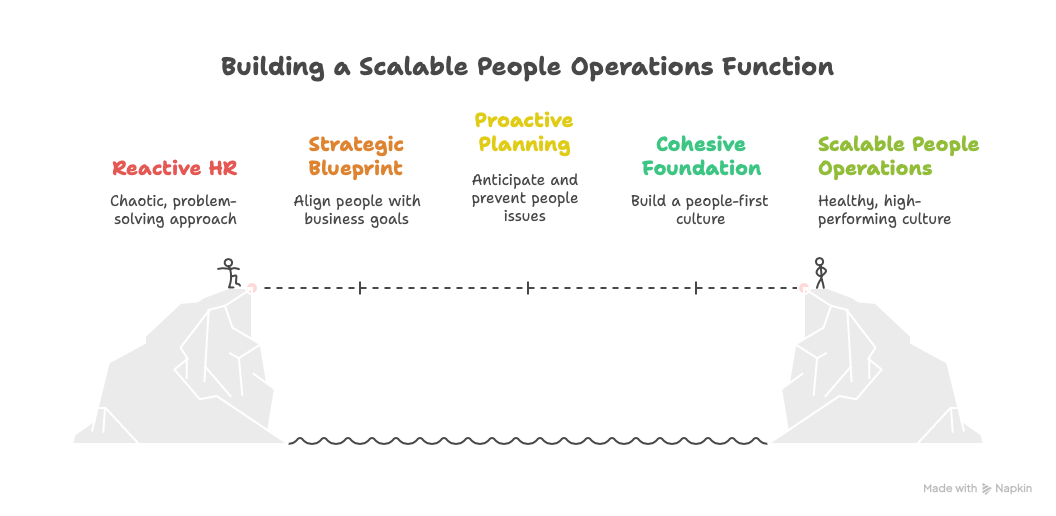
A People Operations roadmap is your strategic blueprint for managing your most valuable asset: your people. It’s a proactive plan that aligns your people strategy with your business goals. Without it, companies often fall into "reactive HR," a chaotic cycle of solving problems as they arise—from compliance issues and missed talent opportunities to employee burnout and high turnover. A roadmap allows you to build a cohesive, people-first foundation that scales with you.
What are the Key Milestones in a 90-Day People Ops Roadmap?
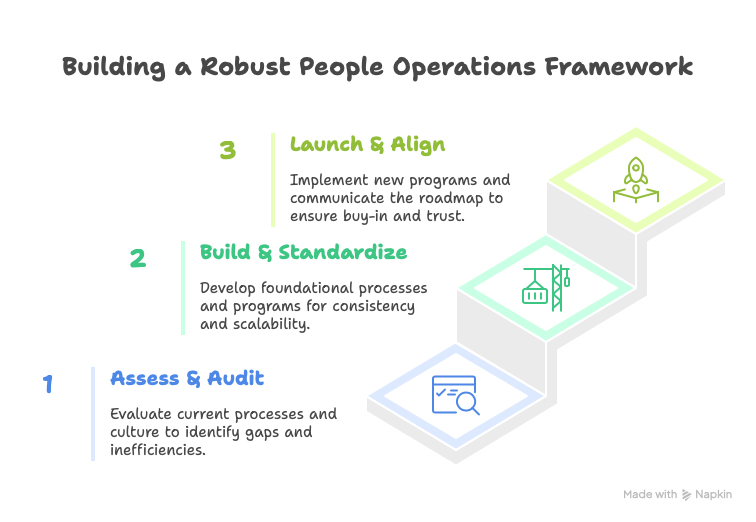
The first 90 days are about assessment, foundation, and alignment. Here’s a checklist to guide your efforts:
Month 1: Assess & Audit
- Audit Current State: Review all existing people-related processes, including hiring, onboarding, payroll, benefits, and performance management. Identify pain points and inefficiencies.
- Conduct Team Interviews: Speak with founders and early employees to understand the current culture, what's working, and what’s not. Gather qualitative insights into employee satisfaction and engagement.
- Define Core Values & Culture: Codify the company’s core values and mission. Use these as a North Star for all future people-related decisions and processes.
- Assess HR Tech Stack: Evaluate your current tools (ATS, HRIS, payroll) and identify gaps. Do you have the right technology to support your growth?
Month 2: Build & Standardize
- Create a Foundational Talent Process: Standardize job descriptions, interview questions, and a structured offer process to ensure consistency and a great candidate experience.
- Design a Scalable Onboarding Program: Develop a clear and engaging onboarding checklist that goes beyond IT setup. Focus on culture, team introductions, and role clarity.
- Establish a Performance Framework: Implement a simple but effective performance management system. This can start with a basic check-in process and evolve over time.
- Review Legal & Compliance: Ensure your employee handbook and key policies are up-to-date and compliant with relevant labor laws.
Month 3: Launch & Align
- Launch Foundational Programs: Roll out your standardized hiring process, new onboarding program, and initial performance framework.
- Train Managers: Provide managers with the tools and training they need to succeed in their roles, from running effective one-on-ones to giving constructive feedback.
- Communicate the Roadmap: Share your People Operations roadmap with the entire company. Explain the “why” behind these changes to get buy-in and build trust.
- Plan for the Next 90 Days: Based on initial feedback and results, create a plan for the next phase of your People Operations journey, including topics like employee development, compensation, and engagement.
Author
Olga Fedoseeva is an award-winning HR executive and people strategist with over 20 years of international experience across EMEA, the US, and APAC. Currently Chief of Staff at Exponential Science and Founder of UnitiQ, she has personally hired more than 1,000 employees and scaled organizations from 30 to 3,000 staff. Recognized as one of the Top HR Women in EV (2021), Olga has led global HR transformation, talent acquisition, and people operations for startups, scale-ups, and multinational enterprises. Her expertise spans the full HR lifecycle—succession planning, DEI, HR tech integration, workforce planning, and executive coaching—helping businesses align people strategies with growth objectives while fostering inclusive, high-performance cultures.


