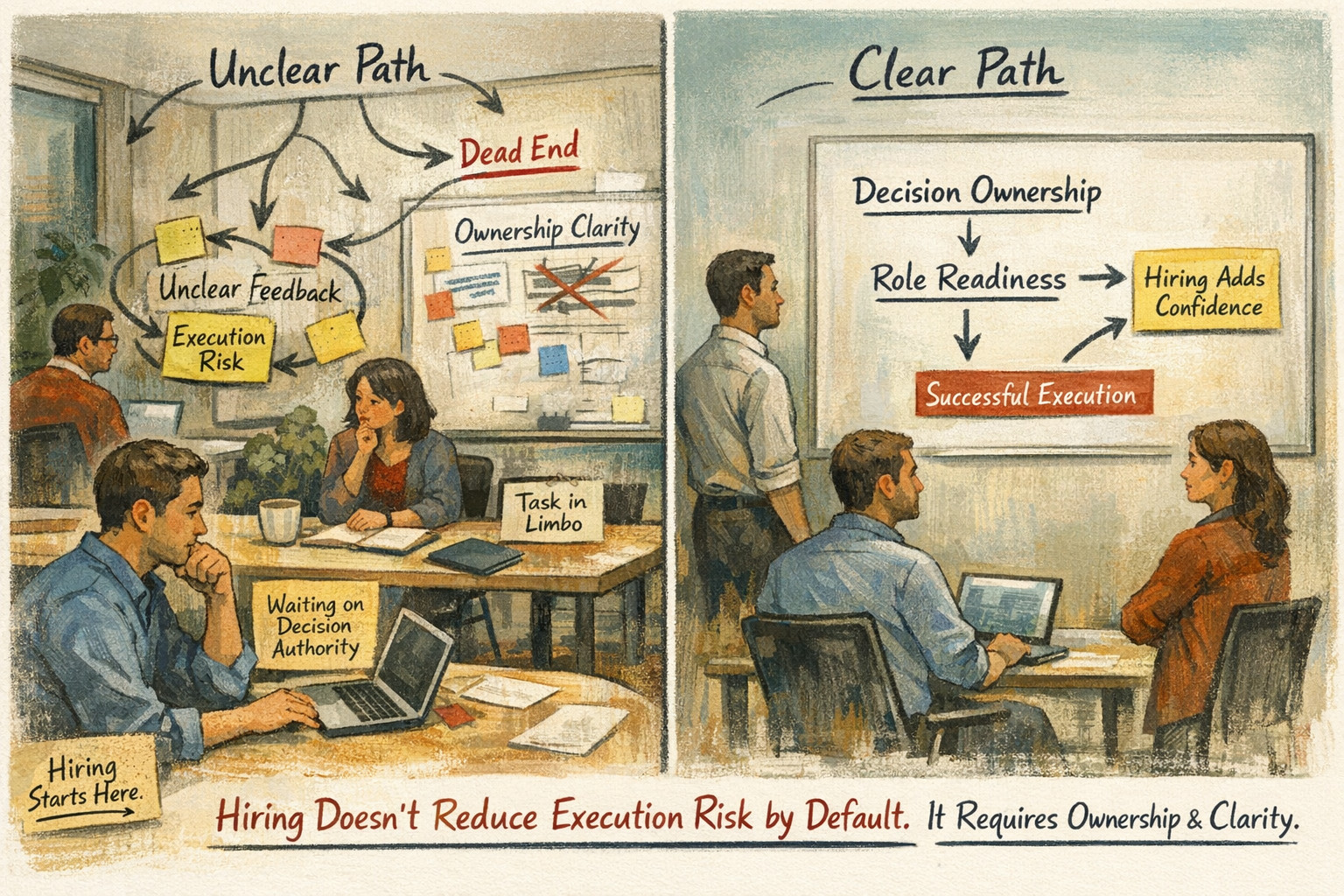
Most founders don’t think they have a hiring problem.
They say:
- “The team is strong.”
- “We hire experienced people.”
- “CV quality isn’t the issue.”
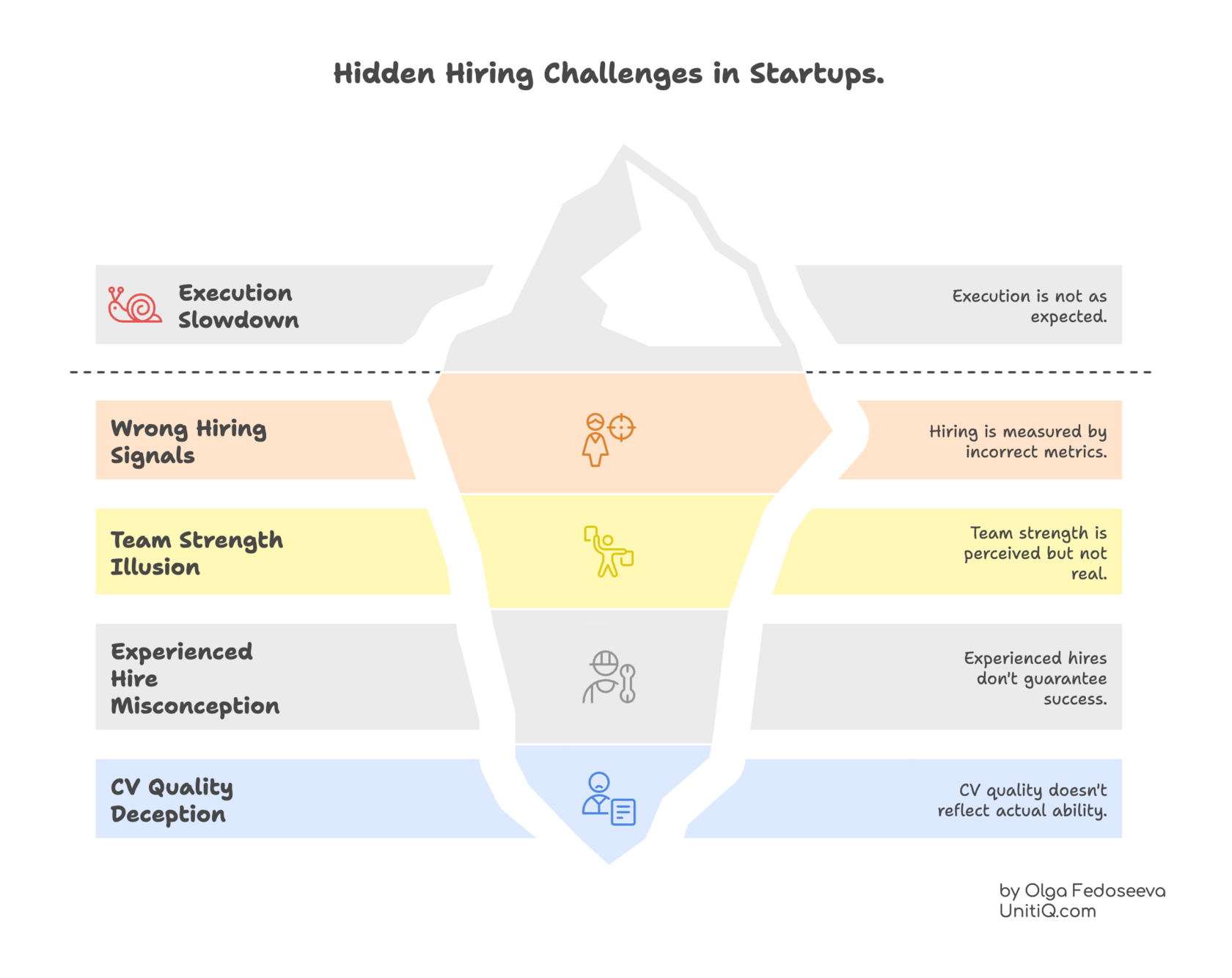
And on paper, they’re right.
The resumes are impressive.
The interviews go well.
The candidates check all the boxes.
Yet execution still slows.
Not dramatically.
Not all at once.
Just enough that founders stay involved longer than they should.
Just enough that decisions feel heavier.
Just enough that every new hire adds complexity instead of relief.
This is not because the people are weak.
It’s because “strong” hiring is being measured by the wrong signals.
Strong on paper. Fragile in execution.
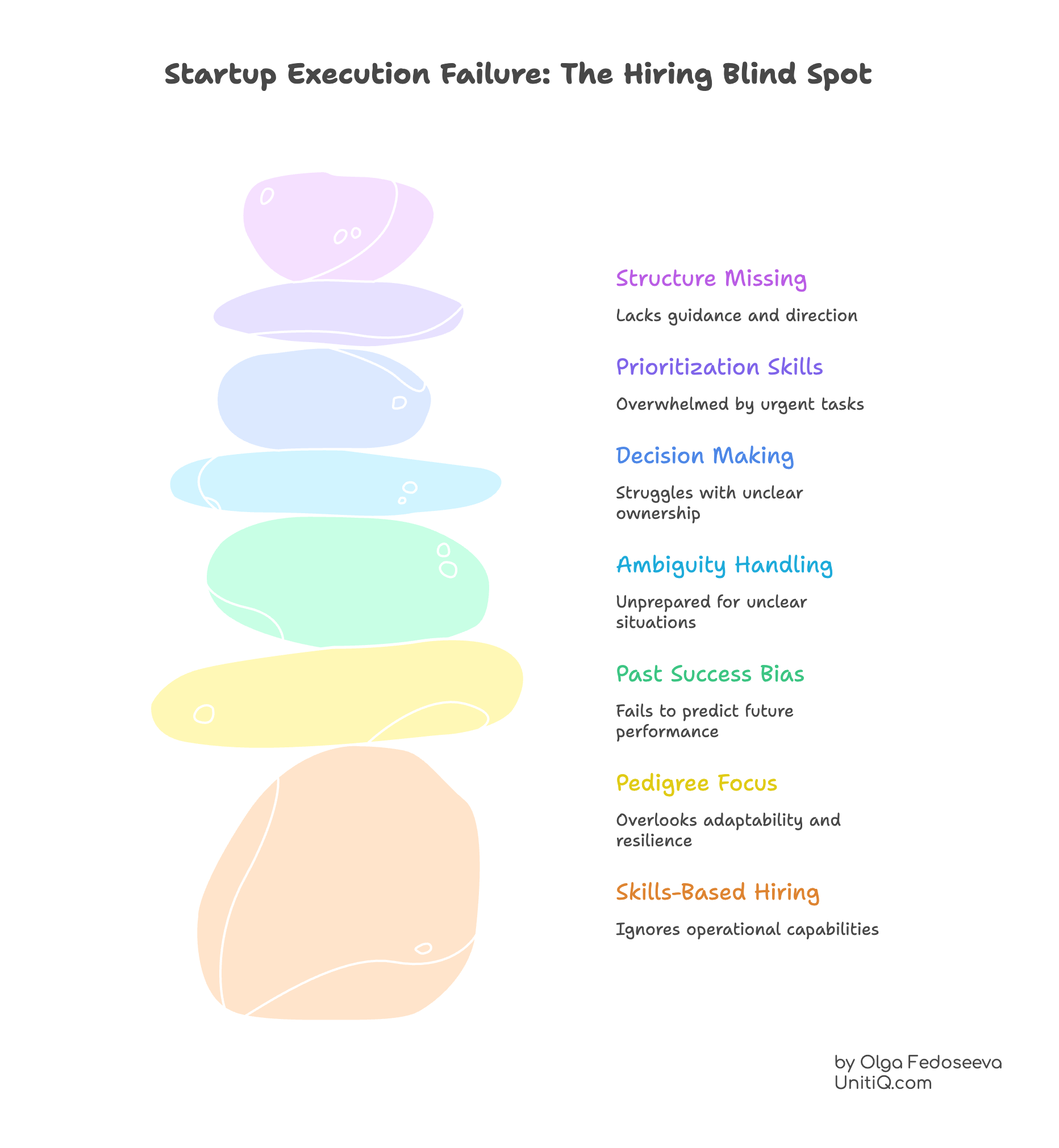
Most startups hire for skills, pedigree, and past success.
They optimise for:
- known companies
- technical depth
- functional experience
These are safe signals.
They feel objective.
They reduce the fear of “getting it wrong.”
But they say very little about:
- how a person operates under ambiguity
- how they make decisions when ownership is unclear
- how they prioritise when everything is urgent
- how they behave when structure is missing
So founders conclude:
“We hired strong people — execution should follow.”
When it doesn’t, they look elsewhere for the problem.
They rarely look at hiring itself.
Why hiring doesn’t fail loudly
Bad hires in startups rarely crash.
They slow things down.
They ask for more alignment.
They wait for clarity.
They escalate decisions upward.
They do good work — just not decisively.
The damage is subtle:
- more meetings
- more cross-checking
- more founder involvement
- more “we’ll revisit this”
This is why startups keep believing they hire well.
The system doesn’t explode.
It just becomes heavier.
This is where fractional HR usually gets it wrong
When execution slows, founders bring in fractional HR.
And what they often get is:
- cleaner processes
- clearer documentation
- better compliance
- nicer role descriptions
Useful.
But insufficient.
Because the problem was never lack of HR hygiene.
The problem was that talent acquisition was never designed as an execution system.
Fractional HR fails when it:
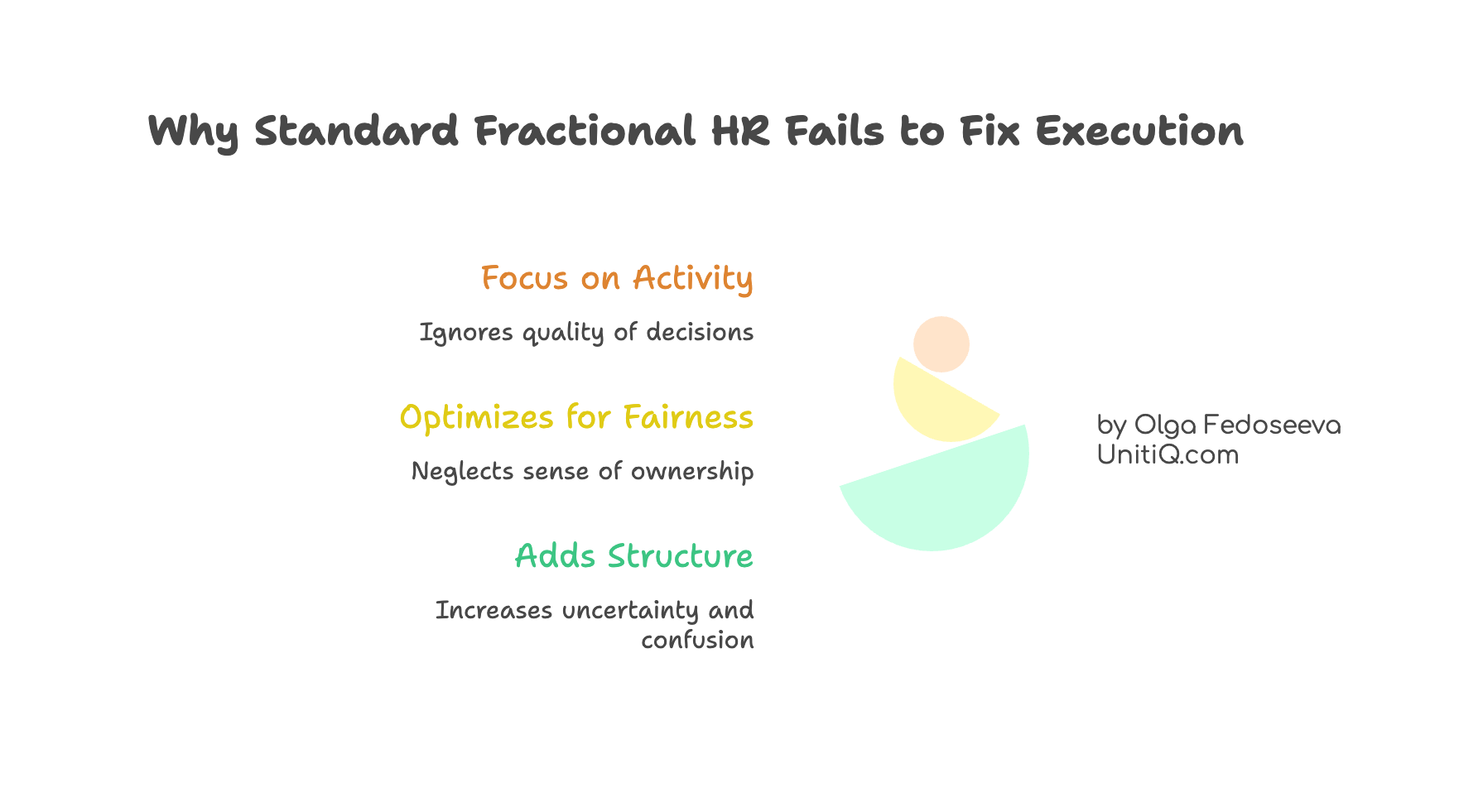
- improves hiring activity instead of hiring decisions
- optimises for fairness instead of ownership
- adds structure without reducing uncertainty
That doesn’t fix execution.
It just makes the slowdown more organised.
Hiring is the first place execution systems reveal themselves
Every hire answers one real question:
“What decisions will this person own when things are unclear?”
Most recruitment processes never answer it.
They test skills.
They test culture fit.
They test collaboration.
But they avoid the hardest part:
- trade-offs
- conflict
- speed under pressure
- accountability when no one agrees
So startups keep hiring “strong” people —
and quietly accumulate execution debt.
What fractional HR should actually fix
In a startup context, fractional HR is not about HR.
It is about re-engineering talent acquisition so execution doesn’t degrade as the company scales.
That means fixing three things at the hiring level:
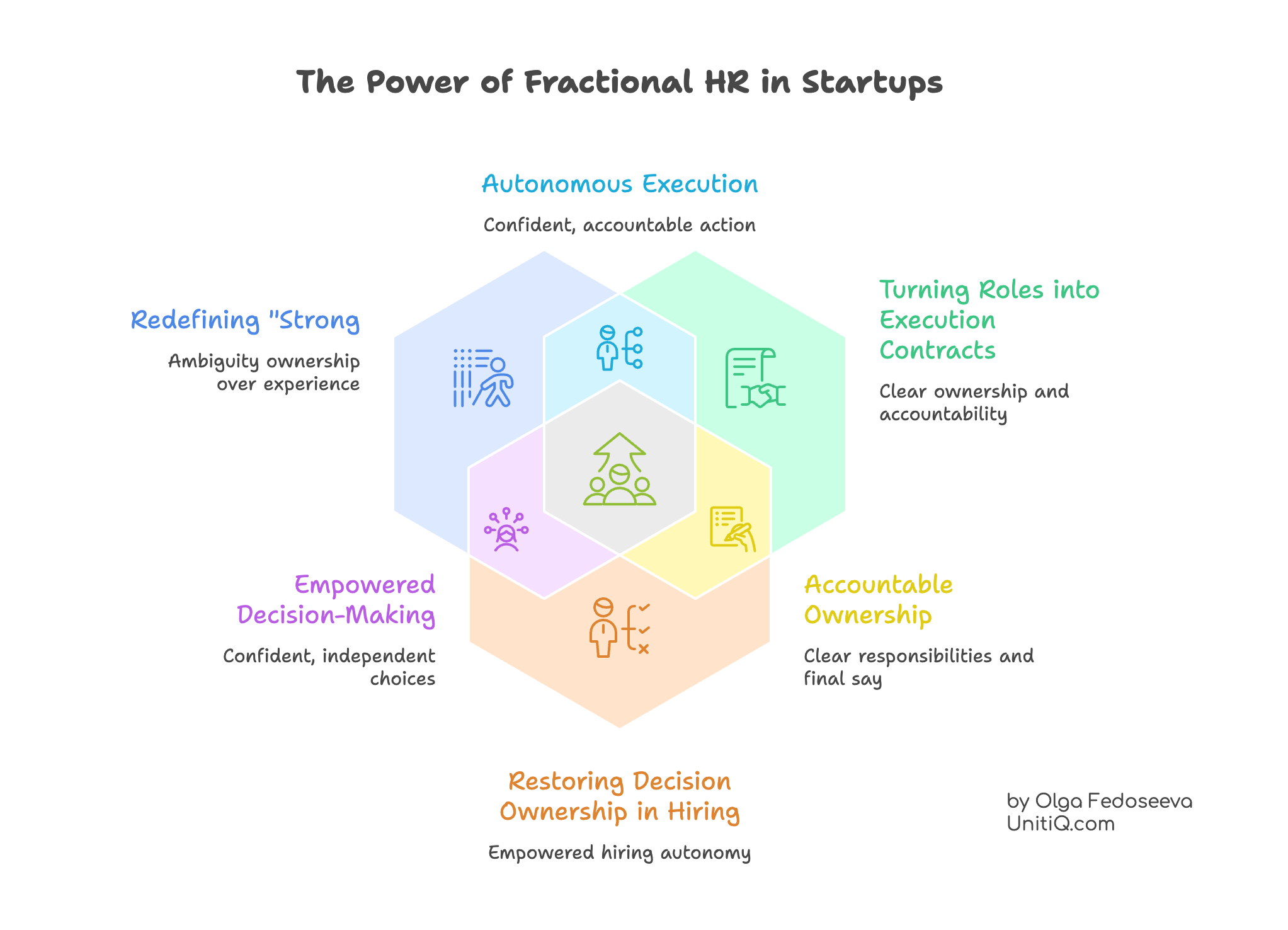
1. Redefining “strong”
Strong is not:
“Has done this before.”
Strong is:
“Can own decisions in this level of ambiguity.”
2. Turning roles into execution contracts
Not “responsibilities” —
but:
- where this person has final say
- where they must move without permission
- what failure actually looks like
3. Restoring decision ownership in hiring
Input is welcome.
Consensus is optional.
Ownership is non-negotiable.
Without this, hiring will always drift back to founders.
The uncomfortable test
Ask yourself:
“If this hire underperforms, will we say ‘they weren’t strong enough’ — or ‘we never gave them clear ownership’?”
If the answer isn’t obvious, the problem is already in your hiring system.
If you want to sanity-check what’s breaking in your hiring system, we can walk through it together.
👉 Book a conversation
👉 Book a conversation
TL;DR
Most startups don’t think they have a hiring problem.
They think they hire strong people.
Hiring doesn’t fail loudly.
It quietly replaces ownership with opinions and slows execution.
Fractional HR doesn’t help if it optimises hiring activity.
It only helps if it redesigns talent acquisition around execution and decision ownership.
They think they hire strong people.
Hiring doesn’t fail loudly.
It quietly replaces ownership with opinions and slows execution.
Fractional HR doesn’t help if it optimises hiring activity.
It only helps if it redesigns talent acquisition around execution and decision ownership.
About the author
Olga Fedoseeva is the Founder of UnitiQ, a talent acquisition and People Projects partner for Tech Startups across EU, UKI, and MENA.
She works with founders in Fintech, AI, Crypto, and Robotics to prevent mis-hires before they compound — restoring execution momentum and protecting teams from quiet burnout.


