
Short Answer
Hiring the right people doesn’t work without a clear company culture because candidates are evaluated against inconsistent expectations. When culture is undefined, interviewers interpret “fit,” ownership, and success differently — which leads to mis-hires, slow decisions, and teams that struggle to execute together.
TL;DR
- Hiring success depends on clear cultural signals, not just candidate quality
- Culture defines how decisions are made and how teams operate under pressure
- Without explicit culture, interviewers evaluate candidates inconsistently
- Strong hires can fail if the operating environment is unclear
- Culture works only when leadership behavior reflects it consistently
Why Hiring the Right People Doesn’t Work Without a Clear Culture
Startups often say they want to hire the right people.
But few define what right actually means.
So hiring becomes subjective.
One manager hires for speed.
Another hires for expertise.
Another hires for attitude.
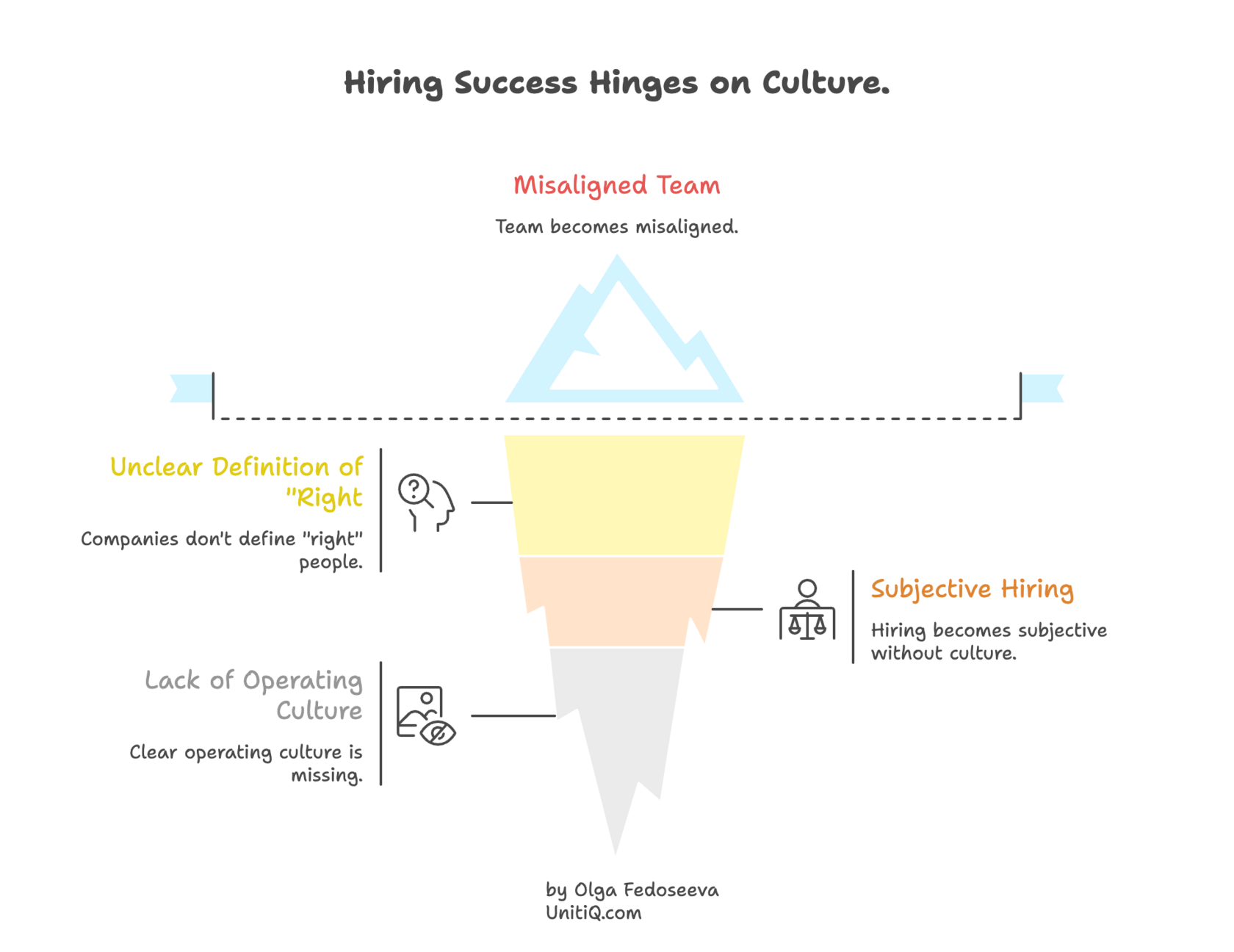
Everyone believes they are selecting the right candidate.
Yet the team slowly becomes inconsistent.
Because “the right person” only exists in relation to a clear culture.
Without that, hiring decisions drift — and execution eventually slows.
In scaling startups, hiring rarely breaks because of candidate pipelines. It breaks when hiring is treated as an activity instead of an execution system. (Read: Hiring as Infrastructure: Why Talent Acquisition Must Be Designed for Scale)
The Hidden Problem: Culture Is Often Assumed, Not Defined
Many companies talk about culture.
But in practice, culture often exists only as:
- slogans on a website
- a few values in a slide deck
- vague statements like “we move fast” or “we value ownership”
This creates a subtle hiring problem.
Interviewers interpret those values differently.
Candidates hear different expectations from different people.
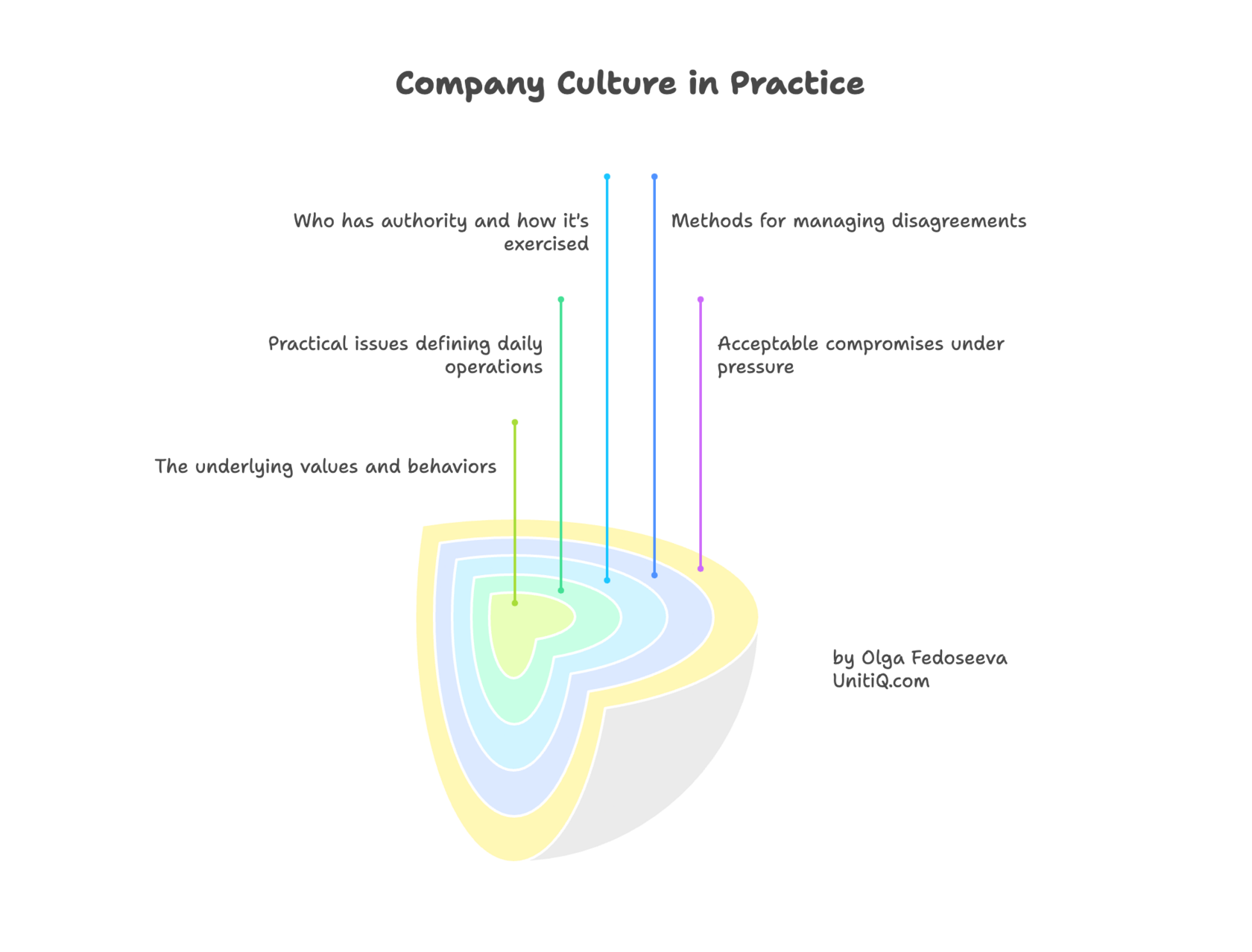
And new hires enter the company without understanding how decisions actually get made.
So even talented people struggle to operate effectively.
Not because they lack ability.
Because the operating system of the company is unclear.
Culture Is Not Values. It’s How Decisions Happen.
In strong companies, culture is not abstract.
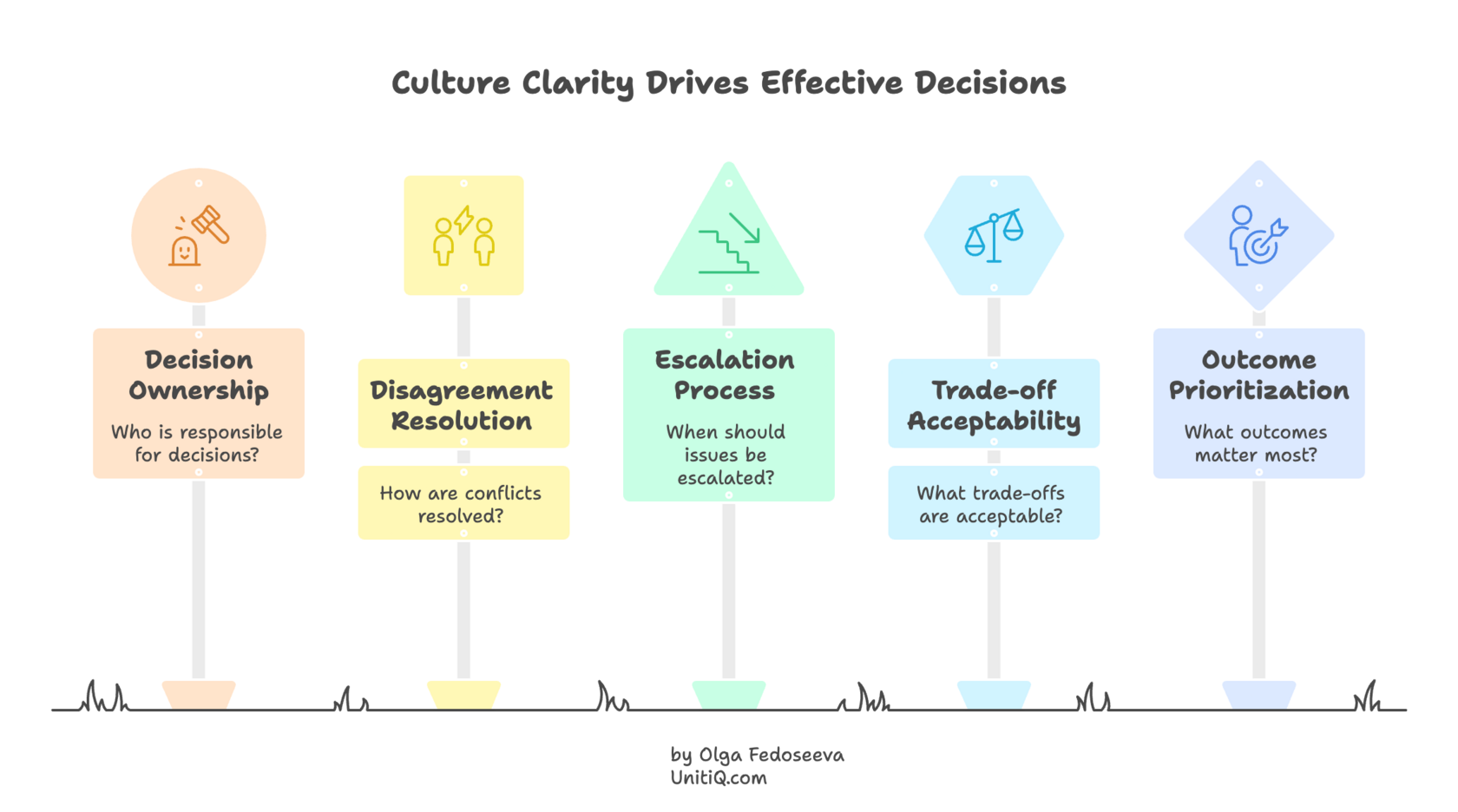
It shows up in very concrete questions:
- Who owns decisions?
- How are disagreements resolved?
- When should someone escalate?
- What trade-offs are acceptable?
- What outcomes matter most?
These answers shape how people behave when pressure appears.
Without this clarity, every new hire must guess.
And guessing creates friction.
Why Hiring the “Right People” Fails Without Culture
Founders often believe hiring problems come from:
- weak candidate pipelines
- poor recruiting
- lack of employer branding
But a deeper issue often sits underneath.
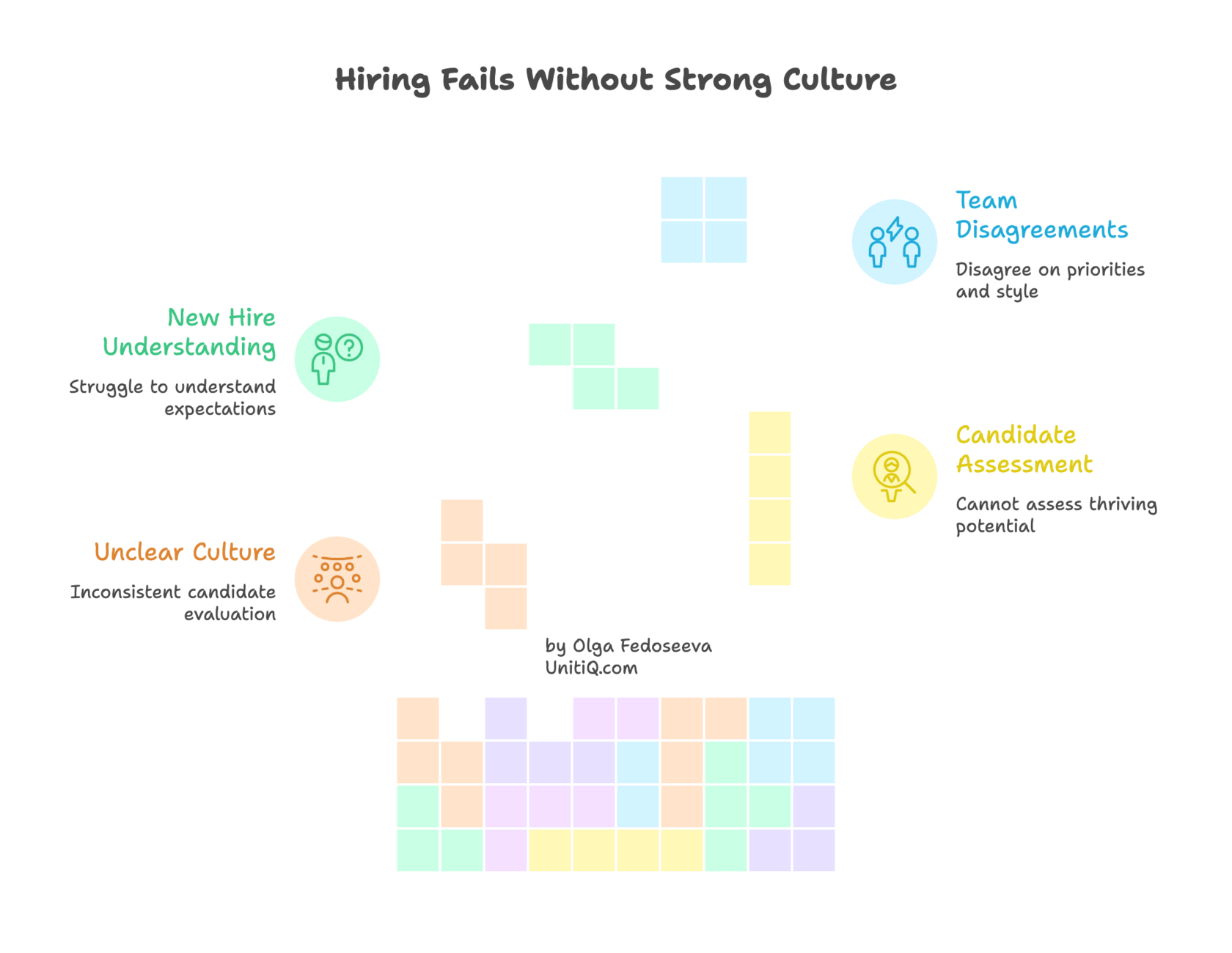
If the company culture is unclear:
- interviewers evaluate candidates inconsistently
- candidates cannot assess whether they will thrive
- new hires struggle to understand expectations
- teams disagree on priorities and execution style
So even strong hires may feel misaligned within months.
Most hiring failures do not appear during interviews. They emerge after onboarding, when ownership and decision authority were never clearly designed. (Read: Execution Fails After Hiring — Not During It)
Not because they were the wrong person.
Because the environment was never clearly defined.
Even highly capable hires struggle when success signals and decision boundaries are unclear during the first months. (Read: Why “Good Hires” Still Fail in the First 90 Days)
The Leadership Test: Culture Starts With the Senior Team
Culture becomes real only when leadership behaves consistently.
If the leadership team:
- interprets company values differently
- resolves trade-offs in conflicting ways
- escalates decisions inconsistently
Then hiring signals become distorted.
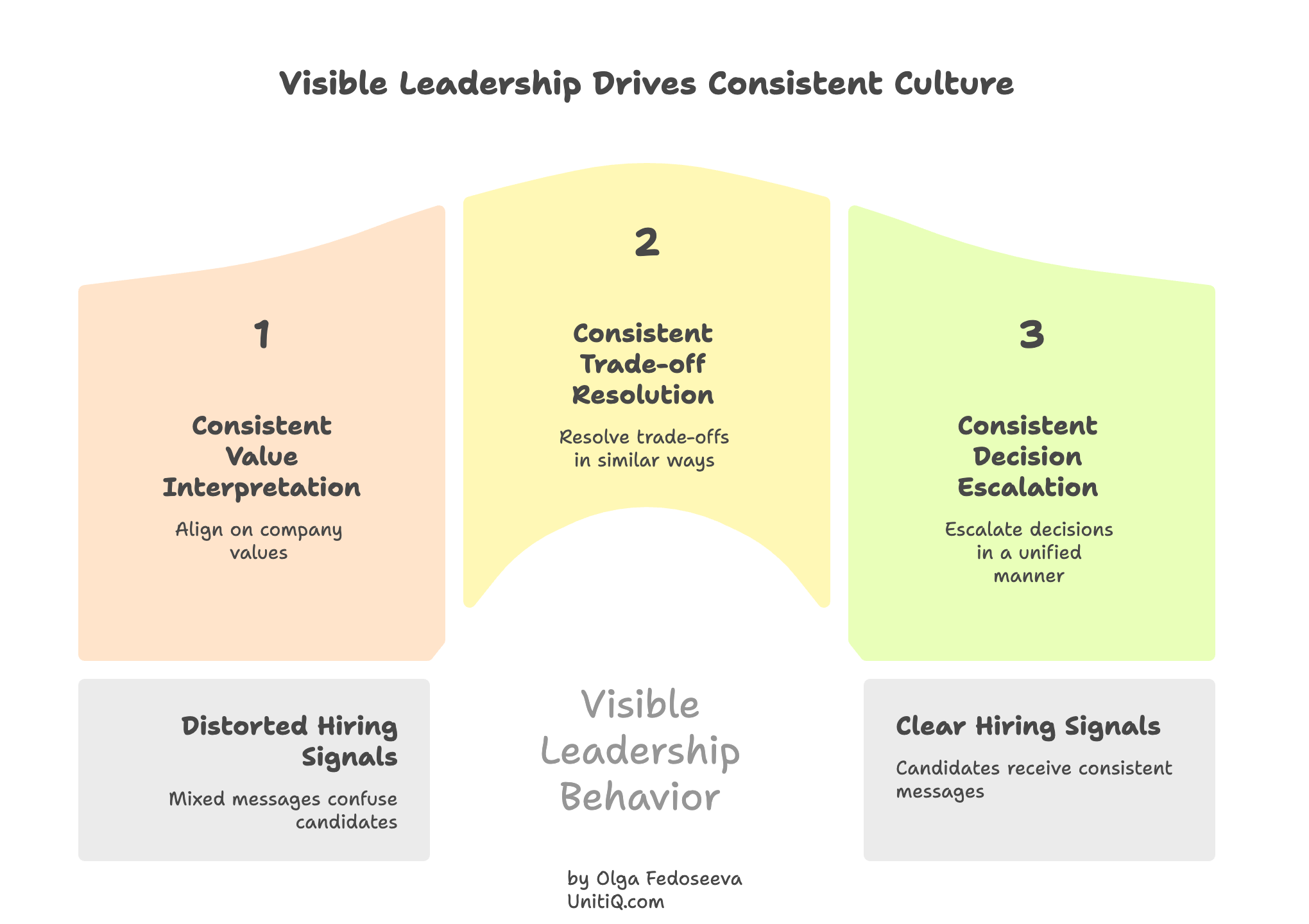
Candidates receive mixed messages.
Employees learn that success depends on reading personalities, not following principles.
This is why culture must be visible in leadership behavior first.
As teams grow, decision authority often fragments unless it is explicitly designed into the organization. (Read: Why Decision Authority Breaks as Startups Scale)
Otherwise it remains theoretical.
Strong Teams Are Built Around Shared Direction
Hiring exceptional individuals is important.
But great teams are rarely just collections of talented people.
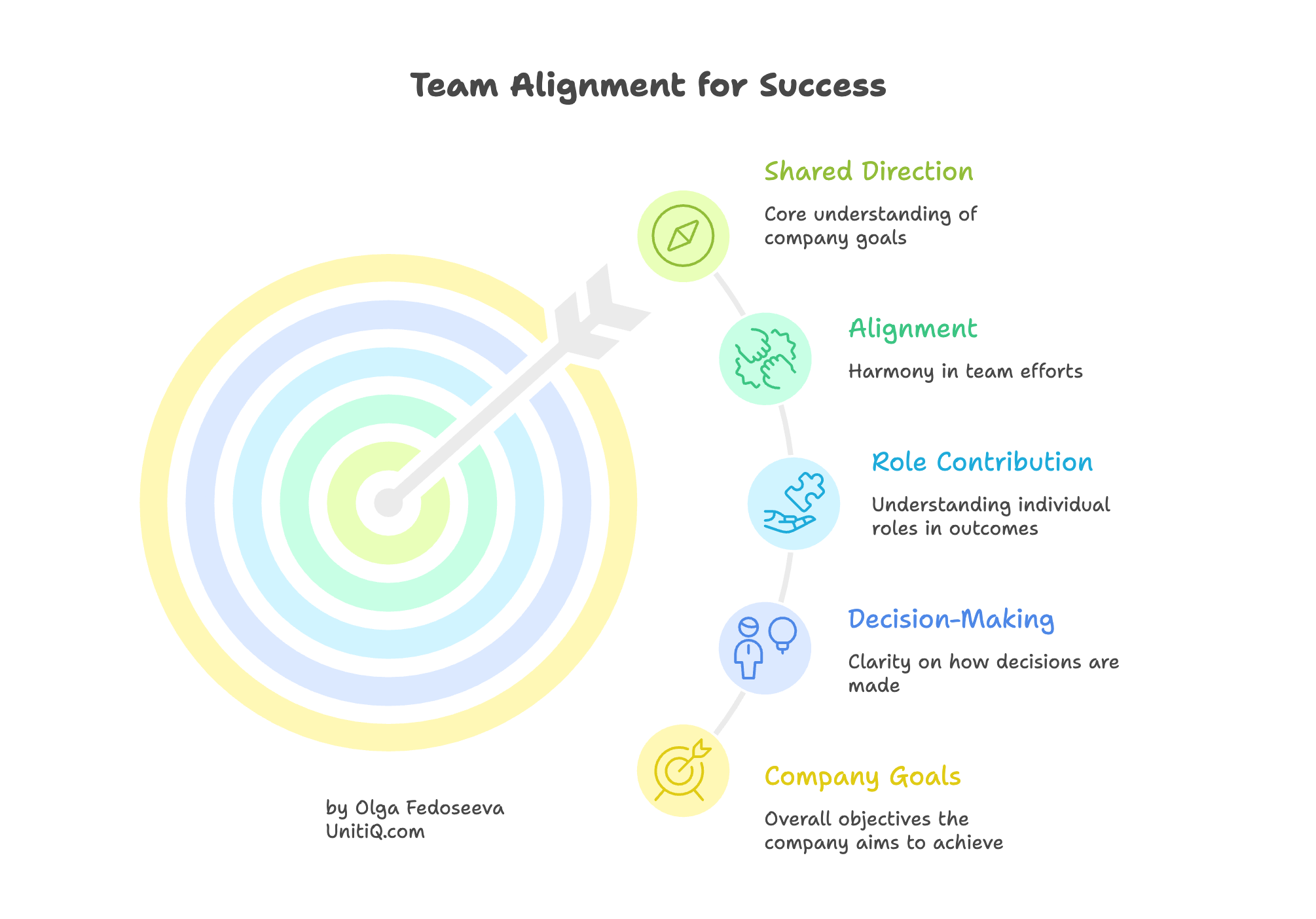
They work because everyone understands:
- what the company is trying to achieve
- how decisions are made
- how different roles contribute to outcomes
This creates alignment.
People can disagree.
But they still move in the same direction.
Without that shared direction, even highly skilled individuals pull the company in different ways.
This is why simply increasing hiring speed rarely improves execution when ownership and decision clarity are missing. (Read: Why Hiring Faster Won’t Fix Your Execution)
Diversity Works Best When Culture Is Clear
Diversity strengthens teams when it operates inside a clear decision environment.
Different perspectives help teams:
- challenge assumptions
- explore alternative solutions
- improve decision quality
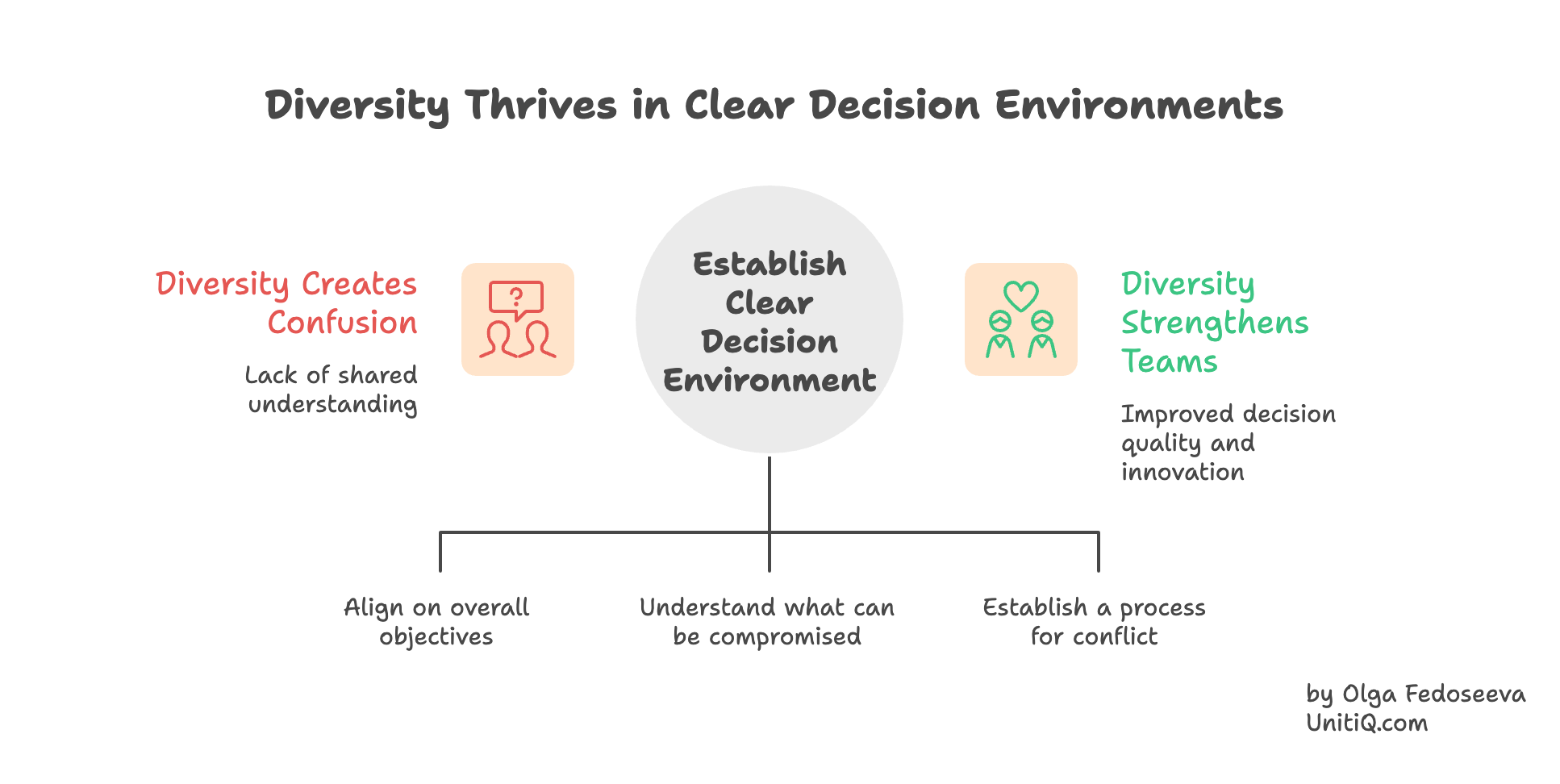
But this only works if people share a common understanding of:
- the company’s goals
- acceptable trade-offs
- how disagreements should resolve
Without that clarity, diversity creates confusion instead of strength.
When ownership becomes ambiguous, hiring friction appears long before founders realize the system has broken. (Read: When Hiring Slows, Decision Ownership Has Already Broken)
Culture Must Be Designed — Not Assumed
Companies that hire successfully do one thing differently:
They make culture explicit.
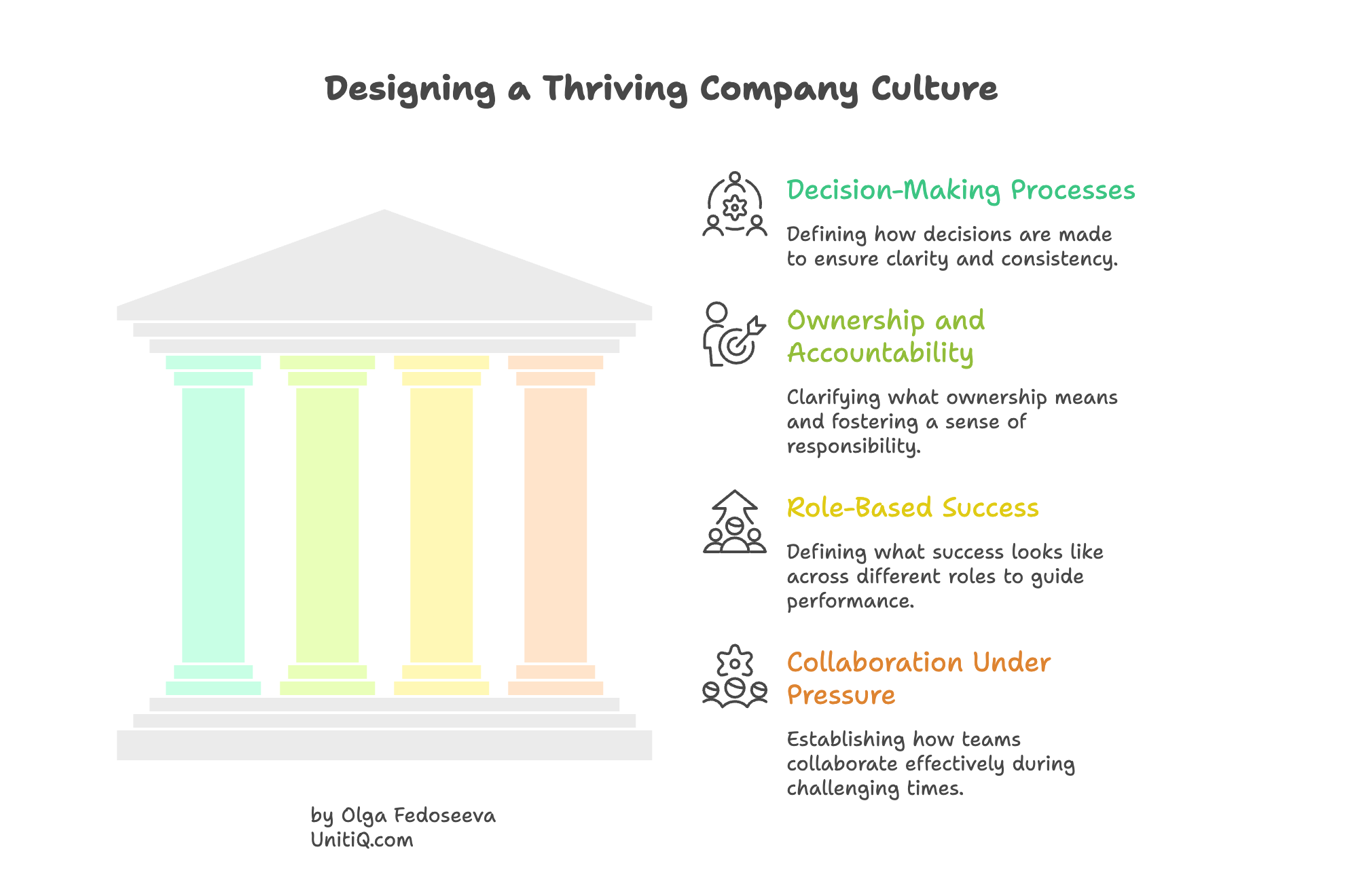
This means defining:
- how decisions are made
- what ownership means
- what success looks like across roles
- how teams collaborate under pressure
When these signals are clear, hiring becomes easier.
Candidates can understand the environment.
Interviewers evaluate people against consistent criteria.
New hires can start contributing faster.
The Real Role of Culture in Hiring
Culture is not a hiring filter.
It is the context that makes hiring decisions meaningful.
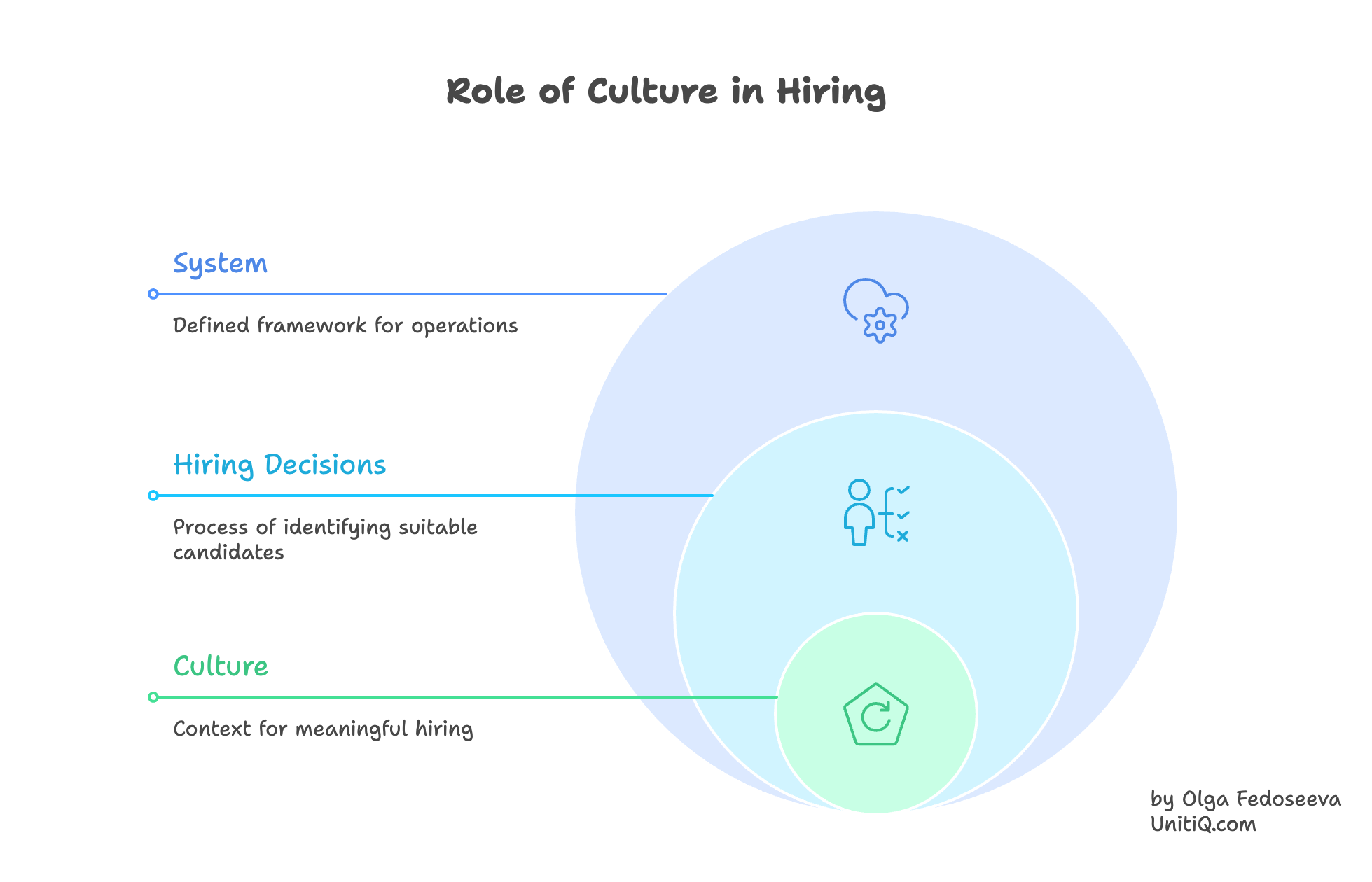
Without it:
Hiring becomes guesswork.
With it:
Hiring becomes a process of identifying people who can operate effectively inside a defined system.
And when the system is clear, great people tend to recognize it quickly.
FAQ
Why does company culture affect hiring success?
Culture defines the behavioral expectations inside a company. Without clear cultural signals, interviewers evaluate candidates inconsistently and new hires struggle to understand how decisions are made.
Can strong hires fail because of weak culture?
Yes. Even experienced hires can struggle if ownership, decision authority, and success signals are unclear inside the company.
How does culture influence execution?
Clear culture reduces decision friction. When employees understand how decisions are made and what outcomes matter most, teams operate faster and escalate less.
Should startups define culture early?
Yes. Early culture clarity helps founders hire consistently, align teams faster, and avoid execution slowdowns as the company scales.
Final Thought
Companies rarely fail to hire strong people because talent is scarce.
They fail because the environment those people enter is undefined.
When culture is explicit and leadership lives it consistently:
- hiring decisions become clearer
- teams align faster
- execution becomes easier
And the question shifts from:
“Did we hire the right person?”
to:
“Can this person succeed in the way our company actually works?”
About the author
Olga Fedoseeva is the Founder of UnitiQ, a global HR executive, and a talent acquisition and people strategy leader with 20+ years of experience across EMEA, the US, and APAC. She has personally hired 1,500+ employees, led people strategy for organisations scaling from 30 to 700+ employees, and writes about hiring systems, execution risk, and people infrastructure in growth-stage startups.


