
There’s a moment founders rarely talk about — because it doesn’t feel dramatic when it happens.
Hiring stops feeling heavy.
Not because the market improves.
Not because candidates suddenly get better.
Not because a new process is introduced.
It just… gets easier.
Roles are clearer.
Decisions move faster.
Offers are made with confidence.
Founders stop second-guessing every hire.
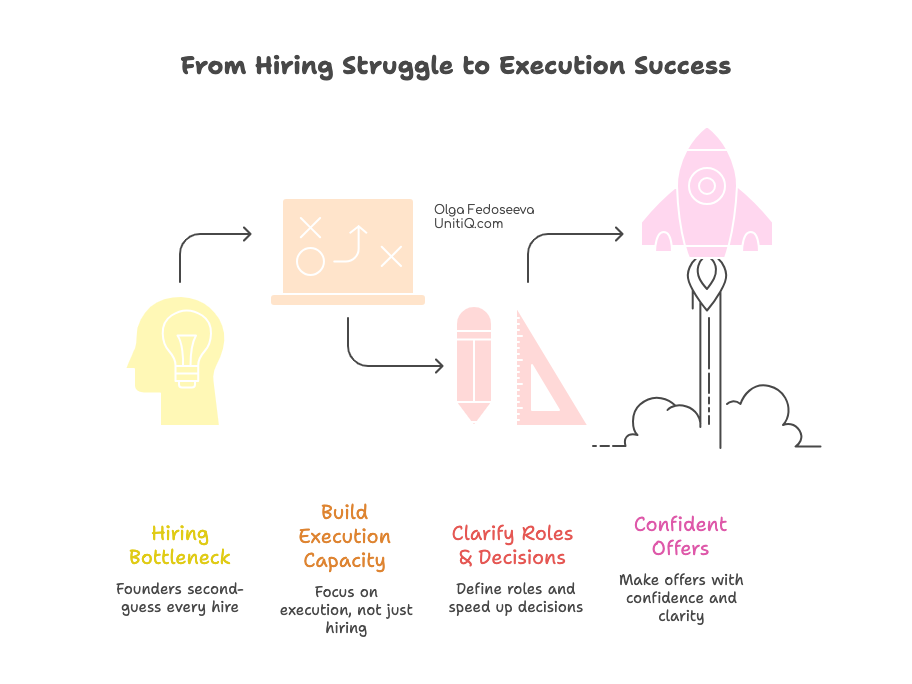
This article is about why that moment happens, and why it only happens after execution capacity is in place — never before.
This is usually the moment founders realize that hiring was never the real constraint — execution was.
Which is why hiring is not the bottleneck — execution capacity is.
The Misleading Belief About “Good Hiring”
Most founders believe hiring feels hard because:
- the market is competitive
- good candidates are rare
- stakes are high
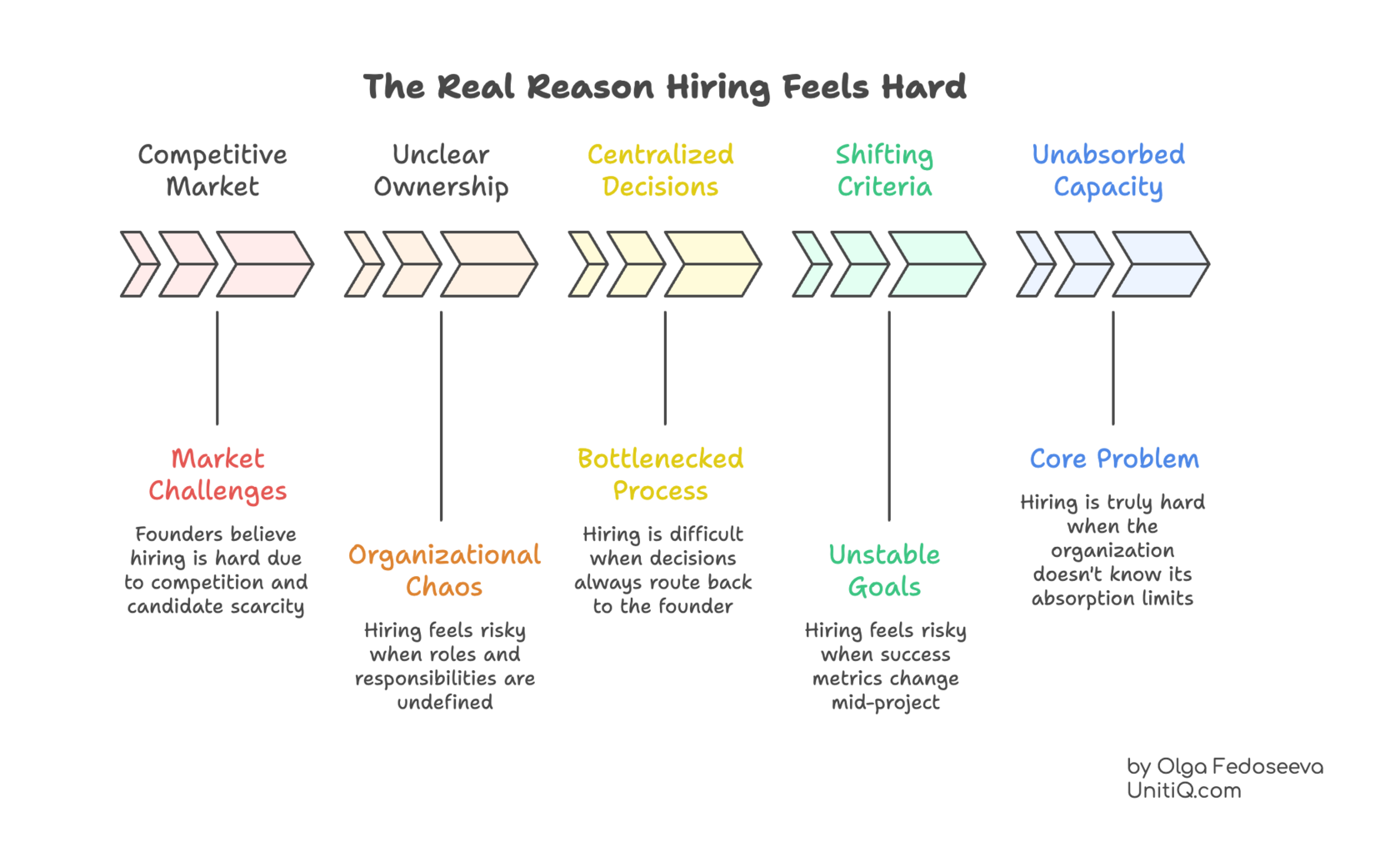
Those things are true — but they’re not the real reason hiring feels painful.
Hiring feels hard when the organization doesn’t yet know what it can absorb.
When ownership is unclear.
When decisions still route back to the center.
When success criteria shift mid-flight.
In that state, every hire feels risky — because it is.
If you want to sanity-check what’s breaking in your hiring system, we can walk through it together.
👉 Book a conversation
👉 Book a conversation
In hindsight, the difference wasn’t better candidates, but having the right conditions in place before hiring even started.
Those conditions are exactly what must be true before you hire if hiring is going to create leverage.
What Changes When Hiring Finally Works
When hiring starts to work, founders notice a few subtle but consistent shifts.
1. Roles Stop Being Vague
Job descriptions stop sounding like:
- “own execution”
- “drive outcomes”
- “take responsibility”
Instead, they describe:
- what is owned
- what decisions belong to the role
- what success actually looks like
This happens because ownership already exists internally.
The role is not aspirational — it’s real.
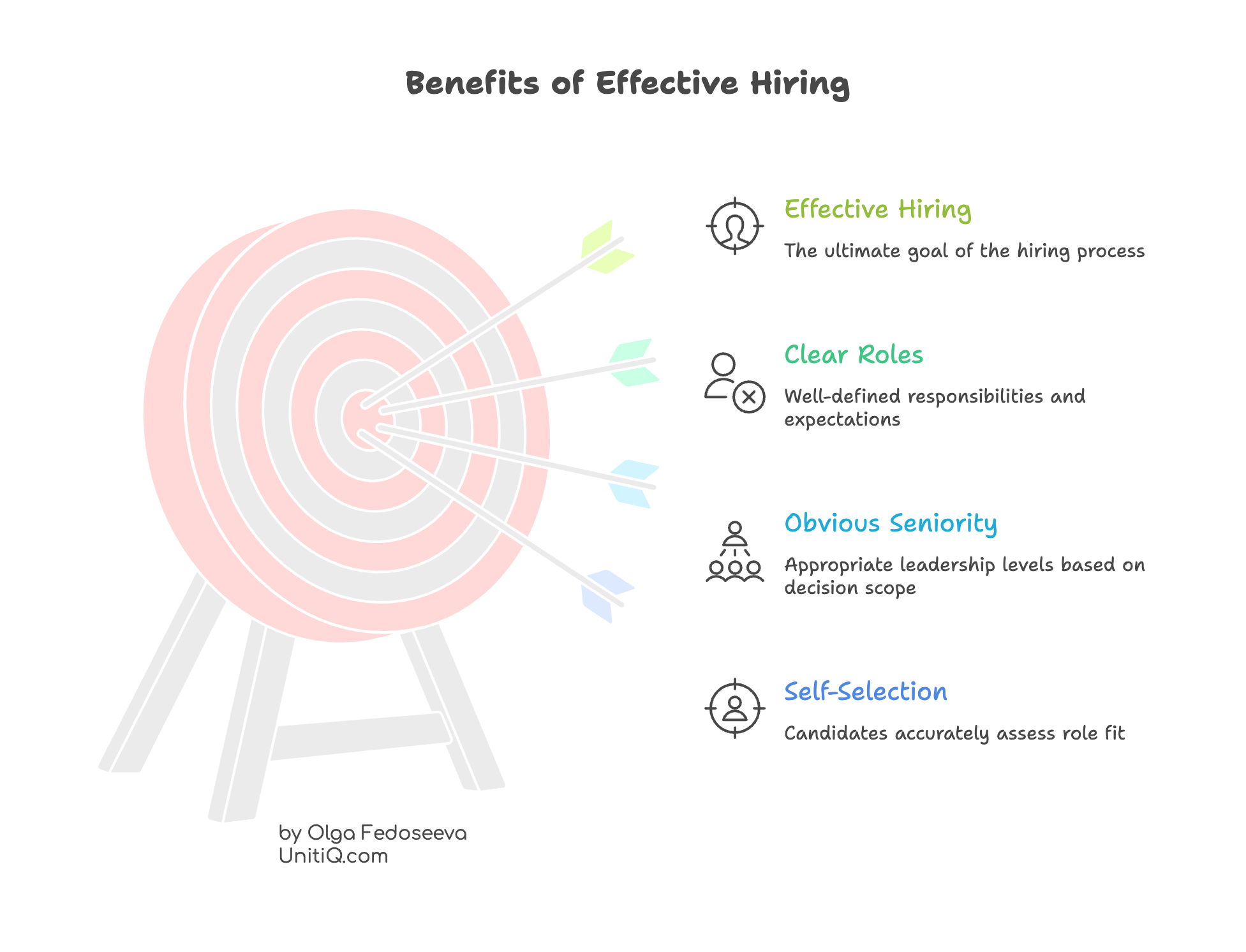
2. Seniority Becomes Obvious
When execution capacity is clear, founders no longer debate endlessly:
- “Do we need someone more senior?”
- “Should we bring in a VP?”
- “Is this overkill?”
They know:
- how much autonomy the system can support
- how many decisions the role must absorb
- how often escalation is acceptable
Seniority stops being a guess.
It becomes a consequence of decision scope.
3. Candidates Self-Select — Correctly
When execution readiness is in place:
- strong candidates understand the role faster
- misaligned candidates opt out earlier
- interviews become confirmation, not discovery
This is one of the least discussed benefits.
Hiring works when the role repels the wrong candidates before you ever reject them.
Why Speed Suddenly Stops Being the Obsession
Before execution capacity exists, speed feels urgent.
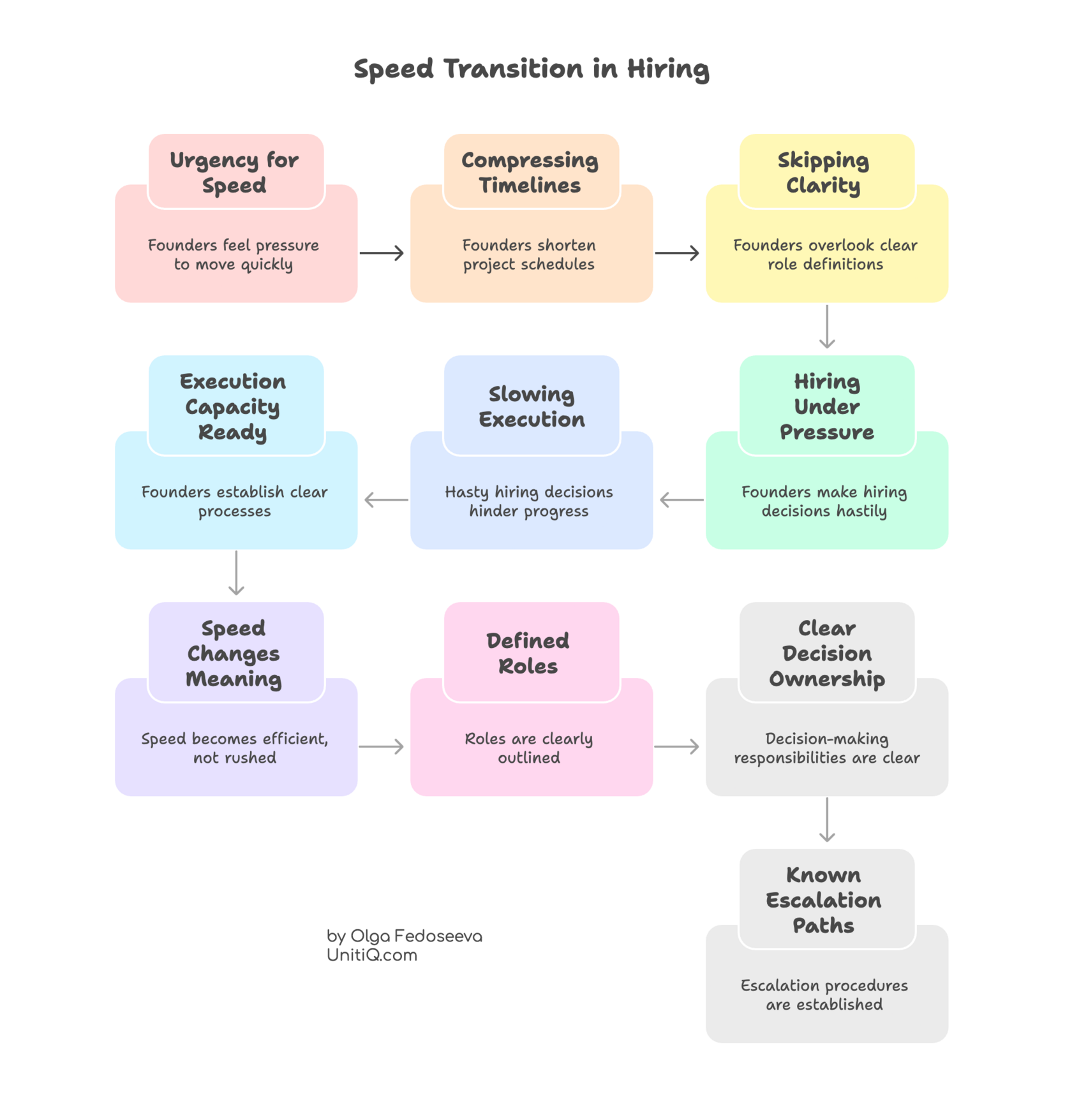
Founders say:
- “We need to move faster.”
- “We’re behind.”
- “We can’t wait.”
So they compress timelines.
They skip clarity.
They hire under pressure.
Ironically, this is when hiring slows execution the most.
When execution capacity is ready, speed changes meaning.
You don’t rush because:
- the role is already defined
- decision ownership is clear
- escalation paths are known
Hiring becomes fast without feeling rushed.
The Disappearance of Hiring Anxiety
This anxiety exists because uncertainty quietly compounds and erodes momentum when execution capacity is missing.
One of the strongest signals that hiring is working is emotional — not operational.
Founders stop asking:
- “What if this doesn’t work?”
- “What if we’re making a mistake?”
- “What if we need to redo this in six months?”
Not because risk is gone —
but because the system can absorb mistakes without breaking.
That’s execution capacity at work.
Why This Never Comes From “Hiring Better”
Many teams chase this feeling by:
- refining interview questions
- adding assessments
- bringing in advisors
- benchmarking compensation
Those things can help — but only after the system is ready.
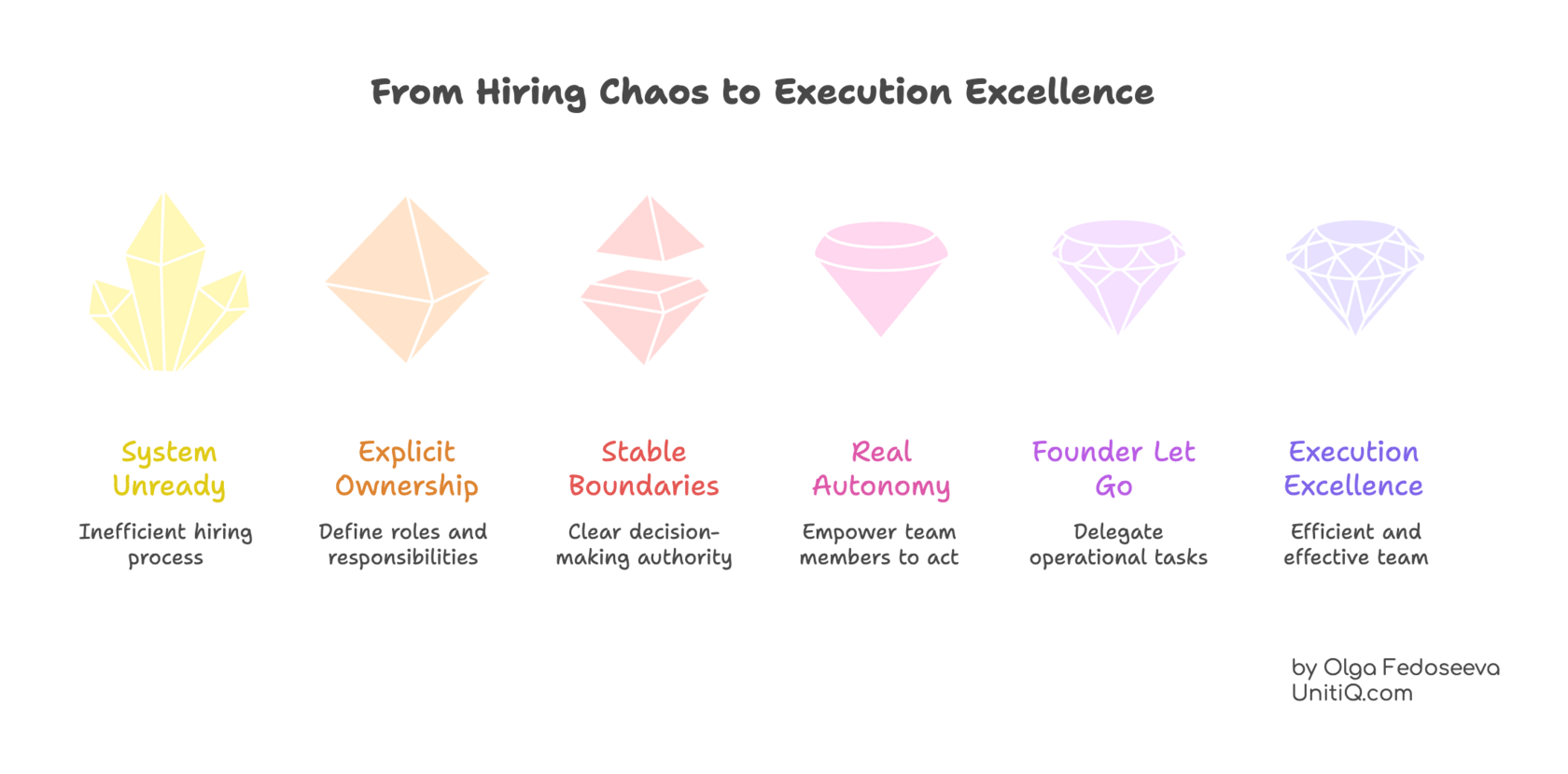
Hiring finally works not because the process improves, but because:
- ownership is explicit
- decision boundaries are stable
- autonomy is real
- founders let go operationally
At that point, even a “good” process feels great.
Before that, even a “great” process disappoints.
The Quiet Shift Founders Notice First
The clearest sign that hiring is working isn’t headcount growth.
It’s this:
Decisions stop coming back.
Not because people are perfect.
But because the organization knows who owns what, and respects it.
Hiring works when it removes load — not when it adds capacity on paper.
Why This Applies to All Hiring (Not Just Leadership)
This pattern shows up most clearly with senior hires because:
- the cost is higher
- the failure is louder
- the expectations are greater
It’s the same dynamic described in why great senior hires fail in Series A–B startups when execution capacity isn’t ready.
But the logic applies to every hire expected to create leverage:
- early ICs
- principals
- managers
- specialists brought in to “raise the bar”
Any hire asked to own something meaningful will struggle if execution capacity isn’t ready.
When it is ready, hiring works — regardless of level.
The Reframe That Closes the Loop
Hiring is not the lever that fixes execution.
Execution capacity is the lever that makes hiring work.
That’s why hiring finally feels easy only after:
- ownership is designed
- decisions are scoped
- autonomy is supported
- founders step back deliberately
At that point, hiring stops being a gamble.
It becomes a natural extension of a system that already knows:
- what it needs
- why it needs it
- and what that role must own to matter
Why This Is the End of the Argument — Not the Beginning
Once founders experience hiring that works, they don’t go back.
They stop chasing:
- speed as a substitute for clarity
- seniority as a substitute for ownership
- hiring as a substitute for execution design
They hire less reactively.
They hire more precisely.
They trust the system they’ve built.
That’s why hiring finally works.
And that’s why it suddenly feels easy.
TL;DR — Key Takeaways
- Hiring feels hard when the company can’t absorb ownership and decisions — not because candidates are worse or the market is tougher.
- Hiring “suddenly becomes easy” when execution capacity is in place: clear ownership, stable decision boundaries, real autonomy, and less founder arbitration.
- In that state, roles become specific, seniority becomes obvious, and candidates self-select correctly.
- Speed stops being the goal — hiring becomes fast without being rushed because clarity already exists.
- This isn’t a leadership-only phenomenon: it applies to any hire expected to create leverage.
- The reframe: execution capacity makes hiring work. Hiring does not create execution capacity.
About the author
Olga Fedoseeva is the Founder of UnitiQ, a global HR executive, and a talent acquisition and people strategy leader with 20+ years of experience across EMEA, the US, and APAC. She has personally hired 1,500+ employees, led people strategy for organisations scaling from 30 to 700+ employees, and writes about hiring systems, execution risk, and people infrastructure in growth-stage startups.
Read full author profile
LinkedIn
Read full author profile


