
When hiring starts to feel heavy, founders often default to one idea:
“We need someone dedicated.”
So they hire — or consider hiring — an embedded recruiter.
The logic sounds solid:
- someone inside the team
- focused only on hiring
- deeply involved in context
- available every day
And yet, many startups notice something unexpected.
Hiring activity increases.
But execution doesn’t get lighter.
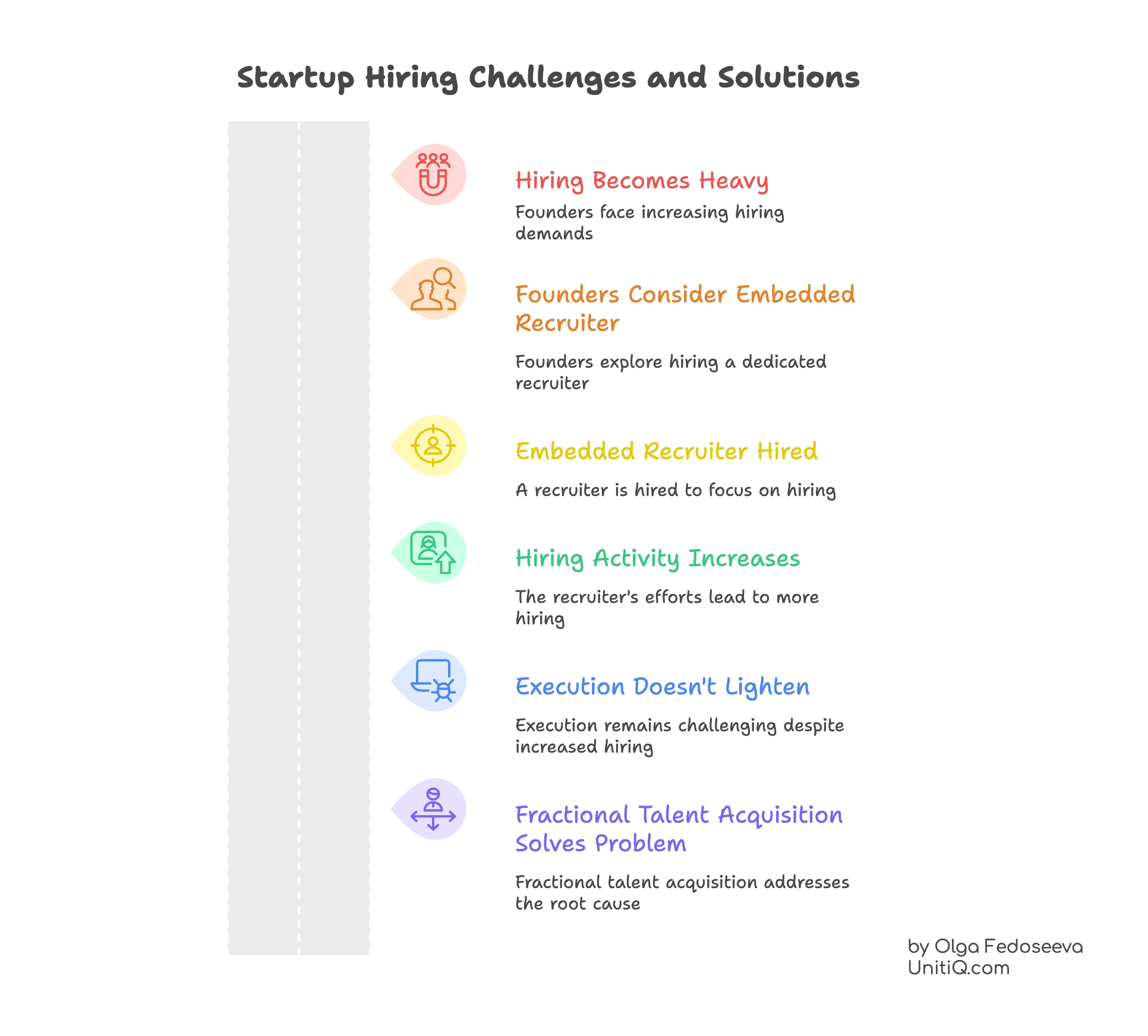
This article explains why “dedicated” recruiting often slows execution, and how fractional talent acquisition solves a different — more fundamental — problem.
The assumption behind embedded recruiters
Embedded recruiters are built on one core assumption:
The hiring system is already sound — it just needs capacity.
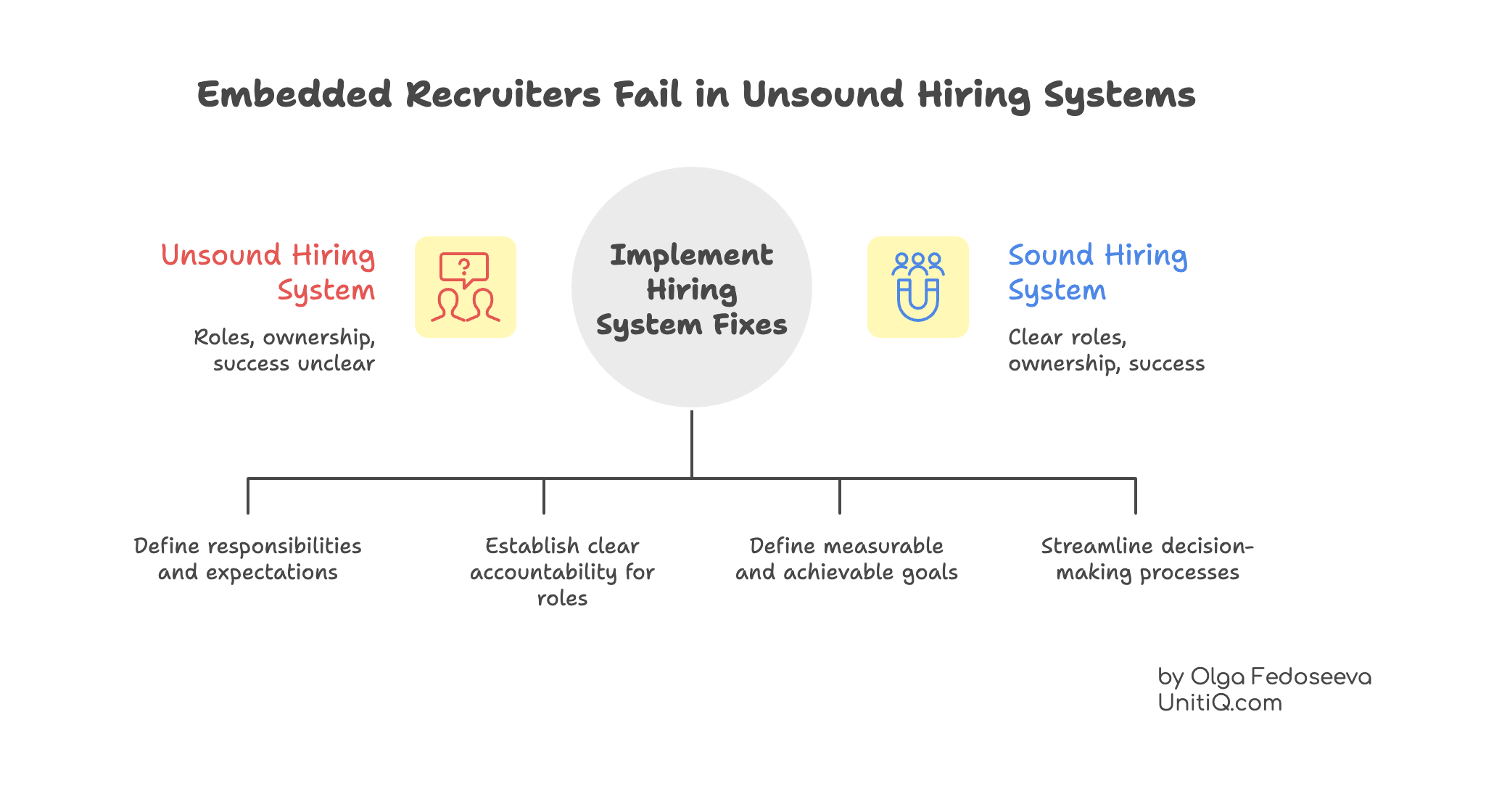
That means:
- roles are clear
- ownership is agreed
- success criteria are stable
- decisions are ready to be made
In that world, embedding a recruiter works well.
But in Series A–C startups, that world rarely exists.
What actually happens when a recruiter is embedded too early
When an embedded recruiter joins an organization that isn’t execution-ready, a predictable pattern emerges.
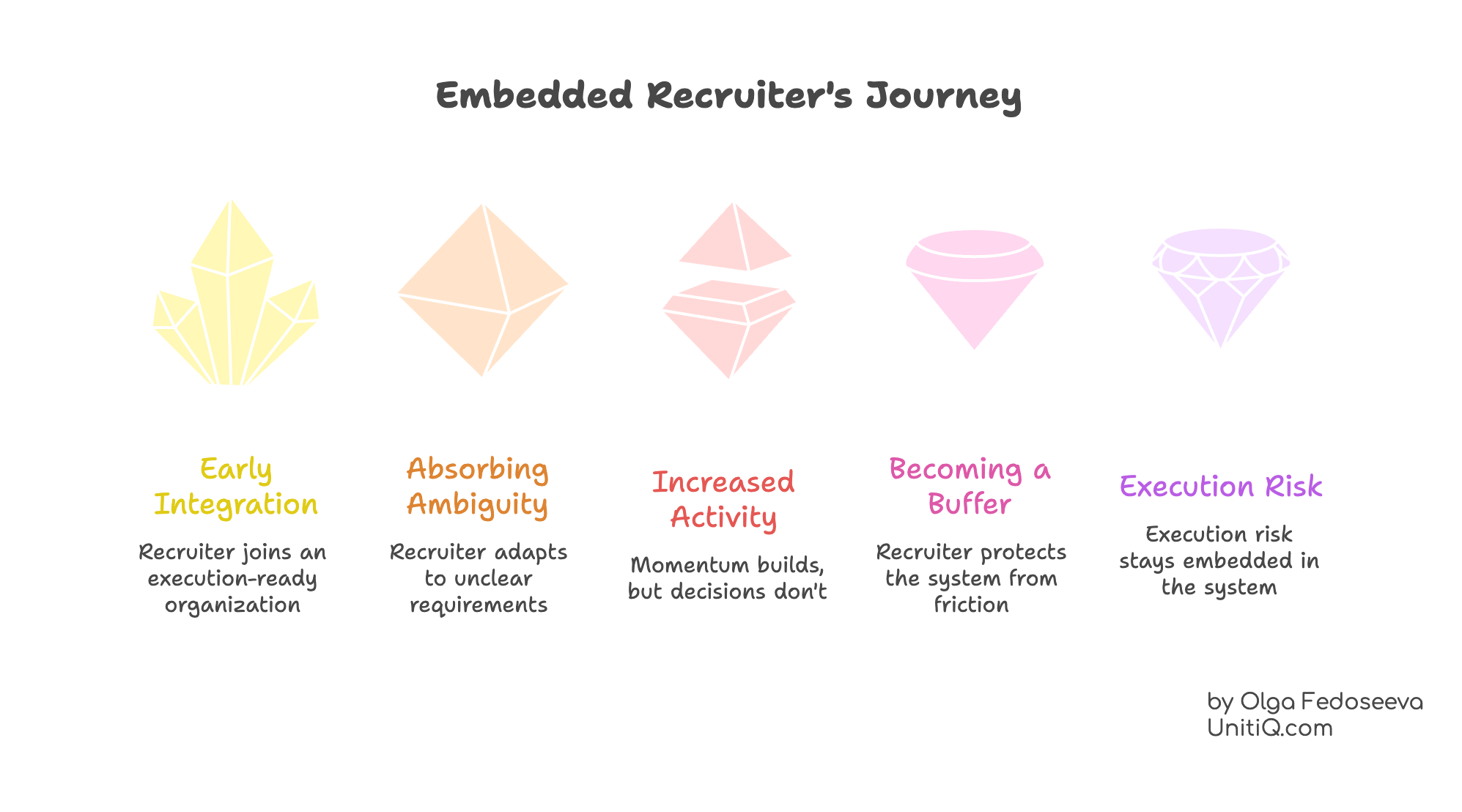
1. The recruiter absorbs ambiguity instead of resolving it
Because the role isn’t fully defined:
- requirements shift mid-search
- priorities change weekly
- feedback contradicts itself
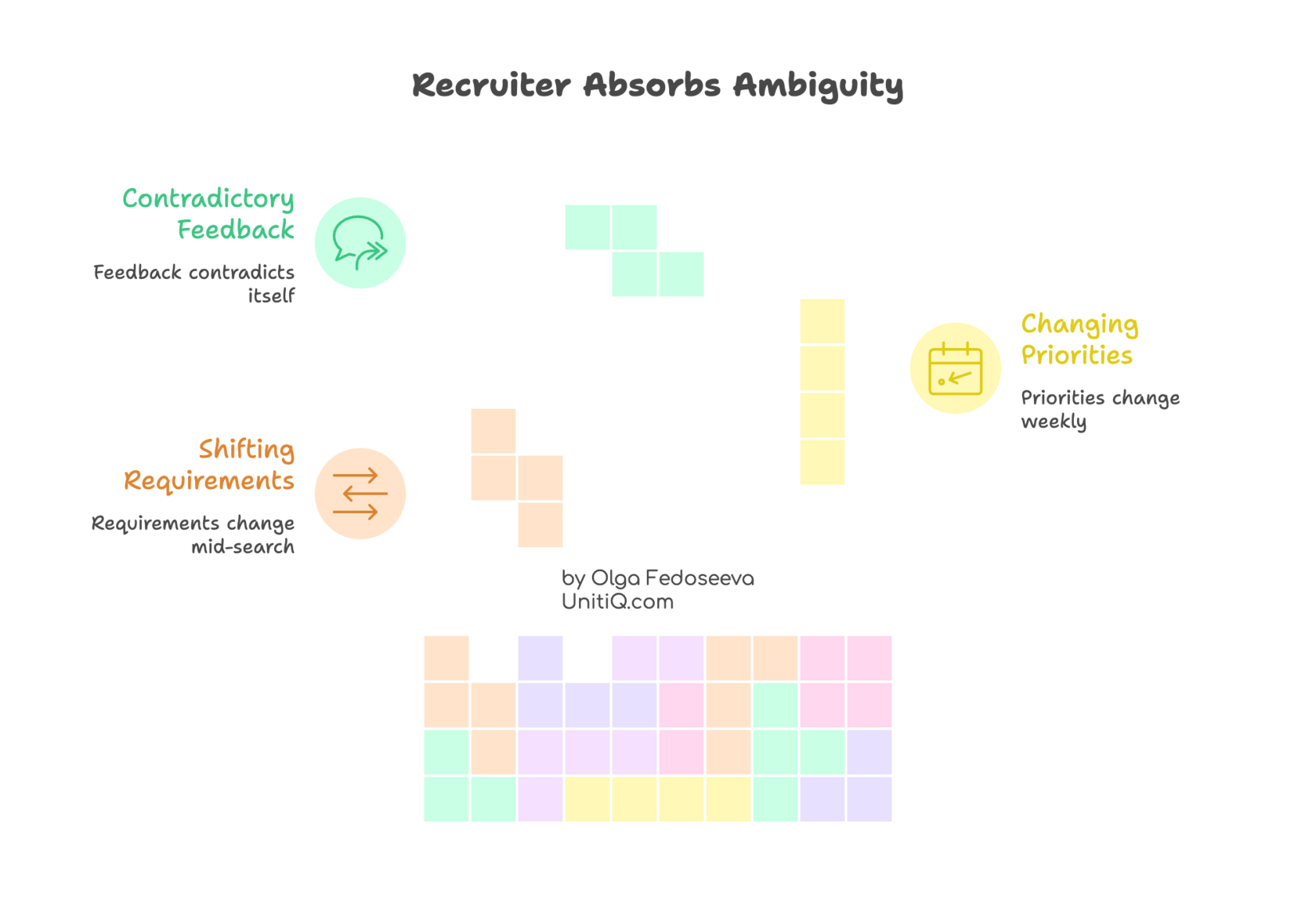
The recruiter adapts — as they should.
But adaptation hides the real issue:
the organization hasn’t decided what it needs yet.
Hiring continues.
Clarity doesn’t improve.
Without role clarity by team, embedded recruiters end up managing ambiguity instead of resolving it.
2. Activity increases, decisions don’t
Embedded recruiters are excellent at keeping momentum:
- scheduling interviews
- managing pipelines
- collecting feedback
- moving candidates forward
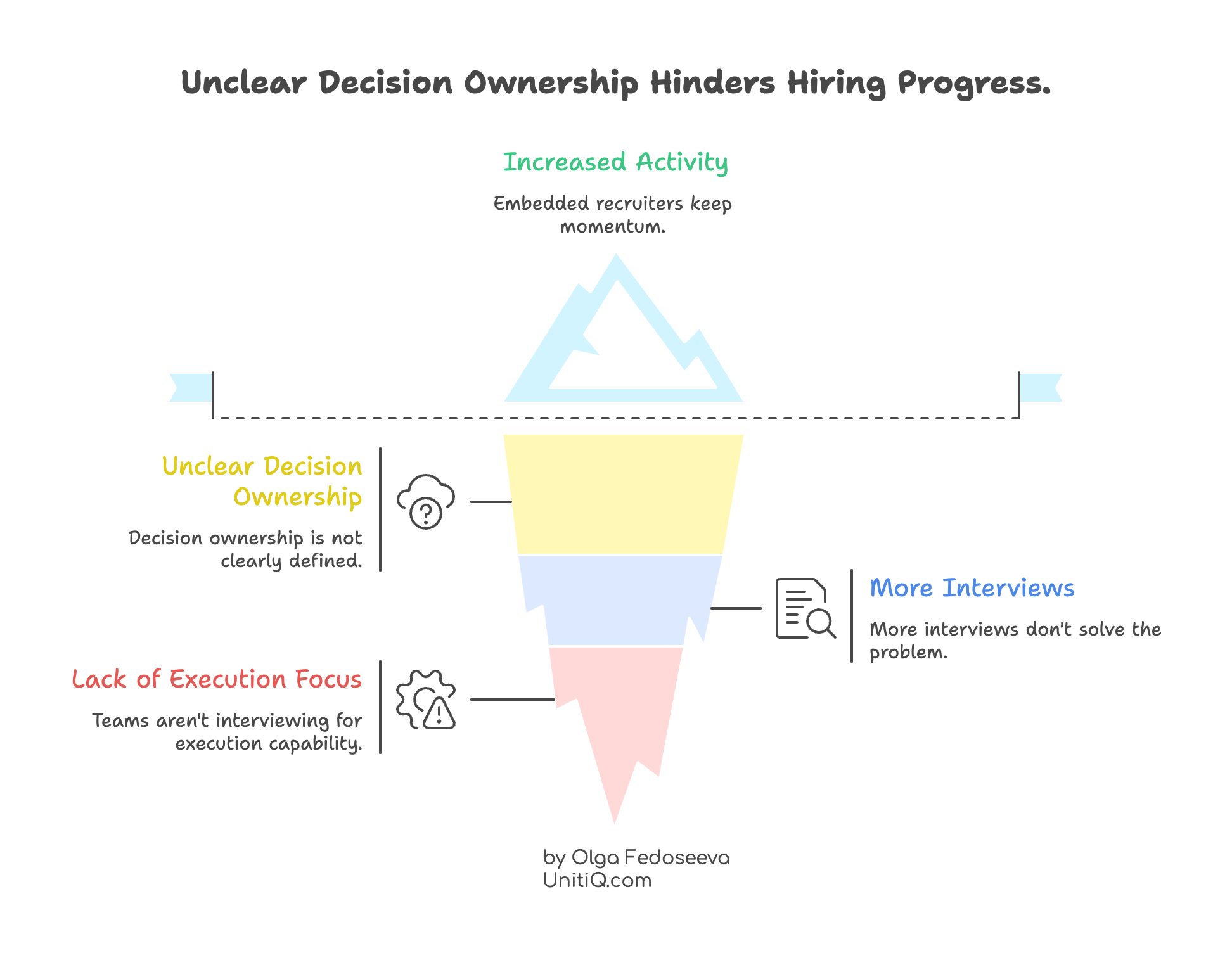
But when decision ownership is unclear, this creates a trap.
More interviews.
More interviews don’t fix this — especially when teams aren’t interviewing for execution capability.
More opinions.
More “almost right” candidates.
Less confidence.
Hiring feels productive, but founders stay deeply involved because decisions never fully transfer.
3. The recruiter becomes a buffer — not a lever
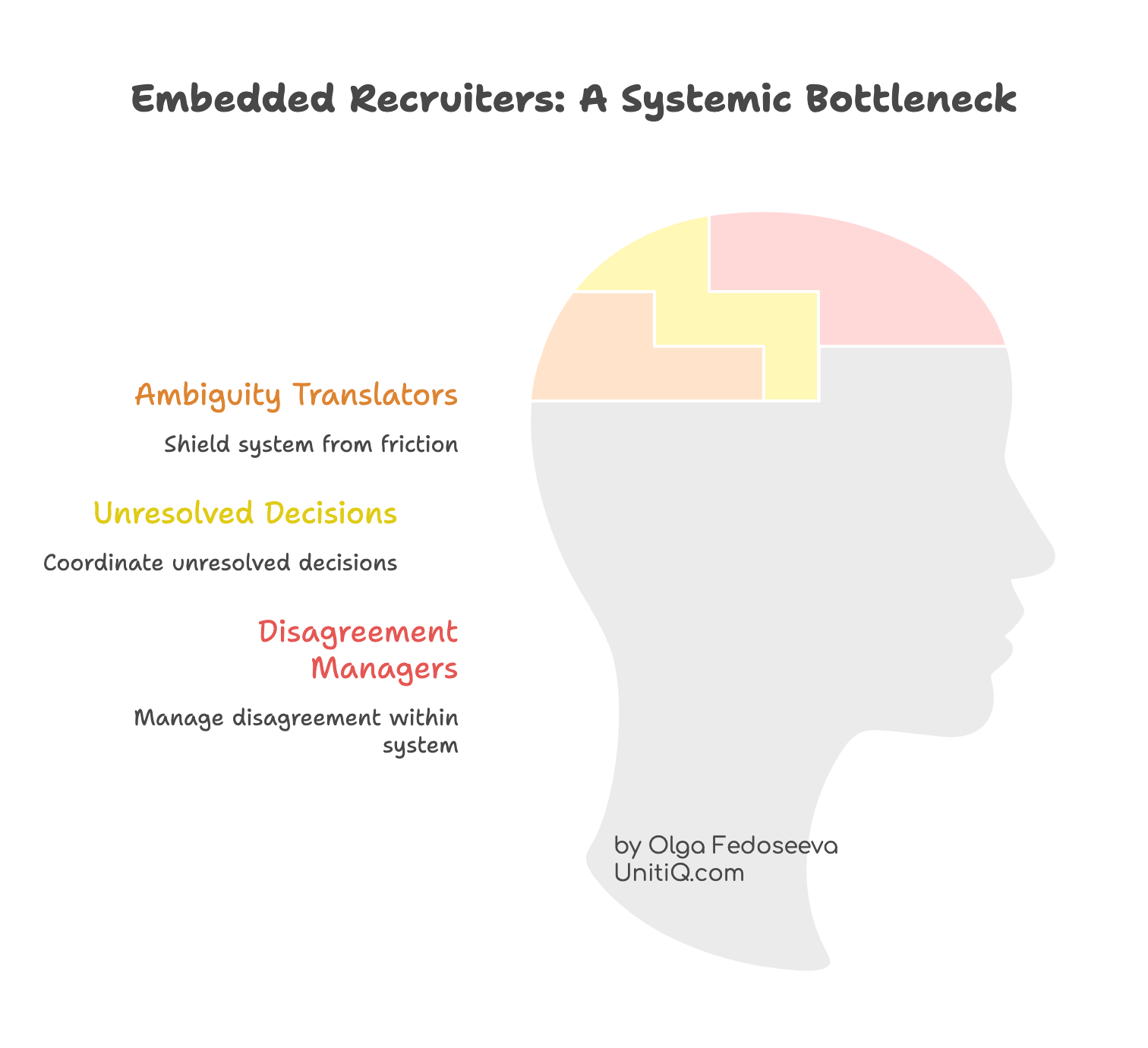
In unclear systems, embedded recruiters unintentionally become:
- translators of ambiguity
- coordinators of unresolved decisions
- managers of disagreement
They protect the system from friction — but that also means the system never has to fix itself.
Execution risk stays embedded.
Why this feels like a hiring problem (but isn’t)
Founders often interpret this as:
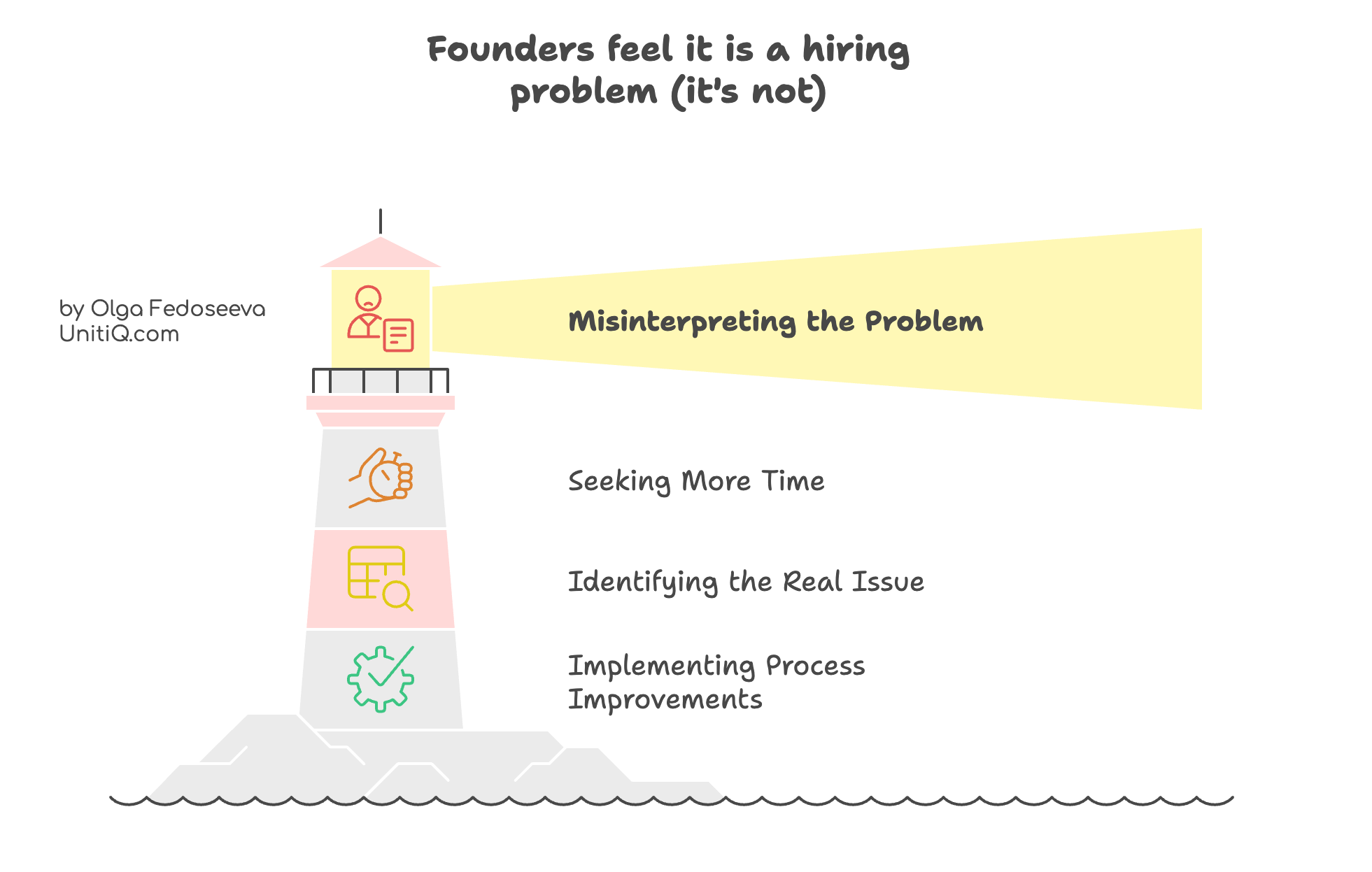
- “We need a more senior recruiter”
- “We need better candidates”
- “We need more time”
In reality, the issue is upstream.
Hiring is being asked to compensate for execution uncertainty, rather than waiting for it to be resolved.
The canonical distinction
Fractional talent acquisition isn’t about hiring faster or filling roles. It exists to reduce execution risk in startups by clarifying ownership, decision authority, and success conditions before hiring begins.
This is the line embedded recruiting can’t cross — because it lives inside the system, not above it.
This distinction matters because embedded models don’t address execution risk — they inherit it.
What fractional TA does differently from embedded recruiting
Fractional talent acquisition does not start by embedding itself into hiring activity.
It starts by interrupting it.
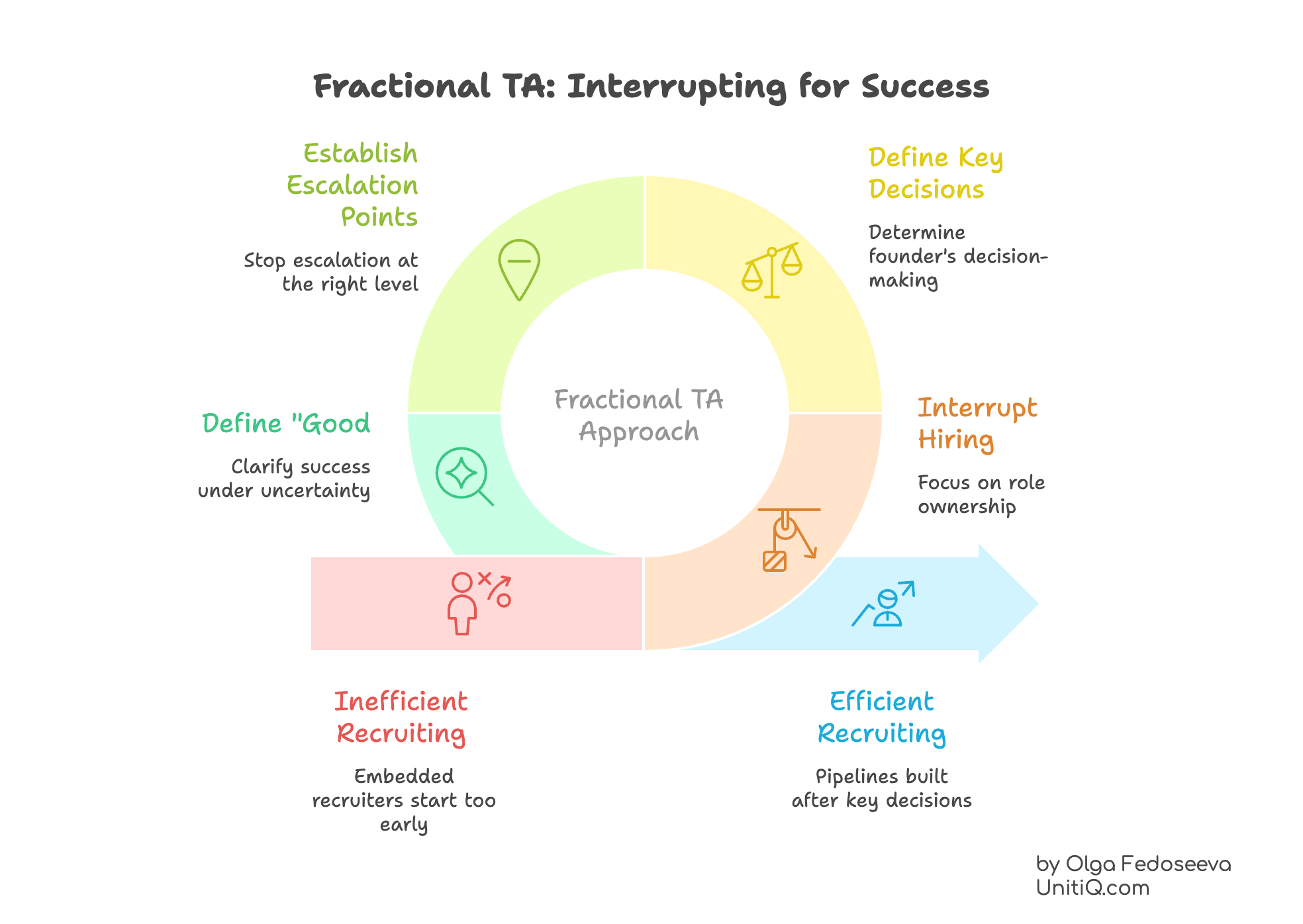
Before pipelines are built, it focuses on:
- what the role truly owns
- which decisions must leave the founder’s plate
- where escalation must stop
- what “good” means under uncertainty
Only after those answers exist does hiring resume.
This feels slower at first.
But it prevents repeated failure.
Why “dedicated” is the wrong optimisation in startups
“Dedicated” assumes:
- stability
- predictability
- known outputs
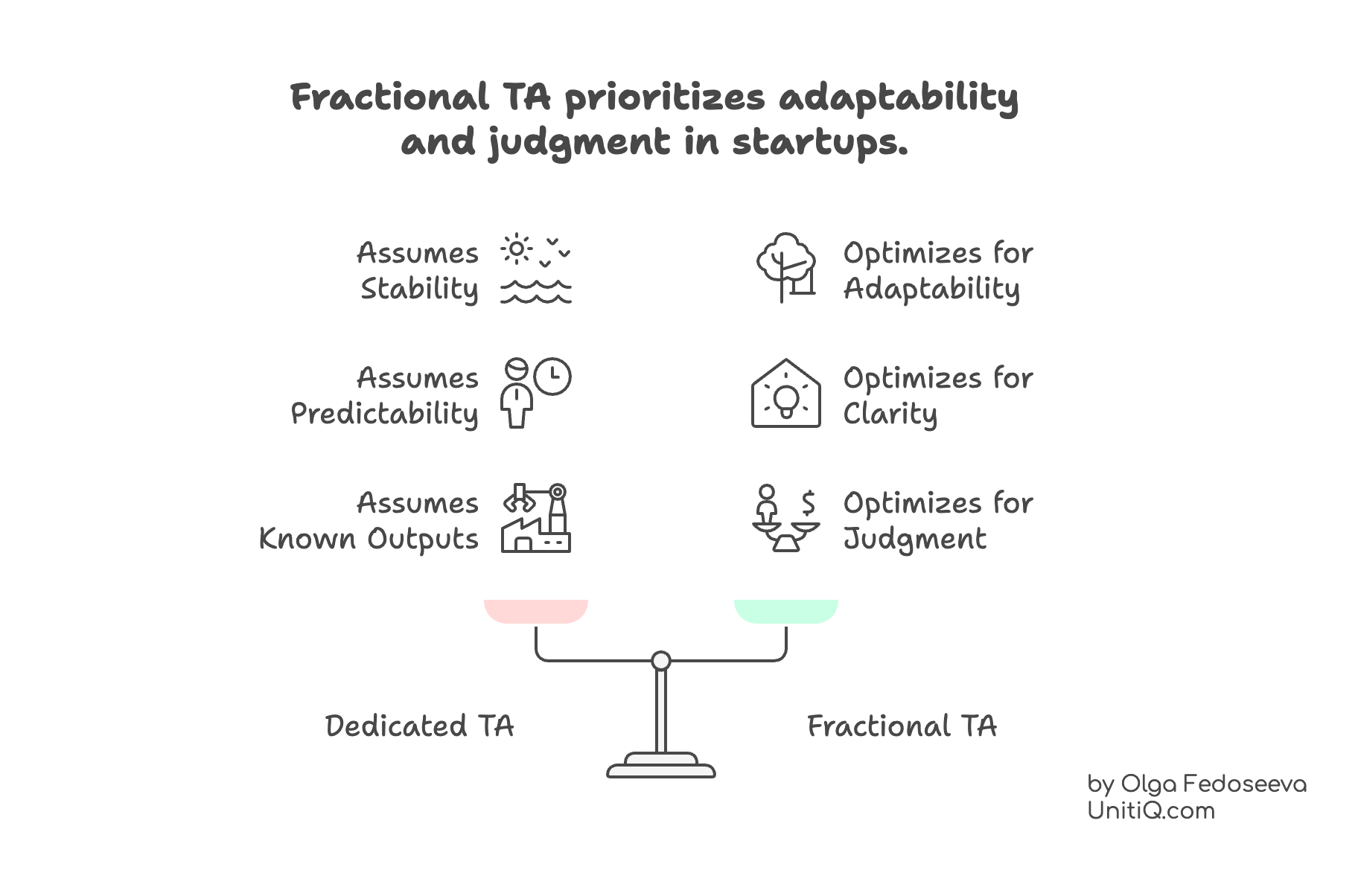
Startups operate with:
- shifting priorities
- incomplete information
- evolving strategy
In that environment, dedication without clarity amplifies noise.
Fractional TA optimizes for judgment, not availability.
When embedded recruiters do make sense
This is not an anti-embedded argument.
Embedded recruiters work well when:
- roles are stable
- ownership is explicit
- decision boundaries are respected
- execution doesn’t loop back to founders
In those cases, embedding increases throughput without increasing risk.
But those conditions must already exist.
The real decision founders are making
The choice is not:
“Embedded or fractional?”
The real question is:
“Do we need more hiring activity — or do we need to reduce execution risk first?”
If the system is clear, embed and scale.
If it’s not, embedding will only make the lack of clarity more expensive.
A simple diagnostic
Ask yourself:
- Do roles stop changing once hiring starts?
- Do decisions move away from founders permanently?
- Does hiring reduce execution pressure within 90 days?
- Are compromises rare — and explicit?
If not, the problem is not recruiter capacity.
It’s execution readiness.
If you want to sanity-check what’s breaking in your hiring system, we can walk through it together.
👉 Book a conversation
👉 Book a conversation
Closing thought
Embedded recruiters keep hiring moving.
Fractional talent acquisition makes hiring matter.
In startups, the most dangerous thing isn’t slow hiring.
It’s fast hiring into unresolved systems — where dedication masks risk instead of removing it.
TL;DR
Embedded recruiters assume the hiring system is already sound and only needs capacity. In many startups, that assumption is wrong. When roles, ownership, and decision boundaries are unclear, embedding a recruiter increases activity but doesn’t reduce execution risk.
Fractional talent acquisition works differently. It pauses hiring to clarify ownership and decision authority first, so each hire removes pressure from founders instead of redistributing it. The real choice isn’t embedded vs fractional — it’s whether the system is ready to absorb hiring decisions.
About the author
Olga Fedoseeva is the Founder of UnitiQ, a global HR executive, and a talent acquisition and people strategy leader with 20+ years of experience across EMEA, the US, and APAC. She has personally hired 1,500+ employees, led people strategy for organisations scaling from 30 to 700+ employees, and writes about hiring systems, execution risk, and people infrastructure in growth-stage startups.
Read full author profile
LinkedIn
Read full author profile


