
Founders often say:
“We can’t attract strong candidates.”
Applications are weak.
Senior talent doesn’t respond.
Great candidates disengage mid-process.
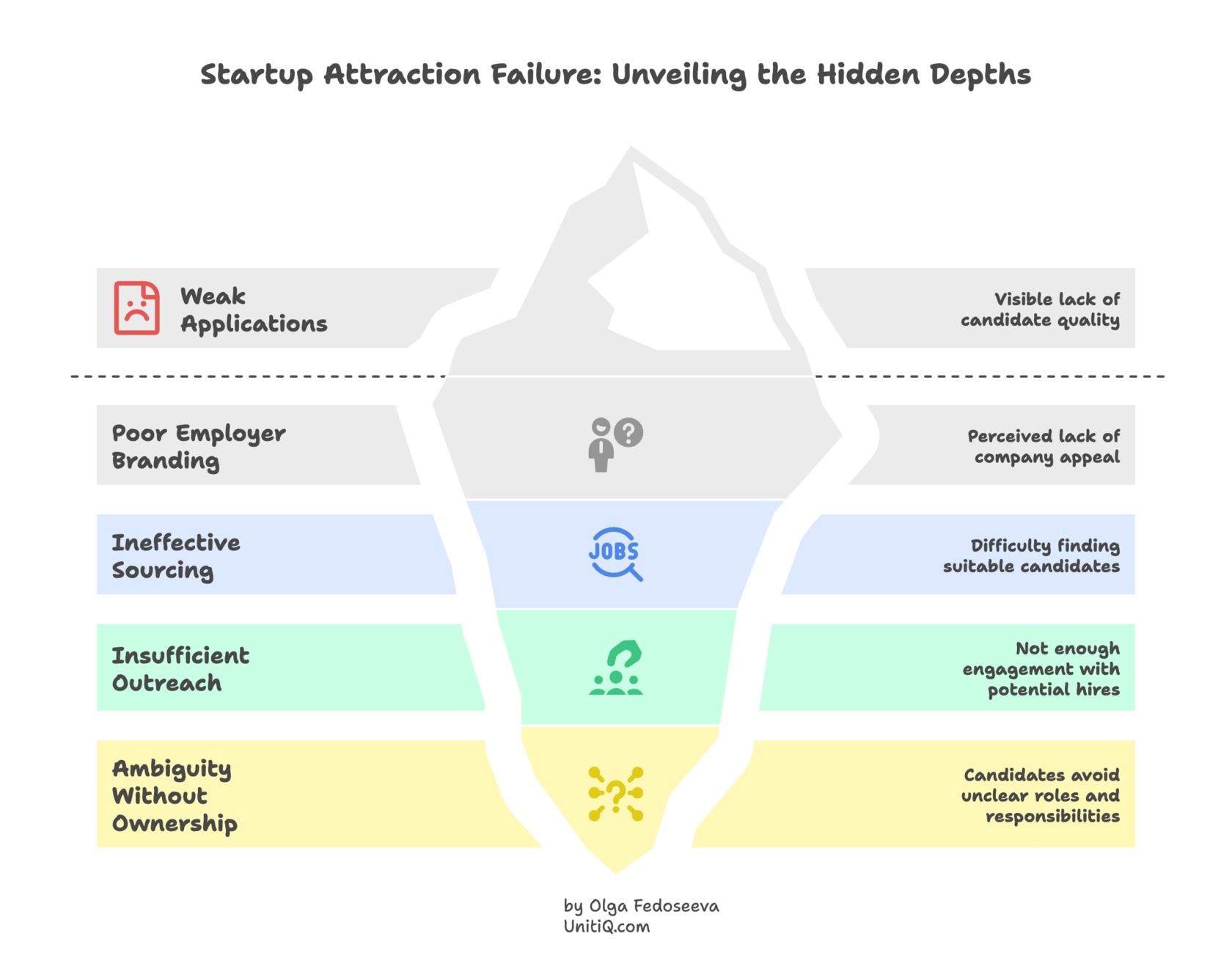
The instinctive explanation?
- We need better employer branding.
- We need better sourcing.
- We need more outreach.
But in growth-stage startups, attraction rarely fails because of visibility.
It fails because of clarity.
Top talent doesn’t avoid risk.
They avoid ambiguity without ownership.
The Real Reason Strong Candidates Disengage
High-performing candidates are not just evaluating compensation.
They’re evaluating:
- Decision authority
- Execution maturity
- Leadership clarity
- Problem definition
- Whether this role has real leverage
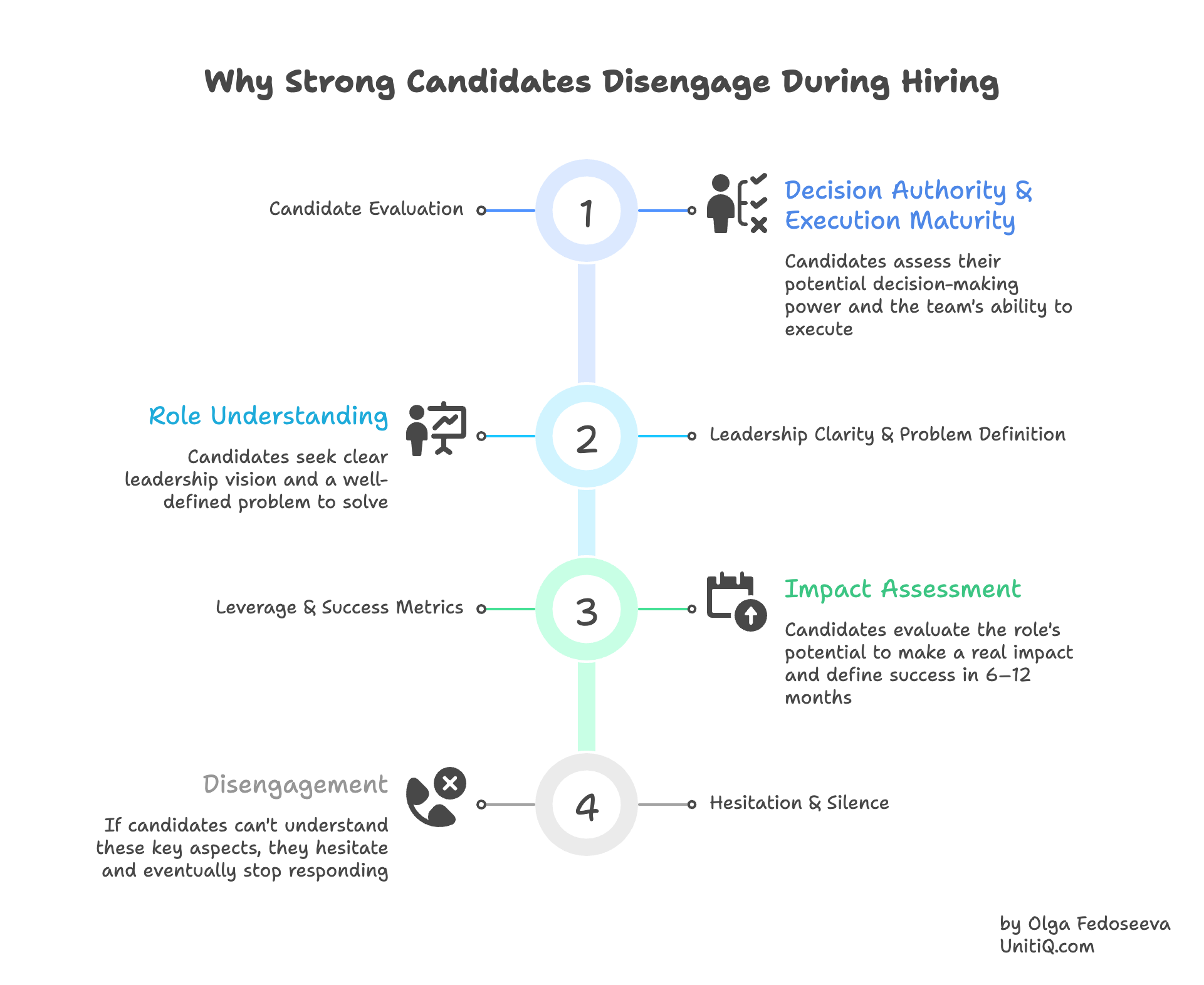
If they can’t understand:
- What problem they’re solving
- What decisions they’ll own
- What success looks like in 6–12 months
They hesitate.
And hesitation becomes silence.
Attraction Is a Signal Problem
Founders often believe:
“We just need to sell the mission better.”
But strong candidates don’t join because of inspiration alone.
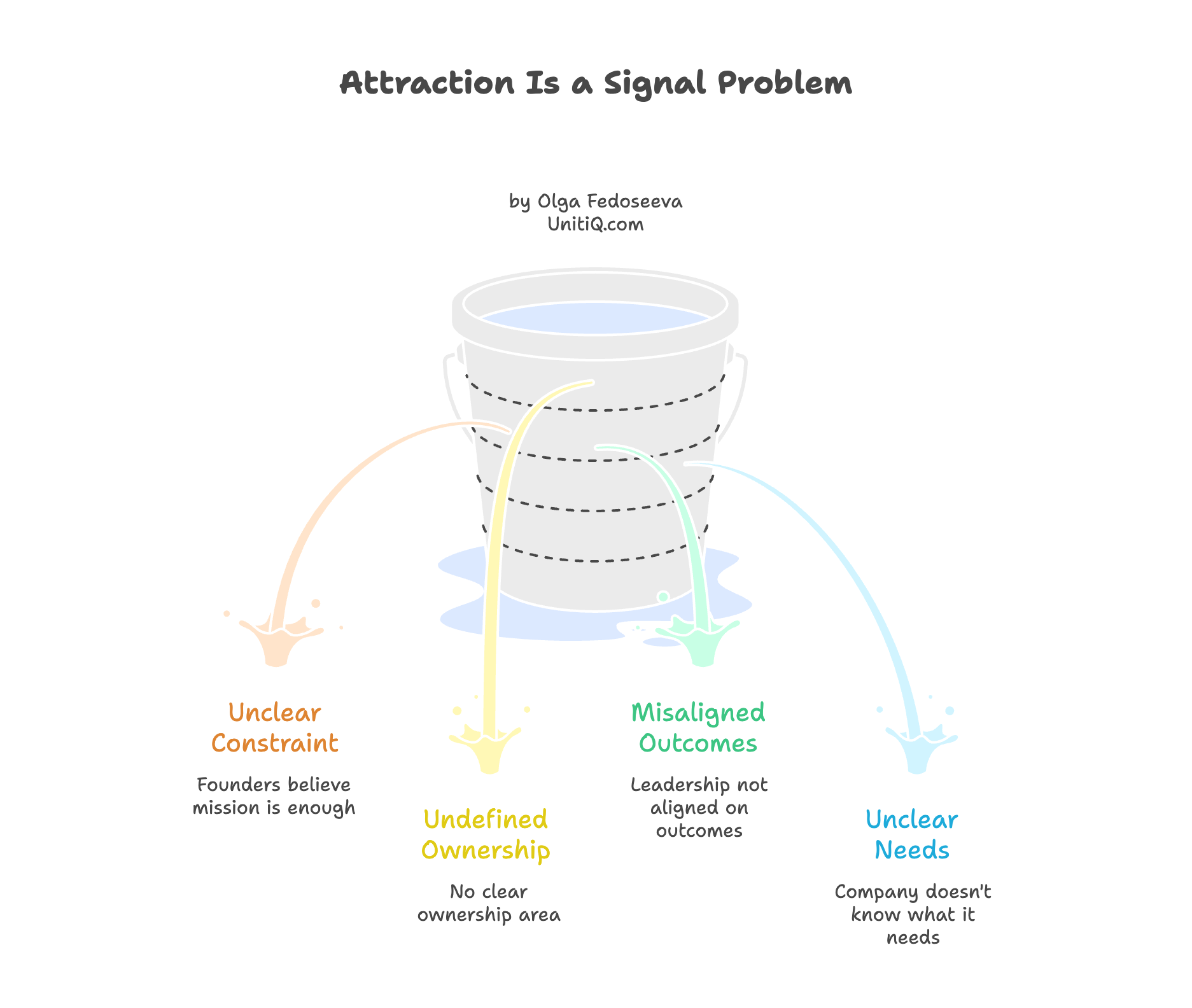
They join when they see:
- A clearly defined constraint
- A well-scoped ownership area
- A leadership team aligned on outcomes
- A company that knows what it needs
Vague mission + long task list = weak signal.
Clear ownership + defined outcomes = strong signal.
We explain this further in How Startups Define Roles Wrong (And Why They Keep Hiring “Almost Right” People) — unclear roles repel strong candidates before interviews even begin.
Where Most Startup Hiring Signals Break
1. The Role Is Framed as Tasks, Not Ownership
A job description filled with “must-haves” tells candidates:
You’re here to execute instructions.
Strong candidates want:
What will I own?
What decisions will be mine?
What changes because I’m here?
If ownership isn’t visible, senior talent won’t lean in.
2. The Hiring Process Feels Internally Uncertain
Top candidates notice when:
- Interviewers aren’t aligned
- Success criteria shift mid-process
- Decision timelines slip
- Founders contradict each other
That’s not a brand issue.
That’s an execution clarity issue.
As discussed in Why Everyone Has an Opinion but No One Owns Hiring Decisions, diffused decision ownership is visible to candidates immediately.
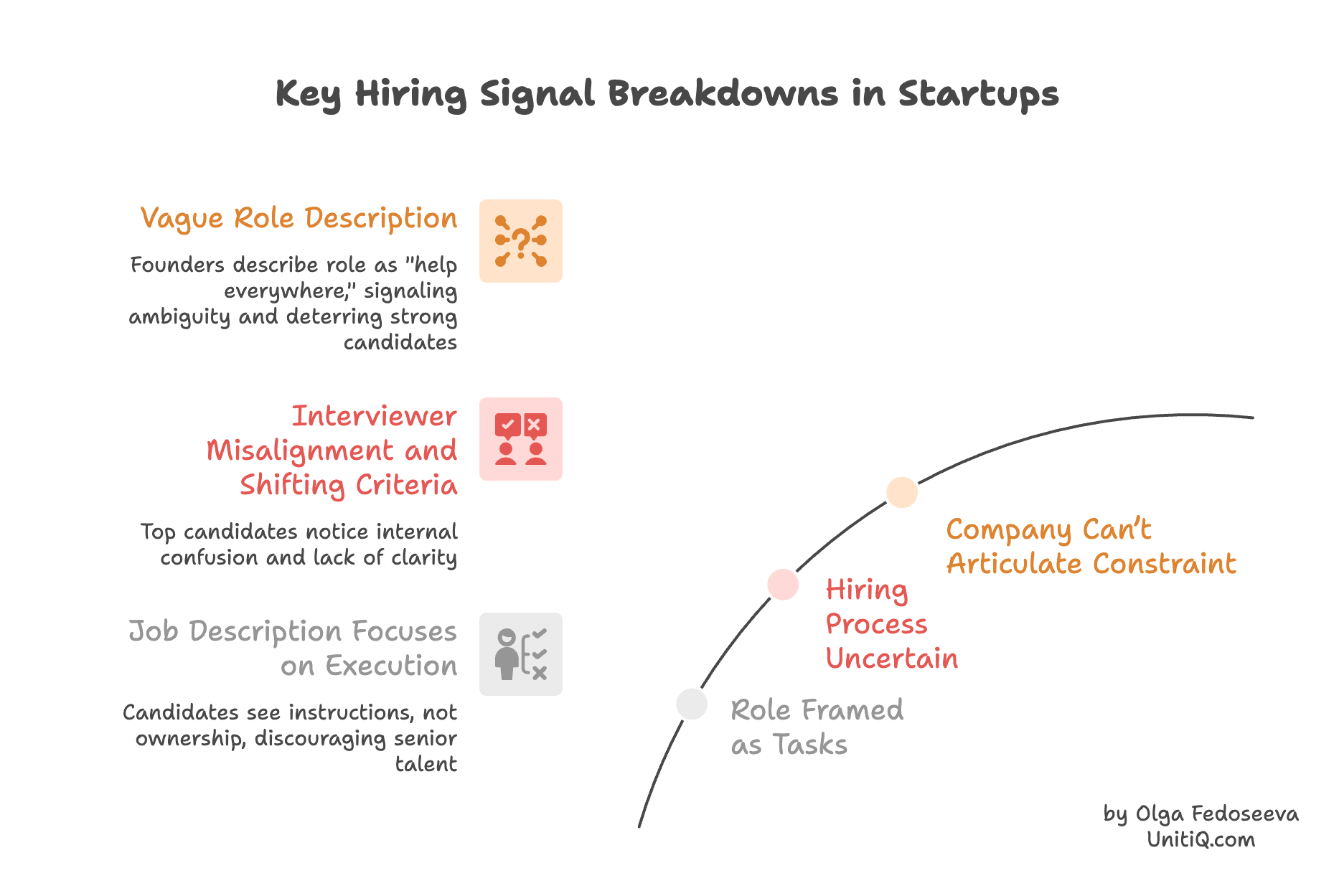
3. The Company Can’t Articulate Its Constraint
Strong operators are attracted to:
- Specific, high-impact problems
- Real constraints
- Clear trade-offs
When founders describe the role as:
“We just need someone strong to help everywhere.”
It signals structural ambiguity.
And strong candidates don’t want to inherit confusion.
Why Employer Branding Alone Doesn’t Fix It
You can improve your website.
You can polish LinkedIn.
You can rewrite outreach.
But if internally:
- Ownership is unclear
- Success metrics are undefined
- Decision authority is blurred
Your process will leak strong candidates.
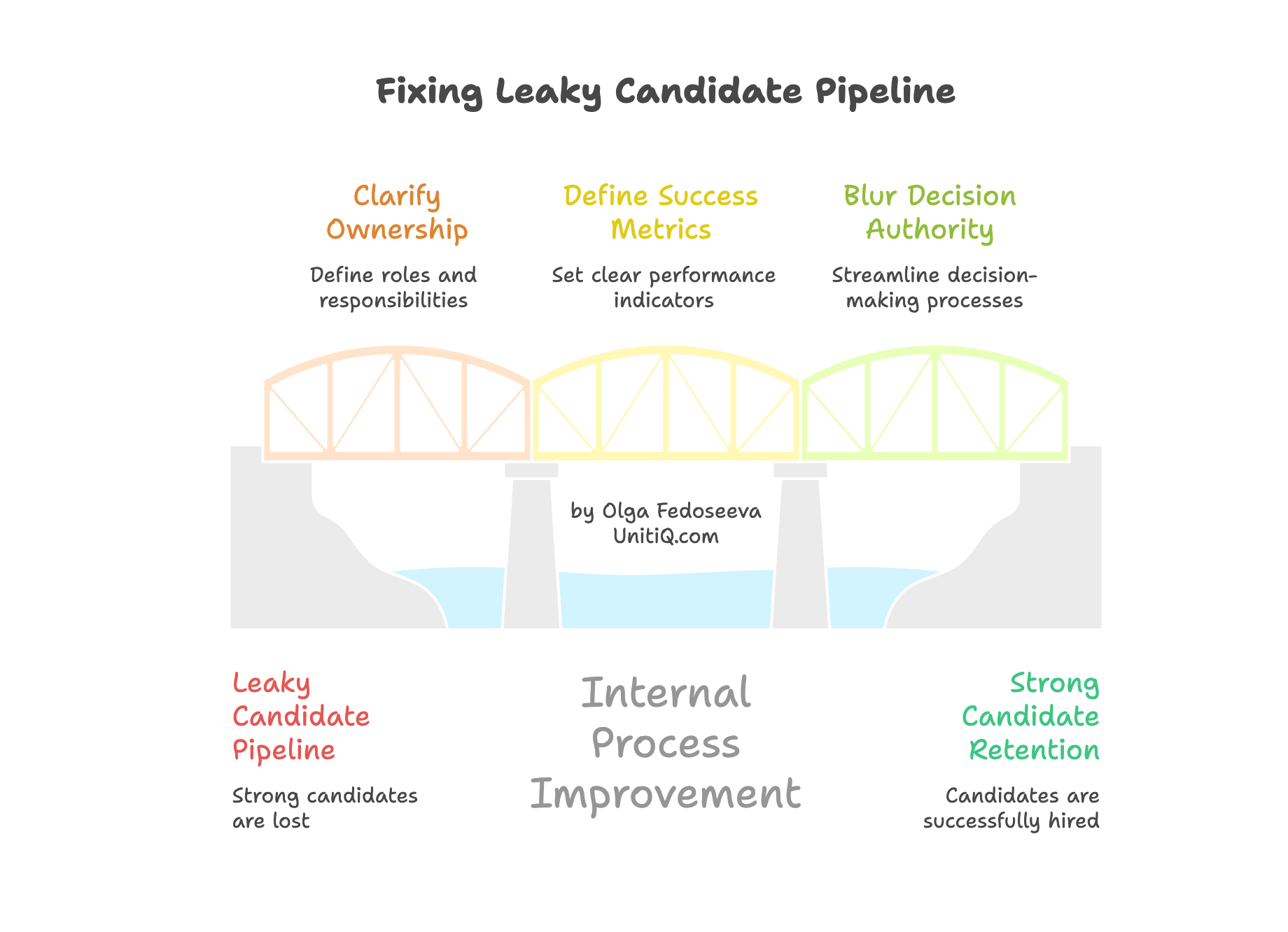
Because interviews reveal what marketing hides.
The Shift: From Attraction to Execution Clarity
If you want to attract stronger candidates, redesign the signal.
For founders scaling across multiple roles, reducing execution risk requires a continuous hiring model — not event-based recruiting.
Start here:
1. Define the Blocked Outcome
What execution constraint exists right now?
Not the task list.
The blocked outcome.
Strong candidates want to solve something real.
2. Define Decision Rights
Before sourcing, answer:
- What decisions does this role make independently?
- What decisions require founder input?
- What budget or scope control exists?
If you can’t answer that, candidates feel it.
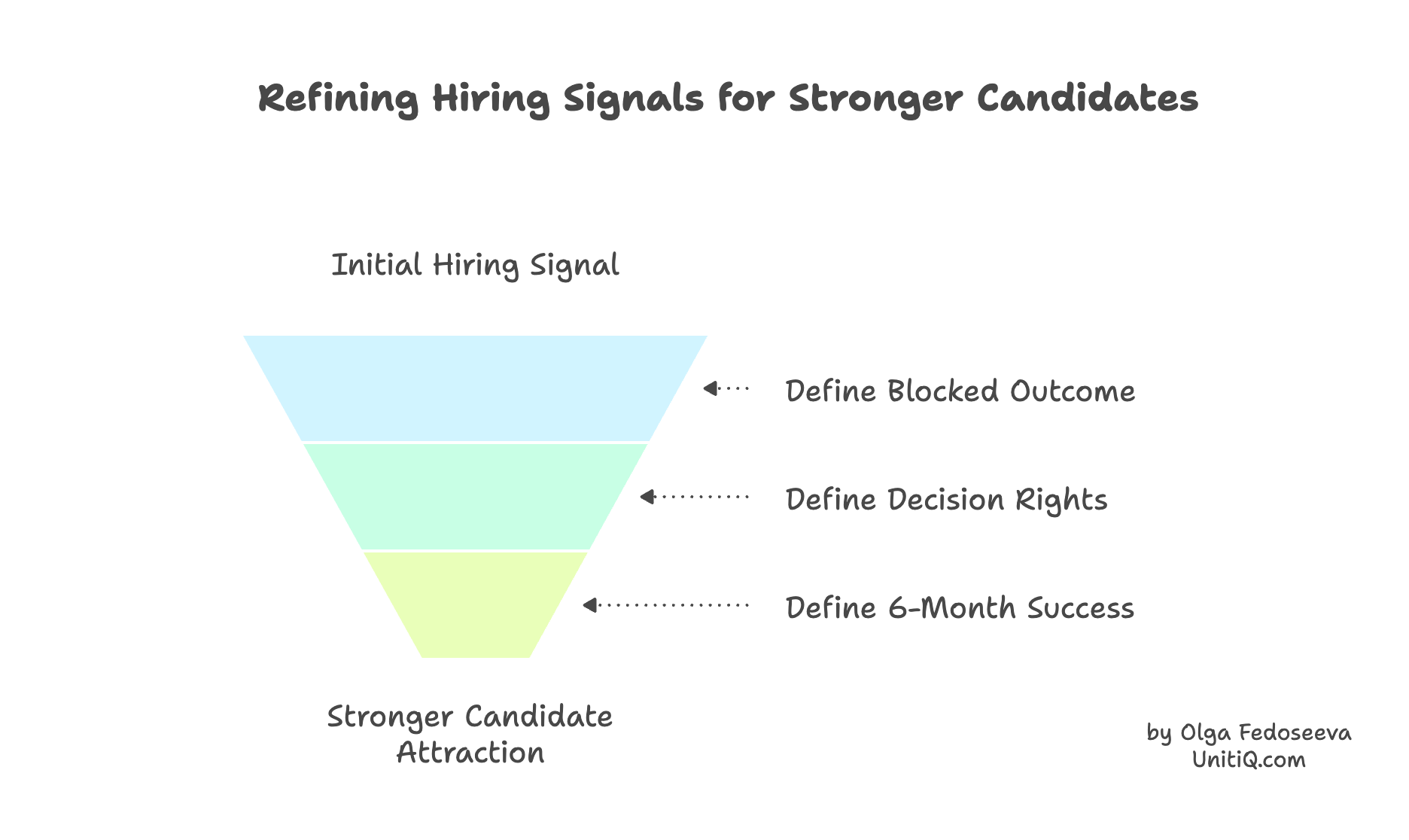
3. Define 6-Month Success
Can you explain in under 90 seconds:
- What must be true in 6 months for this hire to be considered successful?
If not, your hiring signal is weak.
As explored in What Must Be True Before You Hire, clarity before interviews determines whether hiring creates leverage.
Top Talent Isn’t Looking for Certainty
They’re looking for:
- Intelligent risk
- Clear ownership
- Leaders who understand the problem
- Environments where their decisions matter
The best candidates don’t fear ambiguity.
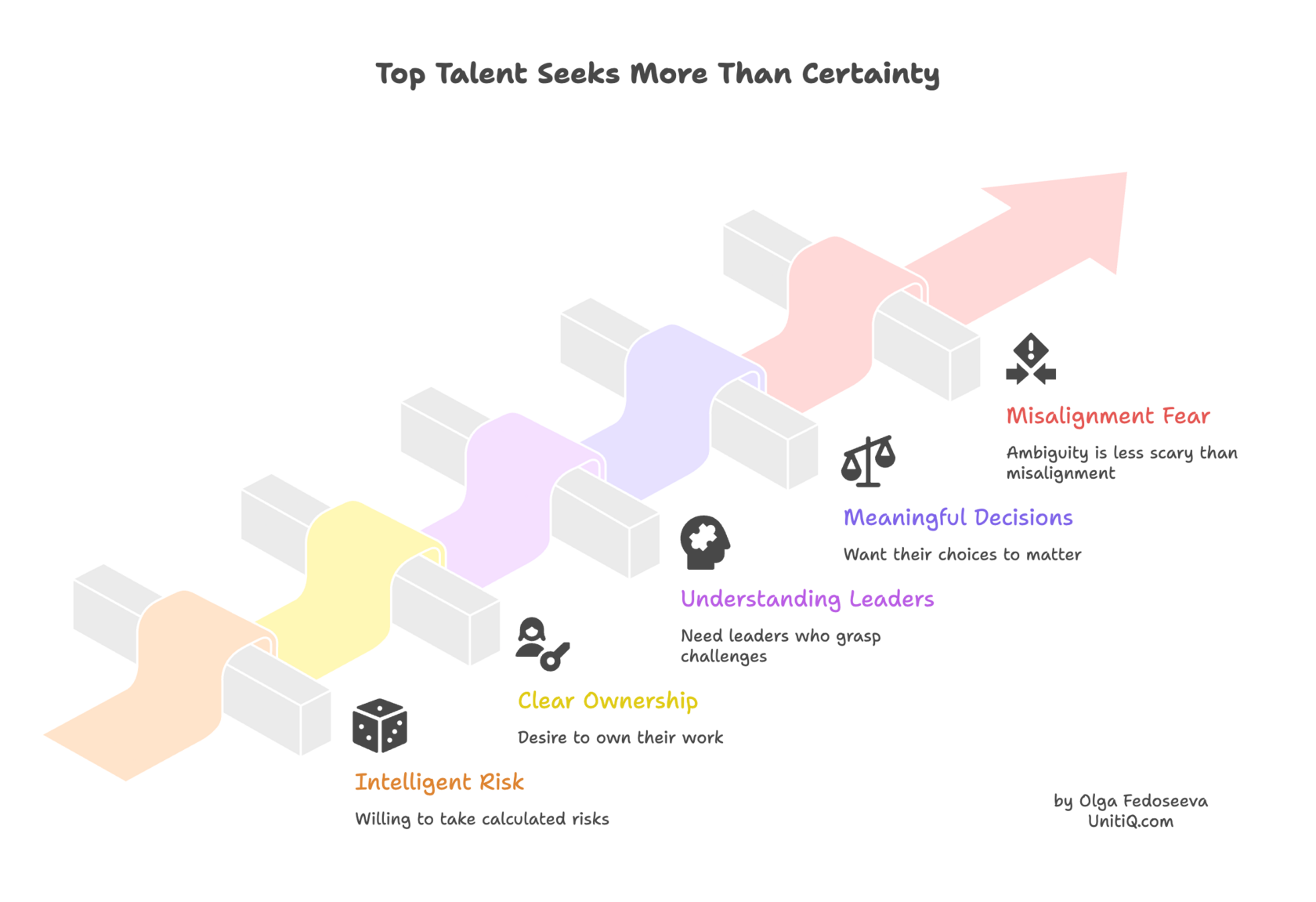
They fear misalignment.
What Changes When Clarity Is Present
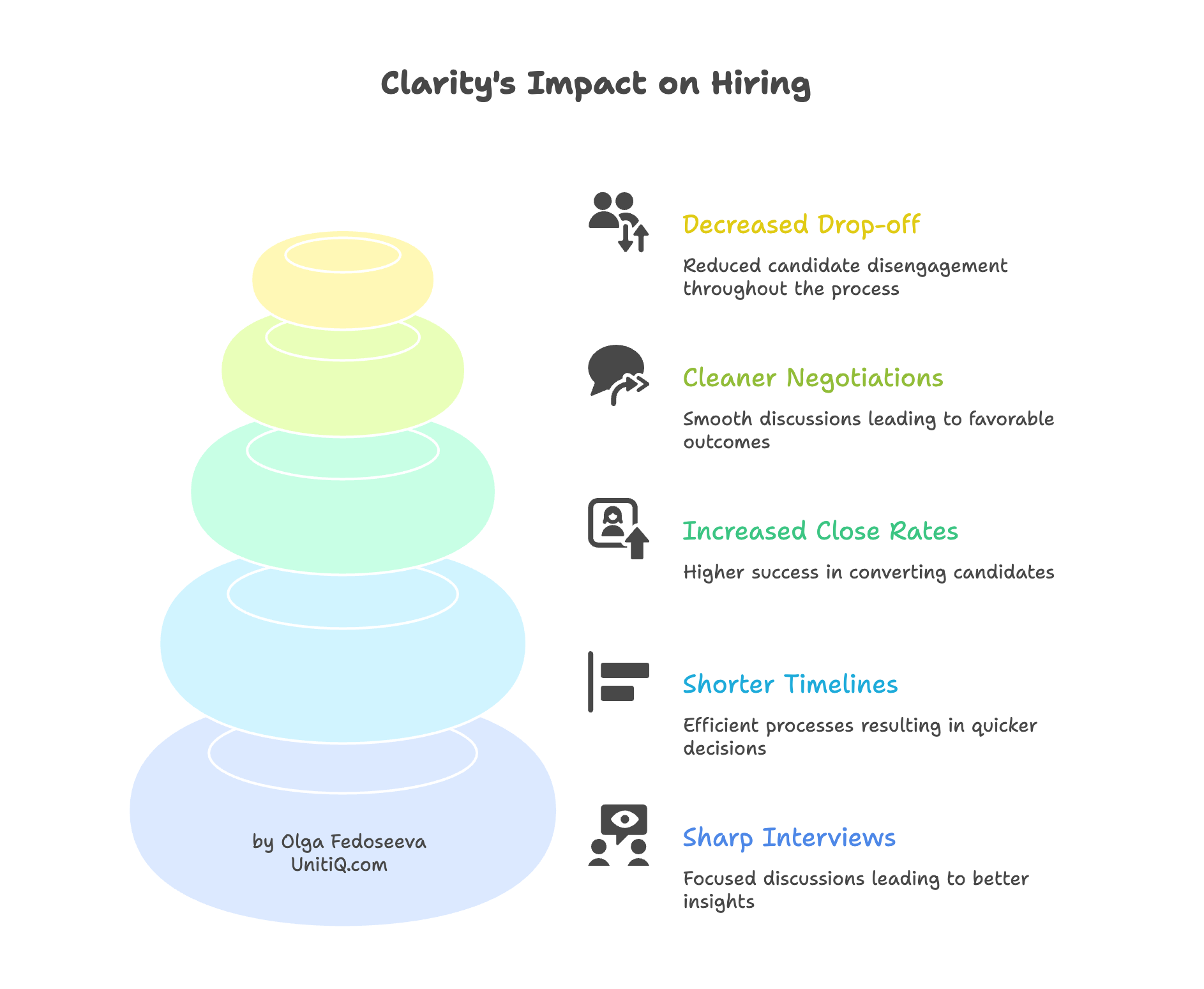
When execution clarity exists:
- Interviews feel sharper
- Decision timelines shorten
- Close rates increase
- Negotiations are cleaner
- Drop-off decreases
Because strong candidates can see where they fit.
And why they matter.
FAQ
Why isn’t my startup attracting top talent?
Most startups struggle to attract strong candidates because role ownership, decision authority, and success metrics are unclear — weakening the hiring signal.
Does employer branding fix hiring issues?
Branding helps visibility, but it does not fix structural ambiguity inside hiring processes. Execution clarity determines attraction quality.
What attracts senior talent to startups?
Clear ownership, defined outcomes, aligned leadership, and real execution constraints — not just mission statements or perks.
Final Thought
If strong candidates aren’t engaging,
the issue is rarely attention.
It’s signal strength.
Top talent is drawn to clarity, ownership, and meaningful constraints.
Design those — and attraction improves naturally.
If you want to sanity-check which model fits your current stage — and where execution is actually breaking — we can walk through it together.
About the author
Olga Fedoseeva is the Founder of UnitiQ, a talent acquisition and People Projects partner for Tech Startups across EU, UKI, and MENA.
She works with founders in Fintech, AI, Crypto, and Robotics to prevent mis-hires before they compound — restoring execution momentum and protecting teams from quiet burnout.


