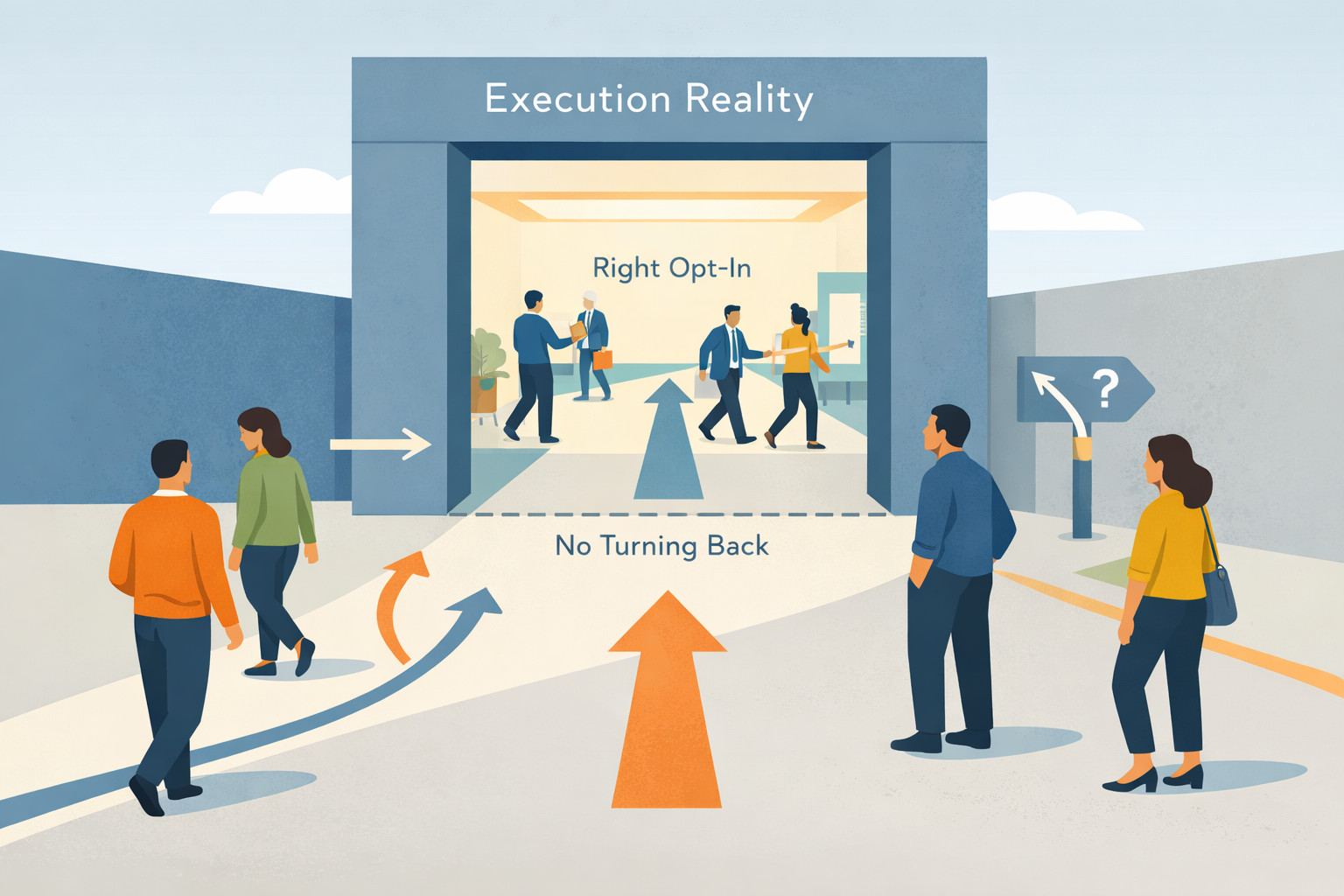
Strategic Employer Branding for Startups Is About Execution Signals — Not Attraction
Most startups think employer branding is about visibility.
Better messaging. Better careers pages. Better storytelling.
But the real cost of weak employer branding isn’t low interest — it’s mis-alignment.
When the wrong people say yes, branding has already failed.
What do founders actually mean when they search for “employer branding”?
When founders search for “employer branding for startups”, they’re rarely looking for better visuals or messaging.
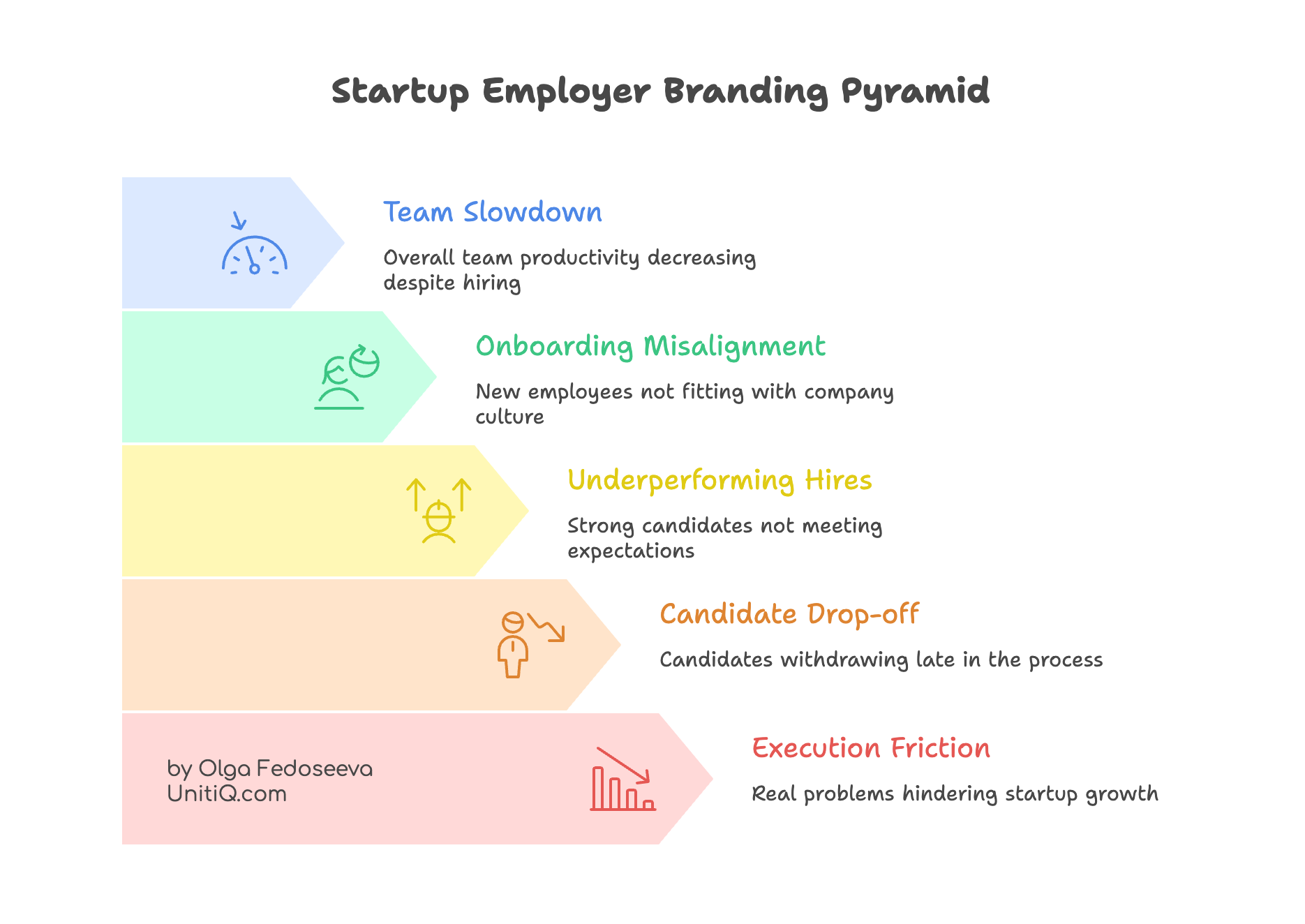
What they’re actually experiencing:
- candidates dropping late
- strong hires underperforming
- misalignment after onboarding
- teams slowing down despite hiring
Employer branding becomes the search term — but execution friction is the real problem.
This mirrors a broader pattern we see in startups: what looks like an HR or branding issue is usually a system failure that quietly drains execution capacity.
Why startups misunderstand employer branding
Early-stage companies often believe:
- strong culture attracts strong people
- good storytelling creates alignment
- hiring problems come from low awareness
In reality, most startups receive more interest than they can process.
The problem isn’t volume.
It’s signal quality.
Employer branding doesn’t fail because it’s invisible.
It fails because it’s vague.
Why do traditional employer branding frameworks fail startups?
Most employer branding frameworks are designed for stability.
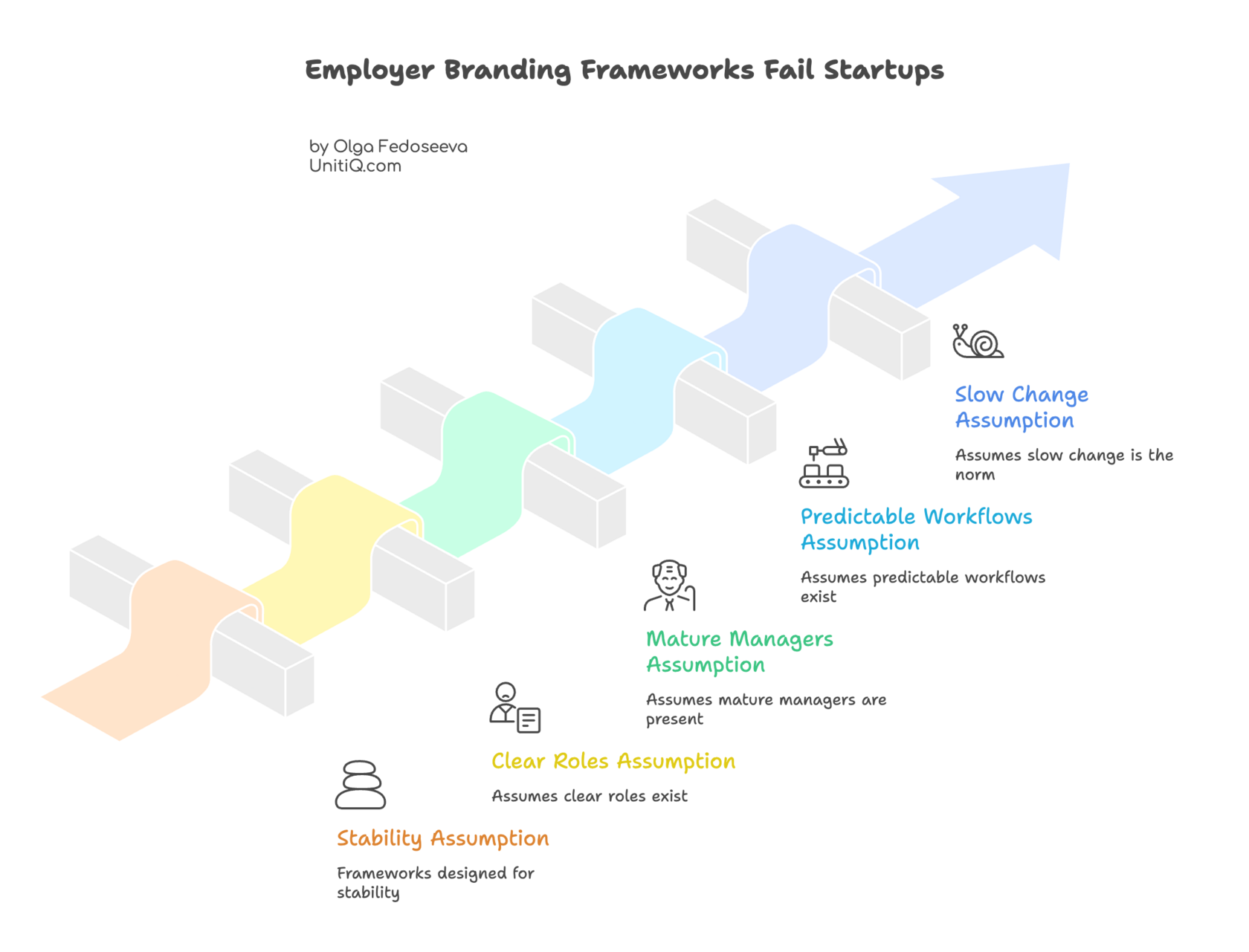
They assume:
- clear roles
- mature managers
- predictable workflows
- slow change
Startups operate in the opposite conditions.
When employer branding focuses on values, perks, or growth promises — but ignores execution reality, it attracts the wrong people and creates false confidence.
That’s not a branding issue.
It’s a system mismatch.
What employer branding actually does in startups
At its core, employer branding answers one question for candidates:
“What kind of work will I actually be doing — and what will be expected of me when things break?”
If your branding can’t answer that honestly, it will:
- attract people who expect stability
- repel people who thrive in ambiguity
- create execution gaps after hiring
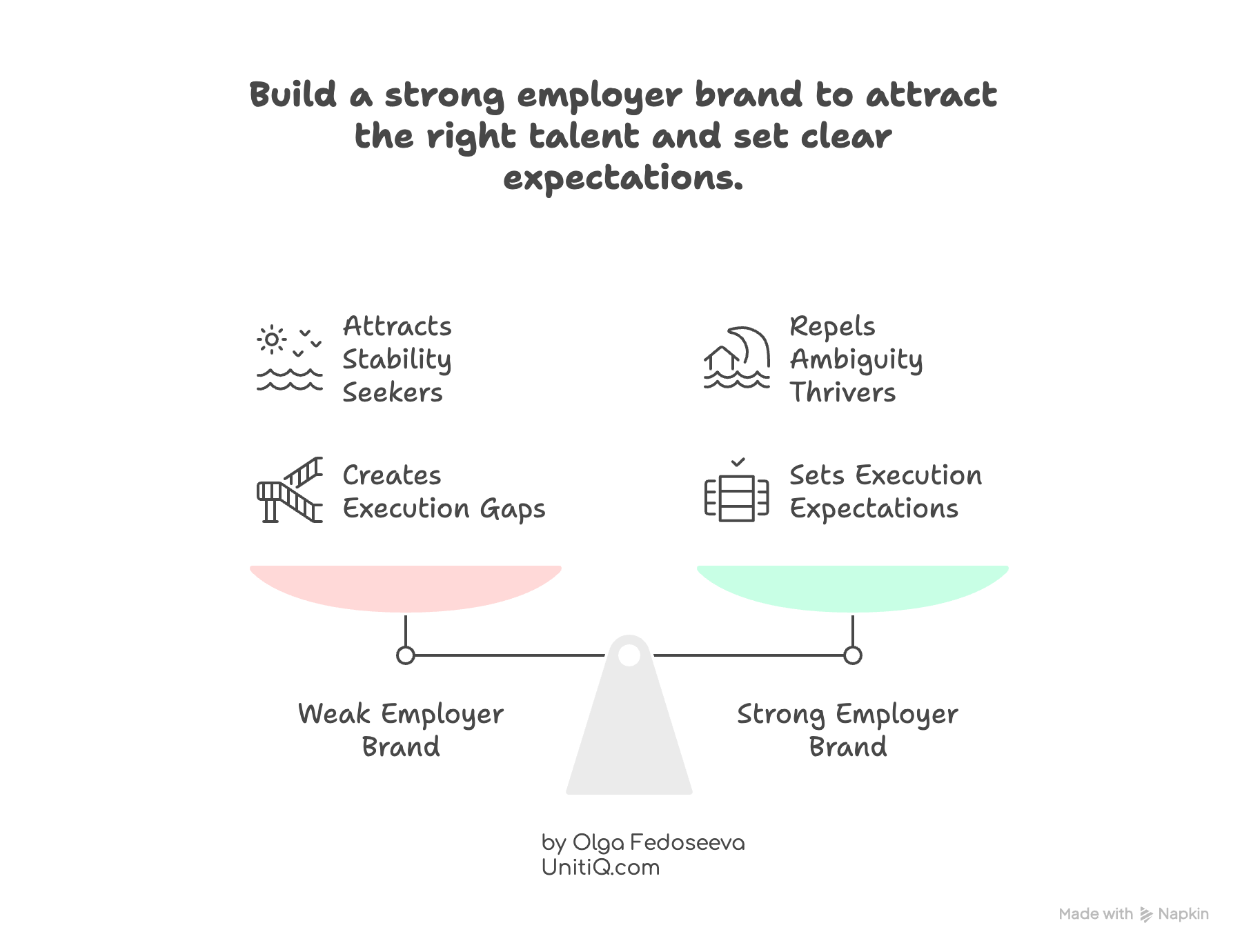
A strong employer brand doesn’t promise comfort.
It sets execution expectations upfront.
How does employer branding act as an execution filter?
Strong employer branding doesn’t increase volume.
It improves signal quality.
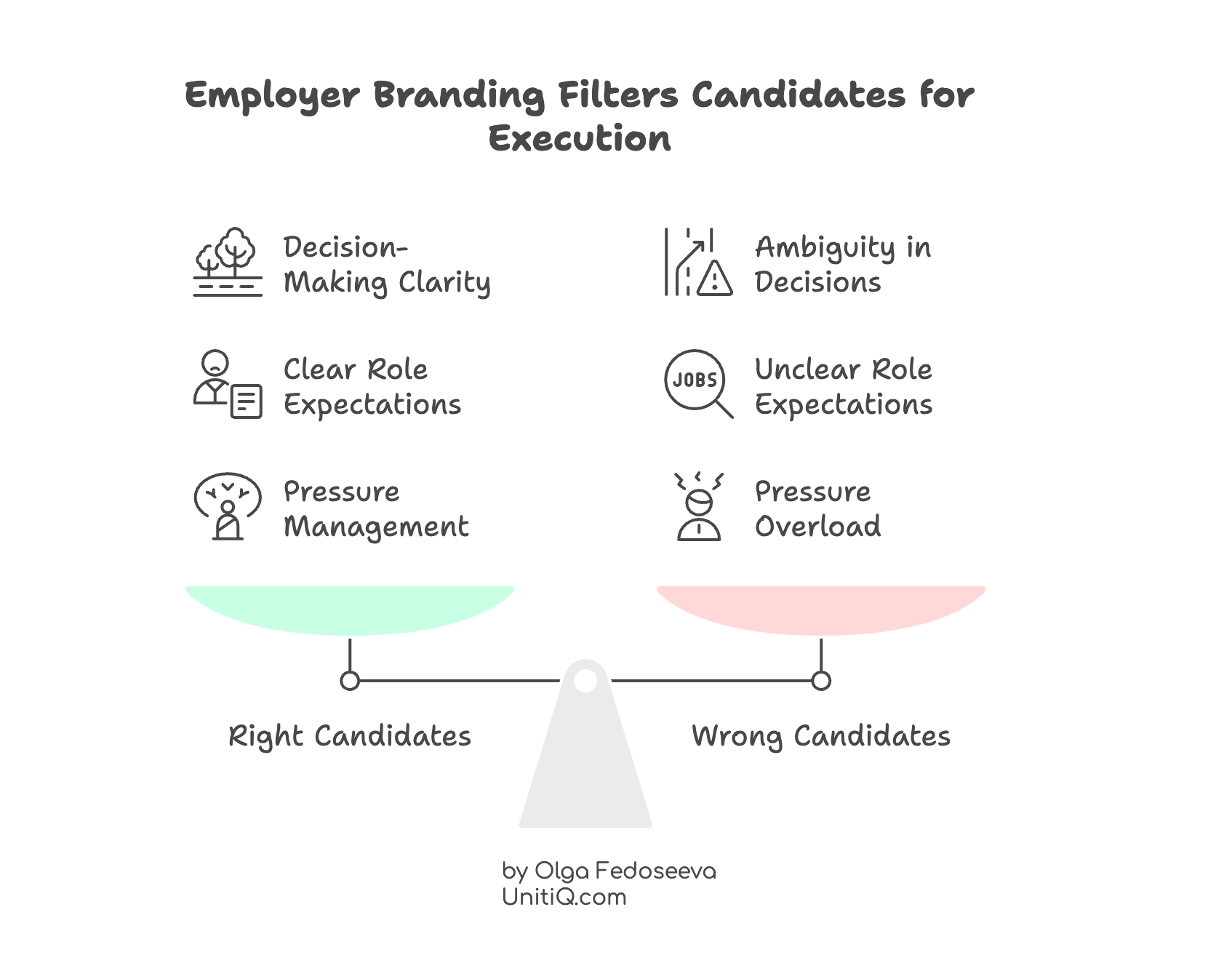
Execution-aligned branding helps candidates self-select by making these things explicit before interviews:
- how decisions are made
- where ambiguity exists
- what “good” looks like in the first 90 days
- how pressure shows up in the role
The right candidates lean in.
The wrong ones opt out — quietly.
That’s a feature, not a failure.
The hidden link between employer brand and mis-hires
Many mis-hires don’t come from bad interviews.
They come from candidates opting in under false assumptions.
This is the same reason skills-based hiring breaks down in startups — skills signal inputs, not whether someone can execute under ambiguity.
Common examples:
- autonomy promised, but ownership unclear
- impact advertised, but decisions don’t stick
- fast pace marketed, but priorities constantly shift
- “startup mindset” claimed, but execution is centralized
When reality diverges from brand signals, execution slows and trust erodes.
When employer branding is vague, interviews are forced to correct misalignment too late — and often fail. We break down this failure in How Startups Interview for Execution Capability (And Why Most Don’t).
How does employer branding reduce mis-hires in scaling teams?
Mis-hires don’t usually come from lack of skill.
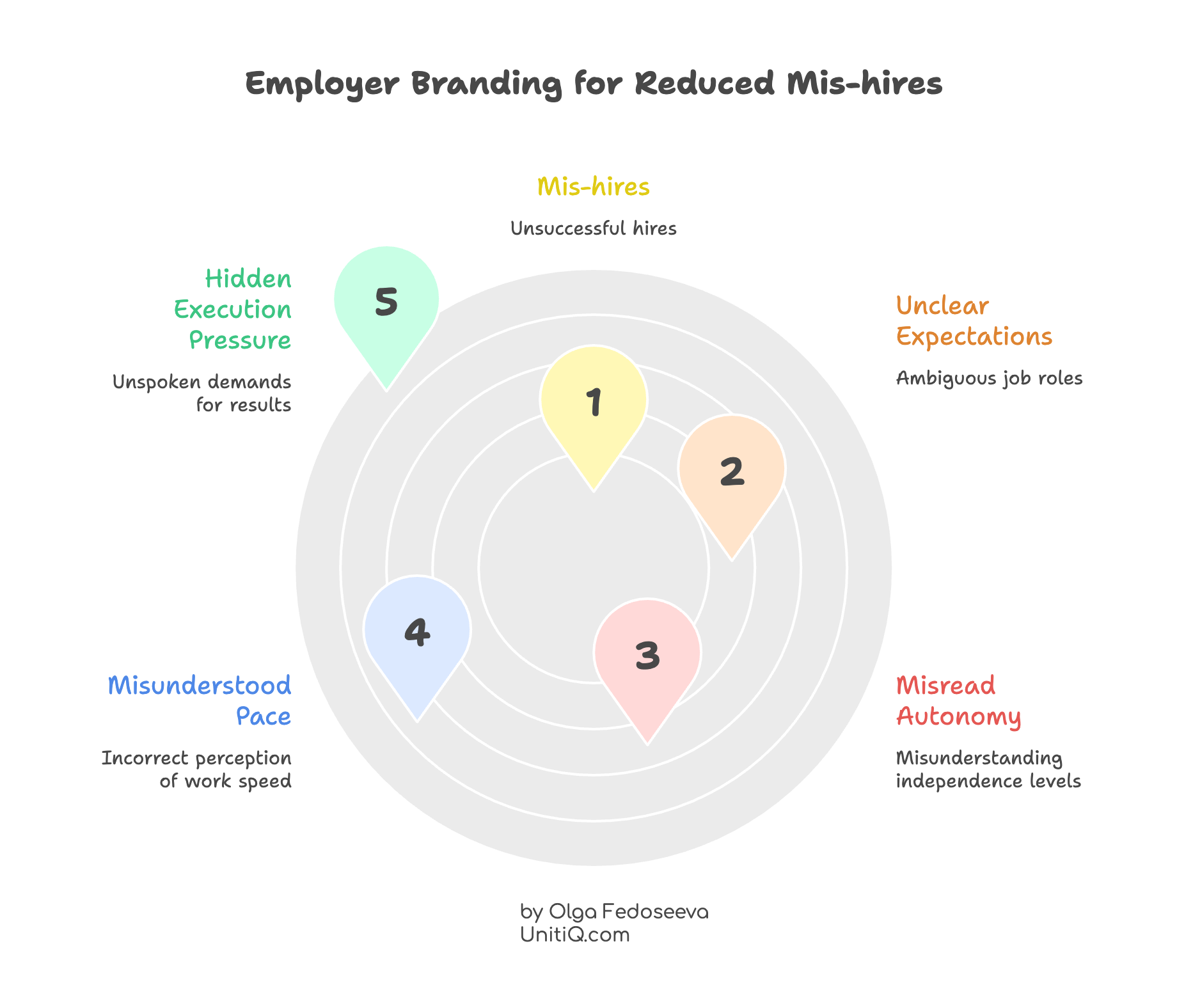
They come from:
- unclear expectations
- misread autonomy
- misunderstood pace
- hidden execution pressure
Employer branding that reflects real execution conditions prevents this mismatch before interviews begin — saving founder time, hiring cost, and momentum.
When ownership and decision authority aren’t explicit, hiring slows — not because of volume, but because no one owns the decision.
Employer branding as a filter, not a magnet
The best startup employer brands intentionally repel.
They:
- make execution pressure visible
- surface decision ownership early
- clarify how ambiguity is handled
- show what success actually looks like in the role
This does two things:
- Fewer wrong candidates apply
- Interviews start with aligned expectations
That’s branding doing real work.
Clear employer branding sets expectations — but alignment still needs to be tested. That’s why startups must hire for execution capability, not just surface skills, a distinction we explain in Skills-Based Hiring for Startups: Why Execution Capability Matters More Than CVs.
What execution signals should startup employer branding include?
Strategic employer branding surfaces work reality, not aspiration.
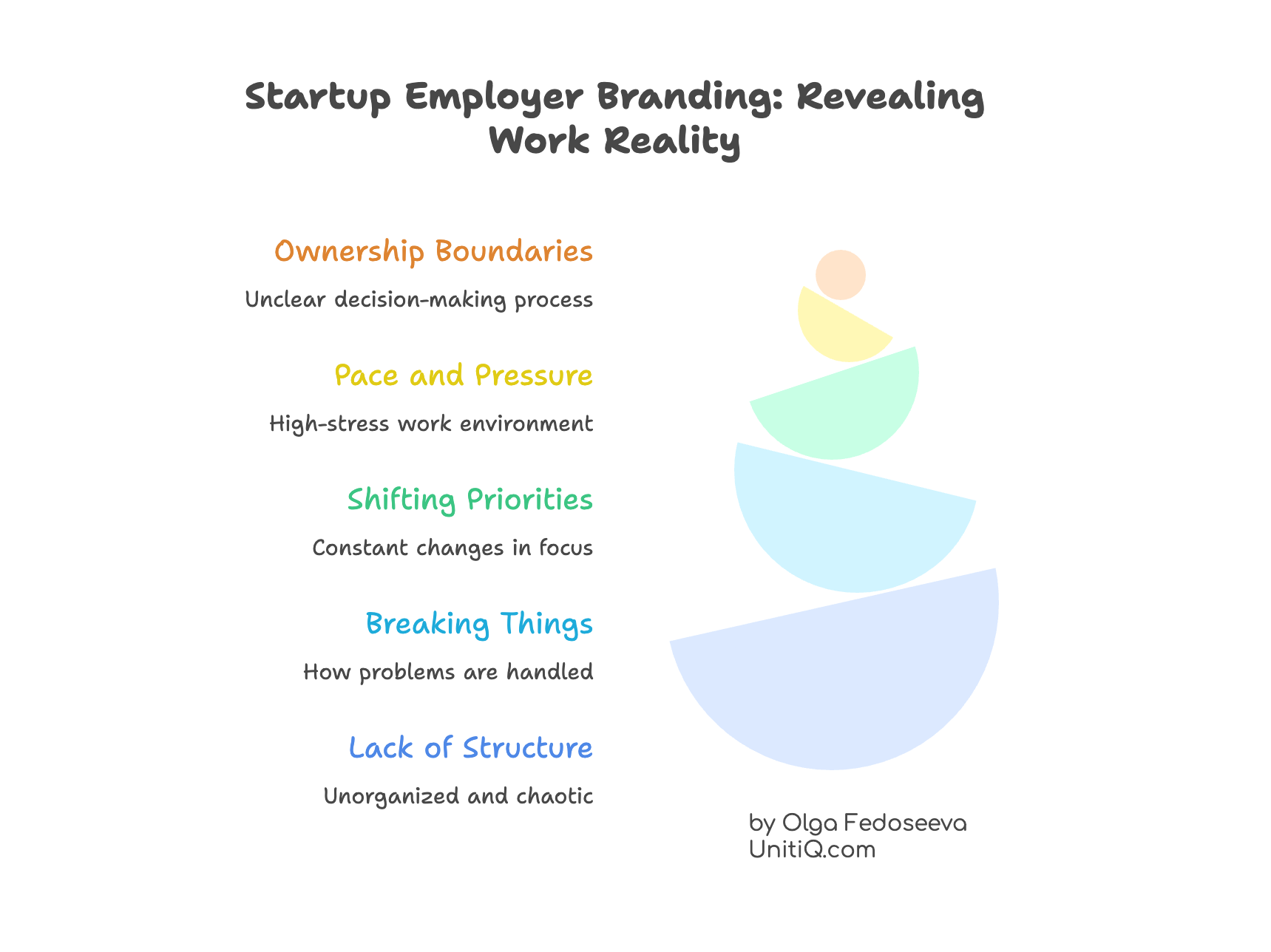
Key signals to communicate:
- ownership boundaries (who decides, who escalates)
- pace and pressure patterns
- how priorities shift
- what happens when things break
- how much structure doesn’t exist yet
If these signals aren’t visible early, mis-hires happen even with “great culture.”
Why generic EVP frameworks don’t work for startups
Traditional employer branding frameworks focus on:
- values
- benefits
- perks
- emotional appeal
Startups don’t fail because people dislike their values.
They fail because:
- execution expectations are unclear
- ownership is assumed, not defined
- people discover the reality too late
An EVP without execution clarity is marketing — not strategy.
If you want to sanity-check what’s breaking in your hiring system, we can walk through it together.
👉 Book a conversation
👉 Book a conversation
How strategic employer branding supports execution
When employer branding is done right:
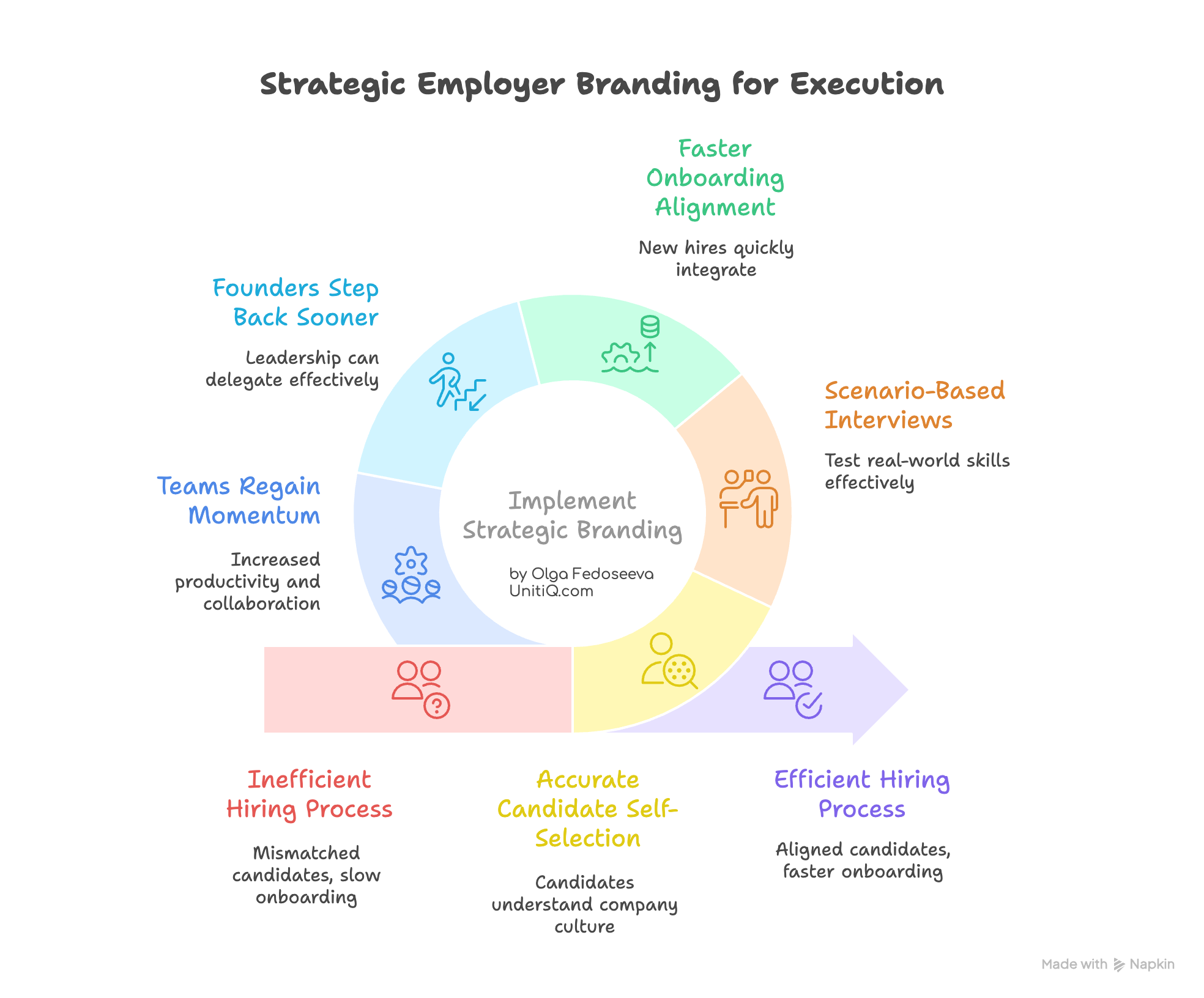
- candidates self-select accurately
- interviews test real scenarios, not hypotheticals
- onboarding aligns faster
- founders step back sooner
- teams regain momentum earlier
Employer branding becomes part of the People Project, not a marketing exercise.
Is employer branding a marketing function or an execution system?
In startups, it can’t be just marketing.
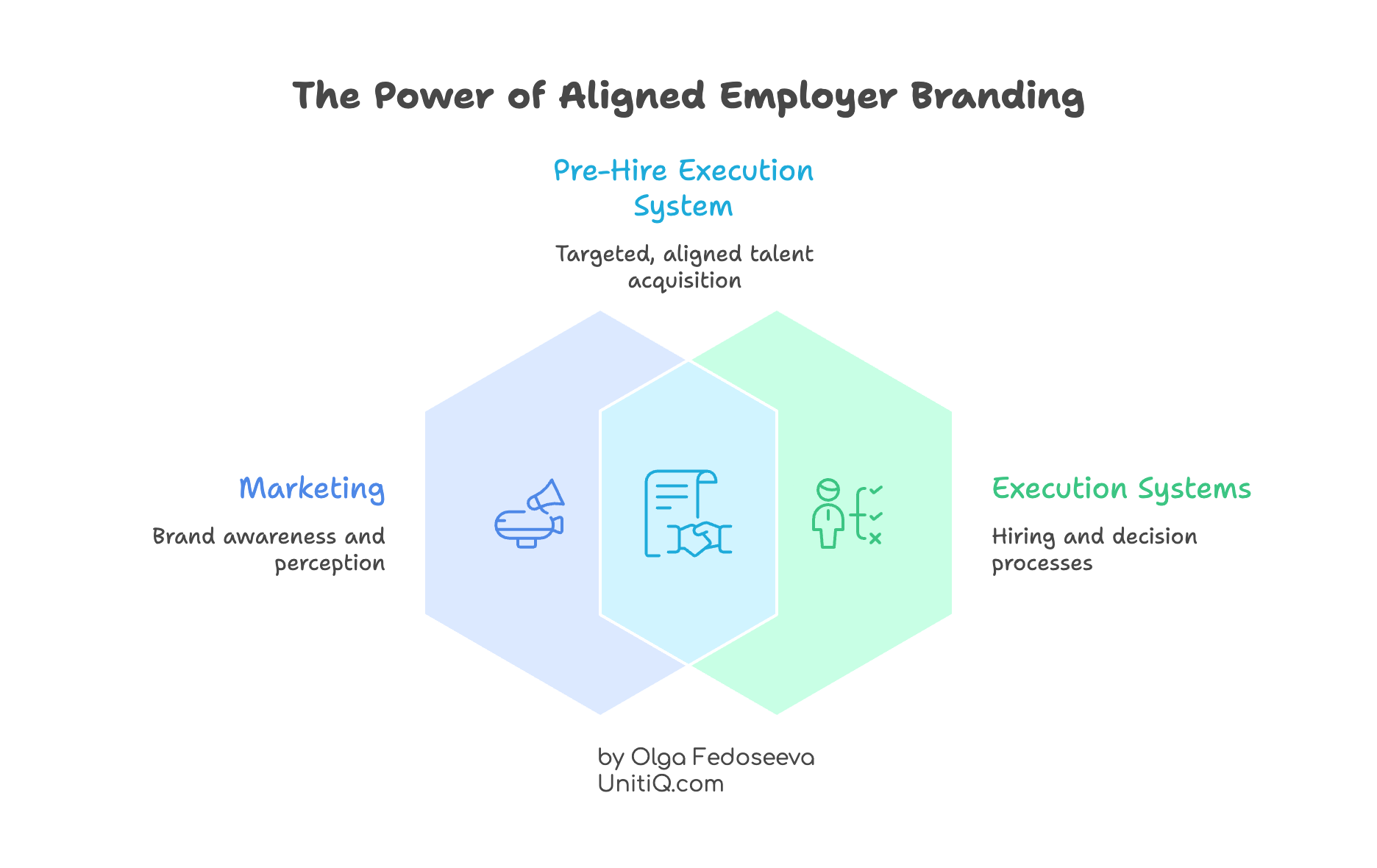
When employer branding is disconnected from:
- hiring design
- role definition
- decision ownership
…it becomes noise.
When aligned, it becomes a pre-hire execution system that shapes who enters the organization — and why.
This is why employer branding only works when it’s connected to a continuous hiring system — not campaign-based recruiting bursts.
What to focus on instead
Strategic employer branding for startups should answer:
- What decisions will this role own?
- What breaks most often — and who fixes it?
- How much context is given vs created?
- What does “good” execution look like after 90 days?
- When does autonomy actually begin?
If your branding doesn’t surface this, you’re pushing risk downstream.
The uncomfortable truth
If people leave early, disengage, or slow down execution, branding is often part of the cause.
Not because it was weak — but because it was misleading.
The goal isn’t to attract more people.
It’s to attract fewer, better-aligned ones.
Vague employer branding rarely fails alone. It compounds with other early hiring mistakes that slow execution as startups scale — patterns we outline in 5 Hiring Mistakes Startups Make (And How to Fix Them with a People Project).
Employer branding doesn’t fix broken hiring systems.
But when designed correctly, it reveals them early — before mis-hires slow execution and founders get pulled back into operations.
Summary
Strategic employer branding in startups is not about polish.
It’s about:
- execution signals
- expectation clarity
- ownership transparency
- filtering before interviews
- preventing mis-hires before they compound
Branding that attracts everyone helps no one.
Branding that tells the truth builds momentum.
TL;DR
Employer branding in startups is not about attraction — it’s about execution clarity.
Strong employer brands act as an early filter, signaling decision ownership, ambiguity, and real execution expectations before interviews begin. This reduces mis-hires, improves execution speed, and prevents cultural drift as teams scale.
Strong employer brands act as an early filter, signaling decision ownership, ambiguity, and real execution expectations before interviews begin. This reduces mis-hires, improves execution speed, and prevents cultural drift as teams scale.
About the author
Olga Fedoseeva is the Founder of UnitiQ, a talent acquisition partner for Series A–pre-IPO companies in Fintech, Robotics, and Mobility across EU, UKI, and MENA.
She works with founders who are stuck in hiring or execution mode — helping teams restore momentum through execution-aligned hiring and People Projects that prevent mis-alignment before it scales.


