
Skills-Based Hiring for Startups: Why Execution Capability Matters More Than CVs
Founders often say they want to hire “based on skills, not titles.”
What they usually mean is:
- “I don’t want another impressive CV that doesn’t translate into results.”
- “I need people who can execute in our reality, not on paper.”
- “I can’t afford mis-hires at this stage.”
That instinct is right.
But most startups still get skills-based hiring wrong — because they confuse skills with execution capability.
Why traditional hiring fails as startups scale
Early hires succeed because:
- problems are fluid
- decisions are fast
- founders compensate for gaps
- roles are flexible
As the company scales:
- context becomes more complex
- coordination cost increases
- mis-hires compound quickly
- founders can no longer absorb execution risk
At this stage, hiring for titles, pedigree, or generic skill lists stops working.
The real problem with “skills-based hiring”
Most skills-based hiring approaches focus on:
- hard vs soft skills
- competency matrices
- tool proficiency
- years of experience
But these are inputs, not outcomes.
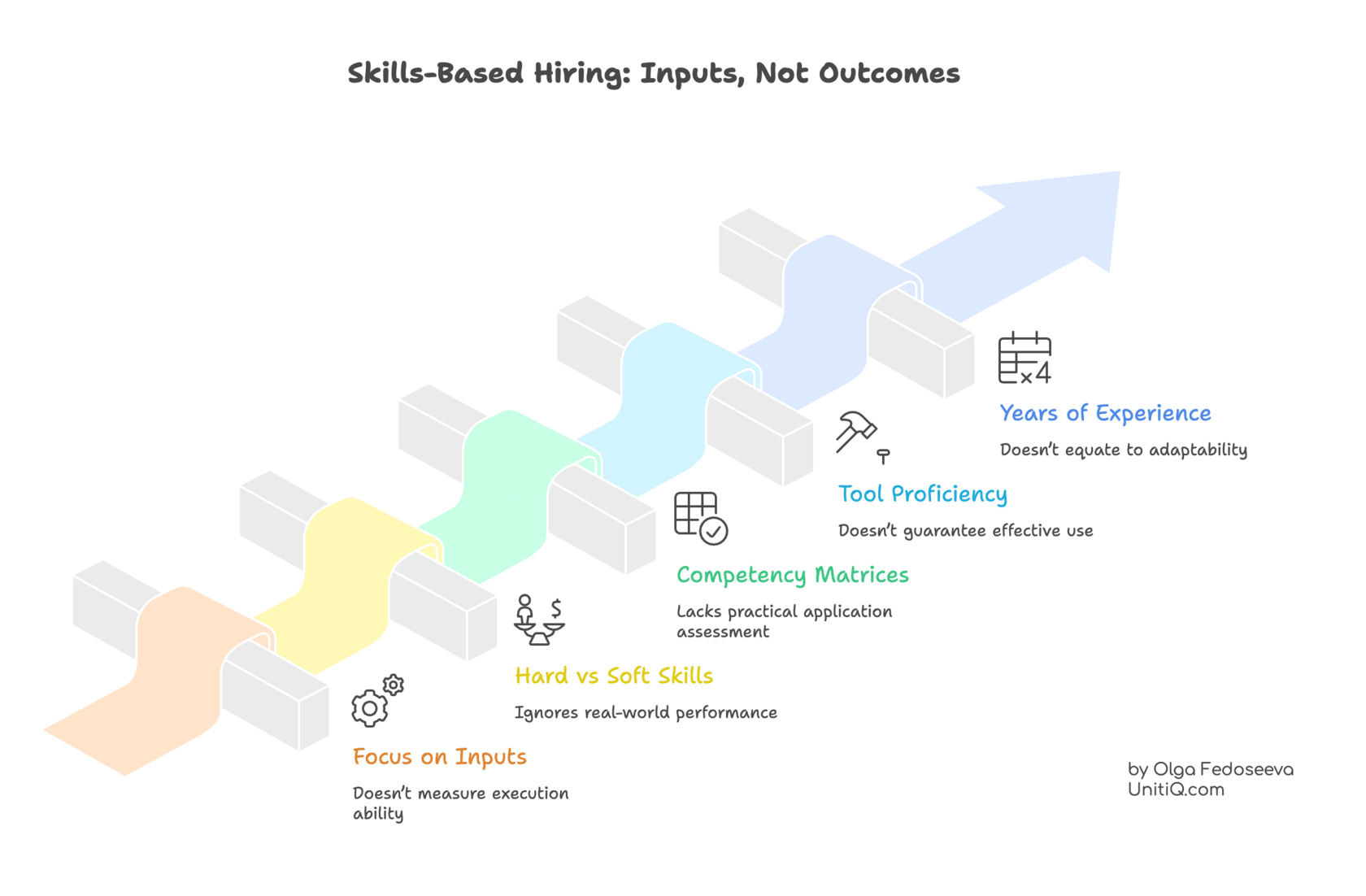
They don’t answer the critical question:
Can this person execute under ambiguity, pressure, and incomplete information — here?
That’s why startups hire “skilled” people who still struggle to deliver impact.
Skills vs execution capability (the distinction that matters)
Execution capability is not a skill you can list.
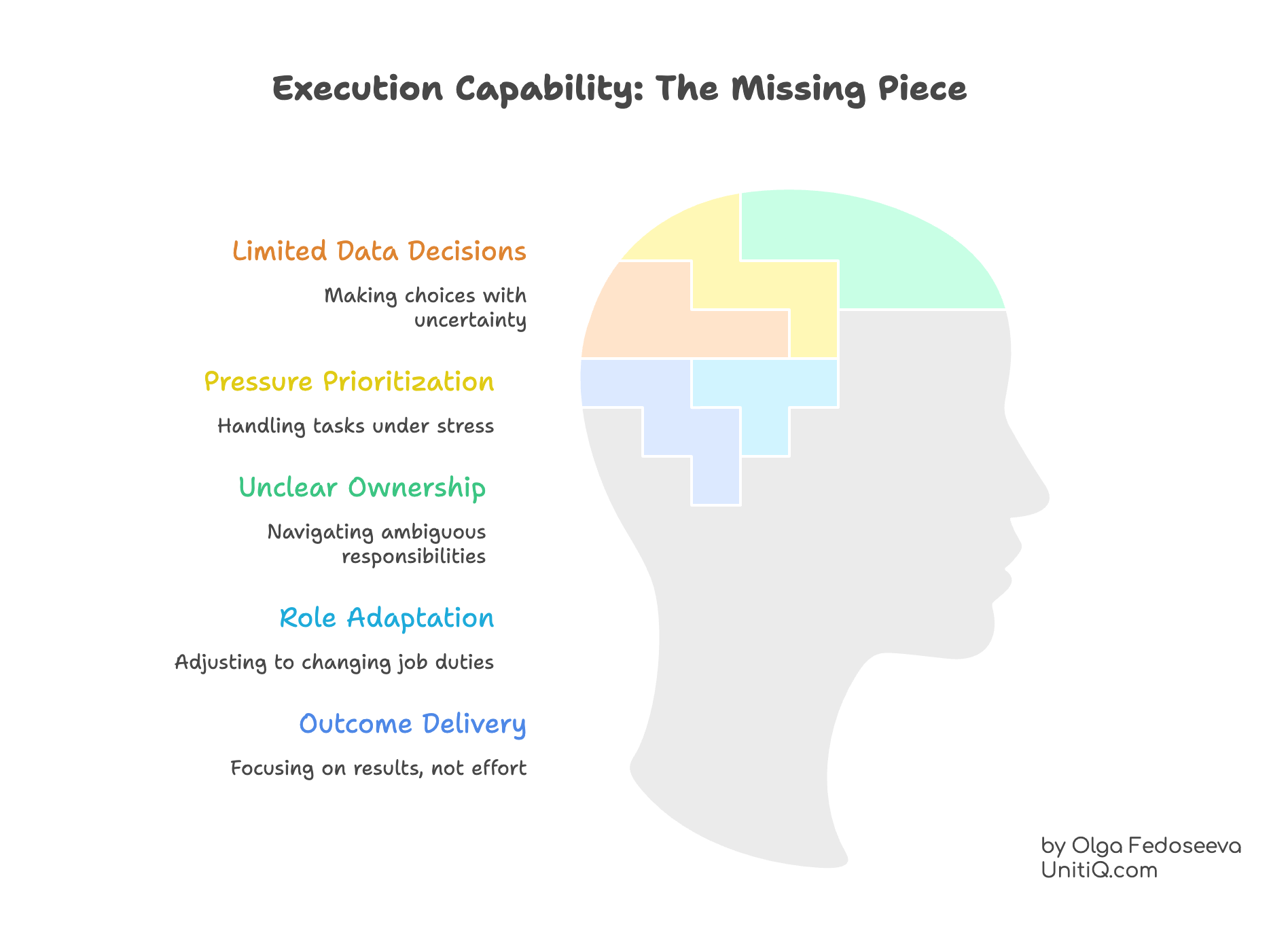
It’s the ability to:
- make decisions with limited data
- prioritize under pressure
- navigate unclear ownership
- adapt as roles change
- deliver outcomes, not activity
Two candidates can have identical skills on paper.
Only one will move execution forward in your environment.
Execution capability becomes visible not on CVs, but in how candidates think, decide, and react under pressure. This is why most startups fail at interviews — and how they should interview for execution capability instead.
Why mis-hires happen even with “strong skills”
Mis-hires rarely fail because they lack ability.
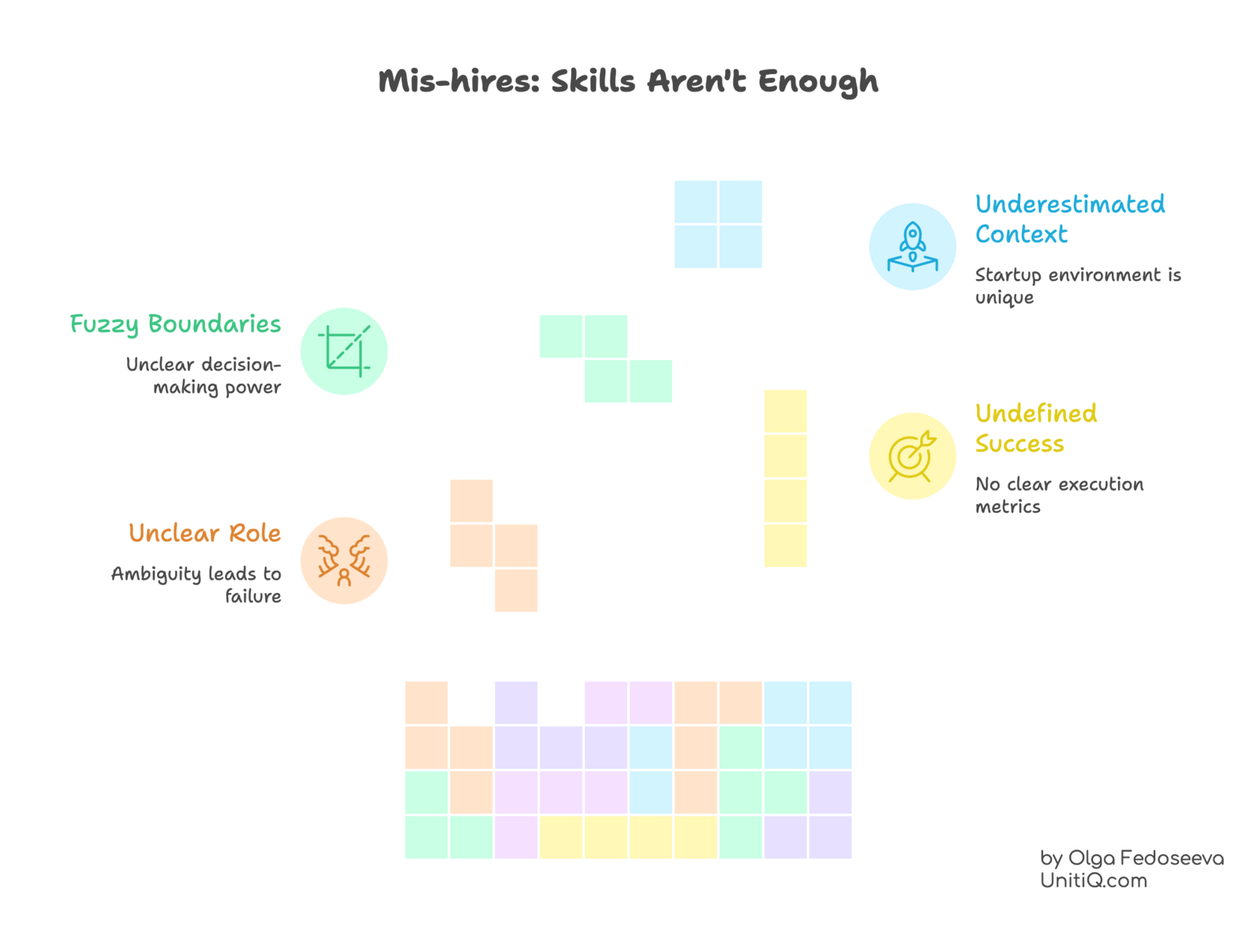
They fail because:
- the role was unclear
- success wasn’t defined in execution terms
- decision boundaries were fuzzy
- the startup context was underestimated
Hiring for skills without defining execution expectations simply scales risk.
Alignment doesn’t start in interviews. It starts much earlier — with the execution signals candidates opt into. We explain this upstream filter in Strategic Employer Branding for Startups Is About Execution Signals — Not Attraction.
What skills-based hiring should look like in startups
In high-performing teams, skills-based hiring is reframed around outcomes.
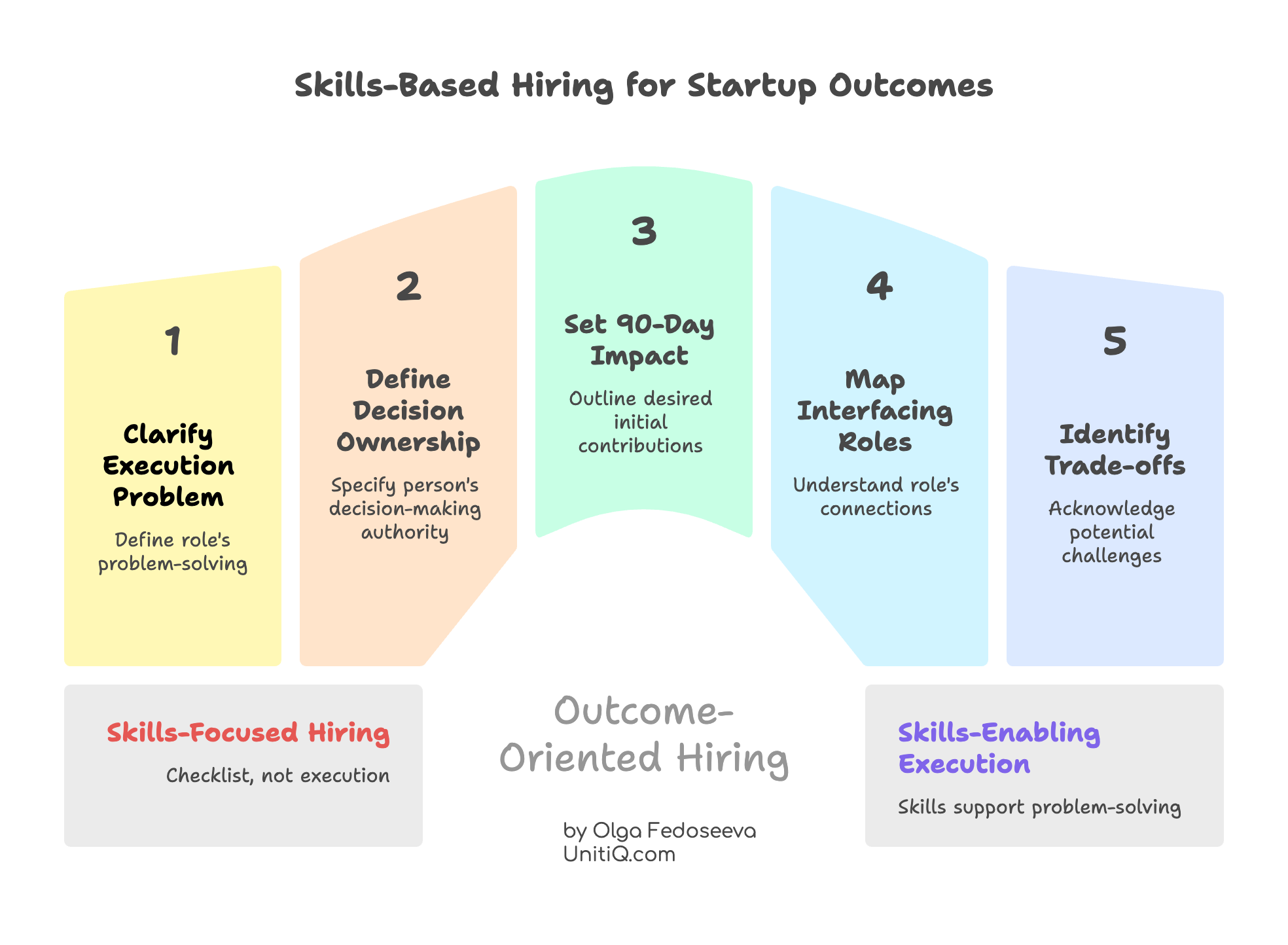
Before interviewing, founders and hiring leaders clarify:
- what execution problem this role solves
- what decisions this person must own
- what “impact in 90 days” looks like
- where this role interfaces with others
- what trade-offs they will face
Only then do skills matter — as enablers of execution, not as a checklist.
How this connects to getting out of hiring mode
Founders stay stuck in hiring mode when:
- roles are vague
- interviews are subjective
- decisions are reversible
- expectations are implicit
Skills-based hiring done right:
- sharpens interviews
- reduces false positives
- improves onboarding speed
- lowers mis-hire cost
- restores execution momentum
This is why it belongs inside a focused People Project, not as a standalone hiring tactic.
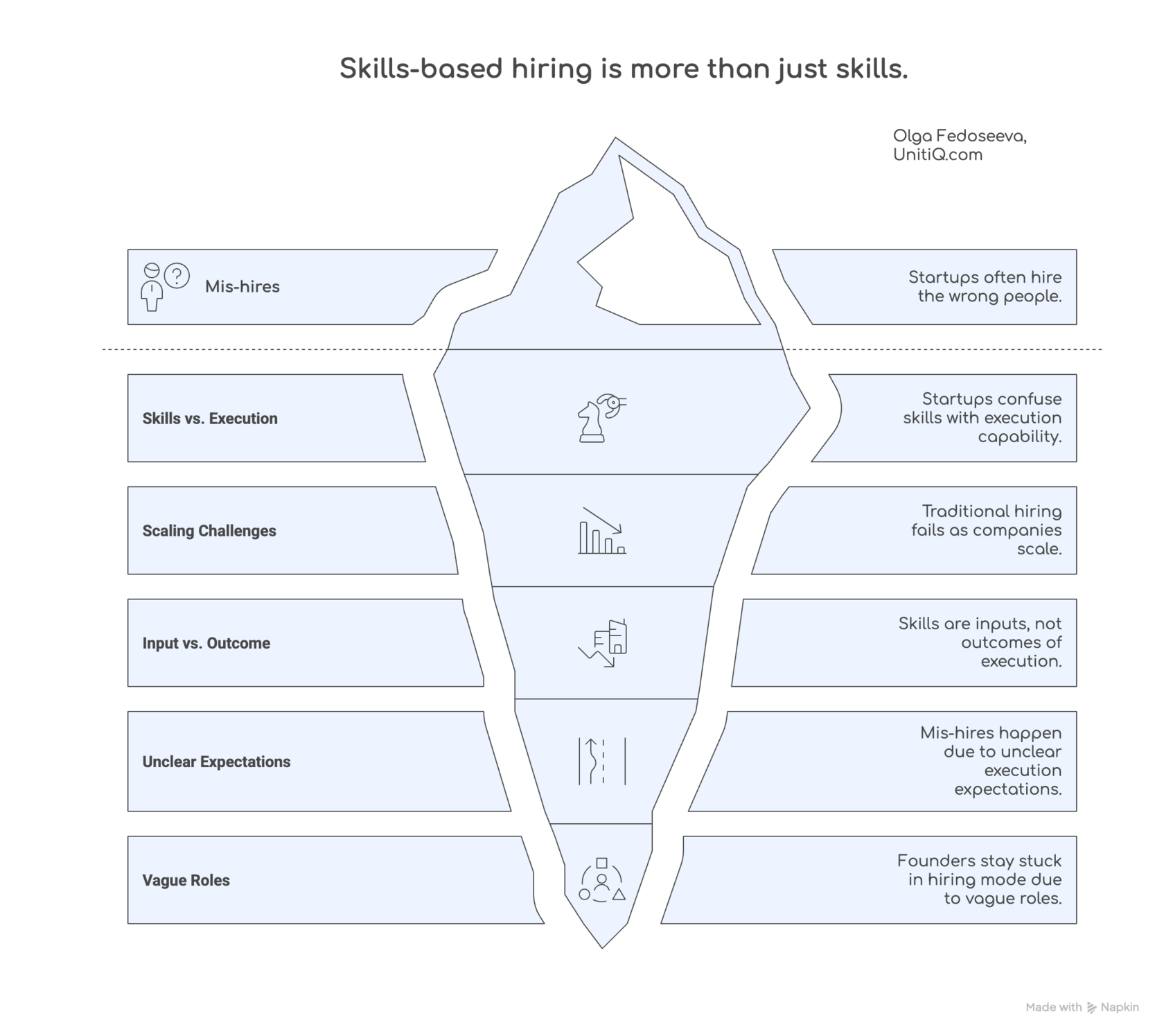
When startups fail to hire for execution capability, founders rarely notice immediately. The first signal is that execution doesn’t accelerate after hiring — and founders stay deeply involved in decisions and problem-solving. This is how teams get stuck in hiring mode, even as headcount grows. We explain why this happens — and how startups should interview for execution capability instead.
The mistake startups keep making
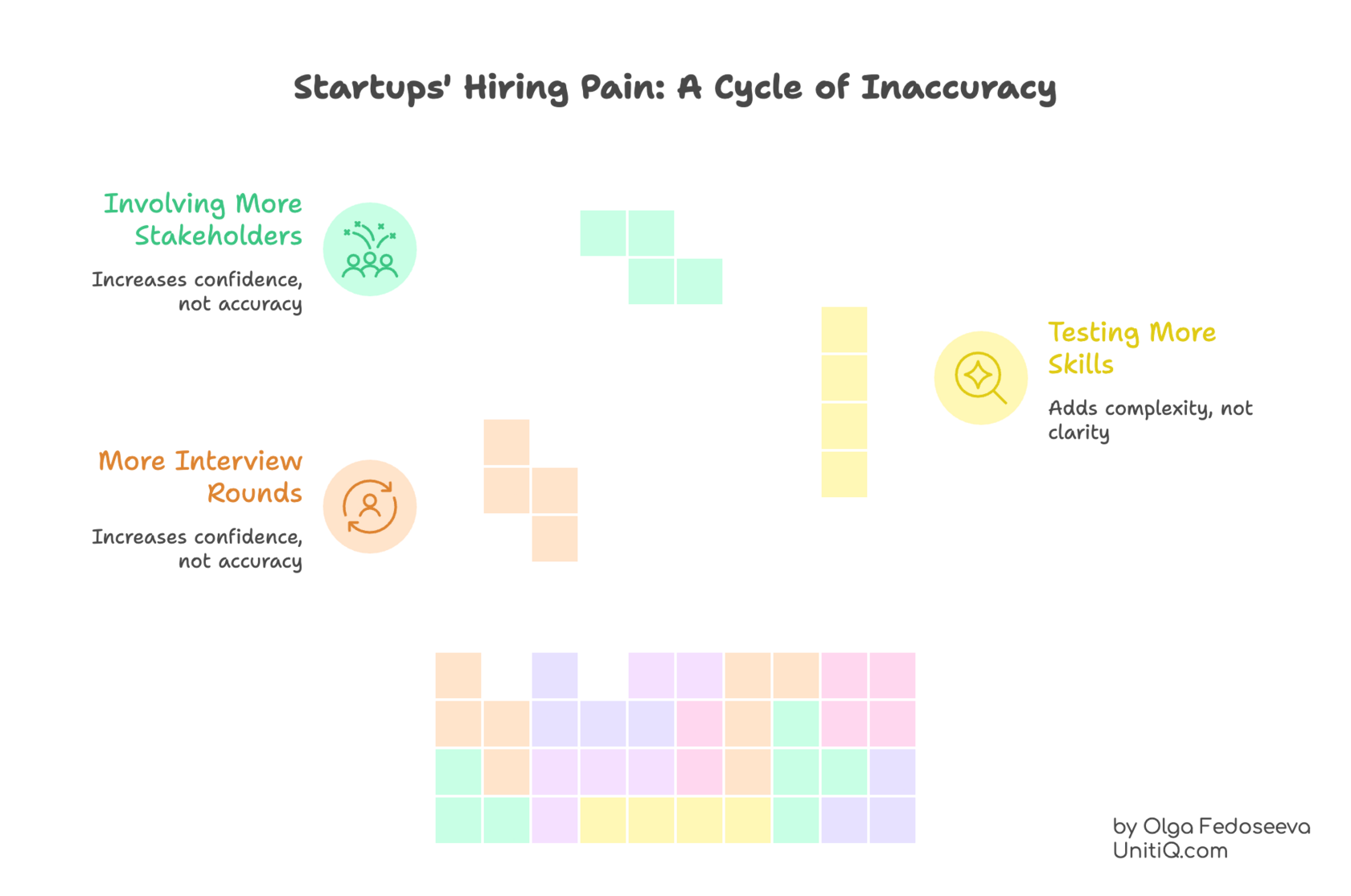
Many teams respond to hiring pain by:
- adding more interview rounds
- testing more skills
- involving more stakeholders
This increases confidence — but not accuracy.
Clarity beats complexity.
When startups hire without execution capability in mind, the impact shows up later as overload, disengagement, and burnout. We unpack this downstream effect in Quiet Quitting and Burnout in Startups Are Execution Problems — Not Motivation Problems.
Summary
Skills-based hiring is not about skills.
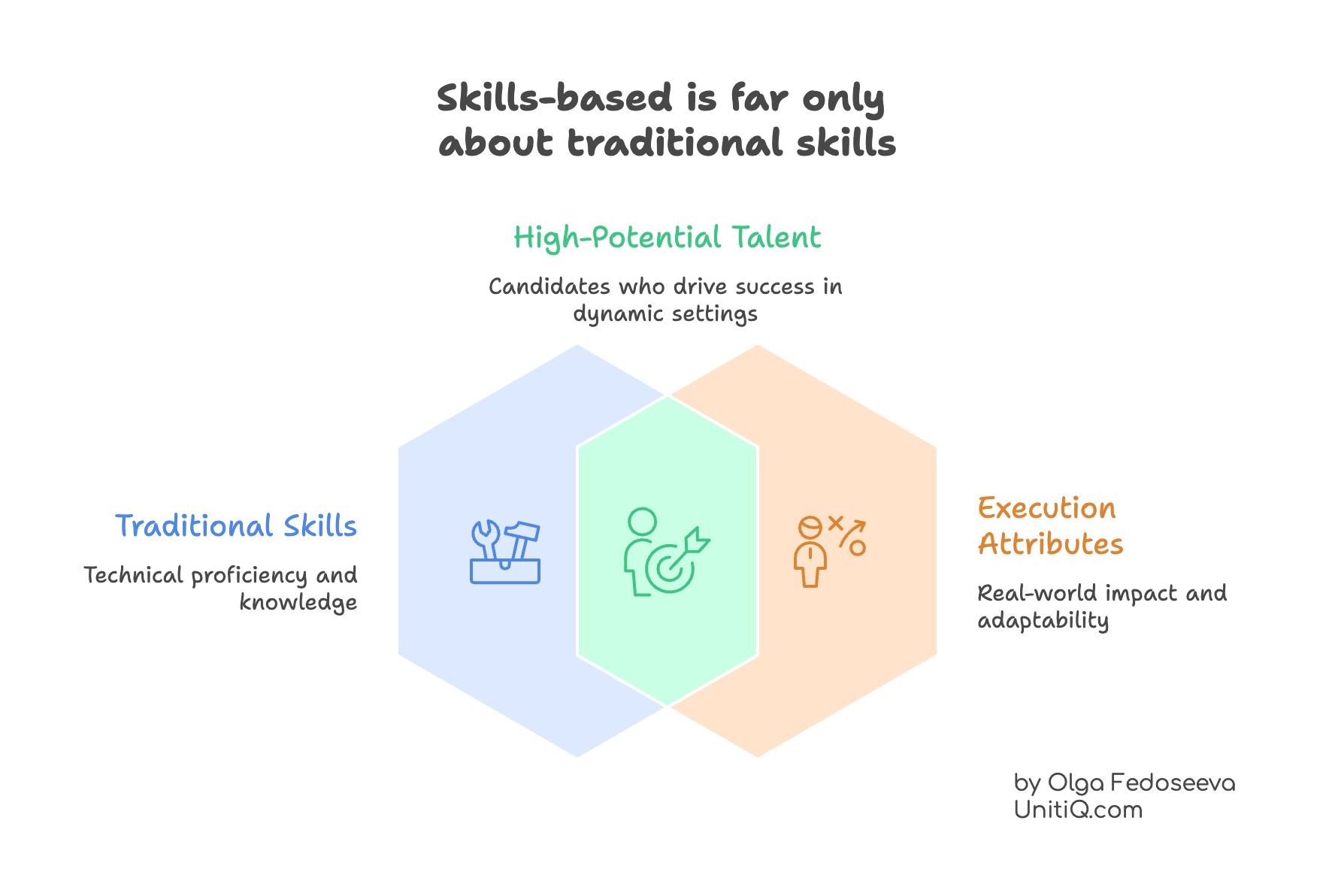
It’s about:
- execution capability
- decision ownership
- context awareness
- impact under pressure
Startups that hire for execution:
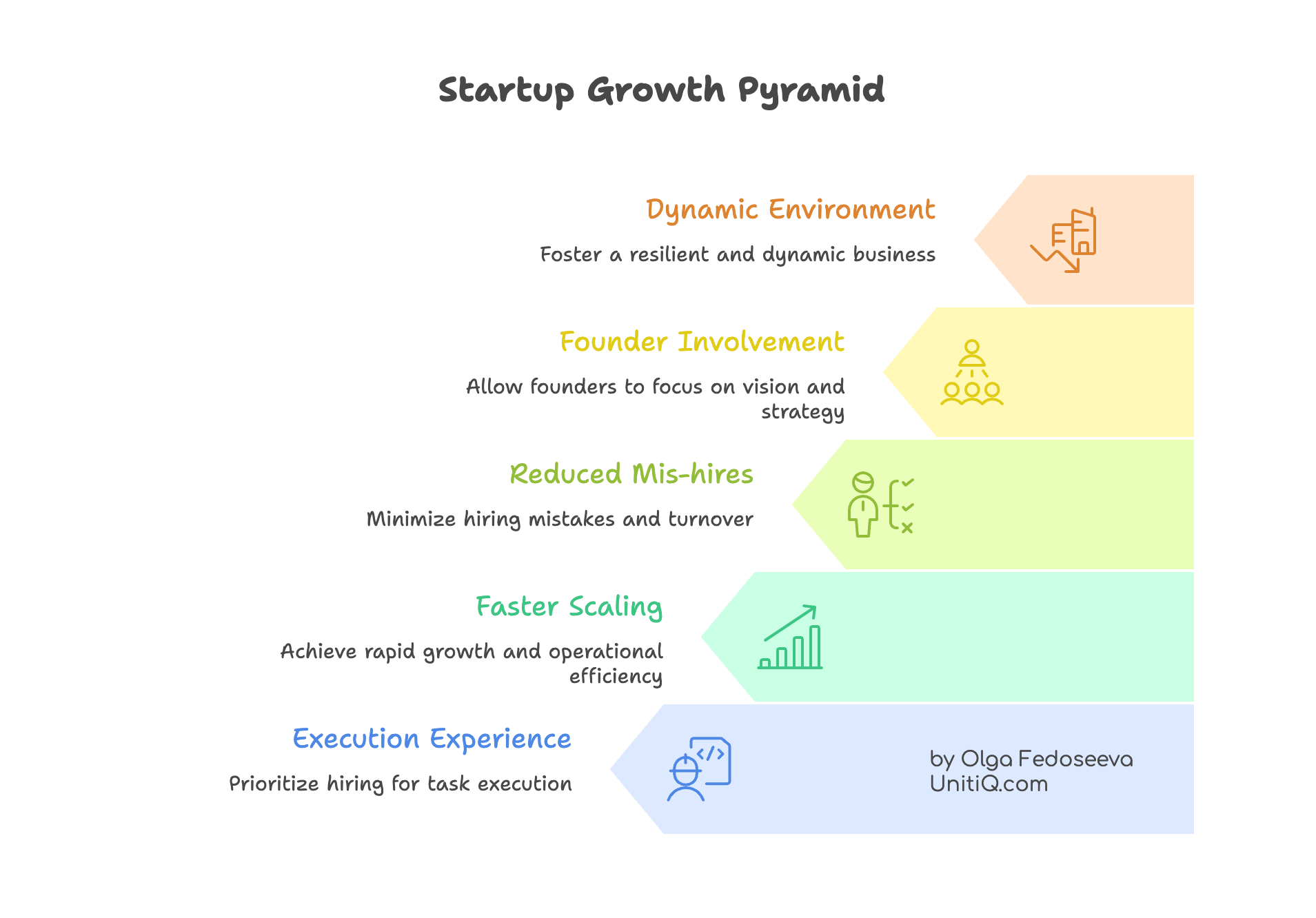
- scale faster
- make fewer mis-hires
- reduce founder involvement
- regain momentum
Those that don’t keep hiring — but never quite moving forward.
About the author
Olga Fedoseeva is the Founder of UnitiQ, a talent acquisition partner for Series A–pre-IPO companies in Fintech, Robotics, and Mobility across EU, UKI, and MENA.
She works with founders who are stuck in hiring or execution mode — helping teams regain momentum through precision hiring and focused People Projects that align people decisions with execution reality.


