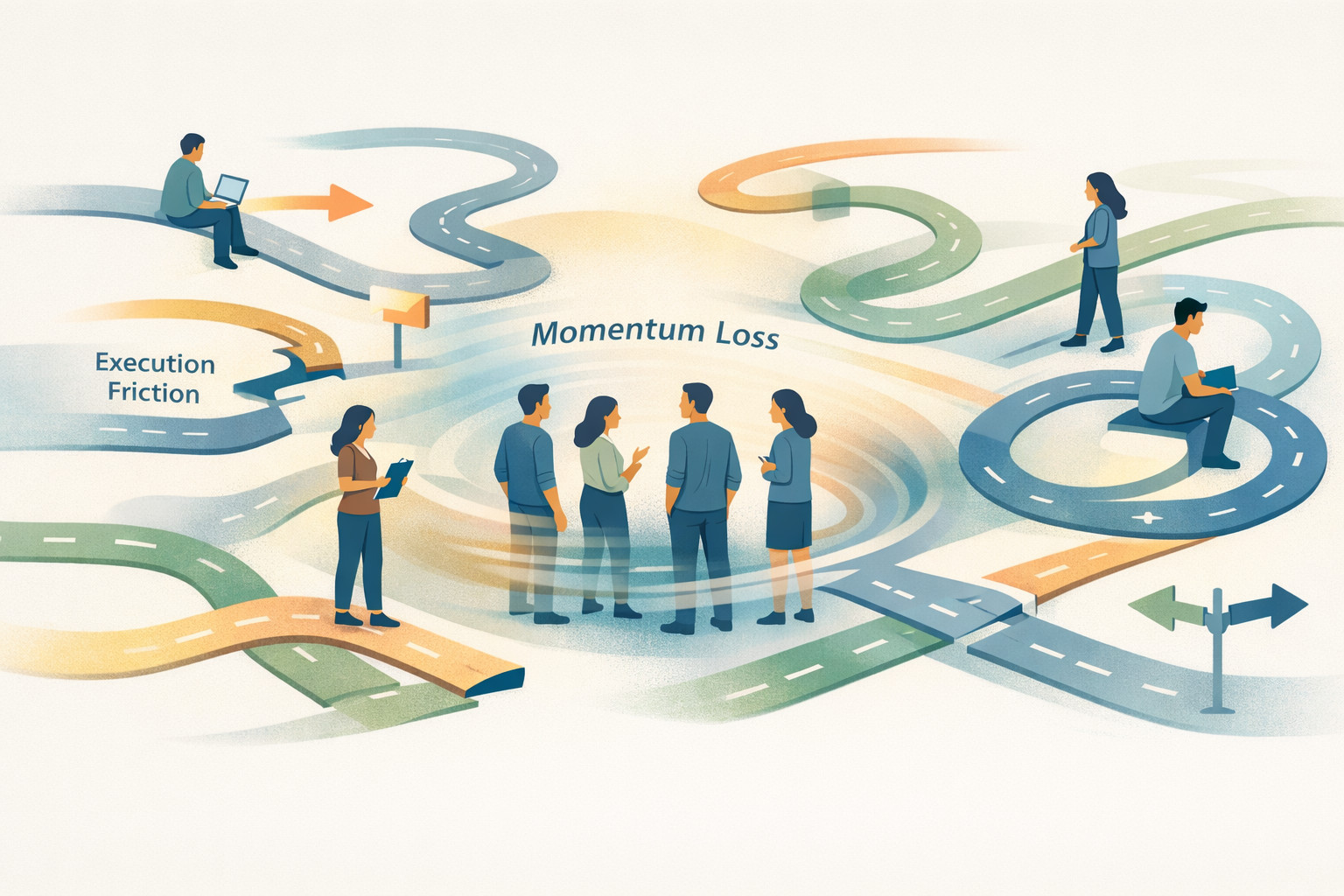
Quiet Quitting and Burnout in Startups Are Execution Problems — Not Motivation Problems
Quiet quitting and burnout are often described as employee disengagement issues.
But in startups, they rarely start that way.
What founders usually experience first is something else:
- decisions slow down
- ownership becomes fuzzy
- momentum disappears
- founders step back into execution
Burnout and quiet quitting show up after execution breaks — not before.
Why startups misdiagnose the problem
When execution slows, many teams look for emotional explanations:
- motivation
- engagement
- resilience
- work-life balance
Those matter — but they are downstream effects, not causes.
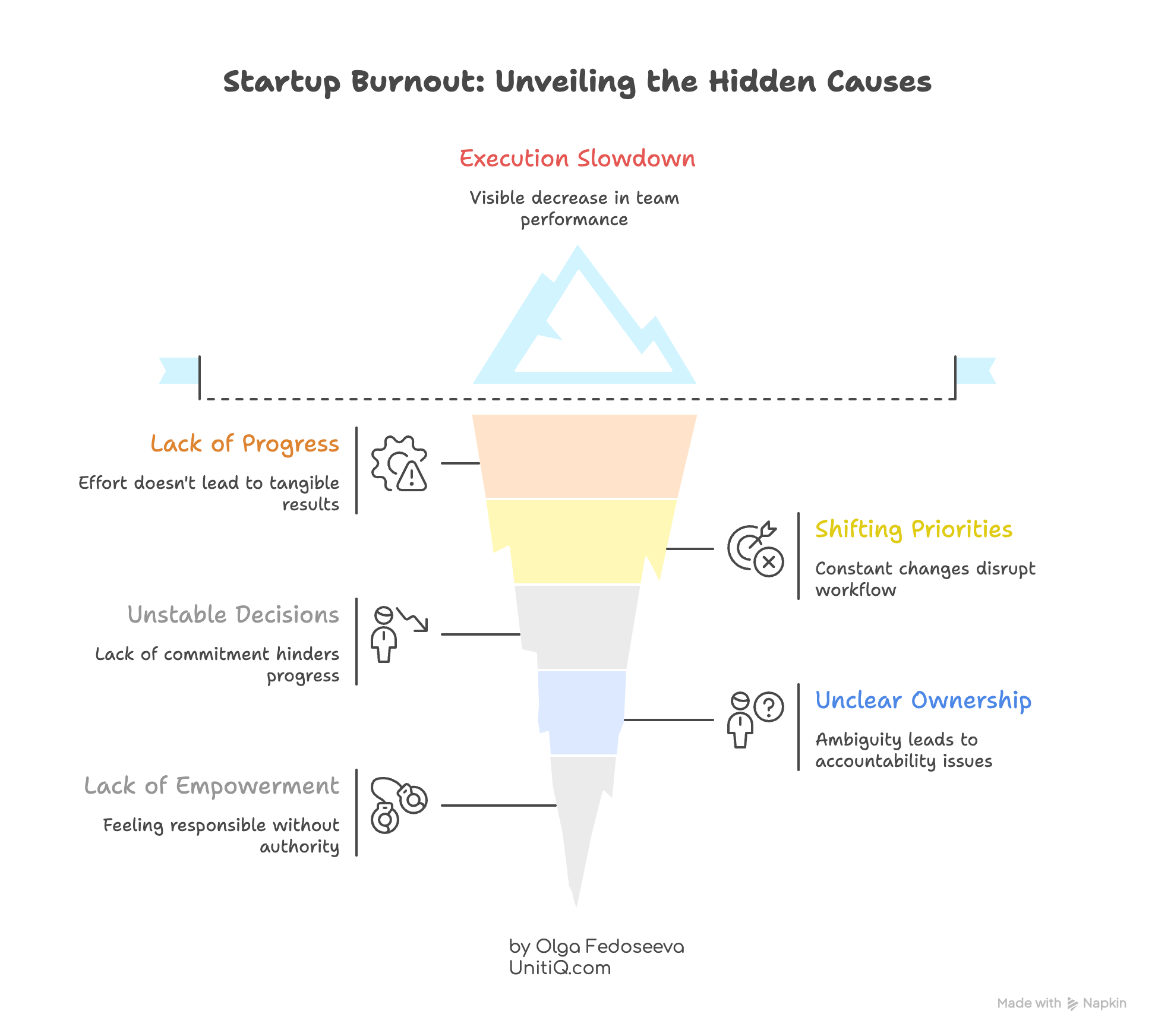
In most startups, burnout emerges when:
- effort no longer translates into progress
- priorities keep shifting
- decisions don’t stick
- ownership is unclear
- people feel responsible but not empowered
People don’t disengage because they don’t care.
They disengage because caring stops producing results.
Burnout often starts with people opting into roles under false assumptions. Employer branding that fails to signal execution reality pushes this risk downstream, as we explain in Strategic Employer Branding for Startups Is About Execution Signals — Not Attraction.
What quiet quitting really looks like in startups
Quiet quitting in startups is rarely dramatic.
It looks like:
- people waiting instead of deciding
- tasks completed, outcomes missing
- risks surfaced too late
- founders re-explaining the same context
- execution depending on a few individuals
Teams are still working.
They’re just no longer pushing forward.
That’s not a motivation failure.
It’s an execution signal.
Why burnout accelerates as startups scale
Early-stage teams tolerate chaos because:
- progress is visible
- feedback loops are short
- ownership is implicit
- founders compensate for gaps
As the company scales:
- roles become ambiguous
- coordination cost increases
- decision rights blur
- mis-hires compound
- execution slows quietly
People keep trying — until effort no longer feels effective.
That’s when burnout appears.
The hidden link between burnout and hiring
Many burnout problems originate in hiring decisions made months earlier.
When teams hire for:
- skills without execution capability
- experience without ownership
- alignment without judgment
They create environments where:
- work increases
- clarity decreases
- execution depends on heroics
High performers burn out first in these systems — not last.
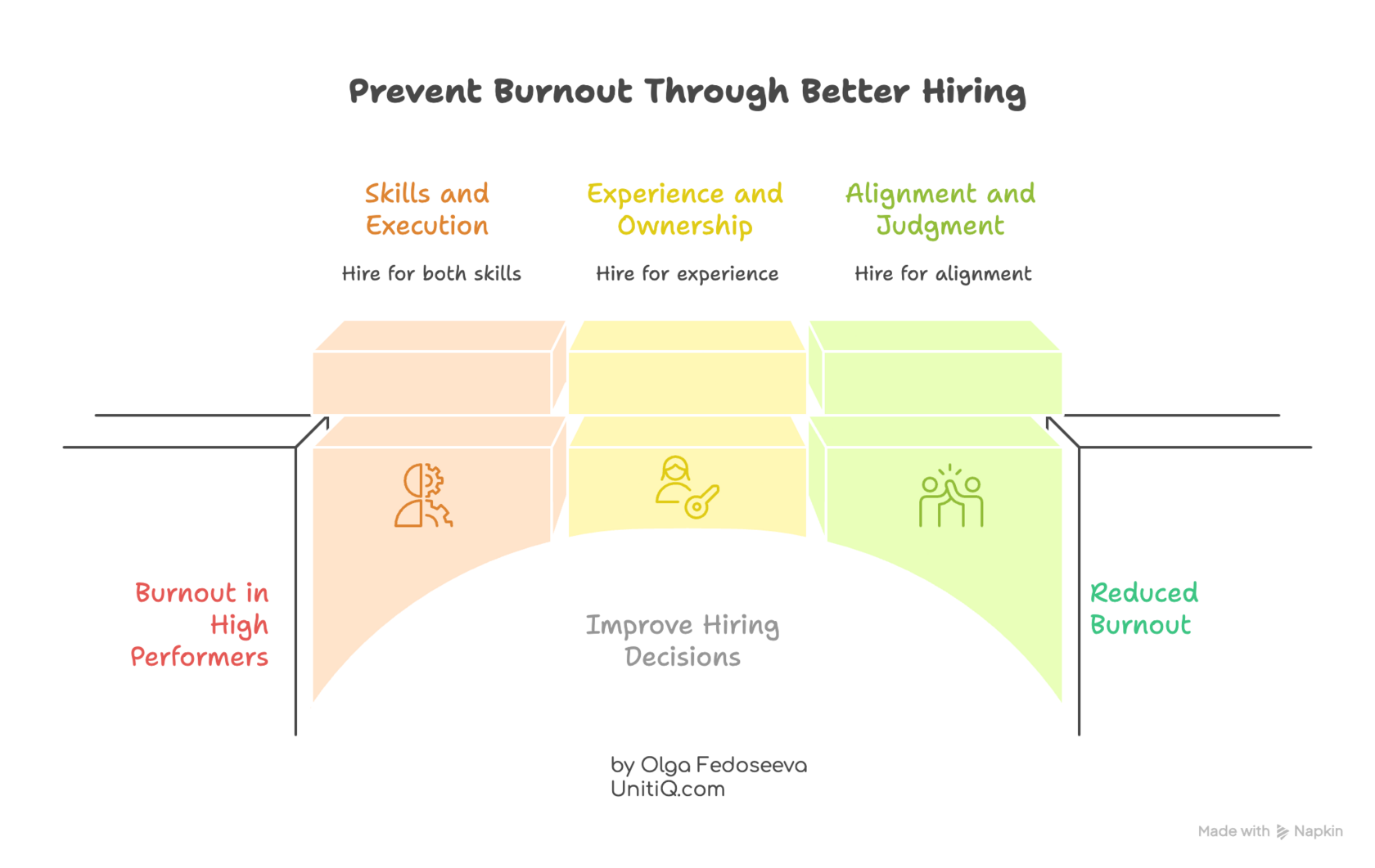
Many burnout problems originate months earlier, when teams hire for skills on paper rather than execution capability in reality. This distinction — and why it keeps founders stuck in hiring mode — is explained in Skills-Based Hiring for Startups: Why Execution Capability Matters More Than CVs.
Why HR interventions often fail
Common responses include:
- engagement surveys
- wellness programs
- manager training
- workload redistribution
These may reduce symptoms temporarily.
But if:
- execution expectations remain unclear
- decision ownership is unresolved
- priorities keep changing
- hiring continues to miss execution capability
Burnout returns.
You can’t fix execution problems with morale tools.
These issues rarely come from a single bad decision. They emerge from repeated hiring mistakes that compound as startups scale — the same patterns we outline in 5 HR Mistakes Startups Make (And How to Fix Them with a People Project).
What actually prevents quiet quitting
Startups that avoid quiet quitting don’t push people harder.
They fix how execution works.
That means:
- defining ownership explicitly
- hiring for execution capability
- clarifying decision boundaries
- aligning onboarding with real outcomes
- detecting execution risk early
When people see progress again, engagement follows naturally.
Where the People Project fits
This is why burnout cannot be solved in isolation.
It requires a People Project — not as an HR initiative, but as an execution system.
A People Project:
- aligns hiring with execution reality
- connects onboarding to outcomes
- surfaces execution signals early
- prevents mis-hires from compounding
- restores momentum before burnout appears
Quiet quitting is not something you “combat”.
It’s something you prevent by fixing execution.
The uncomfortable truth
If your team is burning out or quietly disengaging, the question isn’t:
“How do we motivate people again?”
It’s:
“Where did execution stop working — and why?”
Answer that honestly, and the rest follows.
In many cases, the problem isn’t effort or motivation — it’s that interview processes never tested how people make decisions under pressure. We break down this failure in How Startups Interview for Execution Capability (And Why Most Don’t).
Summary
Quiet quitting and burnout in startups are rarely personal failures.
They are signals that:
- execution is broken
- ownership is unclear
- hiring decisions didn’t match reality
- founders are compensating again
Teams don’t lose motivation first.
They lose momentum.
Fix execution — and engagement returns.
About the author
Olga Fedoseeva is the Founder of UnitiQ, a talent acquisition partner for Series A–pre-IPO companies in Fintech, Robotics, and Mobility across EU, UKI, and MENA.
She works with founders who are stuck in hiring or execution mode — helping teams regain momentum through precision hiring and focused People Projects aligned with real execution needs.
Prevention is always better than a cure. Here are some actionable strategies:


