
Founders rarely hire recruiting partners because they love recruitment models.
They do it because something is breaking:
- hiring is slow
- the wrong candidates keep appearing
- the founder is stuck reviewing CVs instead of building the company
- execution is slowing down because key roles remain unfilled
At that moment, founders usually turn to the most familiar option: recruitment agencies.
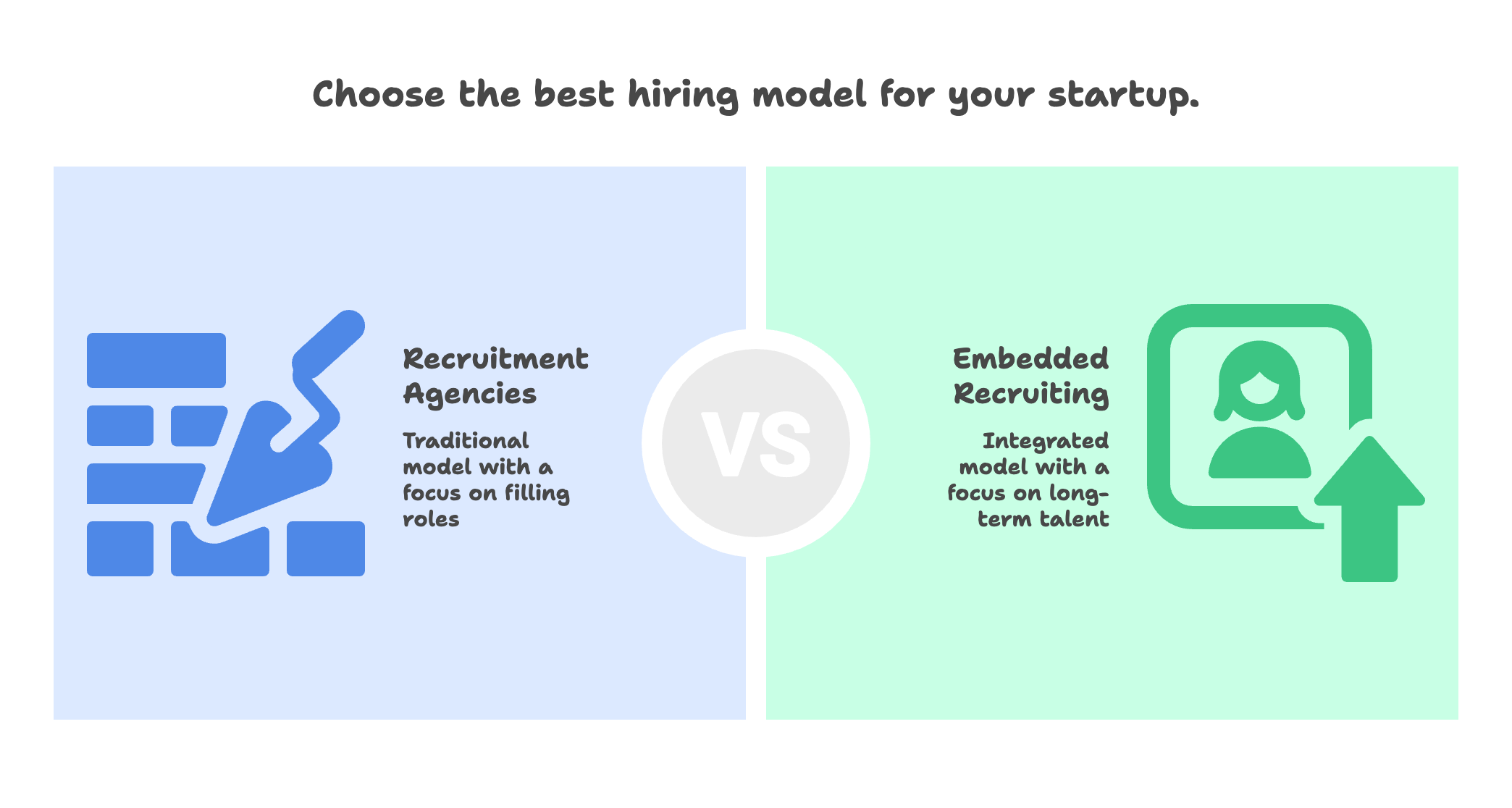
But there is another model that works very differently: embedded recruiting.
Both claim to help you hire.
But the way they operate — and the outcomes they produce — are fundamentally different.
Why the Hiring Model Matters More Than Founders Expect
In early-stage and growth startups, hiring is not just a support function.
It directly affects:
- product velocity
- decision quality
- team cohesion
- founder focus
The wrong hiring model creates friction long before a hire even joins the team.
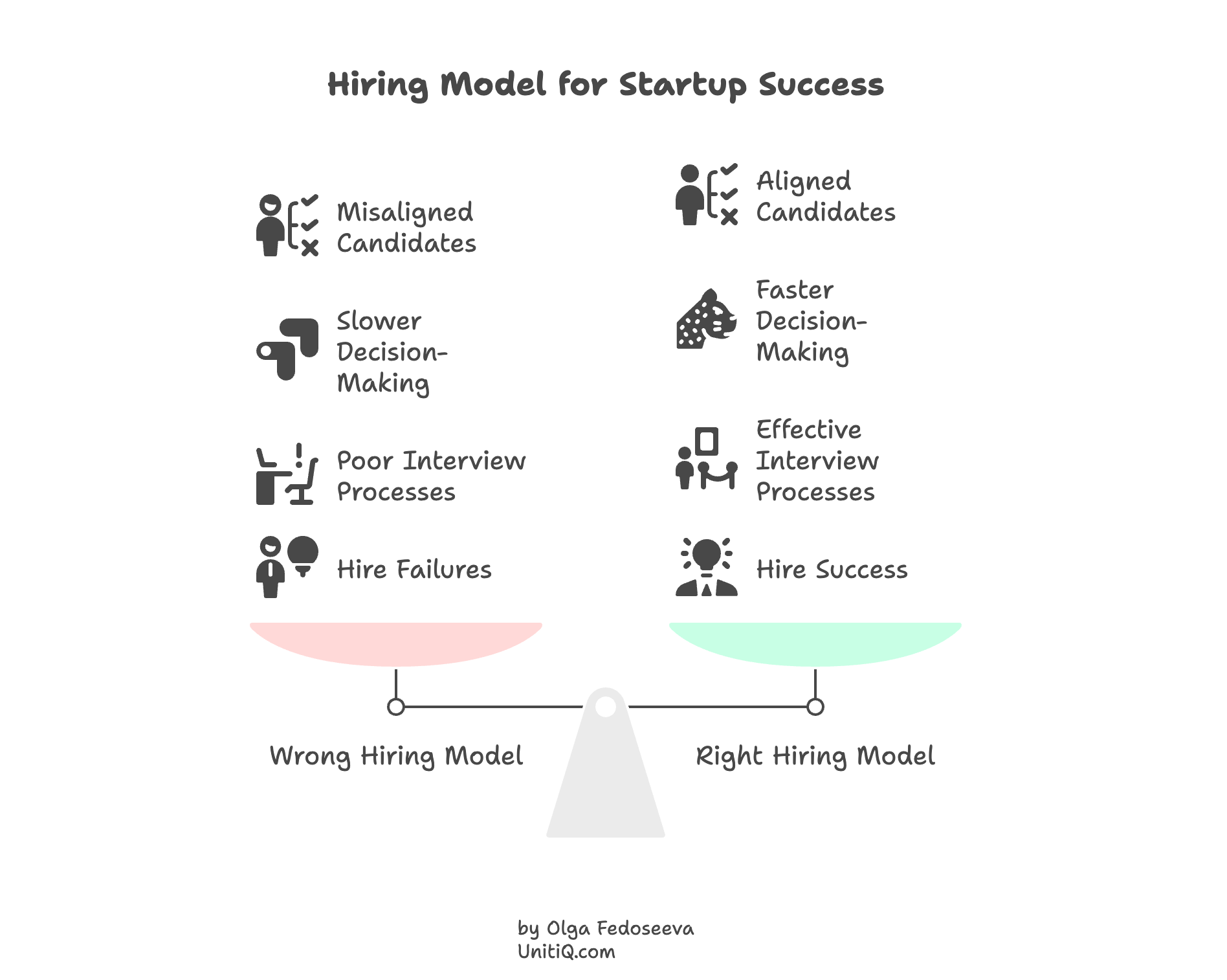
It often leads to:
- misaligned candidates
- slower decision-making
- poor interview processes
- and ultimately hires that fail to create leverage
Which is why the question is not simply “Who can help us hire?”
The real question is:
“Which hiring model helps us build the right team for execution?”
What Traditional Recruitment Agencies Actually Do
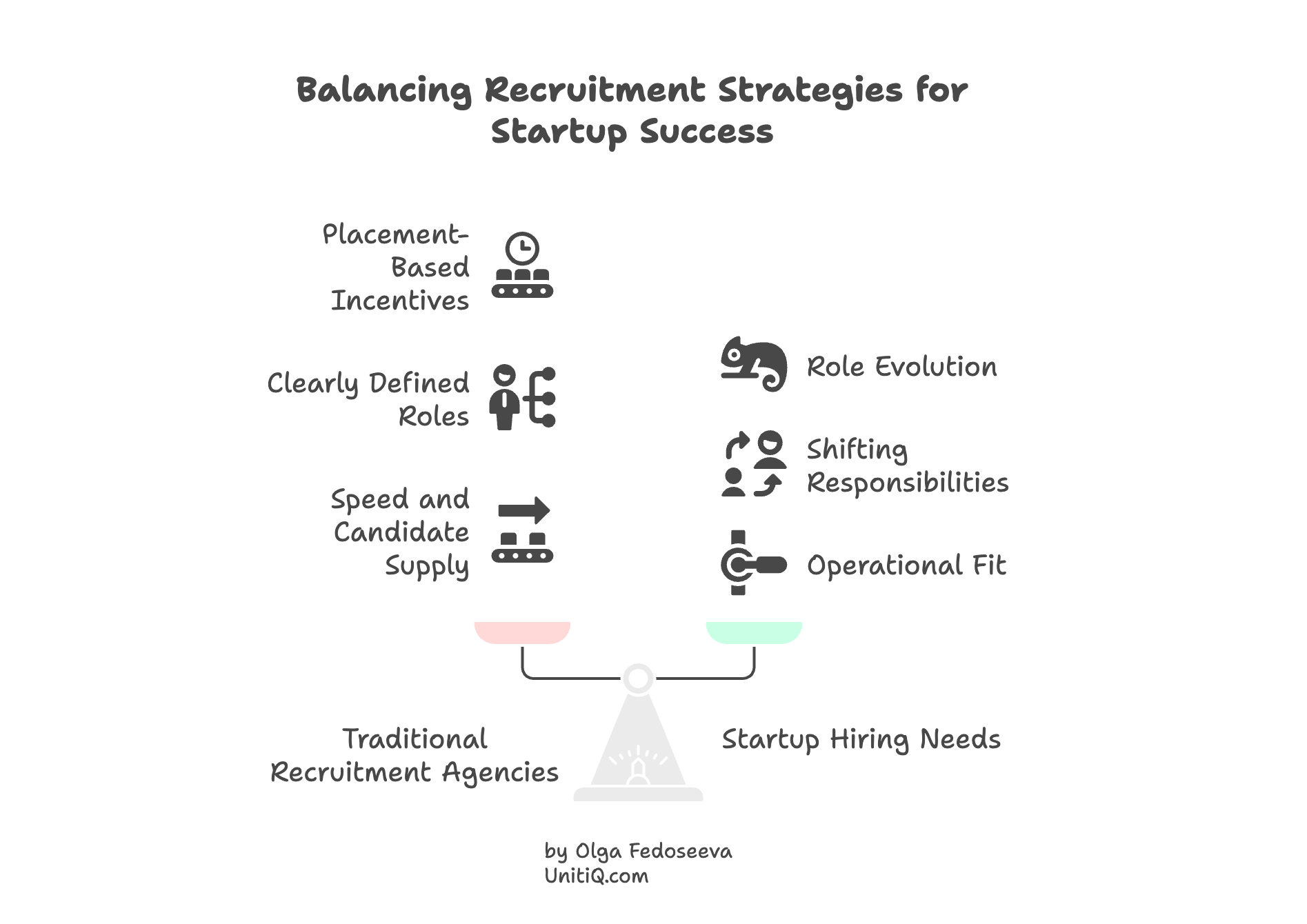
Recruitment agencies are typically structured around placement-based incentives.
Their model prioritizes:
- filling roles quickly
- presenting multiple candidates
- earning commission once a hire is made
This model works well in environments where roles are clearly defined and hiring is relatively predictable.
For example:
- high-volume roles
- standardized job descriptions
- mature organizational structures
In those situations, speed and candidate supply matter more than deep company context.
But startups rarely operate in that kind of environment.
Because the real problem often isn’t candidate supply — it’s that the hiring system itself doesn’t define ownership, decision authority, or execution expectations clearly. (Read: Why Recruitment Agencies Can’t Solve Post-Hire Execution Risk)
In early-stage companies, roles evolve constantly.
Responsibilities shift.
Priorities change.
And success often depends on how someone operates, not just what they’ve done before.
Because agencies usually work from job descriptions rather than internal context, they often struggle to identify these signals.
The result is a familiar founder experience:
Many candidates.
Very few real fits.
Adding more candidates rarely fixes the issue. When hiring criteria are unclear, increasing volume usually creates more noise instead of better decisions. (Read: Why Hiring Faster Won’t Fix Your Execution)
What Embedded Recruiting Actually Means
Embedded recruiting operates on a completely different principle.
Instead of acting as an external supplier of candidates, an embedded recruiter works inside the company’s hiring process.
This means participating in the real operating environment where hiring decisions happen.
This is also why the modern Talent Partner role exists — to help founders translate business needs into structured hiring decisions rather than simply forwarding resumes. (Read: What Does a Modern Talent Partner Actually Do?)
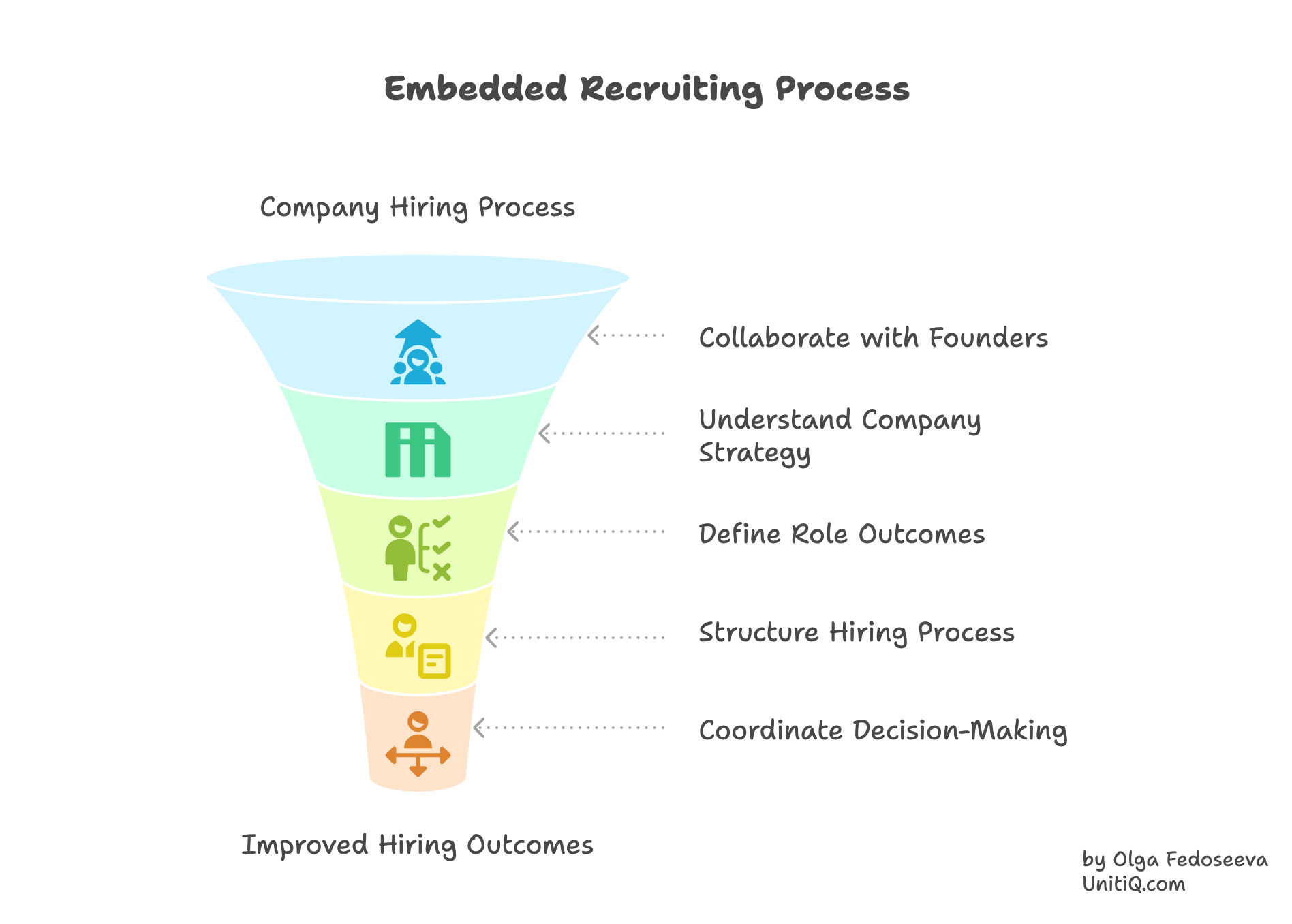
Embedded recruiters typically:
- work directly with founders and hiring managers
- understand the company’s product, strategy, and execution challenges
- help define role outcomes before sourcing begins
- structure the hiring process and evaluation criteria
- coordinate interviews and decision-making
Because strong hiring outcomes depend less on sourcing and more on building a repeatable hiring system inside the company. (Read: How Early-Stage Startups Should Build Their First Talent Acquisition Function)
In other words, they do not simply bring candidates.
They build the system through which hiring decisions happen.
This difference may sound subtle.
But in practice, it fundamentally changes the quality of hiring outcomes.
The Core Difference: Transaction vs System
The simplest way to understand the difference between agencies and embedded recruiting is this:
Agencies operate as a transaction.
Embedded recruiting operates as a system.
A transactional model focuses on delivering candidates for open roles.
A system-based model focuses on ensuring the company can consistently identify and close the right hires.
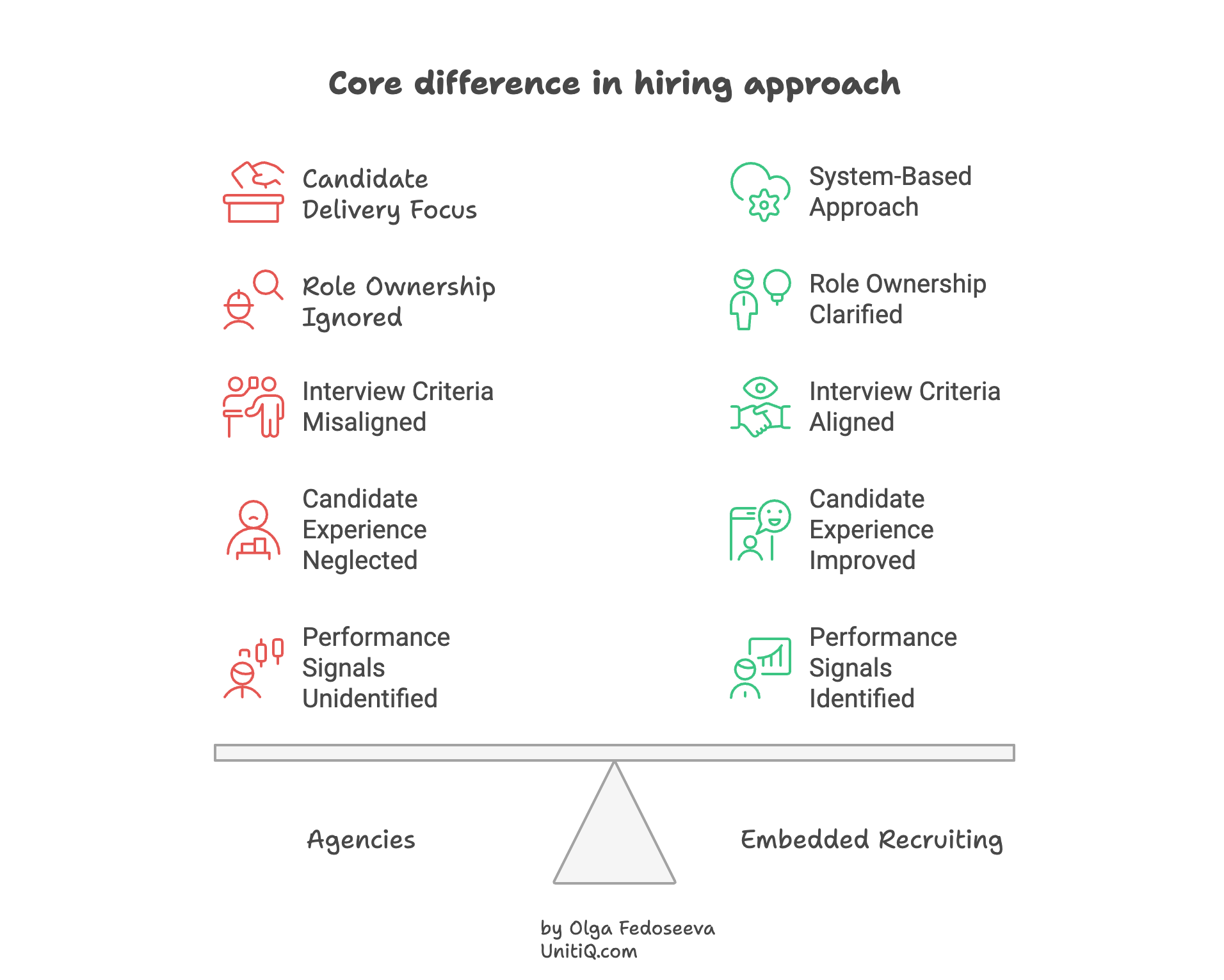
This includes:
- clarifying role ownership
- aligning interview criteria across stakeholders
- improving candidate experience
- identifying the signals that predict performance
Without this system, even strong candidates can be rejected for the wrong reasons — or worse, the wrong candidates can be hired.
Why Embedded Recruiting Often Works Better for Startups
Startups operate under different constraints than larger companies.
They typically have:
- limited hiring bandwidth
- evolving team structures
- unclear role definitions
- high cost of hiring mistakes
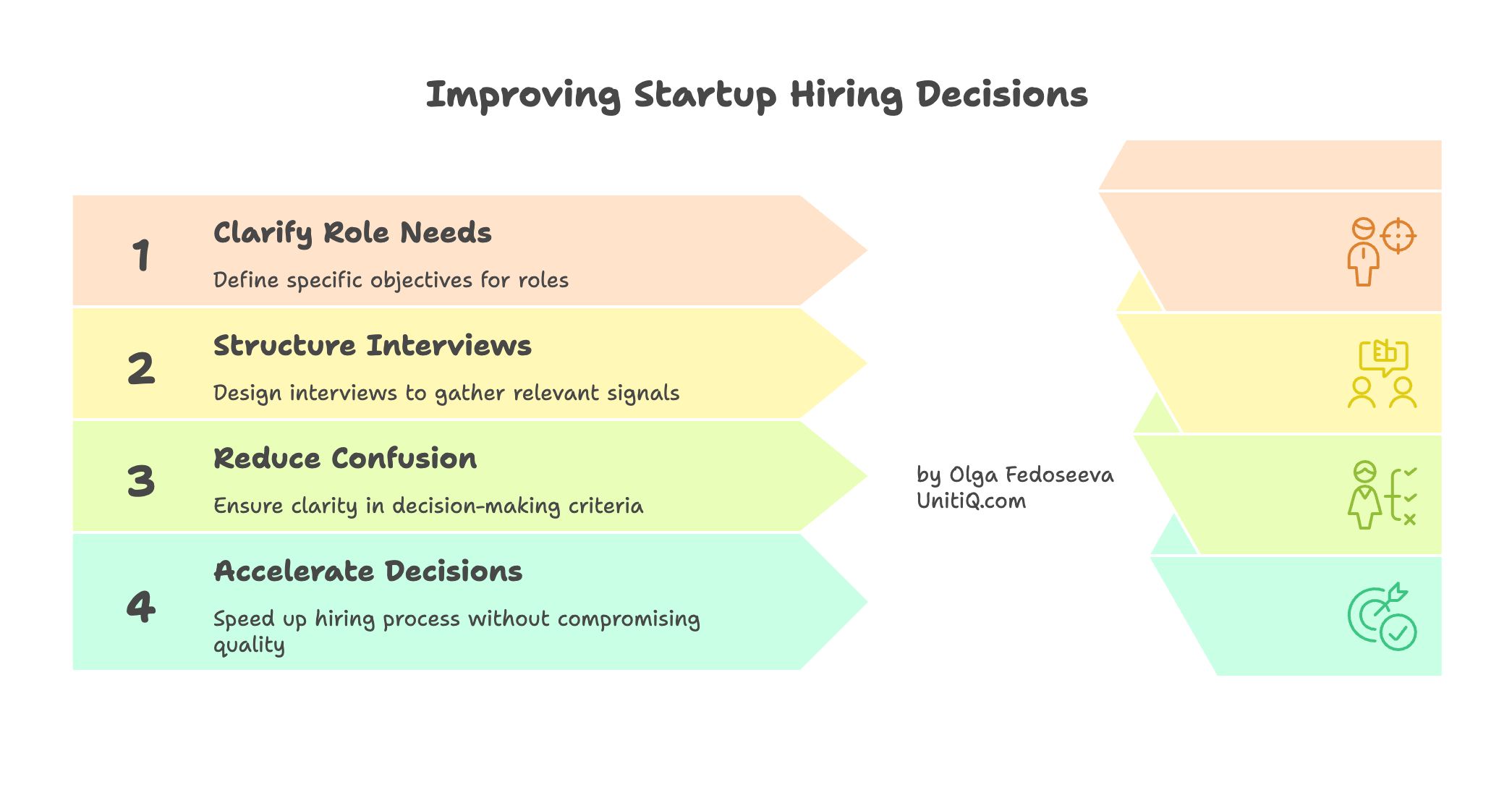
In this environment, embedded recruiting tends to produce better results because it addresses the root causes of hiring friction, not just candidate supply.
It helps founders:
- clarify what the role actually needs to achieve
- structure interviews around real signals
- reduce internal confusion about decision criteria
- move faster without sacrificing hiring quality
Instead of simply accelerating hiring activity, it improves hiring decisions themselves.
This shift is exactly what modern startup hiring requires — moving from volume recruiting to a structured, signal-driven hiring methodology. (Read: Precision Hiring for Startups: A Founder’s Playbook for Scaling Teams)
When Agencies Still Make Sense
This doesn’t mean agencies are always the wrong choice.
They can still be effective in situations where the hiring problem is primarily candidate volume, not decision clarity.
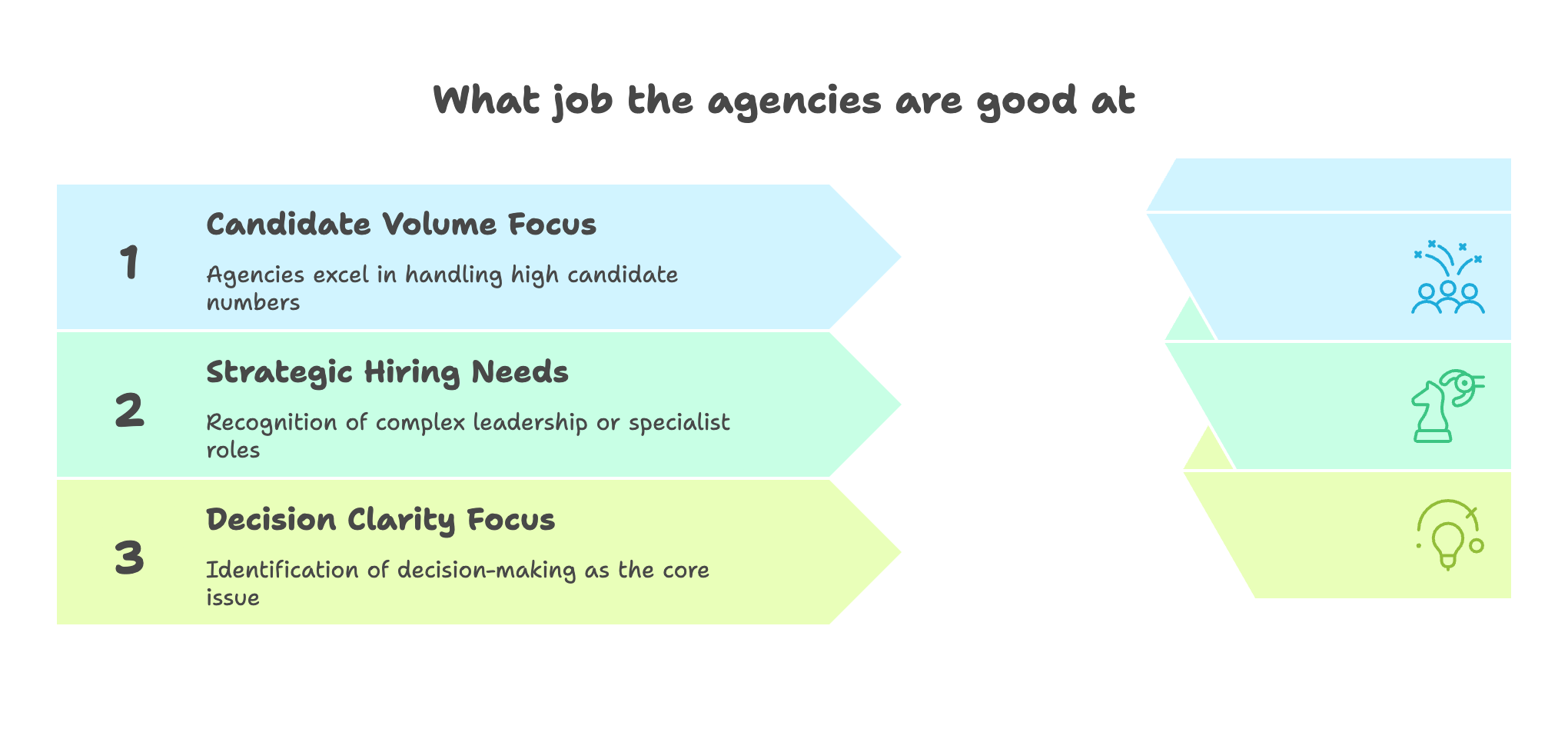
Examples include:
- temporary hiring spikes
- well-defined junior roles
- highly standardized positions
In those cases, speed and candidate pipelines may be sufficient.
But when hiring becomes a strategic constraint — particularly in leadership or specialist roles — founders often discover that candidate supply is not the real problem.
The real problem is how the company makes hiring decisions.
And that is exactly where embedded recruiting creates the most value.
The Model We Use at UnitiQ
At UnitiQ, we work exclusively through an embedded model.
Not because agencies are inherently bad, but because startups rarely fail due to a lack of candidate supply.
They fail because:
- roles are poorly defined
- interviews lack structure
- hiring decisions rely too heavily on intuition
- execution expectations are unclear
Our approach focuses on fixing these structural issues first.
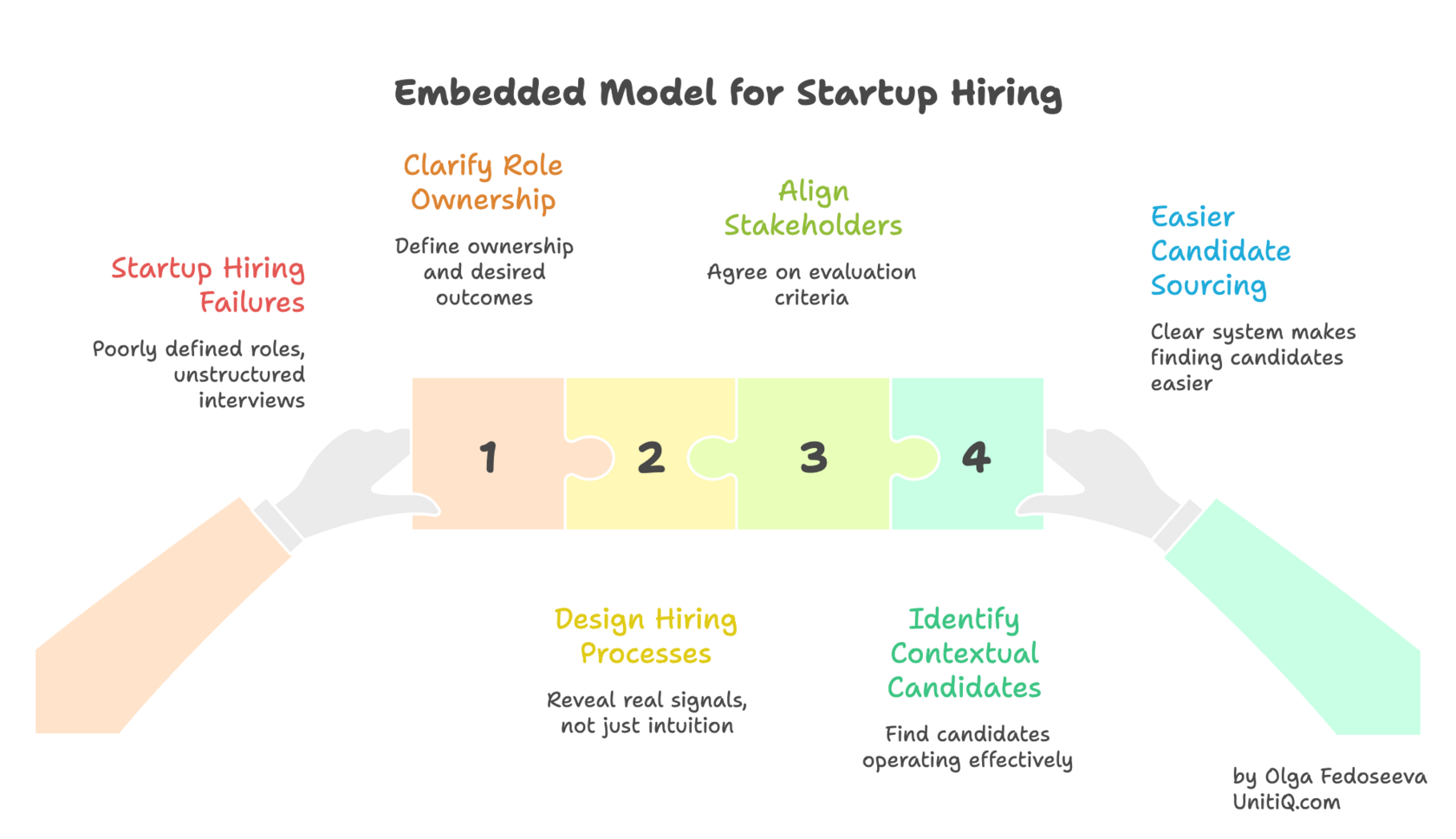
We work alongside founders and teams to:
- clarify role ownership and outcomes
- design hiring processes that reveal real signals
- align stakeholders on evaluation criteria
- identify candidates who can operate effectively inside the company’s context
Because in modern startup hiring, the most valuable signals rarely appear in resumes — they emerge through structured evaluation of how candidates think, decide, and learn. (Read: Hiring in a Post-Resume World: What Founders Should Really Be Screening For)
Only then does sourcing begin.
Because when the system is clear, finding the right candidate becomes significantly easier.
The Decision Founders Should Actually Make
When choosing between recruiting models, founders often compare surface features:
fees
speed
number of candidates
But those are not the factors that determine hiring success.
The real question is much simpler:
Do you need more candidates,
or do you need better hiring decisions?
If the problem is candidate supply, agencies may work.
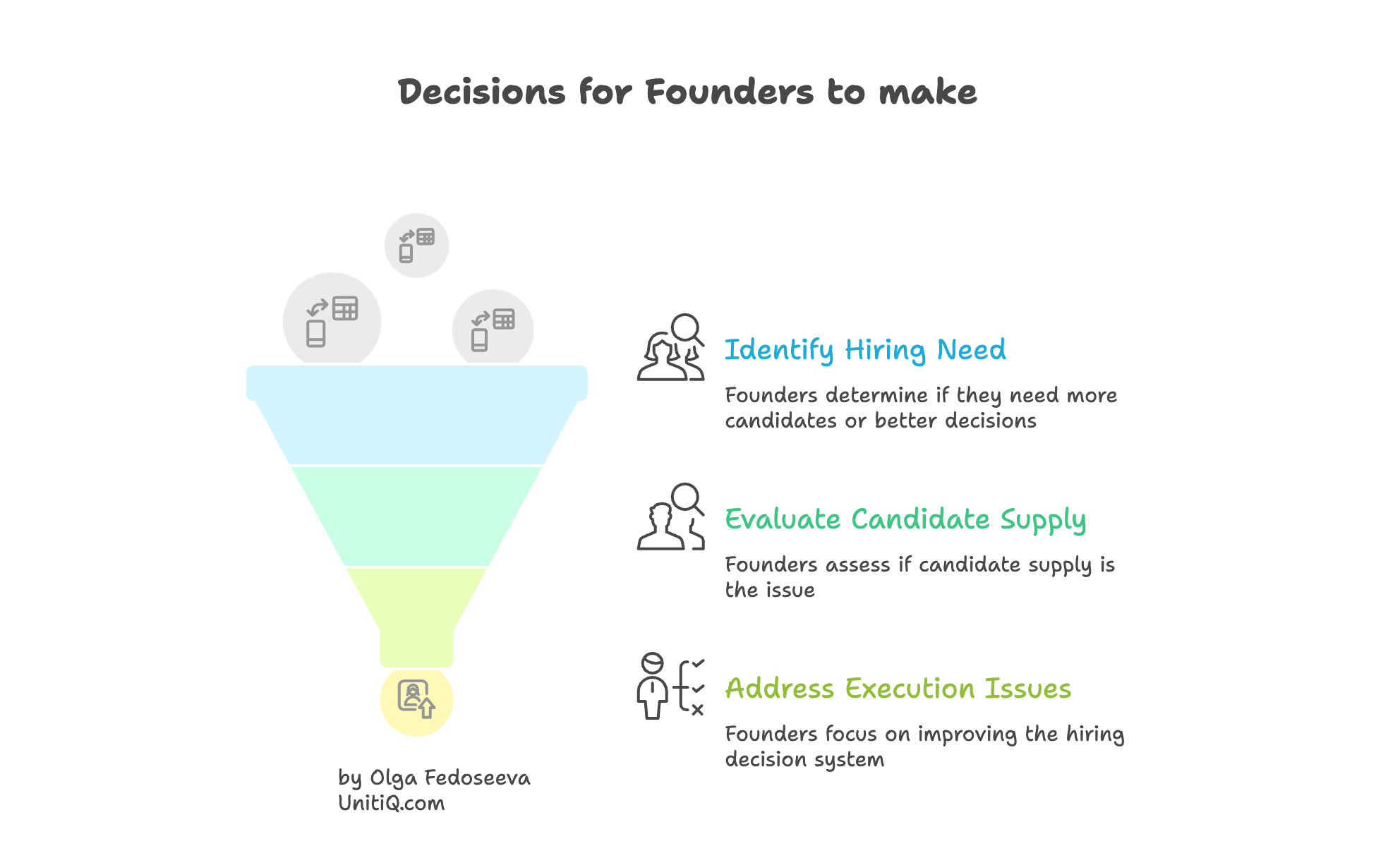
If the problem is execution — and in startups it often is — then the hiring model must address the system behind the decision.
That is what embedded recruiting is designed to do.
If you want to sanity-check which model fits your current stage — and where execution is actually breaking — we can walk through it together.
About the author
Olga Fedoseeva is the Founder of UnitiQ, a talent acquisition and People Projects partner for Tech Startups across EU, UKI, and MENA.
She works with founders in Fintech, AI, Crypto, and Robotics to prevent mis-hires before they compound — restoring execution momentum and protecting teams from quiet burnout.


