
“We need someone fast.”
That sentence usually appears right after:
- a roadmap slips
- a senior person resigns
- revenue misses target
- investors start asking harder questions
Speed becomes the priority.
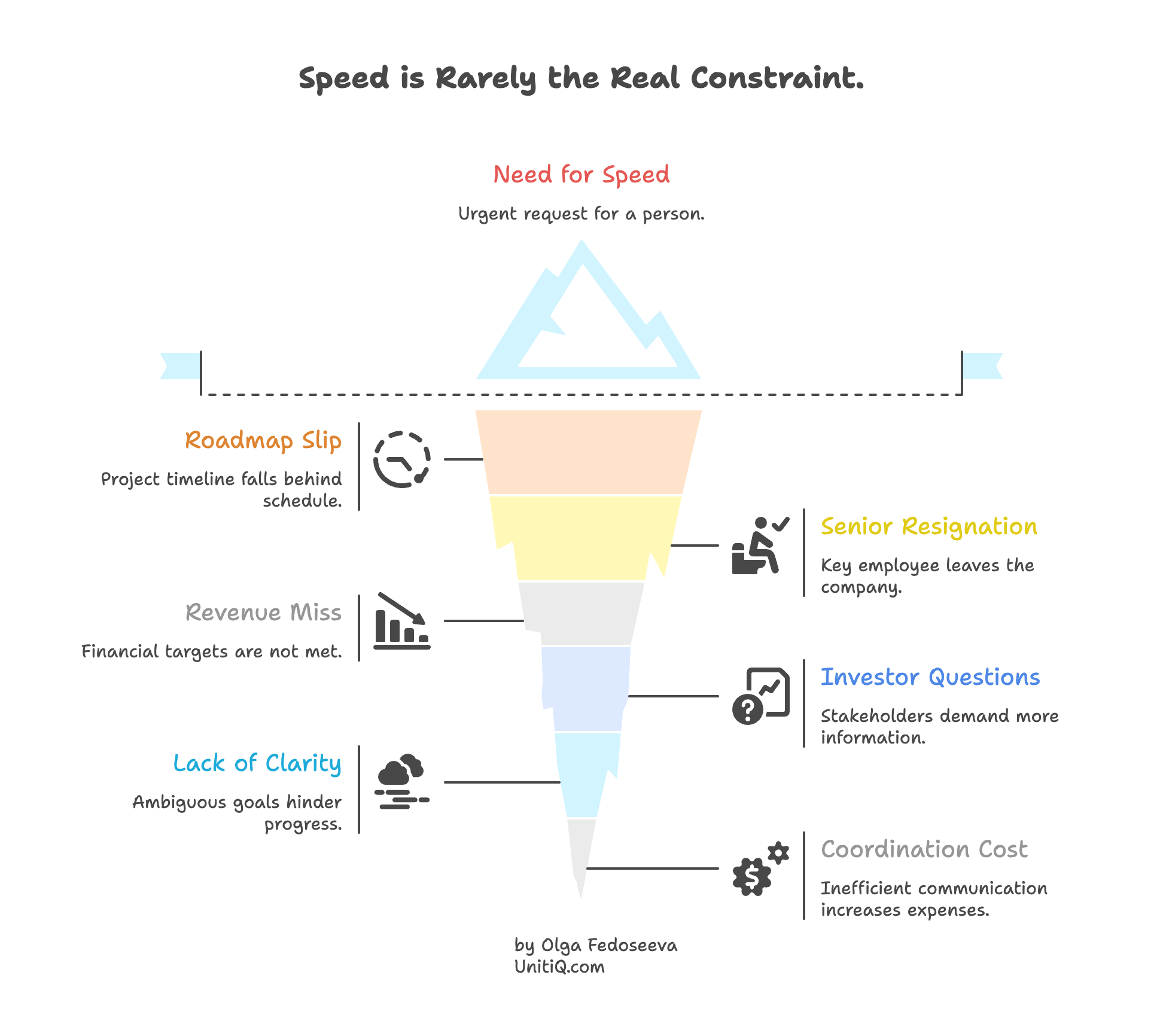
But speed is rarely the real constraint.
Clarity is.
And when founders optimize for speed without precision, they don’t accelerate execution.
They increase coordination cost.
The False Trade-Off: Speed vs Precision
Most founders assume hiring sits on a spectrum:
Slow and careful
or
Fast and risky
That’s the wrong model.
The real trade-off isn’t speed vs precision.
It’s:
Speed without clarity vs speed with clarity.
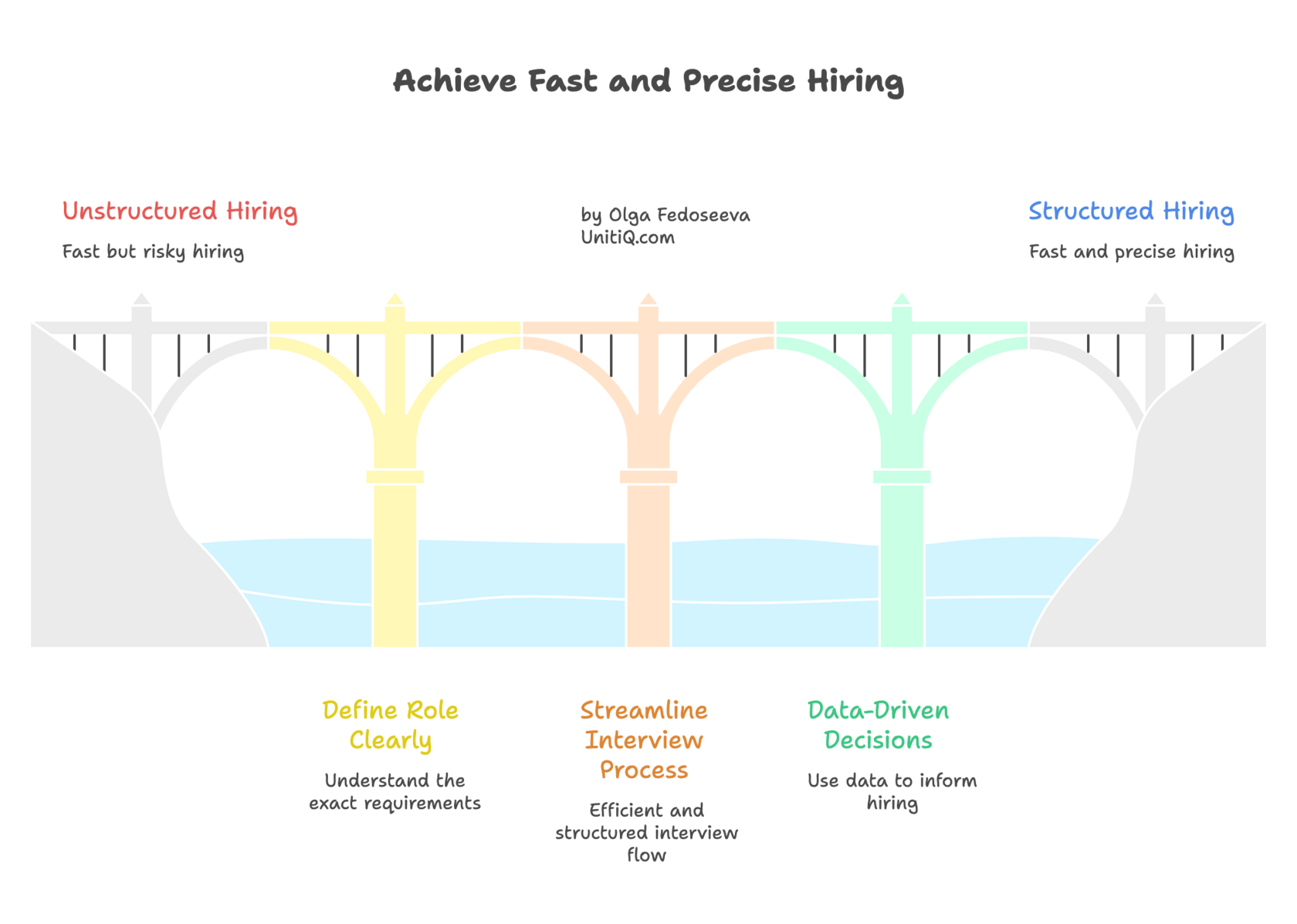
Fast hiring is not the problem.
Unstructured hiring is.
Why “Hiring Faster” Often Slows Execution
When speed becomes the only KPI, three things usually happen:
1. The Role Is Underdefined
The urgency is clear.
The ownership isn’t.
The job description is written quickly.
Success metrics are vague.
Decision authority is assumed, not defined.
The result?
The person joins — and spends months negotiating scope instead of delivering outcomes.
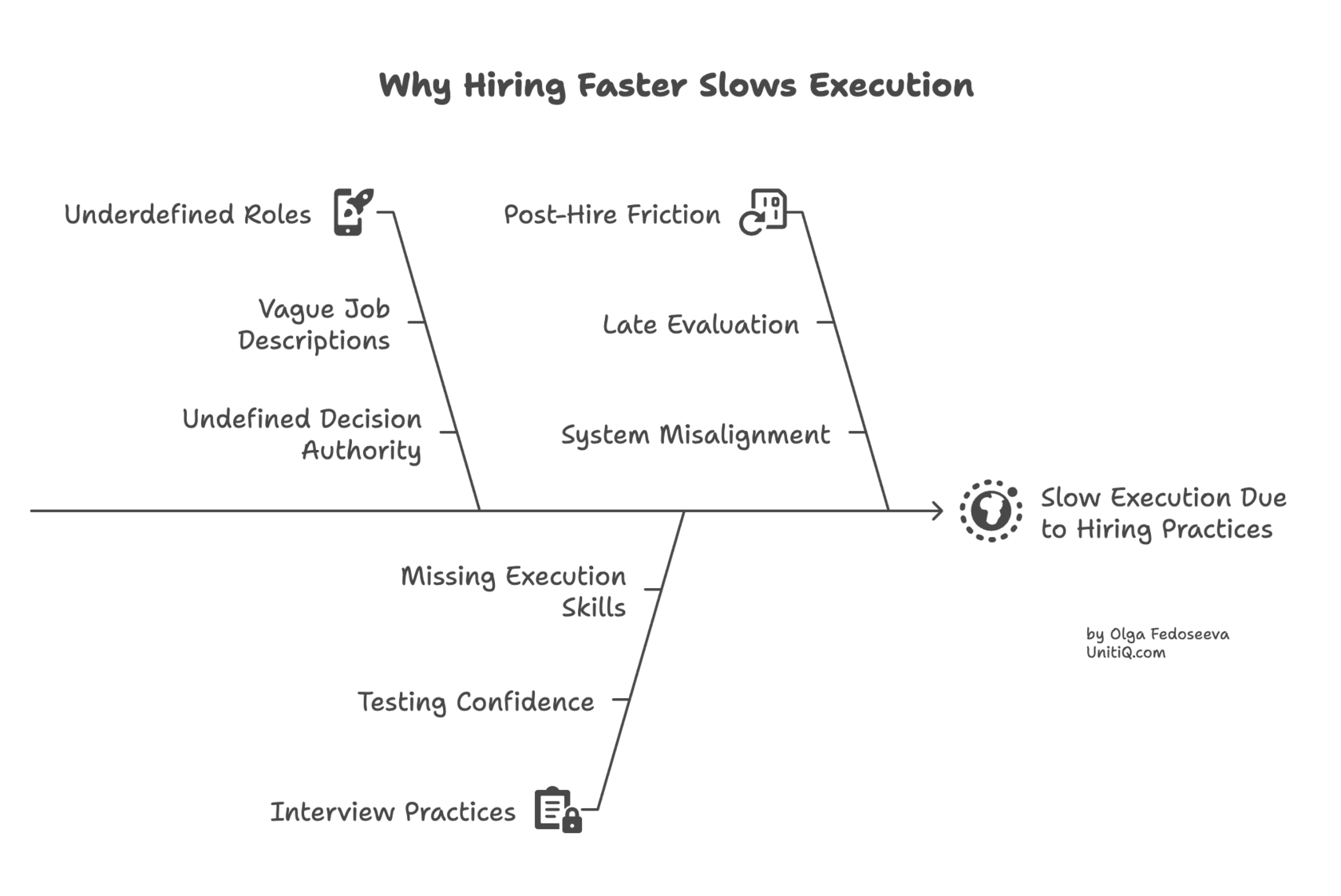
2. Interviews Test Comfort, Not Capability
Under pressure, founders test:
- confidence
- communication
- familiarity
- brand background
Instead of:
- decision-making under ambiguity
- ownership reflex
- execution trade-offs
- learning velocity
Strong communicators get hired.
Strong operators are missed.
We explore this deeper in How Startups Interview for Execution Capability — most interviews test articulation, not execution.
3. Post-Hire Friction Is Discovered Too Late
When precision is missing, the real evaluation happens after onboarding.
And that’s expensive.
Execution slows.
Leaders step back in.
The team absorbs ambiguity.
Three months later, the hire isn’t “bad.”
But the leverage never materializes.
As explained in Why “Good Hires” Still Fail in the First 90 Days, early failure is rarely about talent — it’s about system misalignment.
Precision Does Not Mean Slow
Precision means:
- Ownership defined before skills listed
- Outcomes defined before interviews start
- Decision criteria aligned before candidates enter
When those are clear, speed increases naturally.
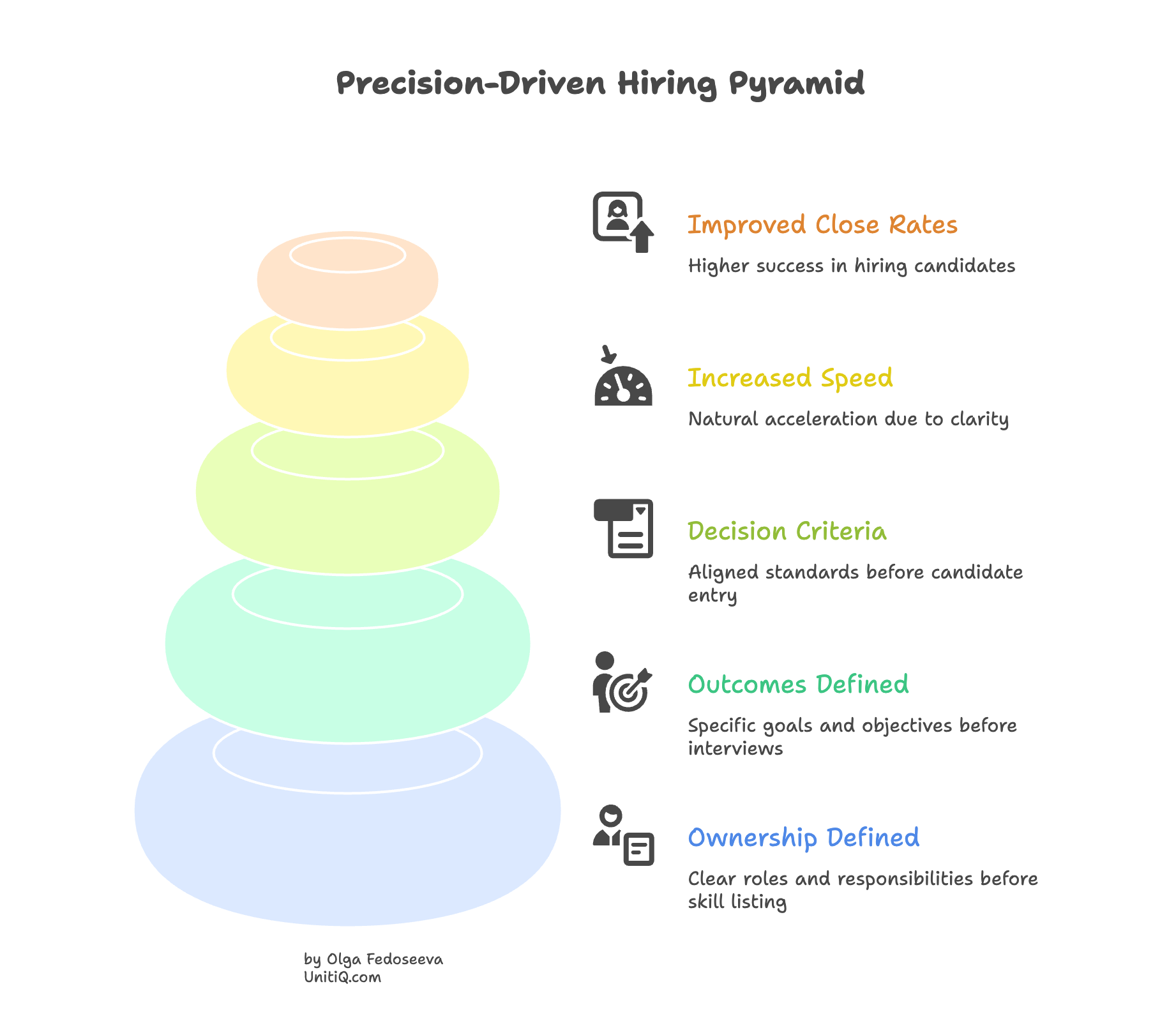
Because:
- Fewer interviews are needed
- Decisions are cleaner
- Offers are made with confidence
- Close rates improve
Speed becomes a byproduct of clarity.
The Real Bottleneck Is Role Definition
Founders often confuse urgency with clarity.
When internal clarity is missing, bringing in fractional hiring ownership can help define roles, decision rights, and success criteria before scaling headcount.
But ask yourself:
- Can I define what success looks like 6 months from now?
- Do I know what decisions this role owns independently?
- Can I explain why this role exists in under 90 seconds?
If not, hiring faster won’t solve it.
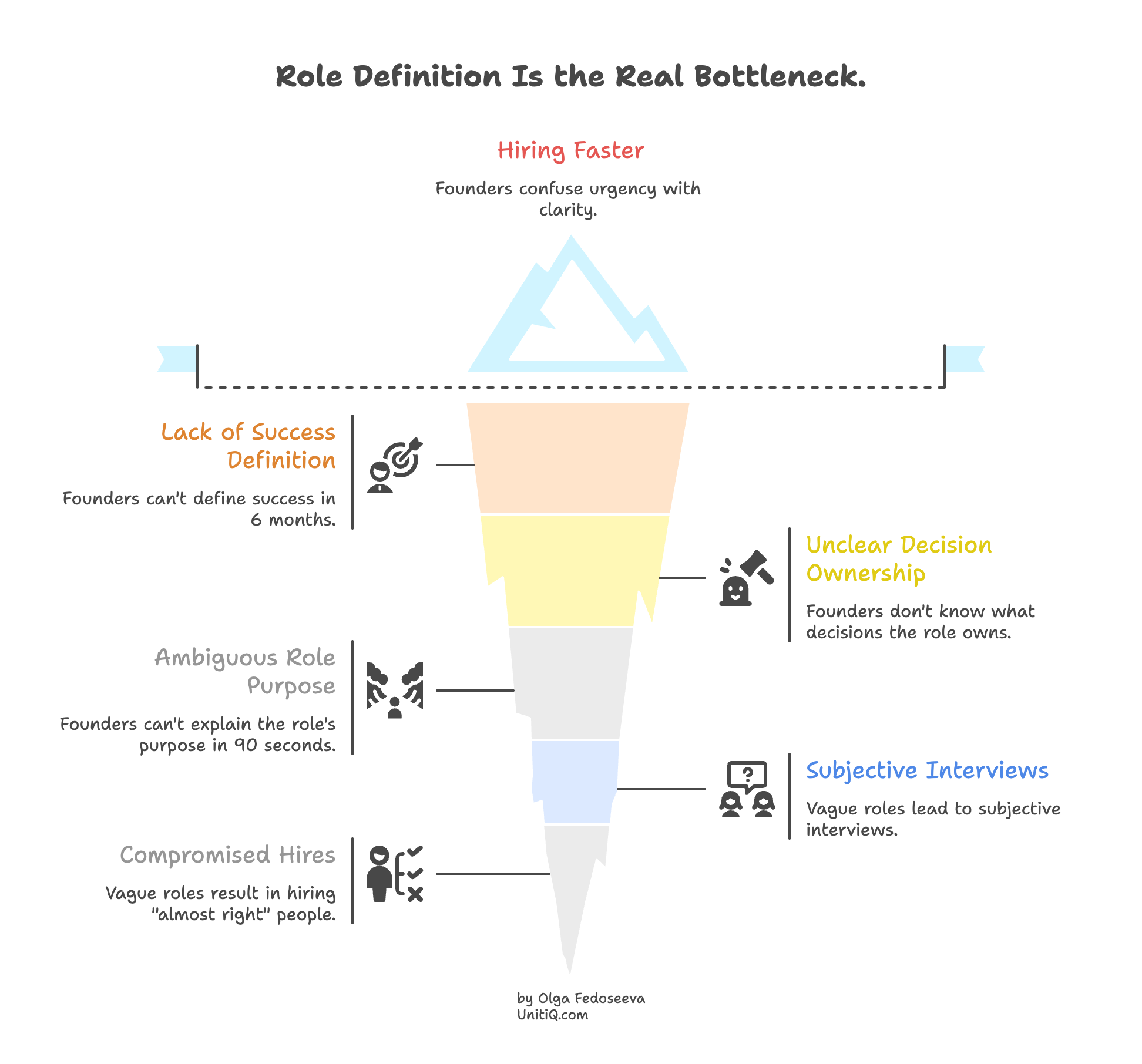
It will compound ambiguity.
As we explain in How Startups Define Roles Wrong (And Why They Keep Hiring “Almost Right” People), vague roles create subjective interviews and compromised hires.
The Hidden Cost of Speed-Only Hiring
Founders usually calculate speed in weeks.
But they pay in quarters.
Speed-only hiring creates:
- Execution drift (3–6 months of adjustment)
- Leadership attention tax
- Coordination complexity
- Cultural signal damage
Every rushed hire increases system entropy.
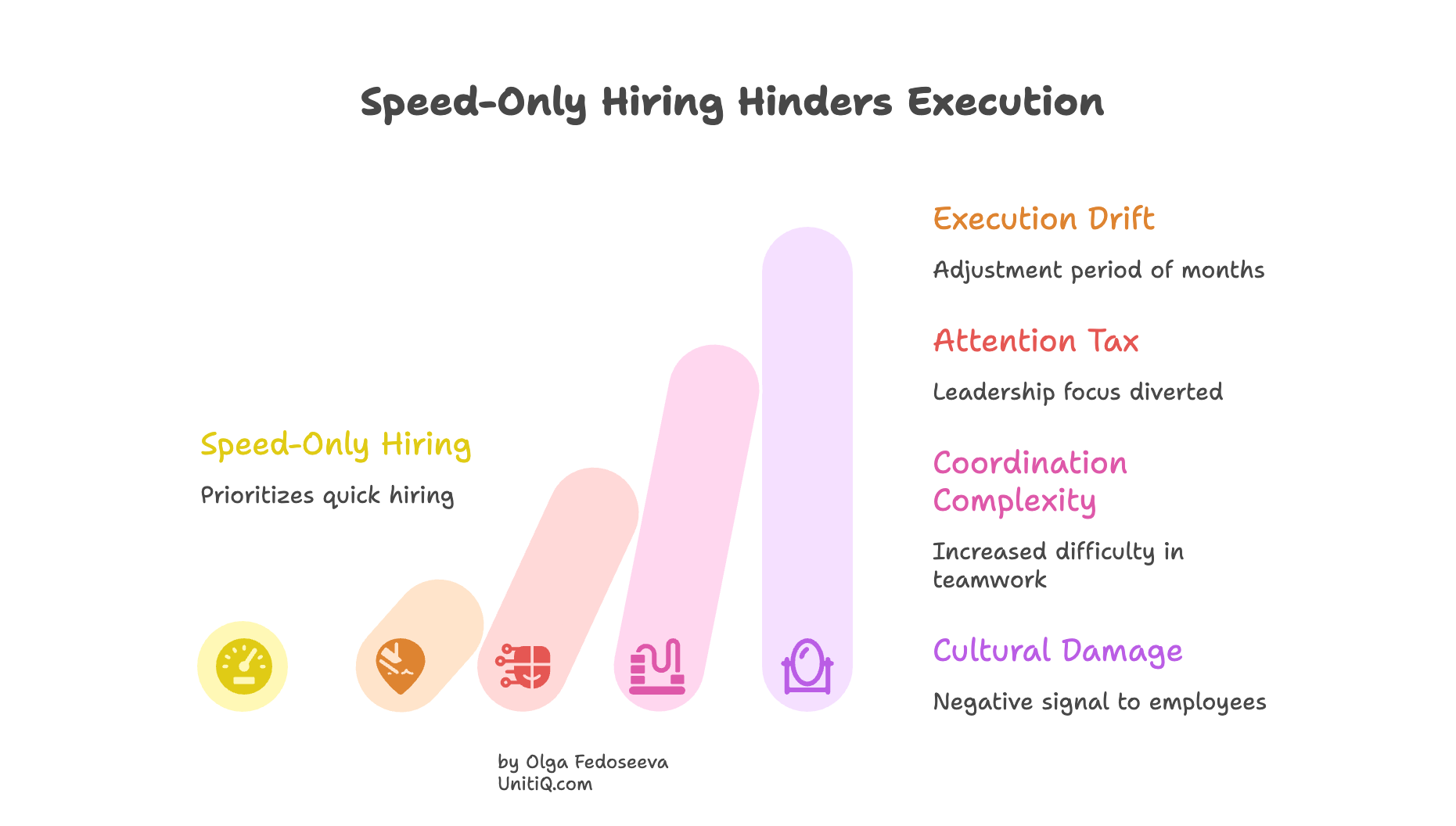
And entropy slows scale.
This connects directly to Hiring Is Not the Bottleneck — Execution Capacity Is — adding people without structural readiness reduces velocity.
What Precision Hiring Actually Looks Like
Precision is not bureaucracy.
It’s alignment.
At an execution level, it means:
1. Start From the Business Constraint
Not the job description.
What outcome is blocked?
What decision is overloaded?
What delivery milestone is at risk?
2. Define Ownership Before Competencies
Skills matter.
But ownership clarity determines leverage.
Without clear decision rights, even senior hires stall.
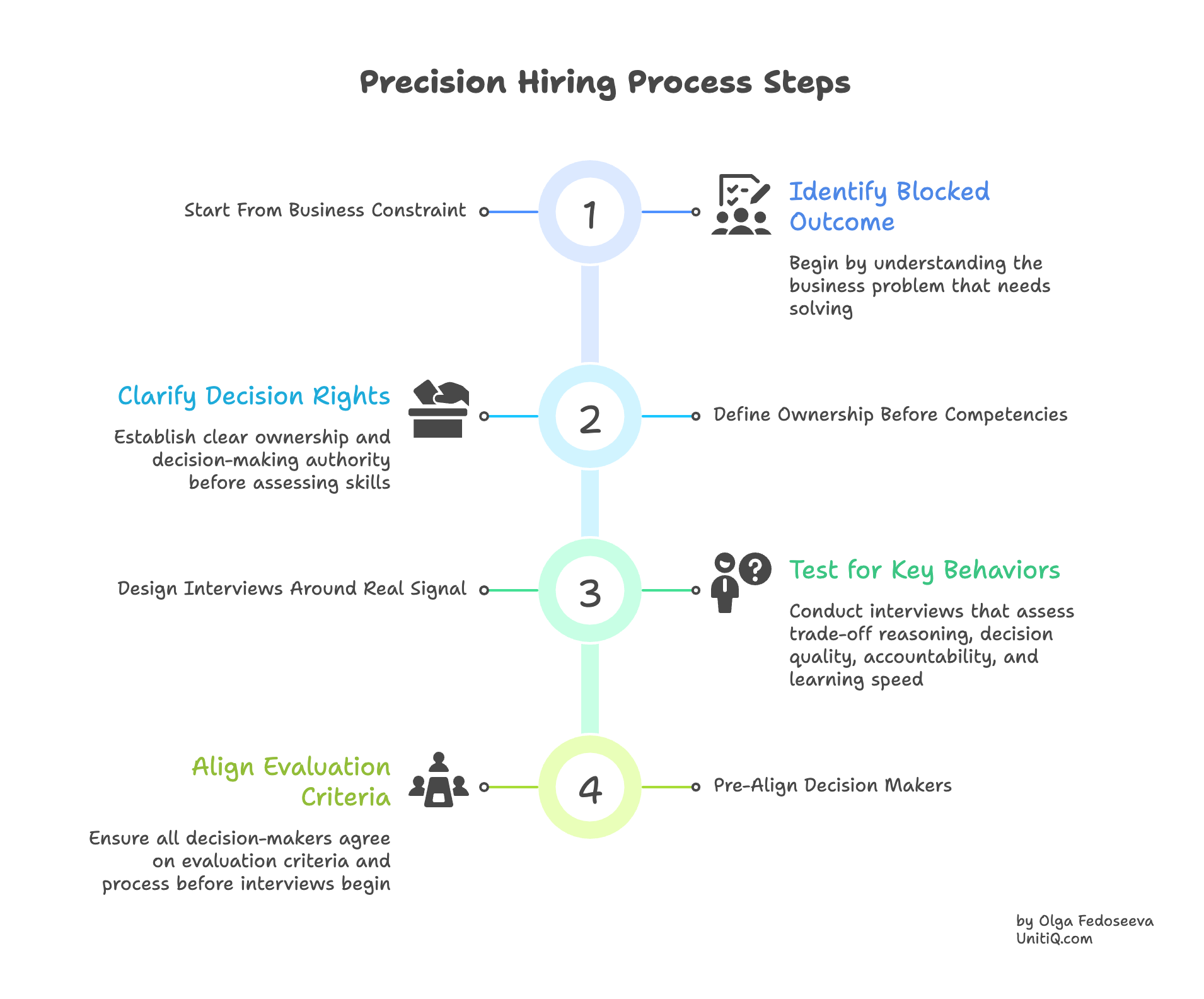
3. Design Interviews Around Real Signal
Test for:
- Trade-off reasoning
- Decision quality under pressure
- Accountability reflex
- Learning speed
Not just credentials or narrative confidence.
4. Pre-Align Decision Makers
Many “slow” hiring processes are not slow because of candidates.
They are slow because internal decision ownership is unclear.
When evaluation criteria are aligned upfront, decisions accelerate.
Speed Without Precision Creates Rework
The irony?
Founders rush hiring to avoid delay.
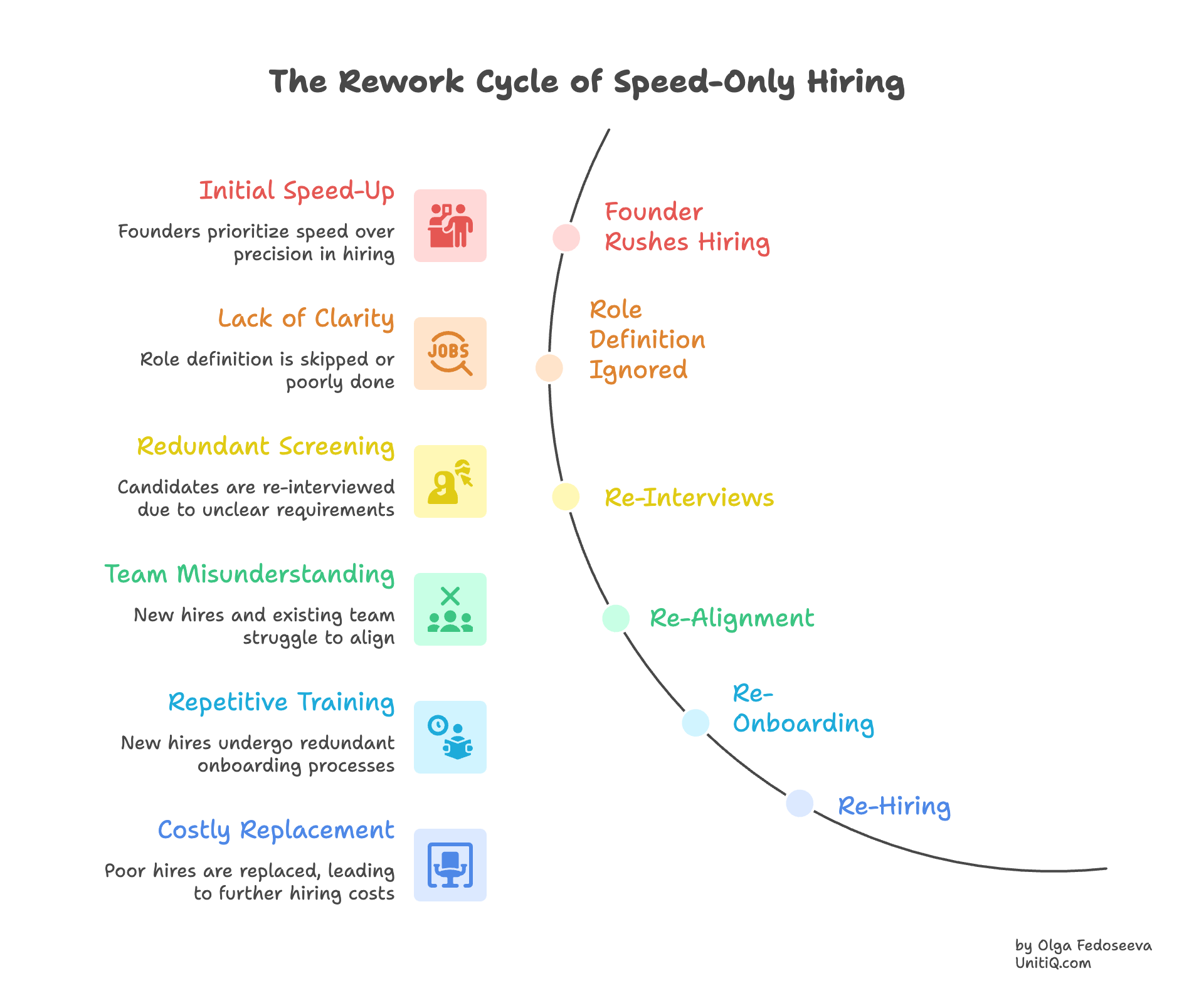
But speed without structure creates:
- re-interviews
- re-alignment
- re-onboarding
- re-hiring
Which costs more time than designing the role properly in the first place.
The Real Formula
It’s not:
Speed vs Precision.
It’s:
Clarity → Precision → Speed.
For founders who want hiring to compound instead of reset every time, we’ve explained how this infrastructure works in Recruitment as a Subscription — a model designed to reduce execution risk across multiple roles, not just fill one.
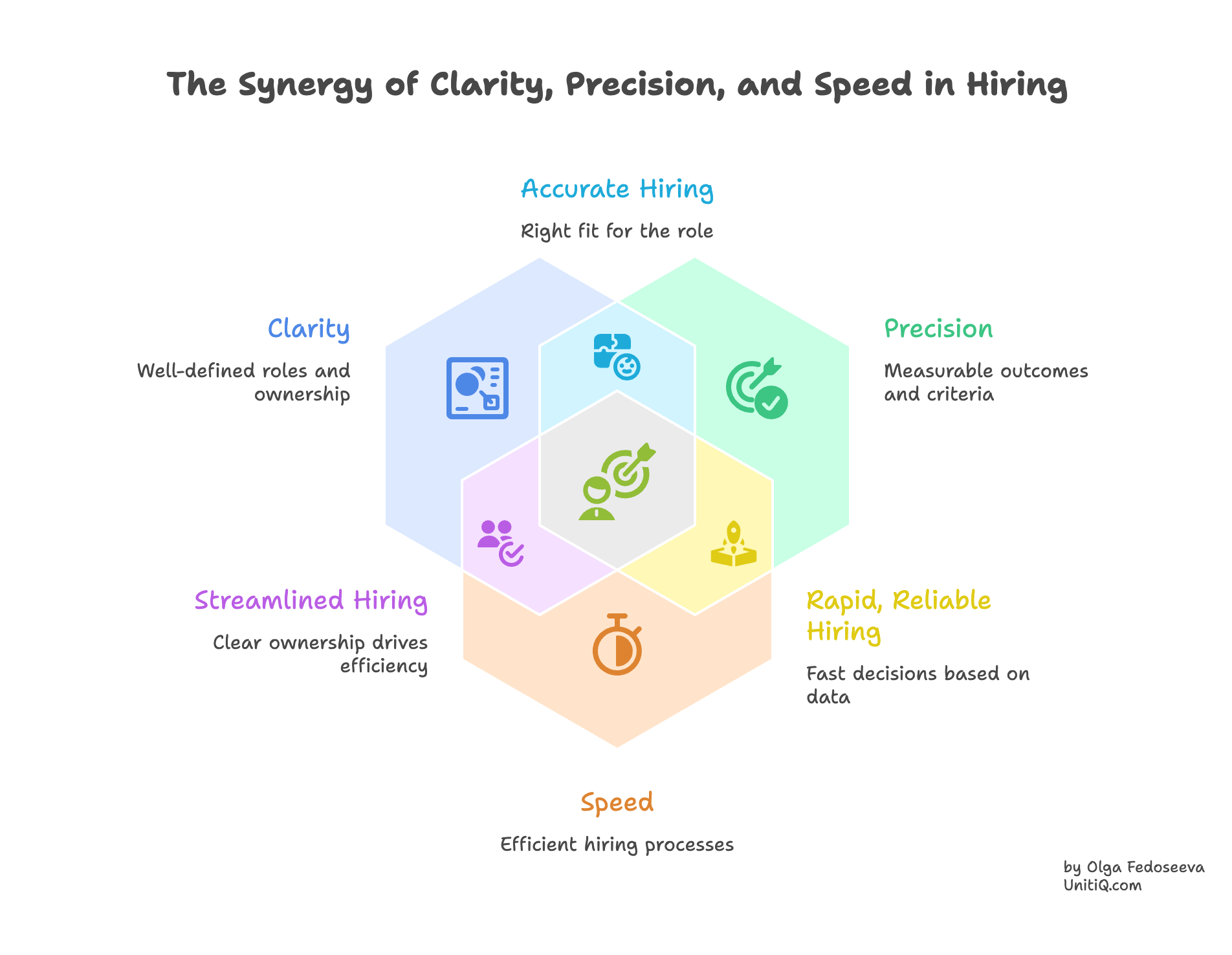
When ownership is defined and outcomes are measurable:
Hiring becomes easier.
Interviews become sharper.
Decisions become faster.
Confidence increases.
And hiring stops feeling like gambling.
FAQ
Is hiring fast bad for startups?
No. Hiring without role clarity and decision alignment is what creates risk. Speed with precision accelerates execution. Speed without structure increases coordination cost.
What is precision hiring?
Precision hiring means defining ownership, success metrics, and evaluation criteria before sourcing begins — ensuring interviews test execution capability, not just experience.
Why do fast hires fail in startups?
Fast hires often fail because roles are underdefined, decision authority is unclear, and interviews test confidence rather than real execution under ambiguity.
Final Thought
Hiring fast feels productive.
But productivity is not momentum.
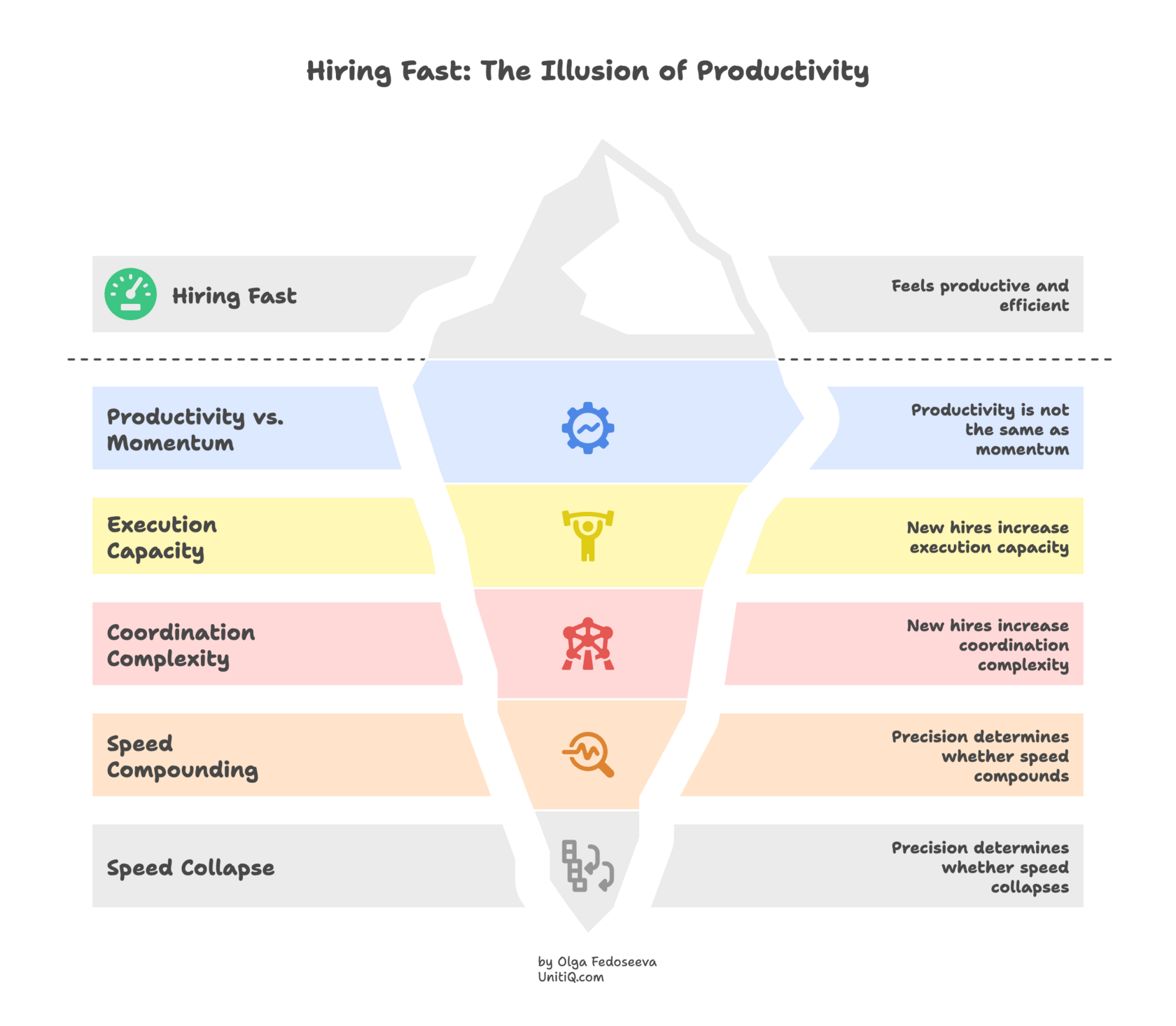
Momentum happens when new hires increase execution capacity — not coordination complexity.
Speed matters.
Precision determines whether speed compounds — or collapses.
If you want to sanity-check which model fits your current stage — and where execution is actually breaking — we can walk through it together.
About the author
Olga Fedoseeva is the Founder of UnitiQ, a talent acquisition and People Projects partner for Tech Startups across EU, UKI, and MENA.
She works with founders in Fintech, AI, Crypto, and Robotics to prevent mis-hires before they compound — restoring execution momentum and protecting teams from quiet burnout.


