
Why Most Hiring Advice Fails Startups
And Why Following It Often Makes Talent Acquisition Worse
Most hiring advice sounds reasonable.
“Hire slow.”
“Focus on culture fit.”
“Use structured interviews.”
“Add more stakeholders.”
“Don’t compromise.”
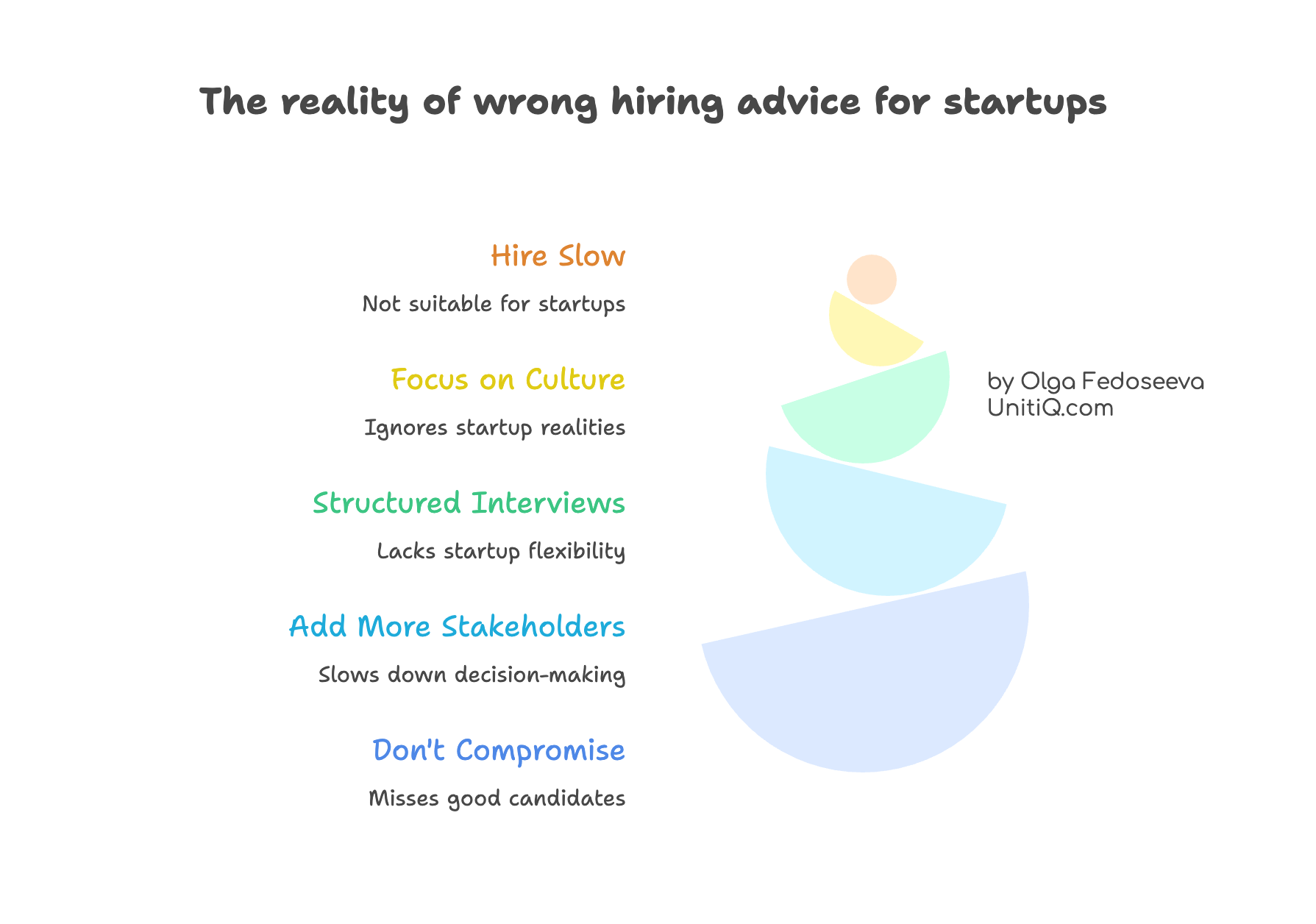
Founders follow this advice in good faith — and still end up stuck in hiring mode, reviewing endless candidates, and making decisions that don’t increase confidence.
The real reason most hiring advice fails is that it ignores a fundamental problem: uncertainty in talent acquisition drains leadership attention far more than difficult work ever does.
The problem isn’t that founders ignore hiring advice.
It’s that most hiring advice was never designed for startup conditions in the first place.
Hiring Advice Assumes Stability. Startups Operate in Flux.
Most hiring frameworks assume:
- stable roles
- predictable execution
- clear success metrics
- low cost of delay
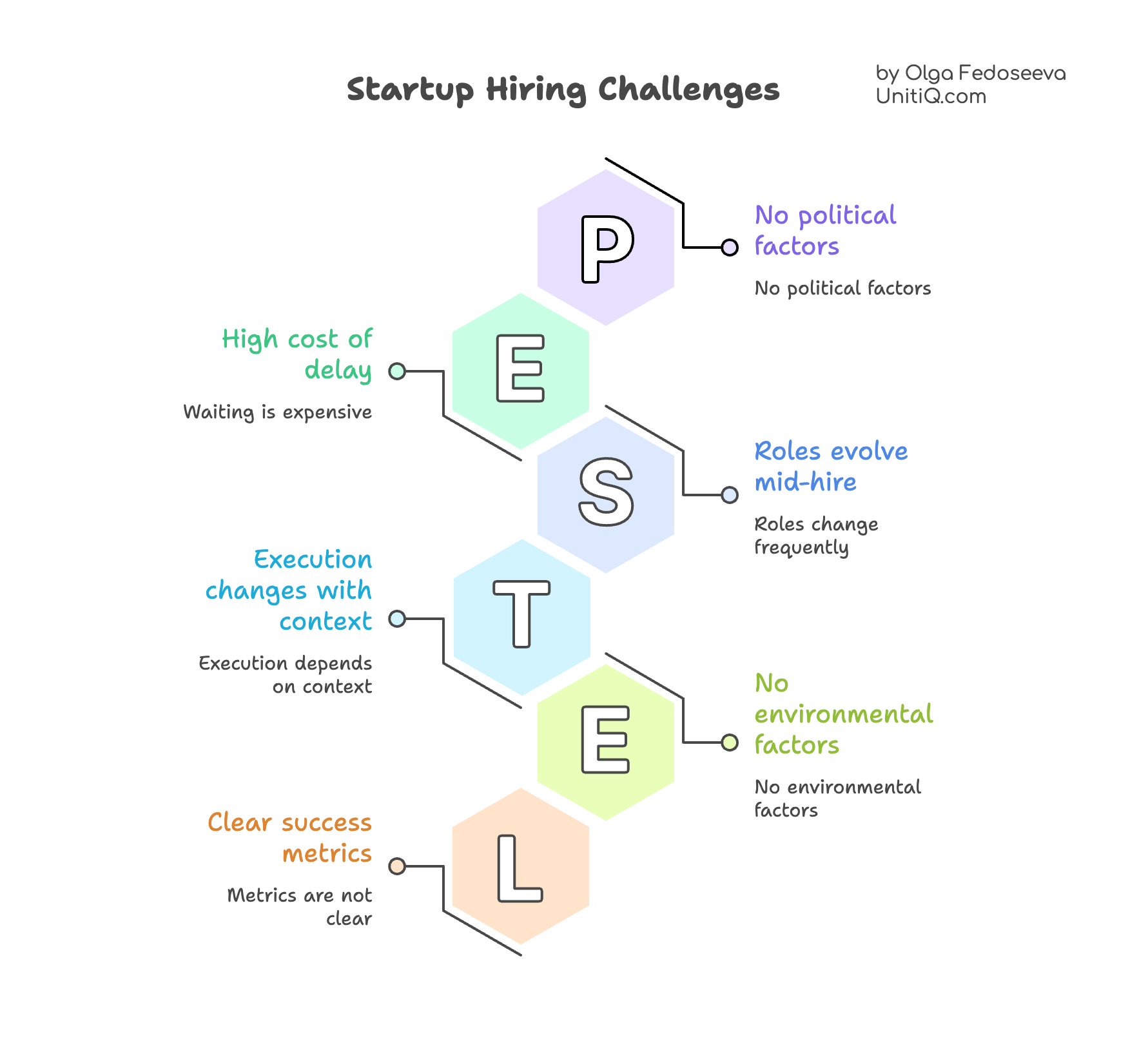
Startups have none of these.
In a scaling company:
- roles evolve mid-hire
- execution changes with context
- priorities shift quarter to quarter
- the cost of waiting is often higher than the cost of hiring
Advice designed for stable environments doesn’t just fail here —
it creates more uncertainty.
Startups rarely fail because they lack advice; they fail because they lack a hiring model that adapts continuously as execution changes.
Why “Best Practices” Break Talent Acquisition
1. “Hire Slow” in High-Uncertainty Environments
Hiring slowly only works when success is clearly defined.
In startups, hiring often slows because:
- execution expectations are unclear
- signals conflict
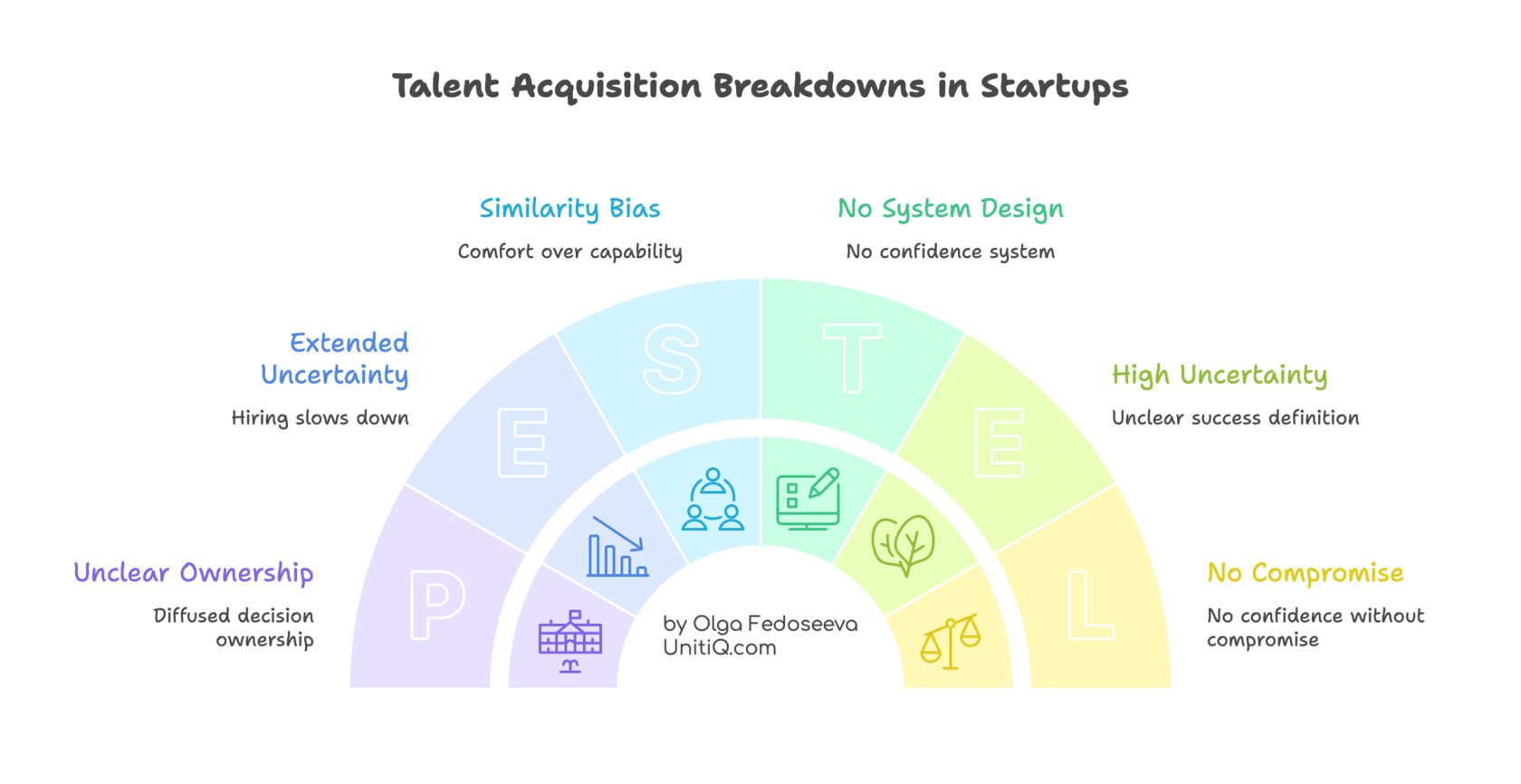
- decision ownership is diffused
“Hire slow” in this context doesn’t improve quality —
it extends uncertainty and keeps leaders trapped in decision loops.
The issue isn’t speed.
It’s confidence.
This is why founders end up reviewing candidate after candidate who feels close but never decisive. In practice, “almost right” isn’t a talent problem — it’s a signal that execution was never clearly defined.
2. “Add More Interviews” to Reduce Risk
This is one of the most common failure modes.
More interviews feel safer.
They look rigorous.
They create activity.
But when execution isn’t defined and ownership isn’t clear, more interviews:
- multiply opinions
- amplify noise
- reduce decision clarity
Teams don’t feel more confident.
They feel more hesitant.
Adding more interviews and opinions rarely reduces risk when no one clearly owns the hiring decision — it only spreads uncertainty across more people.
3. “Culture Fit” Without Execution Context
Culture fit advice often collapses into:
- “Would I enjoy working with this person?”
- “Do they feel like us?”
In startups, this is dangerous.
Without execution context, “culture fit” becomes:
- similarity bias
- comfort bias
- familiarity over capability
And it does nothing to reduce hiring uncertainty.
4. “Don’t Compromise” Without System Design
Founders are told not to compromise — and then given no system that allows confidence without compromise.
So what happens?
- roles stay open too long
- teams burn out
- leaders eventually compromise anyway
Compromise isn’t a moral failure.
It’s what happens when systems don’t produce confidence.
If you want to sanity-check what’s breaking in your hiring system, we can walk through it together.
👉 Book a conversation
👉 Book a conversation
The Hidden Assumption Behind Most Hiring Advice
Most advice assumes this:
If you follow the right process, good decisions will emerge.
In startups, this is false.
Process without:
- clear execution definition
- explicit decision ownership
- aligned signals
doesn’t produce clarity.
It produces activity that feels responsible but doesn’t reduce uncertainty.
Why Founders Feel the Advice Is Right — But Can’t Use It
This creates a quiet psychological trap.
Founders read hiring advice and think:
- “This makes sense.”
- “We should be doing this.”
- “Why isn’t this working for us?”
The gap isn’t discipline.
It’s context.
Hiring advice that ignores uncertainty, execution ambiguity, and leadership risk cannot be applied cleanly in startups — no matter how smart the founder is.
What Actually Works Instead
Effective talent acquisition in startups starts with different assumptions:
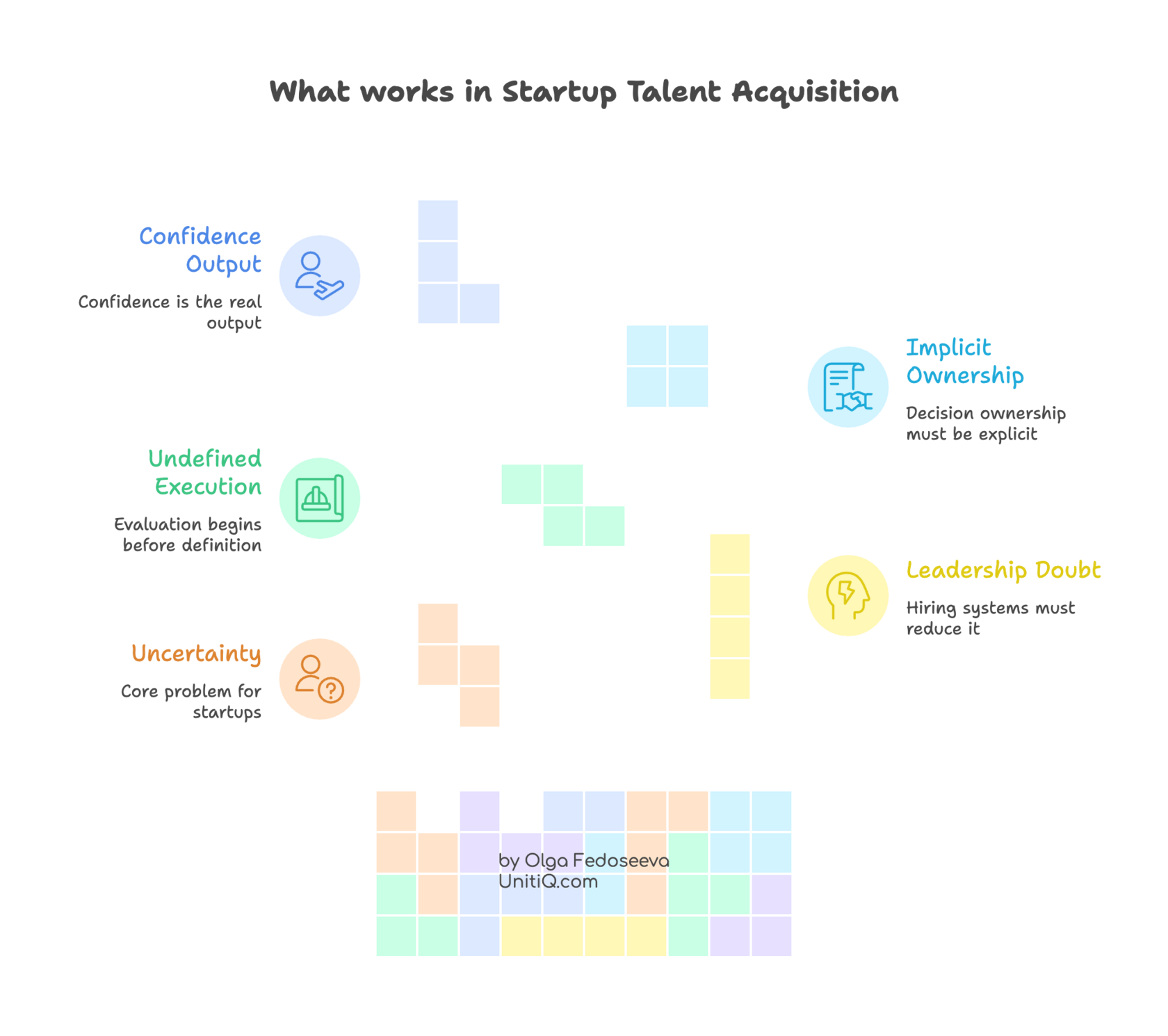
- Uncertainty is the core problem, not talent scarcity
- Hiring systems must reduce leadership doubt, not just move candidates
- Execution must be defined before evaluation begins
- Decision ownership must be explicit
- Confidence is the real output of hiring — not offers sent
When these are in place:
- hiring speeds up naturally
- fewer candidates feel “almost right”
- leaders step out earlier
- teams regain execution momentum
Why This Matters More Than Ever
As startups scale:
- the cost of leadership attention rises
- the cost of execution drag compounds
- bad hires are rarely obvious — but always expensive
Following generic hiring advice in this environment doesn’t just slow growth.
Over time, following generic hiring advice doesn’t just slow recruiting — it creates hidden costs that quietly erode execution, morale, and leadership focus.
It quietly locks uncertainty into the system.
That’s why so many teams feel like they’re “doing hiring right” —
and still can’t get out of hiring mode.
How This Fits the UnitiQ Perspective
This article connects directly to the broader system you’ve been building:
Together, they explain why most advice fails — and what replaces it.
TL;DR / Key Takeaways
- Most hiring advice assumes stable environments startups don’t have
- Adding process doesn’t reduce uncertainty when execution is unclear
- More interviews amplify noise, not confidence
- “Culture fit” without execution context increases bias
- Compromise is a system outcome, not a leadership failure
- Effective hiring reduces uncertainty before candidates are evaluated
About the author
Olga Fedoseeva is the Founder of UnitiQ, a talent acquisition and People Projects partner for Tech Startups across EU, UKI, and MENA.
She works with founders in Fintech, AI, Crypto, and Robotics to prevent mis-hires before they compound — restoring execution momentum and protecting teams from quiet burnout.


