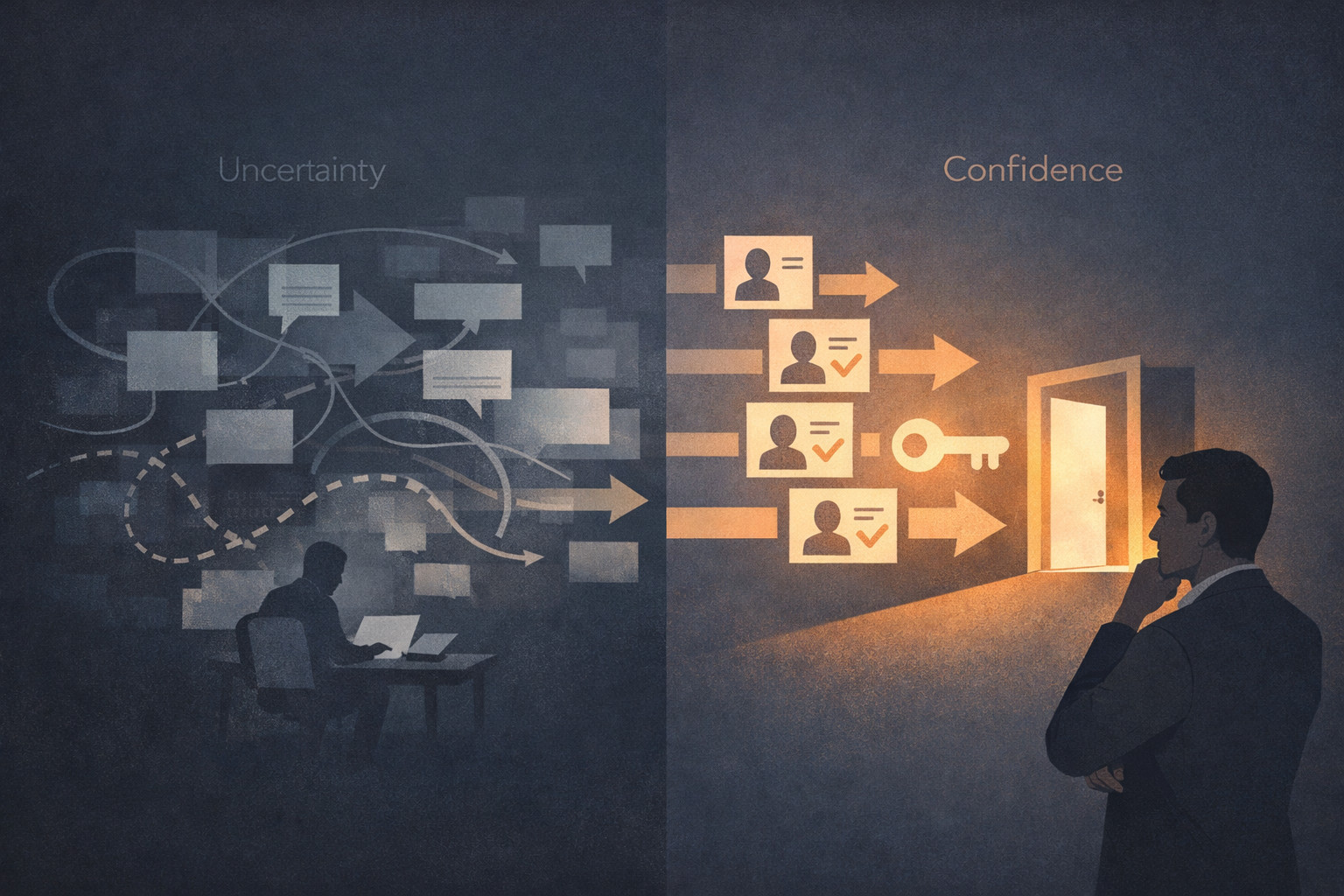
How to Choose the Right HR Partner When Hiring Is Blocking Execution
Most founders don’t start looking for an HR partner because they “need HR.”
They do it because hiring has started to interfere with execution.
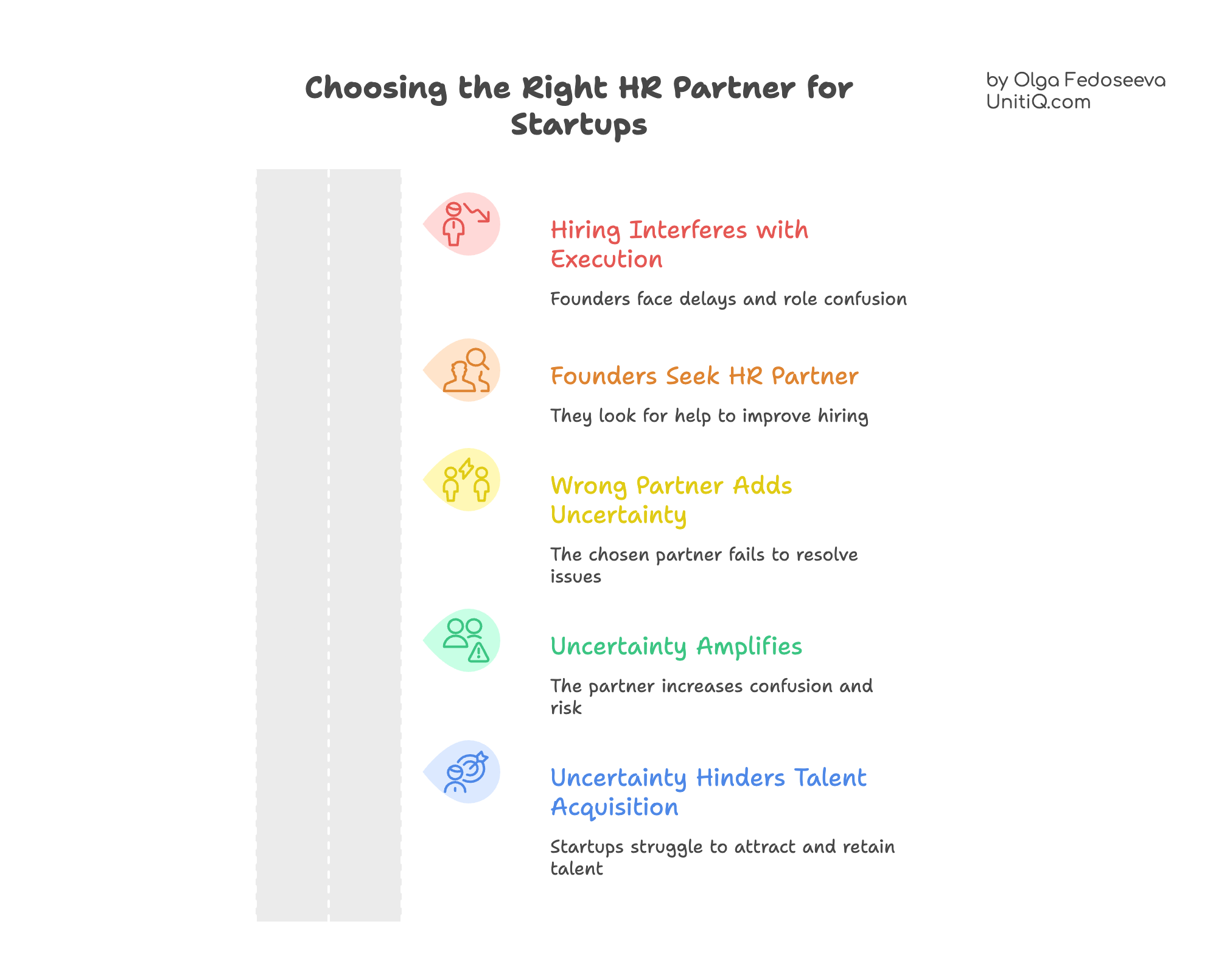
Decisions take longer.
Roles feel unclear.
Leaders stay involved longer than they should.
And every hire feels riskier than the last one.
At this stage, choosing the wrong HR partner doesn’t just fail to help —
it adds another layer of uncertainty to an already fragile system.
This is why uncertainty is the real enemy of talent acquisition in scaling startups.”
This article isn’t about what HR partners offer.
It’s about how to tell whether a partner will reduce uncertainty or quietly amplify it.
The Real Job of an HR Partner in a Scaling Company
In early and mid-stage startups, the primary role of an HR partner is not:
- Policy design
- Compliance ownership
- Employer branding campaigns
- “Best practices” implementation
Those come later.
The real job is simpler — and harder:
To reduce leadership uncertainty in hiring so execution can move forward without constant intervention.
Because at this stage, hiring is not the real bottleneck — execution capability is.
Any partner that doesn’t explicitly understand this will default to activities instead of outcomes.
Why Most HR Partners Fail Startups (Even Good Ones)
Most HR partners are built for stability, not ambiguity.
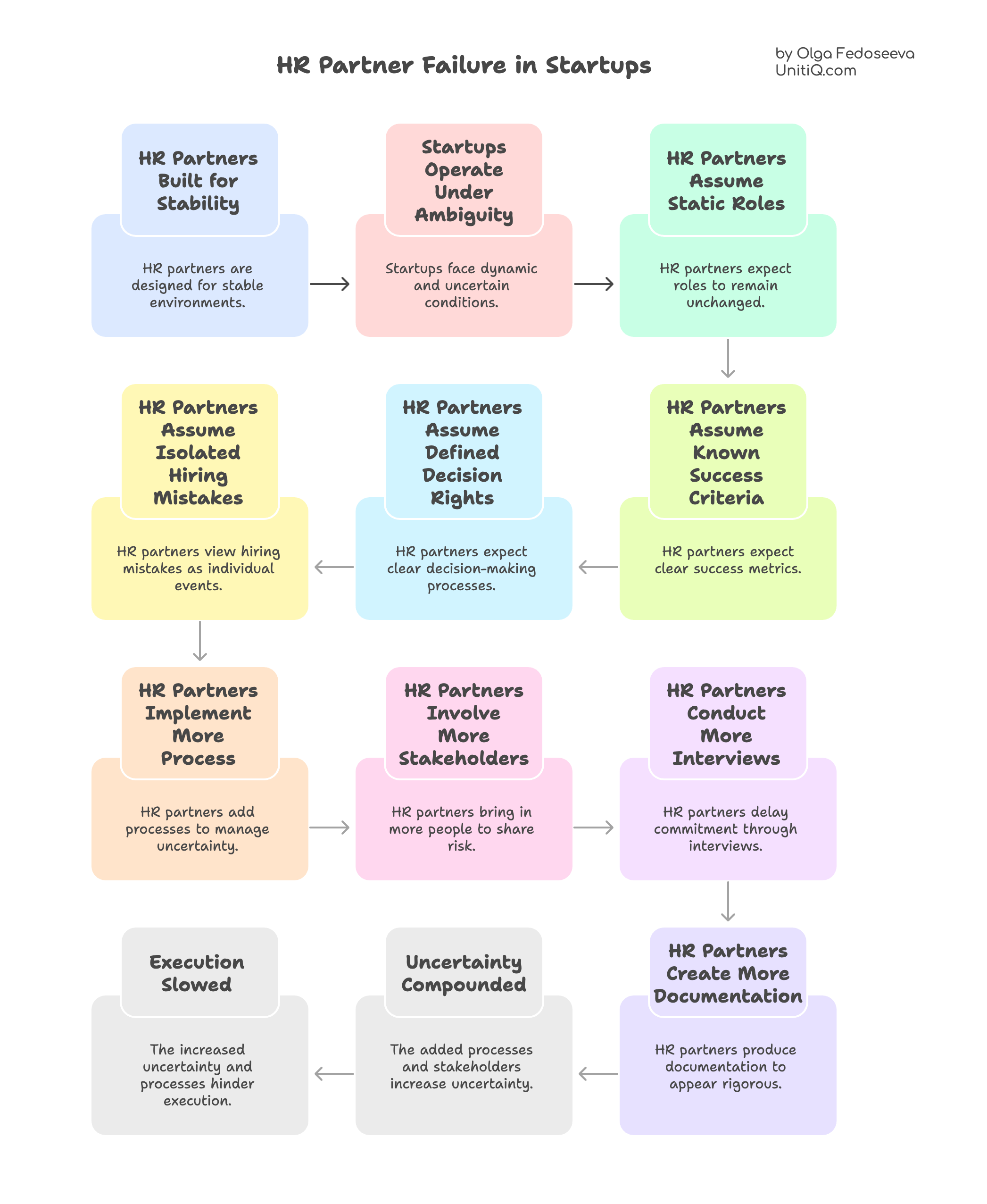
They assume:
- Roles are static
- Success criteria are known
- Decision rights are already defined
- Hiring mistakes are isolated events
Startups operate under the opposite conditions.
So HR partners often respond with:
- More process to compensate for uncertainty
- More stakeholders to share perceived risk
- More interviews to delay commitment
- More documentation to appear rigorous
None of this reduces uncertainty.
“It simply compounds the hidden cost of hiring uncertainty while leadership stays trapped in the loop.
It just slows execution while leadership stays trapped in the loop.
The First Question to Ask: What Problem Do They Think They’re Solving?
Before evaluating experience, tools, or references, ask this:
“What do you believe is broken when hiring stops working?”
Listen carefully.
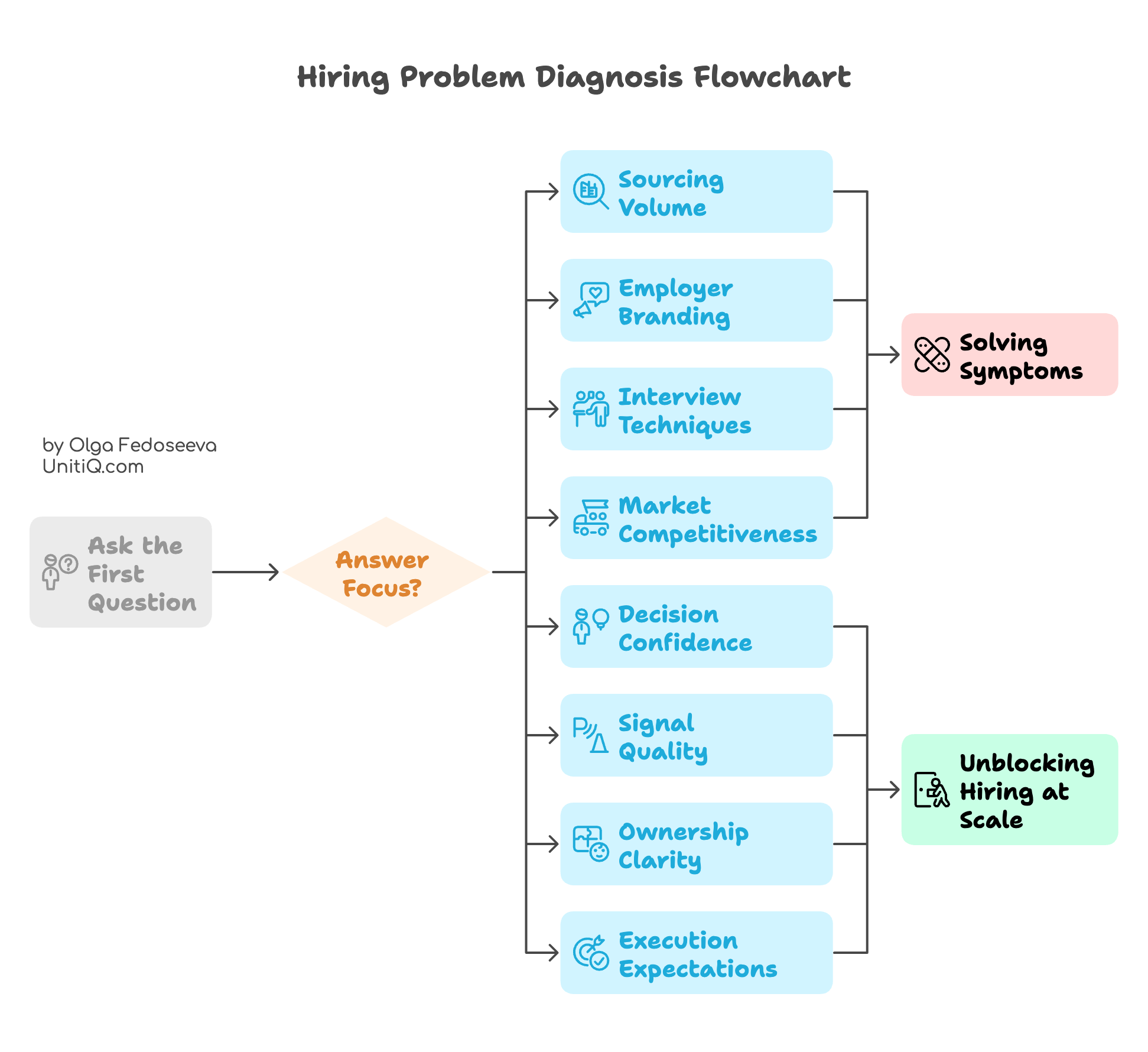
If the answer focuses on:
- Sourcing volume
- Employer branding
- Interview techniques
- Market competitiveness
They are solving symptoms.
You want a partner who talks about:
- Decision confidence
- Signal quality
- Ownership clarity
- Execution expectations
Because those are the things that actually unblock hiring at scale.
If you want to sanity-check what’s breaking in your hiring system, we can walk through it together.
👉 Book a conversation
👉 Book a conversation
Red Flag #1: They Optimise for Process, Not Decisions
Strong HR partners don’t obsess over how many steps the process has.
They obsess over:
- Who owns the decision
- What signals matter most
- When escalation happens
- When leadership exits the loop
If a partner can’t clearly explain:
- Who decides, and
- Based on what,
they will inevitably push risk upward — back to founders and executives.
This is exactly when talent acquisition breaks when everyone has a signal but no one owns the decision.
Red Flag #2: They Can’t Articulate Execution Expectations
Ask them how they help teams define roles.
If they talk mostly about:
- Responsibilities
- Competencies
- Career paths
They’re missing the point.
Execution-focused partners help define:
- What success looks like in the first 90–180 days
- What decisions the role owns
- What ambiguity the role must absorb
- Where failure becomes visible
Without this, hiring decisions will always feel uncertain — no matter how good the candidate looks.
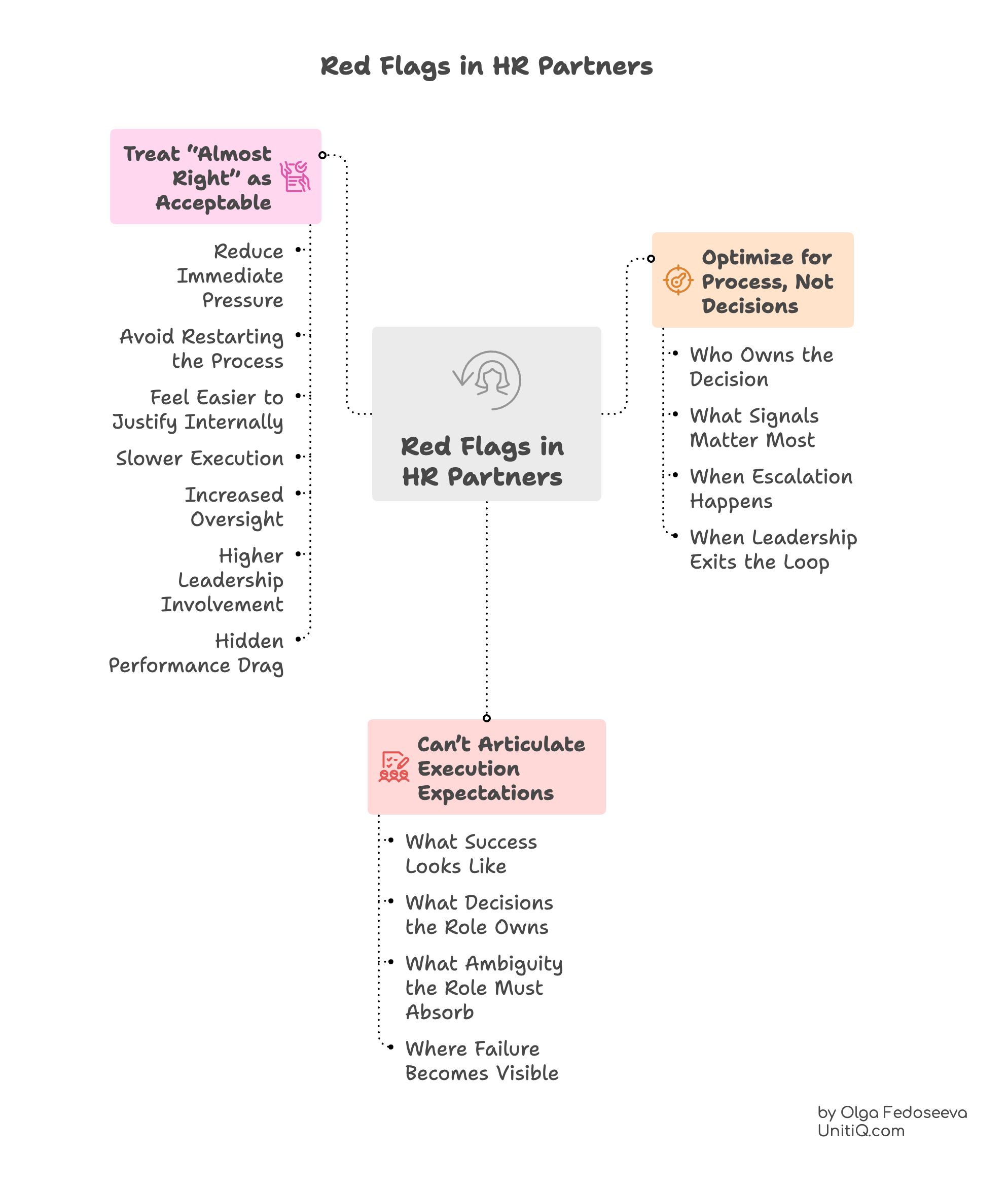
Red Flag #3: They Treat “Almost Right” as Acceptable
In uncertain systems, “almost right” candidates feel safe.
They:
- Reduce immediate pressure
- Avoid restarting the process
- Feel easier to justify internally
But they introduce long-term cost:
Because almost right’ candidates are a signal of unresolved uncertainty, not a harmless shortcut.
- Slower execution
- Increased oversight
- Higher leadership involvement
- Hidden performance drag
A strong HR partner will challenge compromise, not normalize it.
If they help you rationalize “close enough,” they are managing anxiety — not building capability.
If you want to sanity-check what’s breaking in your hiring system, we can walk through it together.
👉 Book a conversation
👉 Book a conversation
What a Strong HR Partner Actually Brings
The right HR partner doesn’t try to replace leadership judgment.
They design systems that make judgment less exhausting.
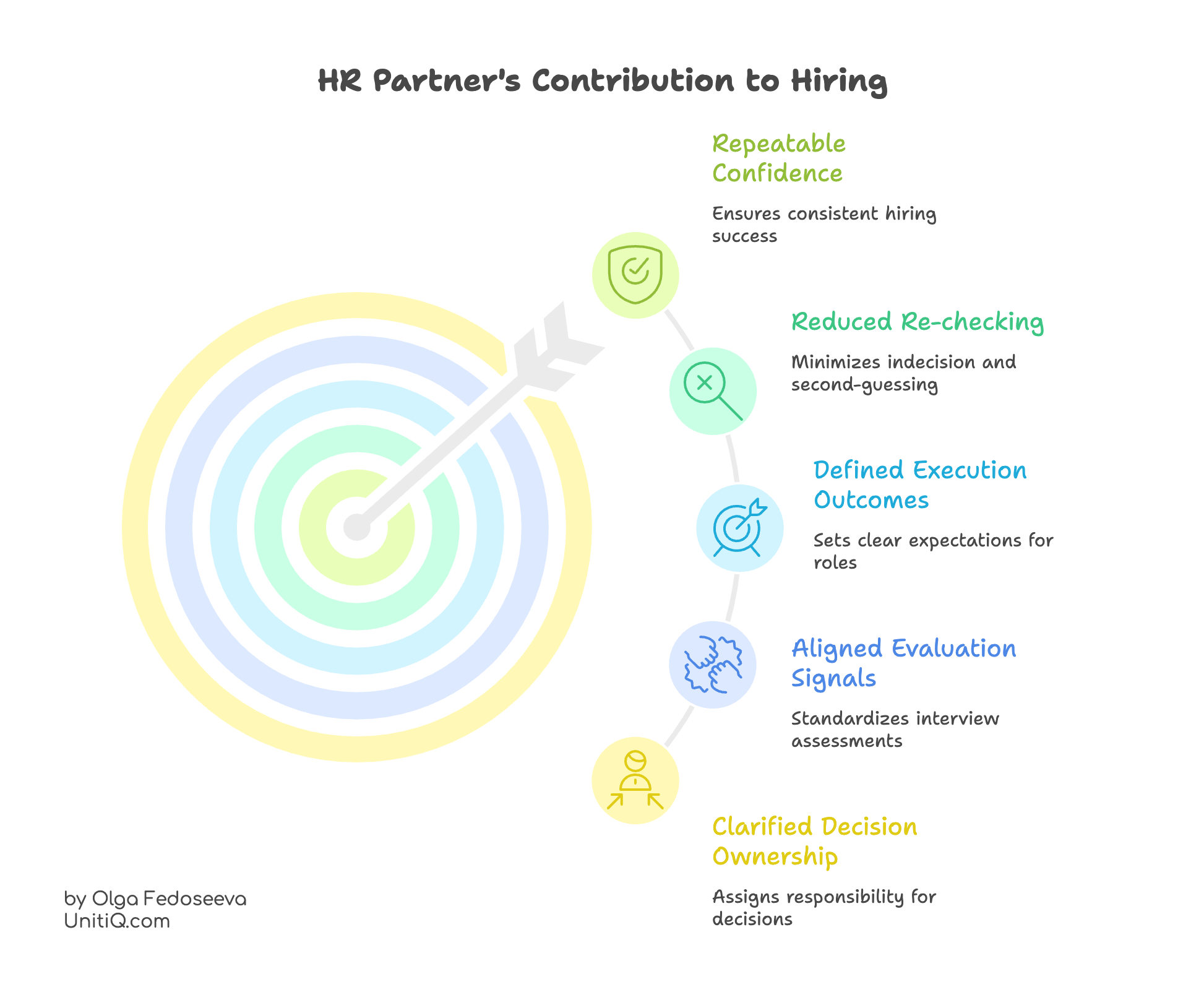
That means they help you:
- Clarify decision ownership per role
- Align evaluation signals before interviews start
- Define execution outcomes early
- Reduce re-checking and second-guessing
- Create repeatable confidence, not heroics
Their value shows up when:
- Founders step out earlier
- Decisions move faster
- Teams trust the system
- Hiring stops feeling like a constant risk surface
A Simple Test: Do They Reduce or Increase Cognitive Load?
After working with them for a few weeks, ask yourself:
- Are decisions clearer or just more documented?
- Is leadership less involved or just better informed?
- Are roles sharper or just better described?
- Is uncertainty lower — or just hidden behind process?
If cognitive load is going down, you chose well.
If it’s staying the same or rising, the partner is likely adding structure without clarity.
Choosing for the Stage You’re In — Not the Company You’ll Become
Many founders choose HR partners for the company they hope to be.
But hiring breaks in the company you are today.
Choose a partner who:
- Is comfortable operating in ambiguity
- Can work without perfect data
- Understands execution pressure
- Designs for speed and confidence
You don’t need maturity theater.
You need uncertainty reduction.
TL;DR
- Hiring breaks when uncertainty stays unresolved
- Most HR partners optimize for process, not decision confidence
- The right partner reduces leadership cognitive load
- Clear ownership and execution definition matter more than tools
- “Almost right” candidates are a signal, not a solution
- Choose a partner who helps you exit hiring — not hover over it
About the author
Olga Fedoseeva is the Founder of UnitiQ, a talent acquisition and People Projects partner for Series A–C tech startups across EU, UKI, and MENA.
She works with founders in Fintech, AI, Crypto, and Robotics who are stuck in hiring or execution mode — helping them regain momentum through execution-first hiring systems and focused People Projects.


