You didn’t plan to hire this month.
But a roadmap slipped.
A key person resigned.
Revenue is behind target.
Investors are asking questions.
So you open LinkedIn.
You message recruiters.
You post a job.
And just like that — you’re hiring under pressure.
This is panic hiring.
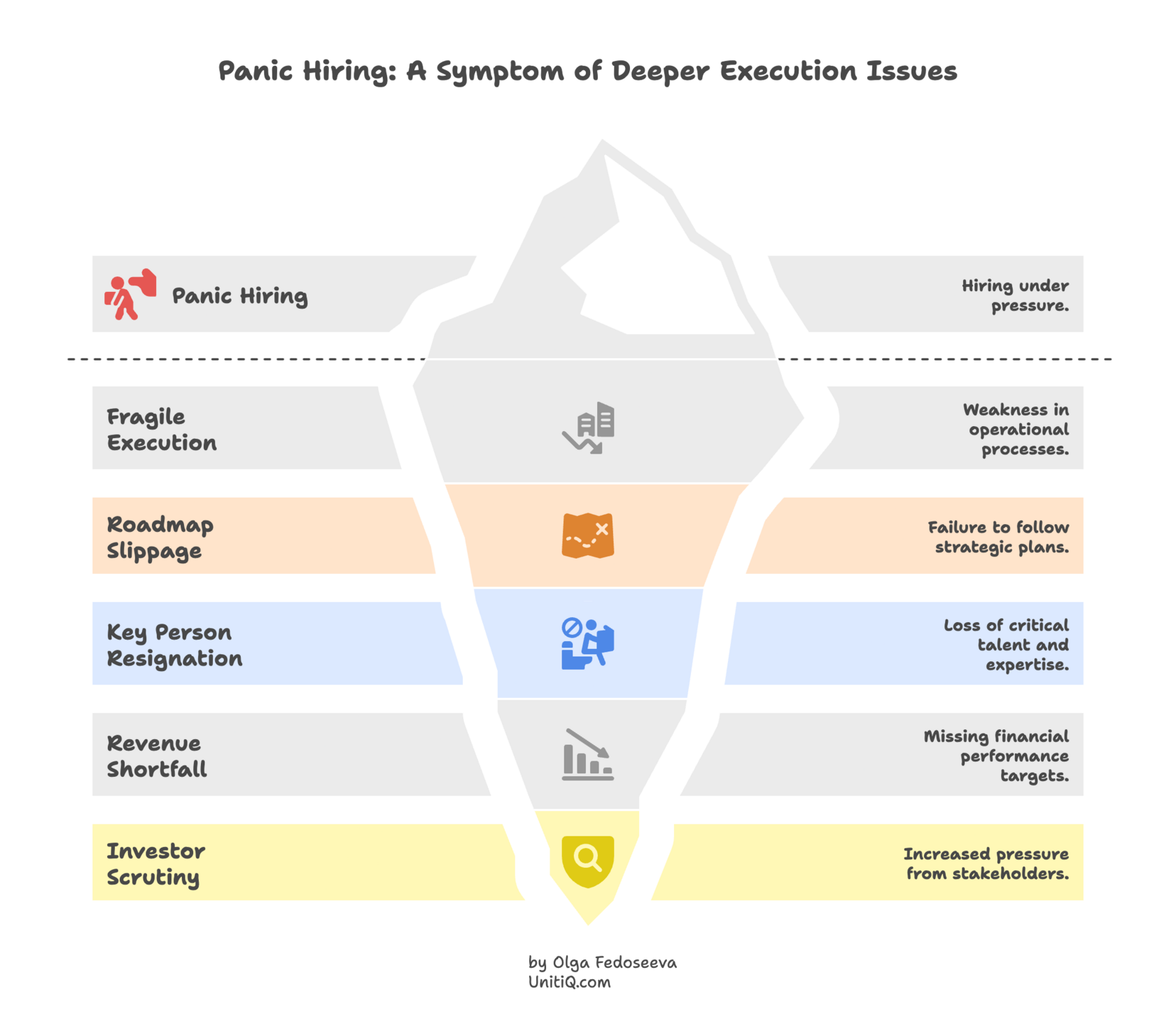
And it rarely starts with hiring.
It starts with fragile execution.
What Panic Hiring Actually Is
Panic hiring is not “moving fast.”
It’s reacting to pain without redesigning the system that caused it.
Most founders think:
“We just need one strong person to fix this.”
But in reality:
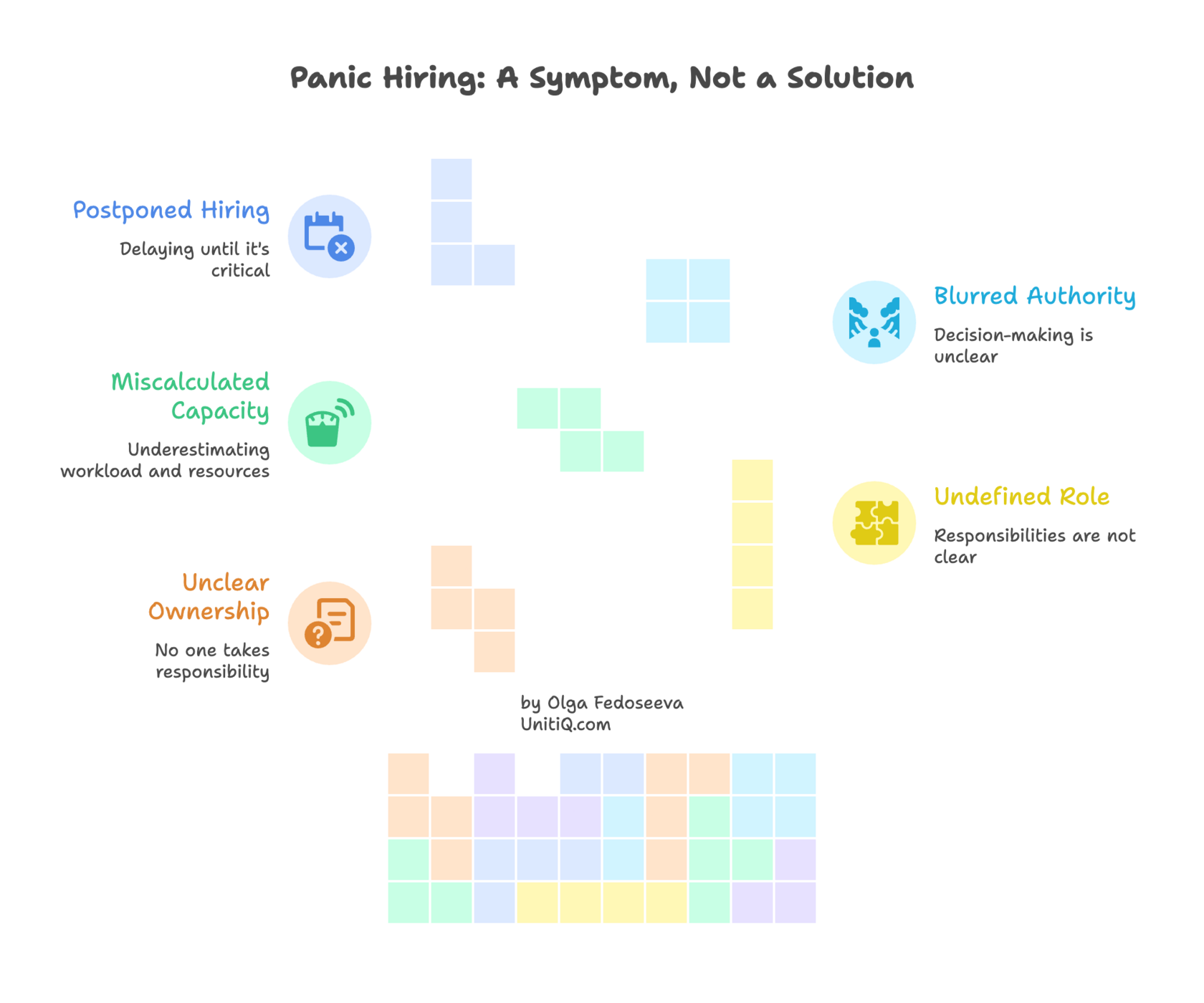
- Ownership was unclear.
- The role was undefined.
- Capacity was miscalculated.
- Decision authority was blurred.
- Hiring was postponed until it hurt.
The hire becomes the band-aid for a structural gap.
And band-aids don’t scale.
Why Founders Fall Into Panic Hiring
Especially at Seed to Series B, hiring rarely feels strategic.
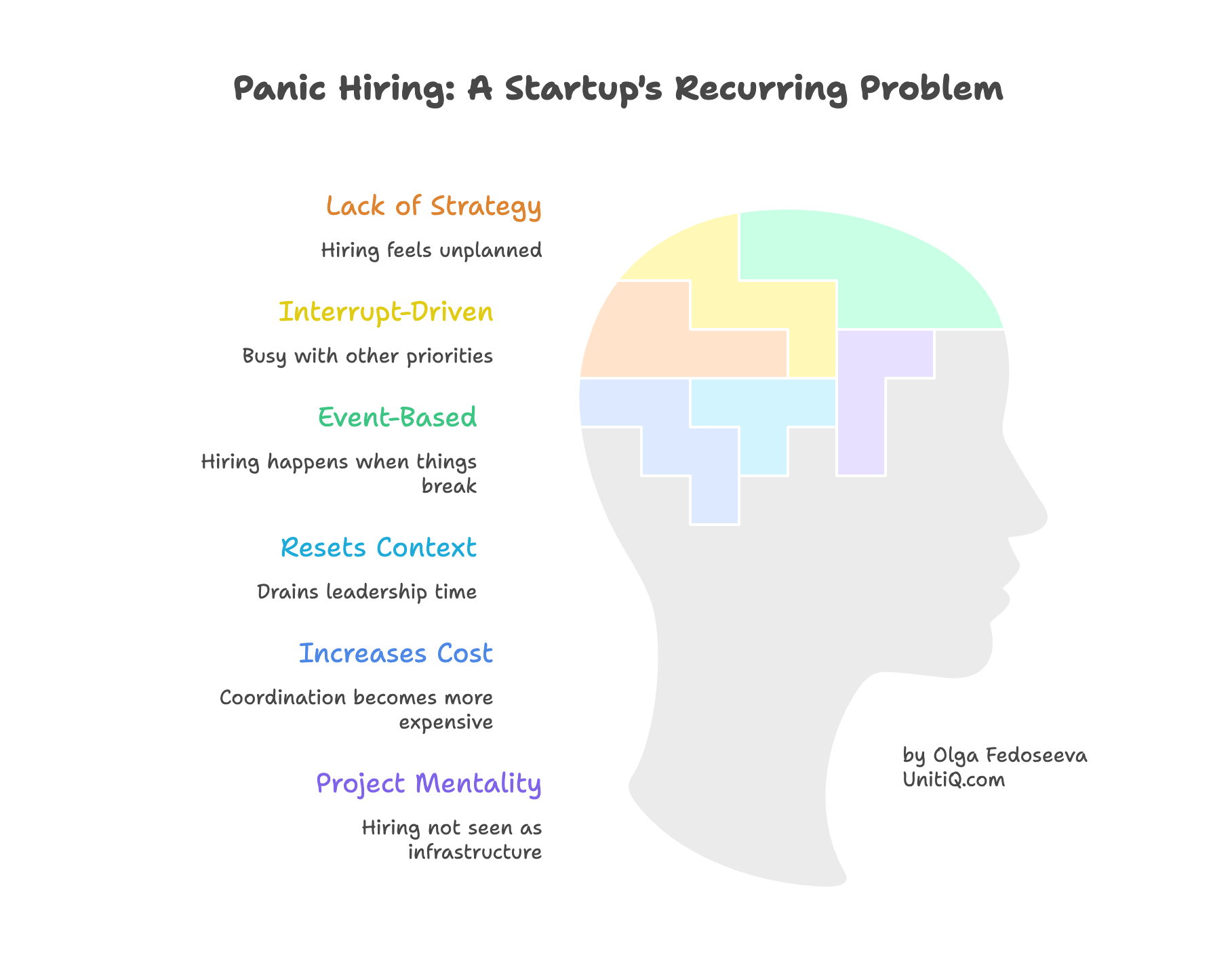
It feels interrupt-driven.
You’re busy building product.
You’re closing customers.
You’re fundraising.
You’re firefighting.
Headcount planning feels theoretical — until something breaks.
As we explain in Hiring Is Not the Bottleneck — Execution Capacity Is, adding headcount without structural readiness often slows teams instead of accelerating them.
So hiring becomes event-based.
And as we explain in Why Event-Based Hiring Keeps Resetting Your Startup, every reactive hire resets context, drains leadership time, and increases coordination cost.
The real issue isn’t urgency.
It’s that hiring is treated as a project — not infrastructure.
The Real Cost of Panic Hiring (It’s Not Salary)
Founders often calculate hiring cost as:
Salary + recruiter fee.
That’s not the real number.
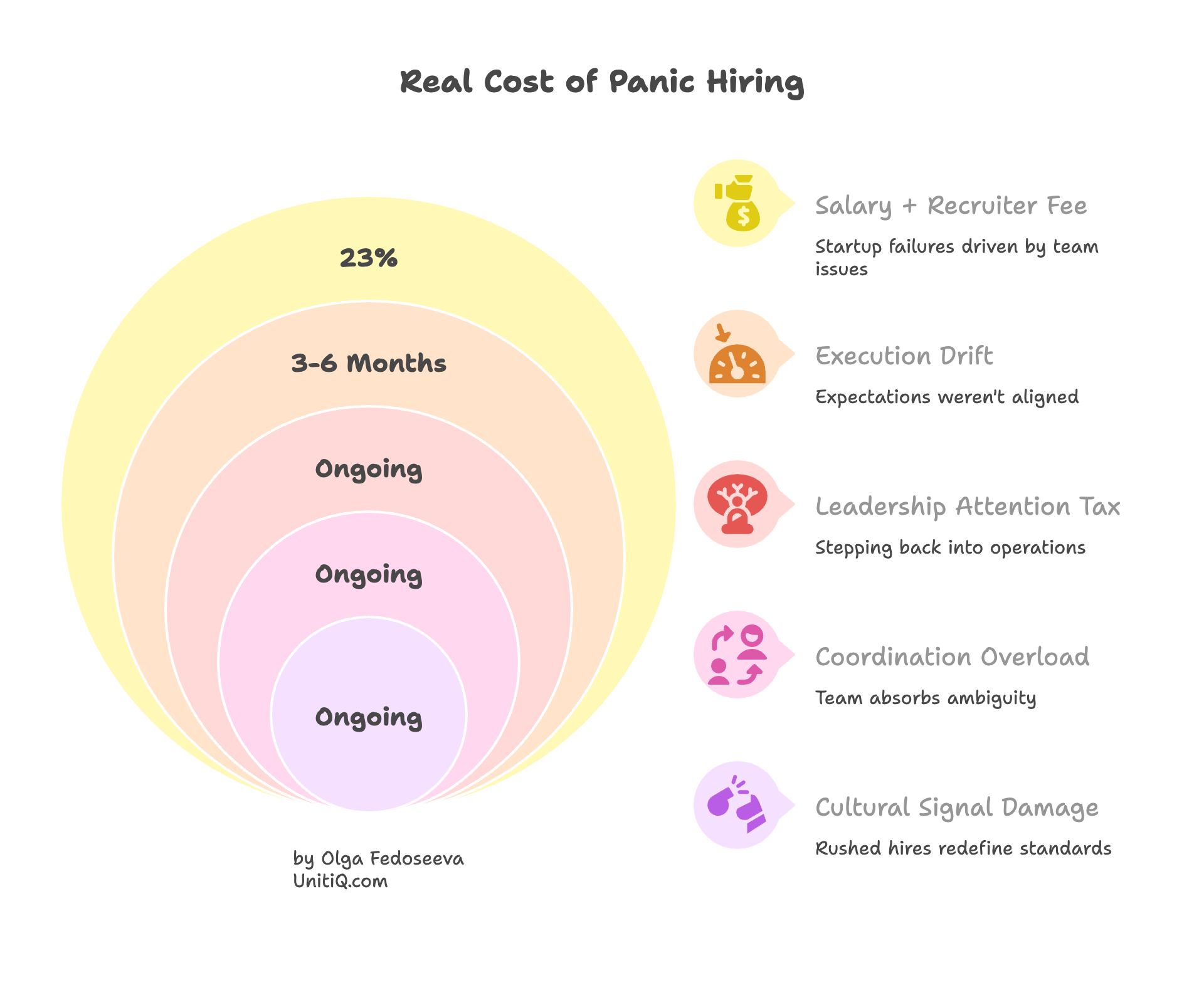
The real cost includes:
1. 3–6 Months of Execution Drift
You discover too late that expectations weren’t aligned.
In The Hidden Cost of Hiring Uncertainty, we explain why the most expensive damage rarely shows up in salary calculations — it shows up in slowed execution and leadership distraction.
2. Leadership Attention Tax
You step back into operations to compensate.
3. Coordination Overload
The team absorbs ambiguity.
4. Cultural Signal Damage
Early hires define standards.
Rushed hires redefine them — usually downward.
But those failures rarely start with “bad people.”
They start with undefined ownership.
We break this down further in The HR Mistakes That Quietly Cost Startups Execution — most hiring failures are system failures, not talent failures.
Panic Hiring Is Usually a Role Design Problem
When founders say:
“We just need someone strong.”
That usually means:
- The problem isn’t clearly scoped.
- Success metrics aren’t defined.
- Decision authority isn’t assigned.
- The team structure hasn’t been stress-tested.
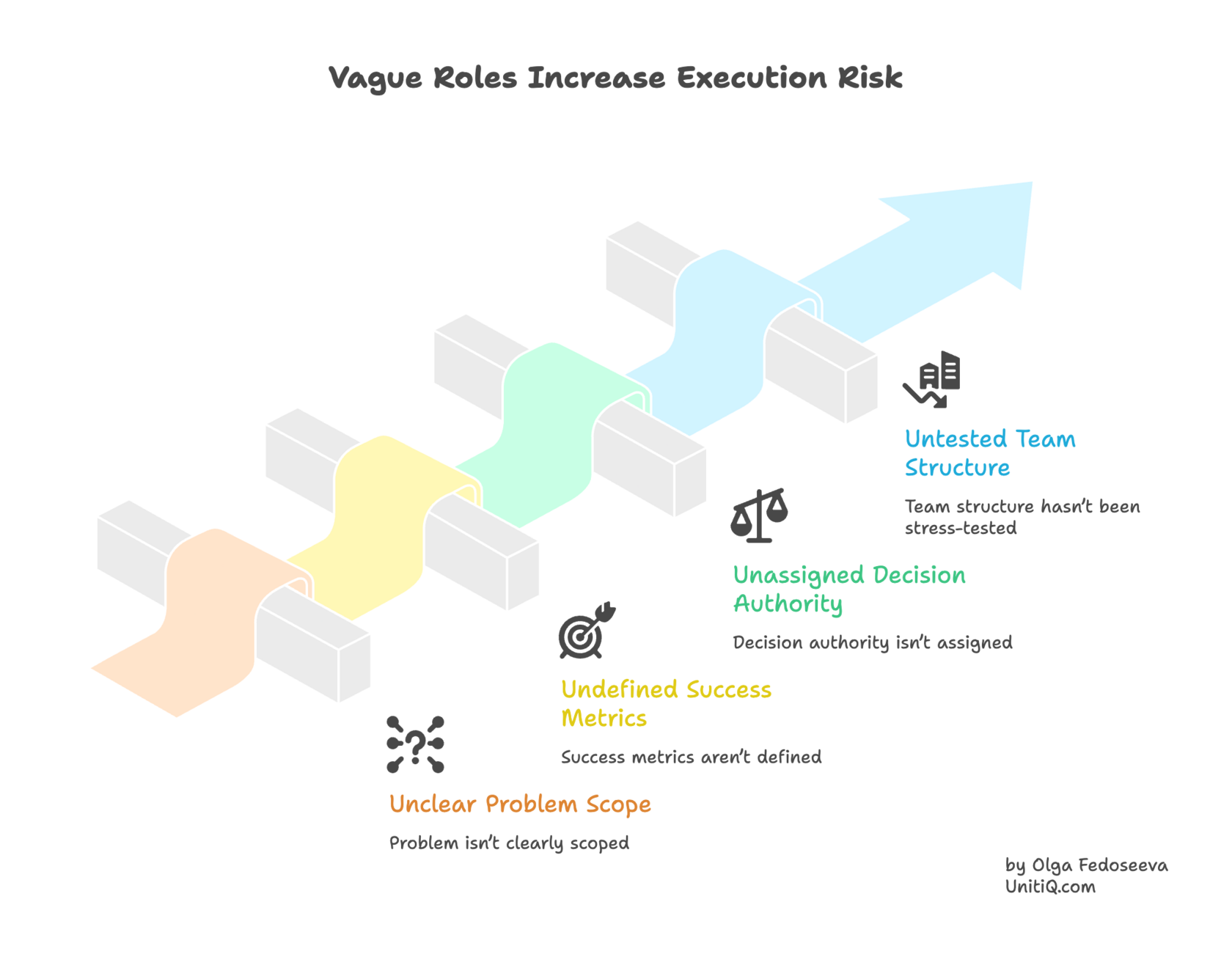
So the job description becomes aspirational instead of operational.
And aspirational hiring increases execution risk.
As explained in How Startups Define Roles Wrong — and Why It Breaks Execution, vague roles create coordination debt that compounds as you scale.
What to Do Instead: Move from Reactive to Designed
High-performing founders don’t eliminate urgency.
They design around it.
Here’s what changes.
1. Build a 6-Month Headcount Forecast — Tied to Execution
Not a finance spreadsheet.
An execution forecast.
For each potential hire define:
- What delivery milestone requires this role?
- What revenue trigger unlocks it?
- What breaks if this role is missing?
- What decision rights will this person own?
This prevents hiring “when it hurts.”
It allows hiring when it makes structural sense.
2. Define Ownership Before You Define Skills
Skills are not the constraint.
Ownership clarity is.
Before opening a role, answer:
- What decisions will this person make independently?
- What outcomes will they be accountable for?
- What does success look like in 90 and 180 days?
If this is unclear, hiring will not solve the problem.
It will redistribute confusion.
We explore this further in What Must Be True Before You Hire, where we outline the execution conditions that must exist before hiring creates leverage.
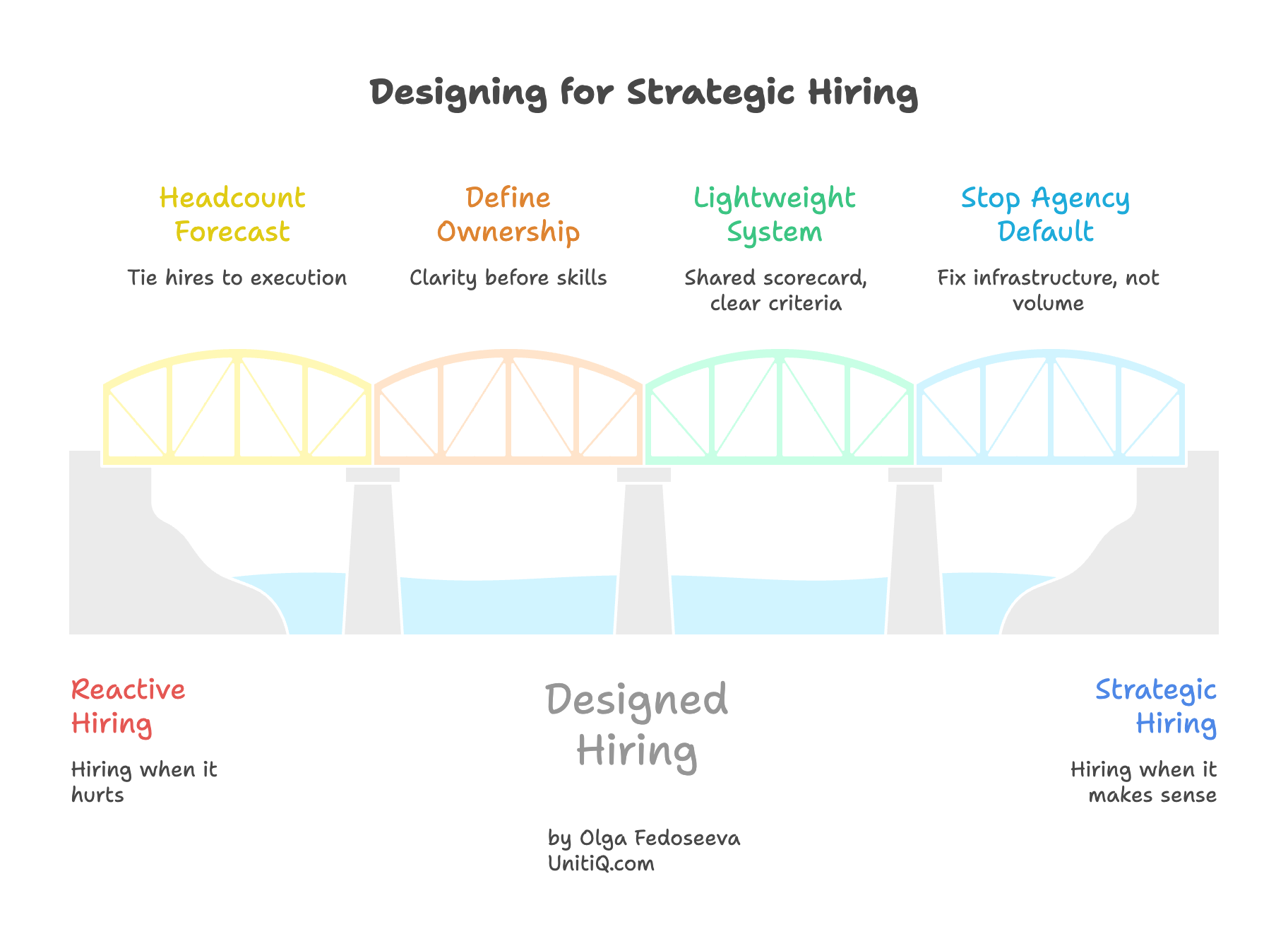
3. Install a Lightweight Hiring System (Not ATS Theater)
You don’t need complexity.
You need alignment.
Minimum viable structure:
- A shared evaluation scorecard
- Pre-aligned decision-makers
- Clear rejection criteria
- A defined success profile
Without this, interviews become opinion-driven.
And opinion-driven hiring slows execution.
This connects directly to Speed vs. Precision in Hiring: What Founders Get Wrong — moving fast without structure doesn’t accelerate growth. It amplifies mistakes.
4. Stop Defaulting to Agencies Under Pressure
When panic hits, many founders outsource immediately.
More CVs.
More interviews.
More “pipeline.”
But sourcing volume does not fix structural ambiguity.
Agencies can fill roles.
They cannot design execution systems.
If hiring feels chaotic across multiple functions, the issue is usually infrastructure.
That’s where embedded, execution-aligned recruiting differs from transactional recruitment — explained in Embedded Recruiting vs Agency: What Actually Changes.
The Pattern We See Across Series A–C
Panic hiring usually appears when:
- Founders remain the default owner of too many decisions.
- Teams grow faster than role clarity.
- Headcount planning is disconnected from delivery planning.
- Hiring is activated only during crisis.
And once this pattern begins, it compounds.
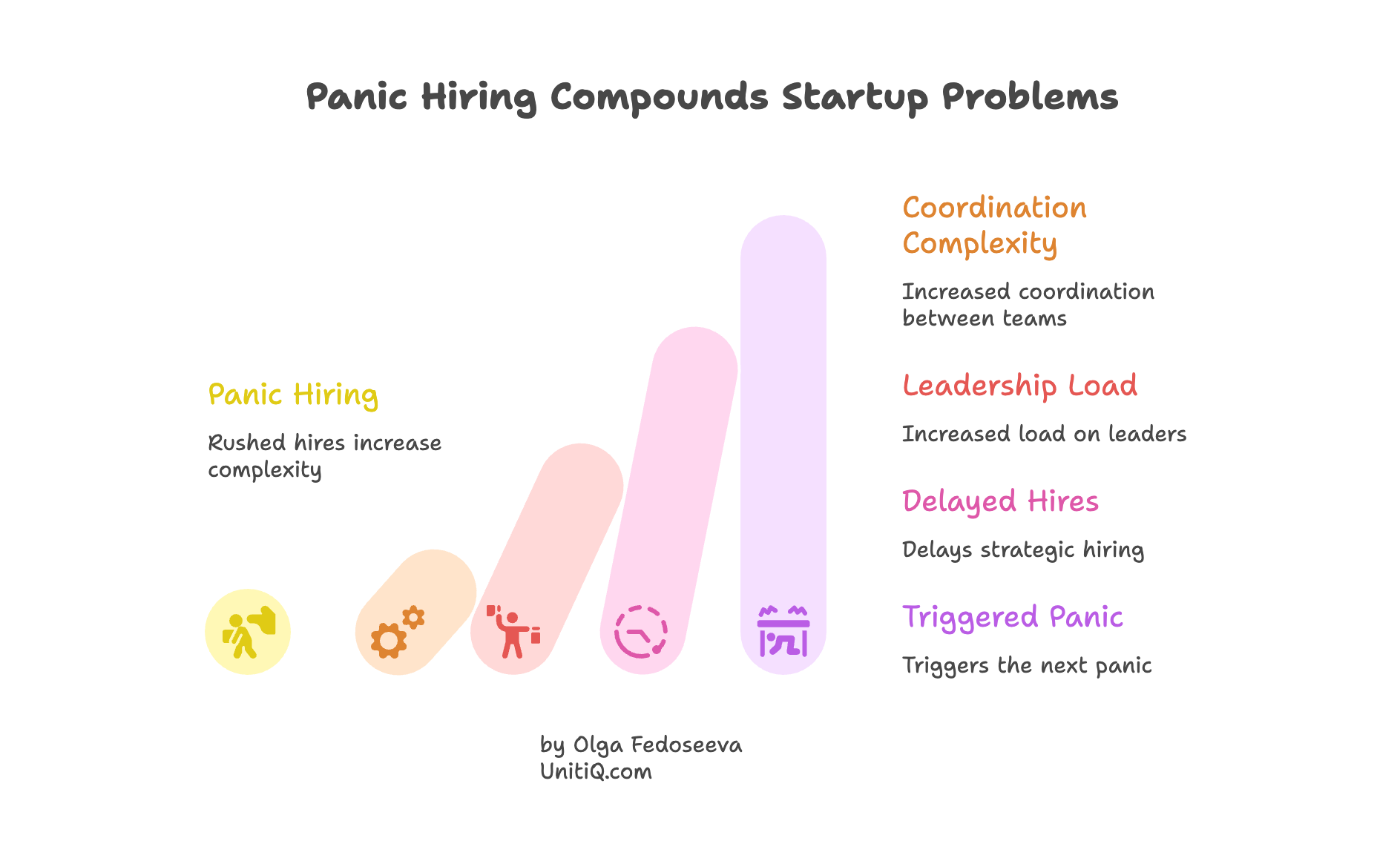
Because every rushed hire increases coordination complexity.
Which increases leadership load.
Which delays the next strategic hire.
Which triggers the next panic.
The Shift: From Hiring Events to Hiring Infrastructure
Panic hiring is a symptom.
The root cause is predictable:
Hiring was never designed as a system.
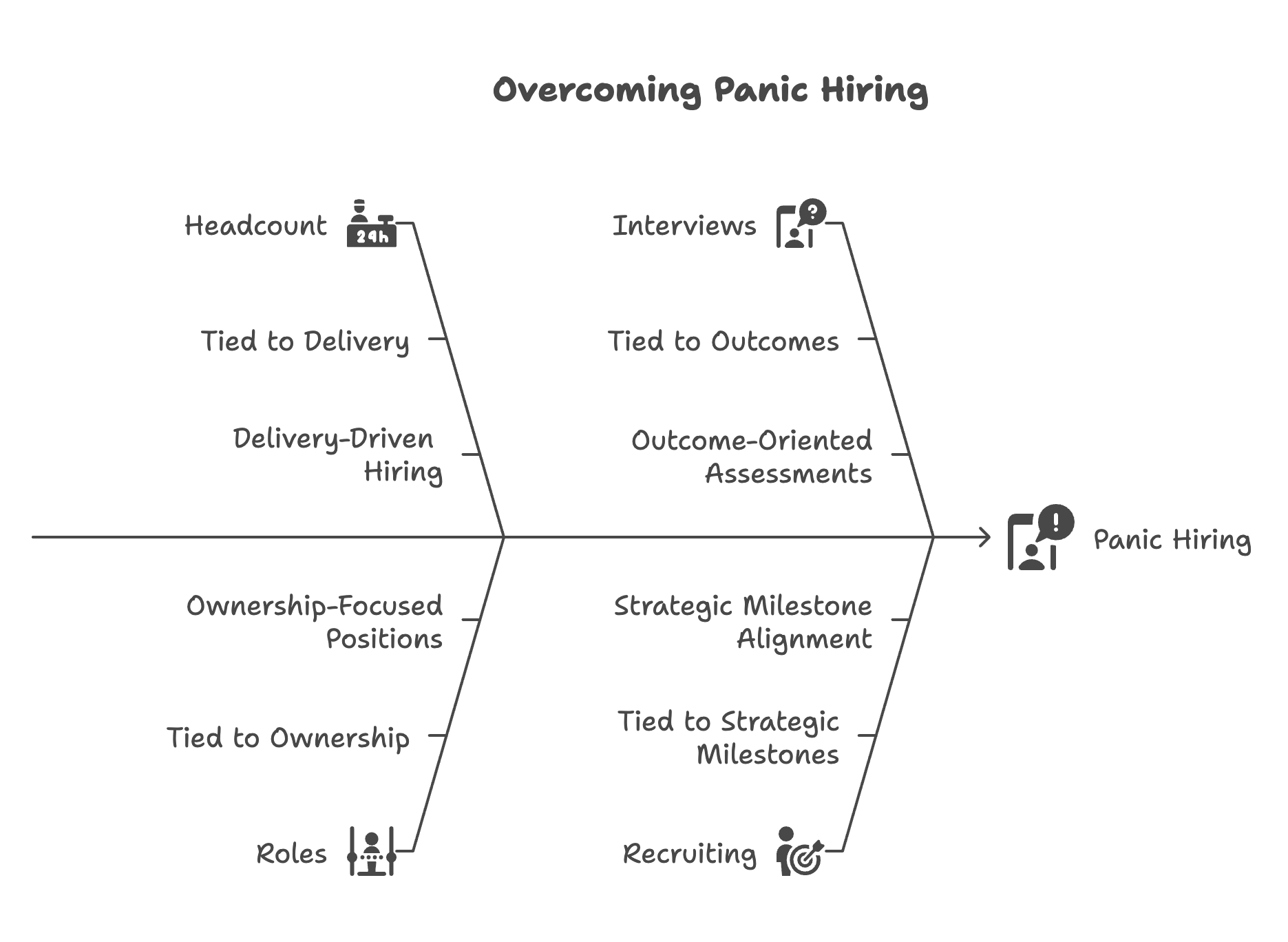
Execution-first companies treat hiring as infrastructure:
- Headcount tied to delivery
- Roles tied to ownership
- Interviews tied to outcomes
- Recruiting tied to strategic milestones
When this system exists, urgency doesn’t disappear.
But panic does.
FAQ
What is panic hiring in startups?
Panic hiring is reactive recruitment triggered by urgency — usually caused by execution gaps, unclear ownership, or delayed workforce planning.
Why is panic hiring dangerous for Series A–C companies?
Because it compounds coordination cost, increases mis-hires, and pulls founders back into operations — slowing scale instead of enabling it.
How can founders prevent panic hiring?
By forecasting headcount against delivery milestones, defining role ownership clearly, and installing lightweight but structured hiring systems.
Is panic hiring a talent problem?
No. It’s usually a role design and execution system problem.
Final Thought
Panic hiring feels like momentum.
But it’s often disguised instability.
If hiring only starts when something breaks,
you’re not scaling — you’re reacting.
The goal isn’t to hire faster.
The goal is to design a system where hiring supports execution — instead of trying to rescue it.
If you want to sanity-check which model fits your current stage — and where execution is actually breaking — we can walk through it together.
About the author
Olga Fedoseeva is the Founder of UnitiQ, a talent acquisition and People Projects partner for Tech Startups across EU, UKI, and MENA.
She works with founders in Fintech, AI, Crypto, and Robotics to prevent mis-hires before they compound — restoring execution momentum and protecting teams from quiet burnout.


