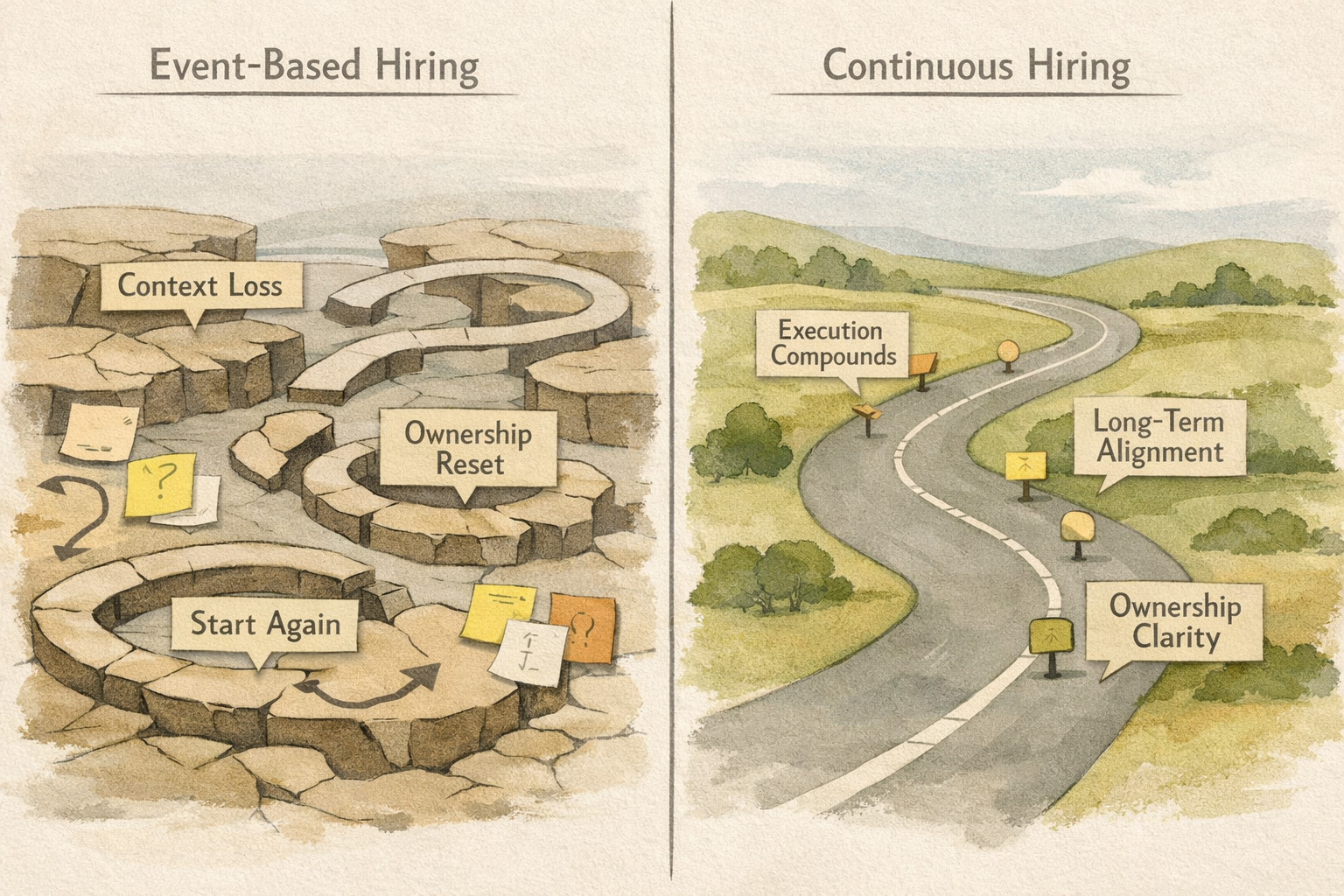
At some point, founders notice something unsettling.
They’ve hired:
- engineers
- product leaders
- sales managers
- operations roles
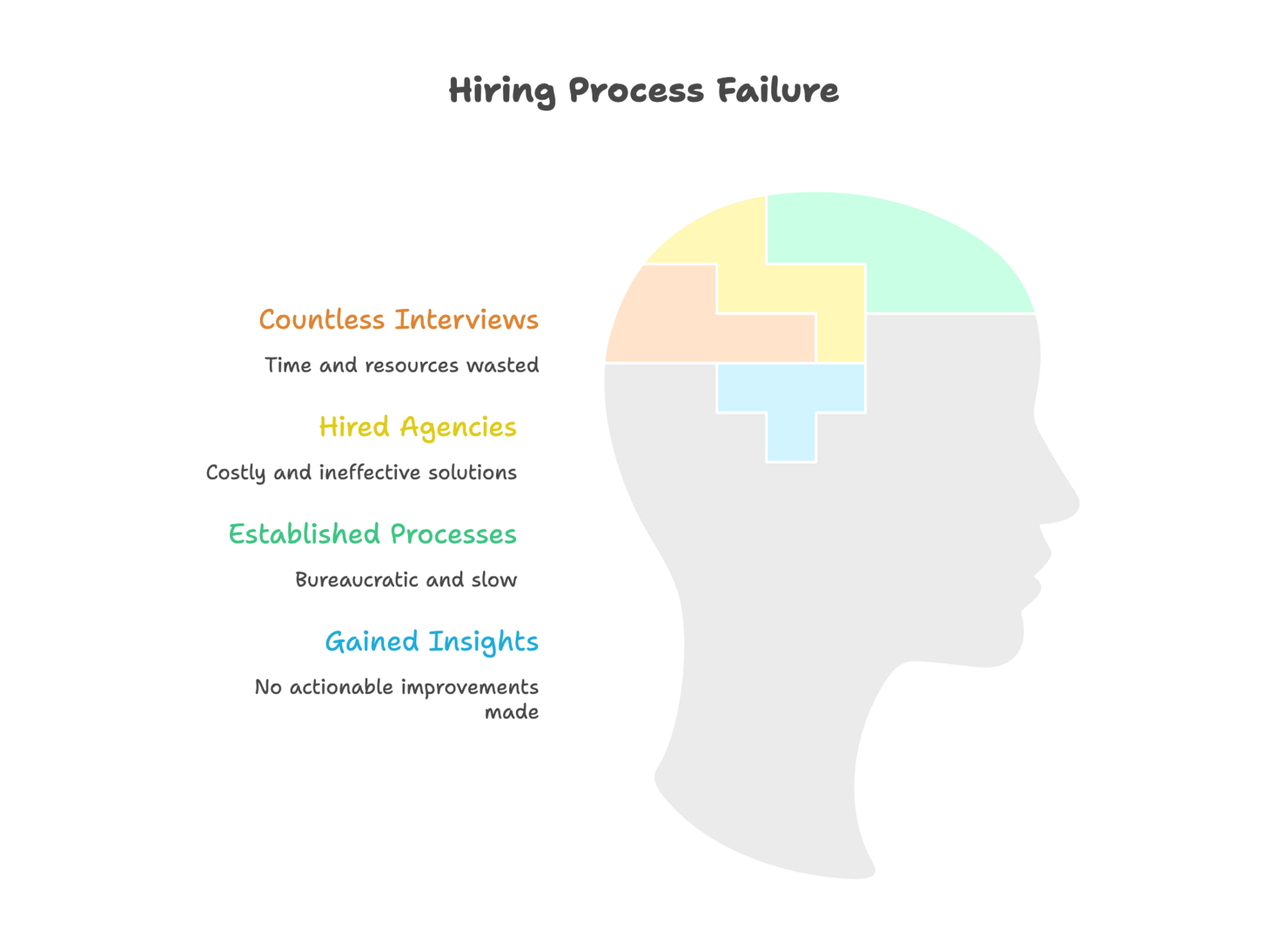
They’ve run dozens of interviews.
They’ve paid agencies.
They’ve built internal processes.
They’ve “learned lessons”.
And yet — hiring still feels heavy.
The same debates return.
The same uncertainty resurfaces.
The same trade-offs stall decisions.
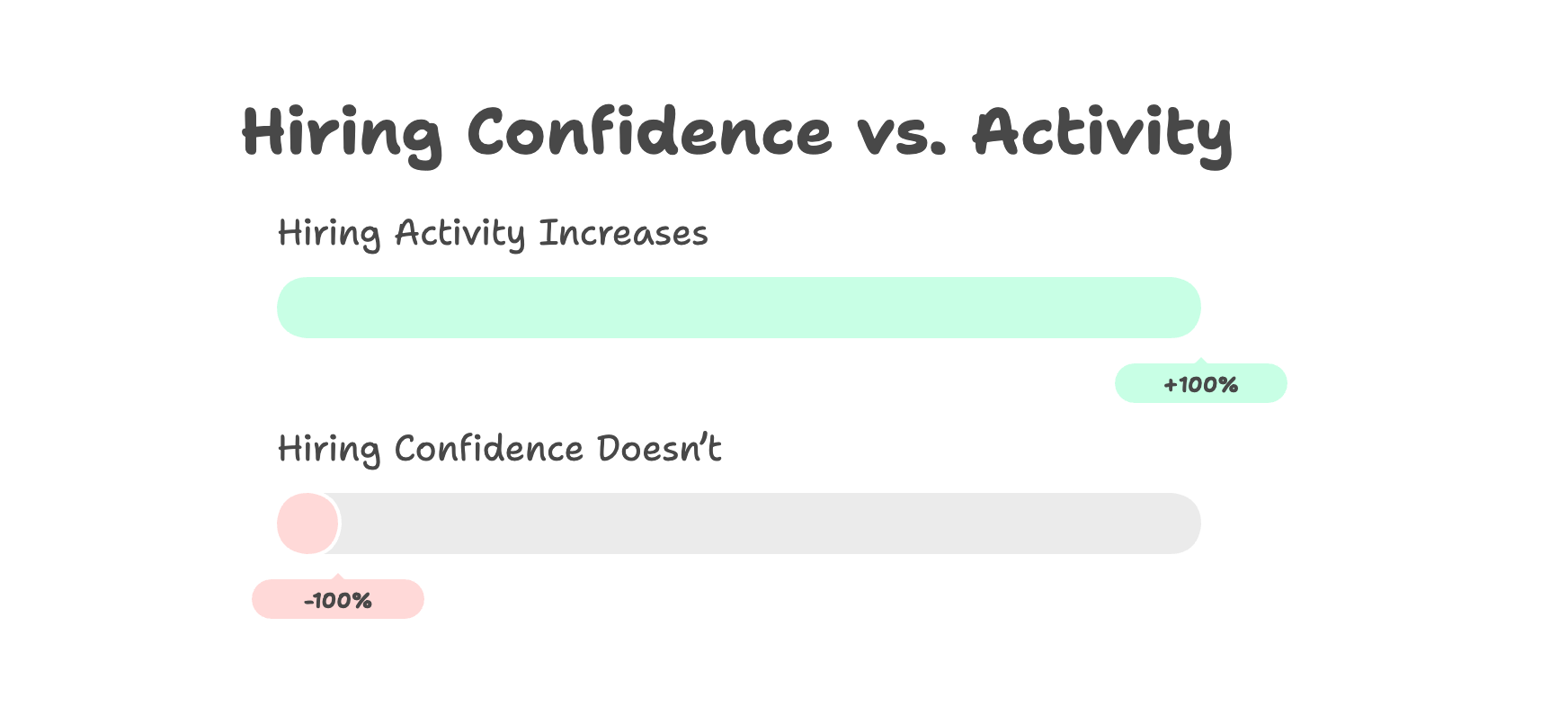
Hiring activity increases.
Hiring confidence doesn’t.
This isn’t bad luck.
And it’s not a talent problem.
It’s learning debt.
The illusion of experience
Most startups assume hiring improves automatically with volume.
More roles filled → more experience → better decisions.
That logic holds only if learning accumulates.
In reality, most hiring experience evaporates the moment a role closes.
Why?
Because hiring is treated as an event — not as a continuously owned system.
This is the same reset pattern that causes startups to relive hiring pain instead of compounding progress.
Event-based hiring keeps resetting your startup.
Event-based hiring keeps resetting your startup.
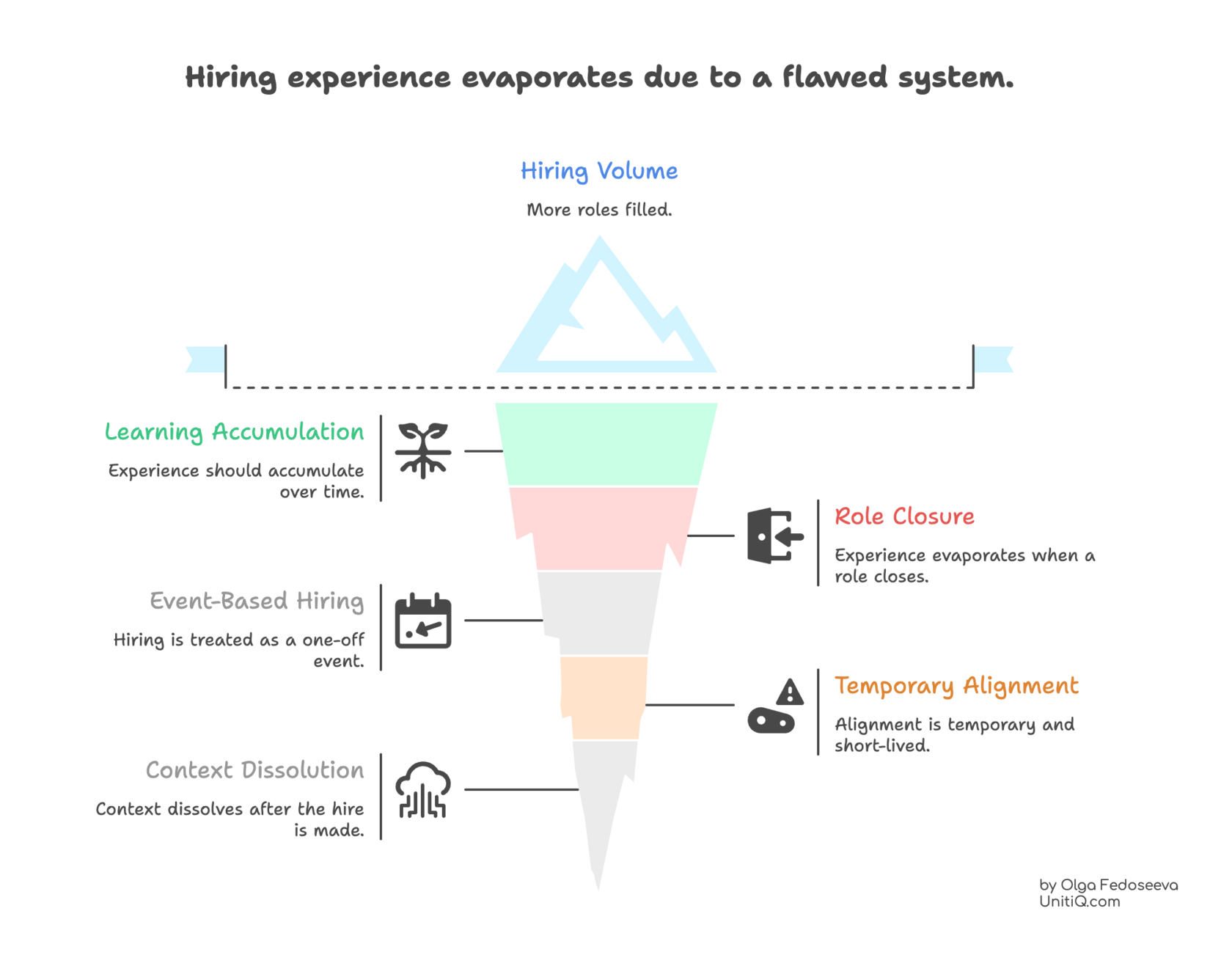
Each role becomes:
- a one-off discussion
- a temporary alignment
- a short-lived calibration
Once the hire is made, the context dissolves.
The next role starts from zero.
What learning debt actually is
Learning debt is what happens when effort doesn’t compound.
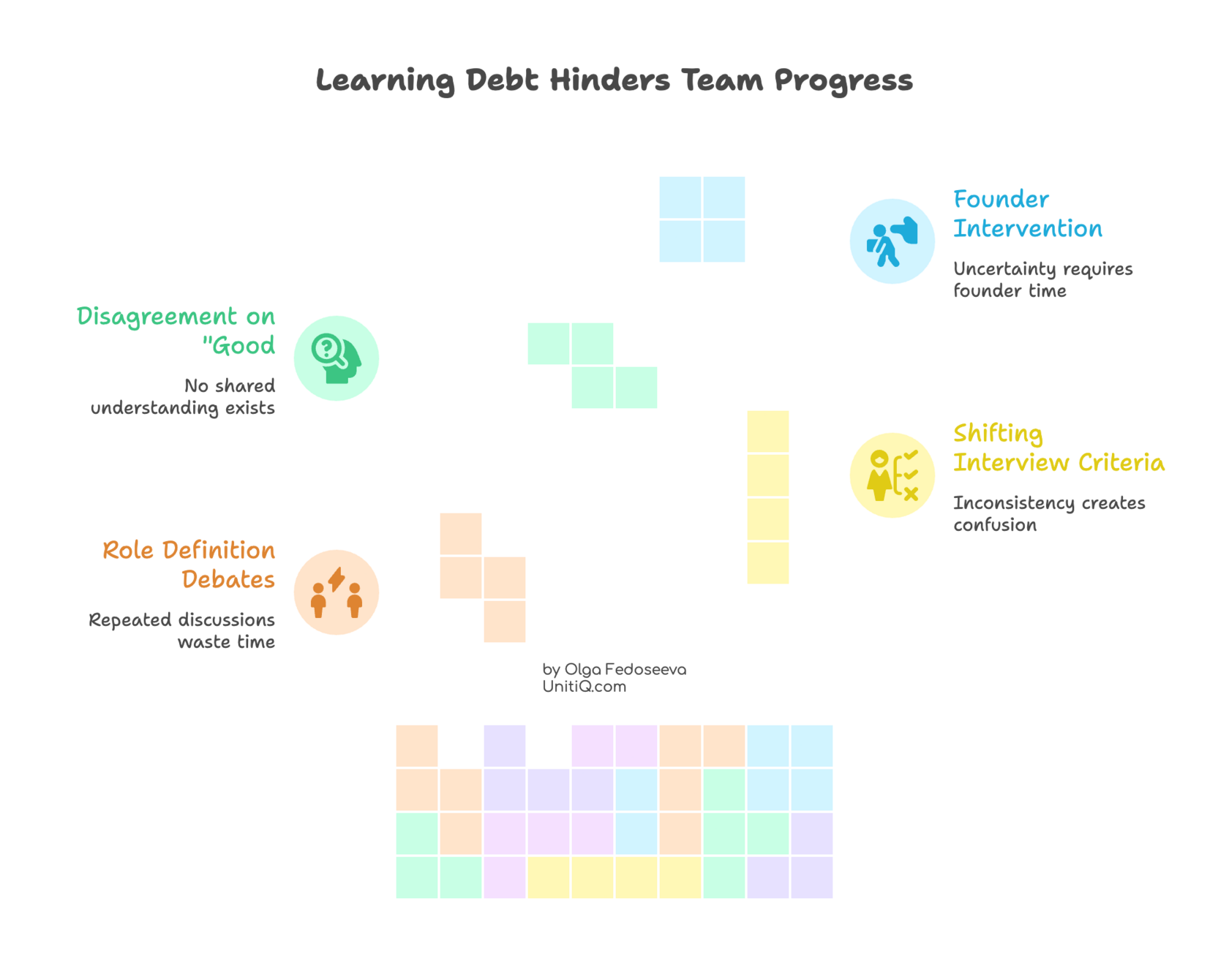
In hiring, it shows up as:
- repeated role-definition debates
- interview criteria that shift mid-process
- disagreement about “what good looks like”
- founders pulled back in to resolve uncertainty
This pull-back happens when no one clearly owns hiring decisions between roles.
Decision ownership has already broken.
Decision ownership has already broken.
Teams feel busy.
But nothing gets easier.
The organisation keeps paying the interest on decisions it never retained.
Why hiring conversations keep repeating
Listen closely to internal hiring discussions over time.
You’ll hear familiar lines:
- “This role is a bit different.”
- “We didn’t quite get this right last time.”
- “Let’s re-align on expectations.”
- “Maybe we need a stronger profile.”
These are not signs of rigour.
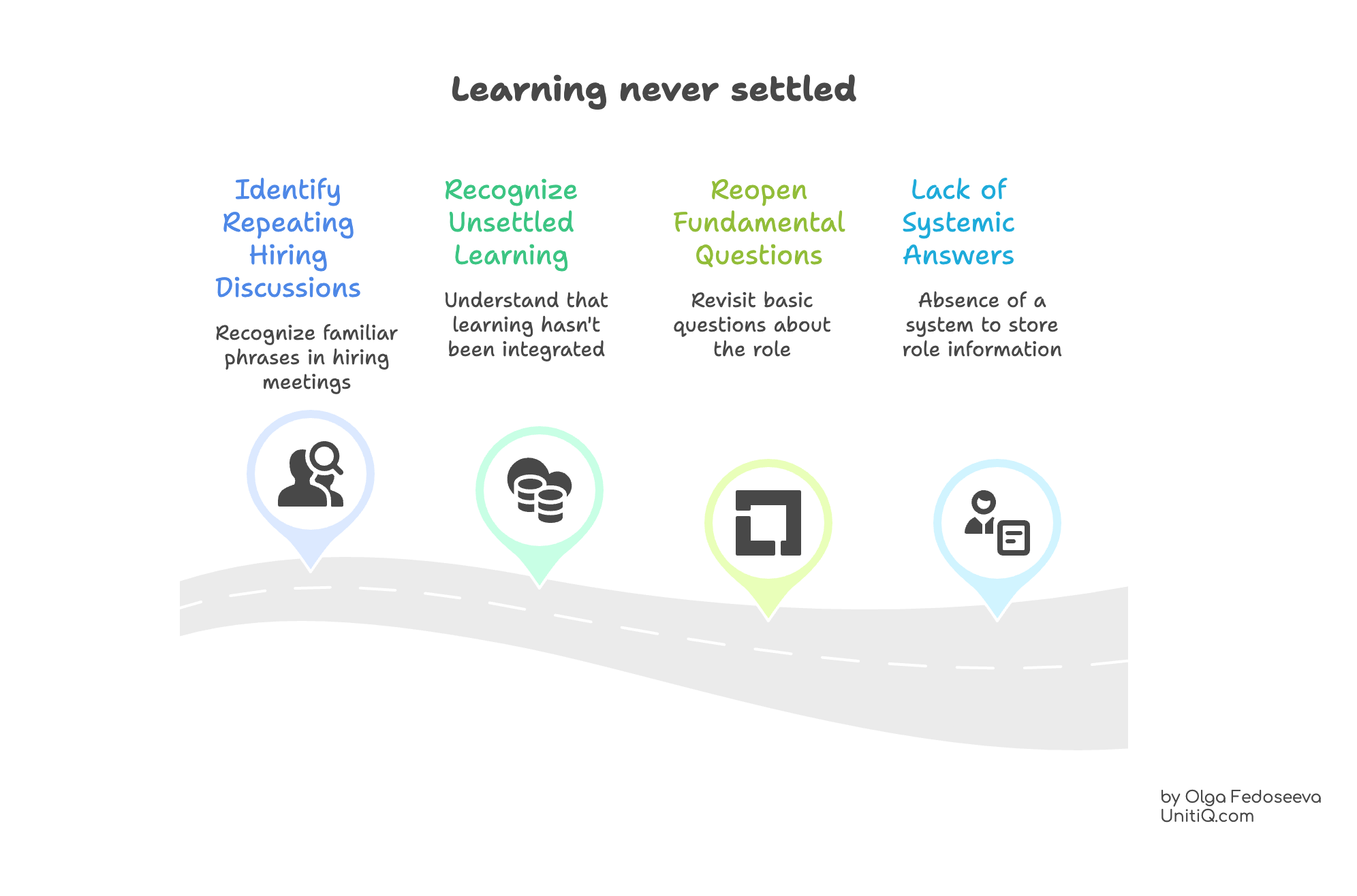
They’re signs that learning never settled.
Each hiring cycle reopens fundamental questions because there’s no system holding the answers.
Event-based hiring prevents learning by design
When hiring is episodic:
- ownership is temporary
- decisions are local
- signals are situational
No one is accountable for:
- carrying context forward
- stabilising criteria
- refining judgement over time
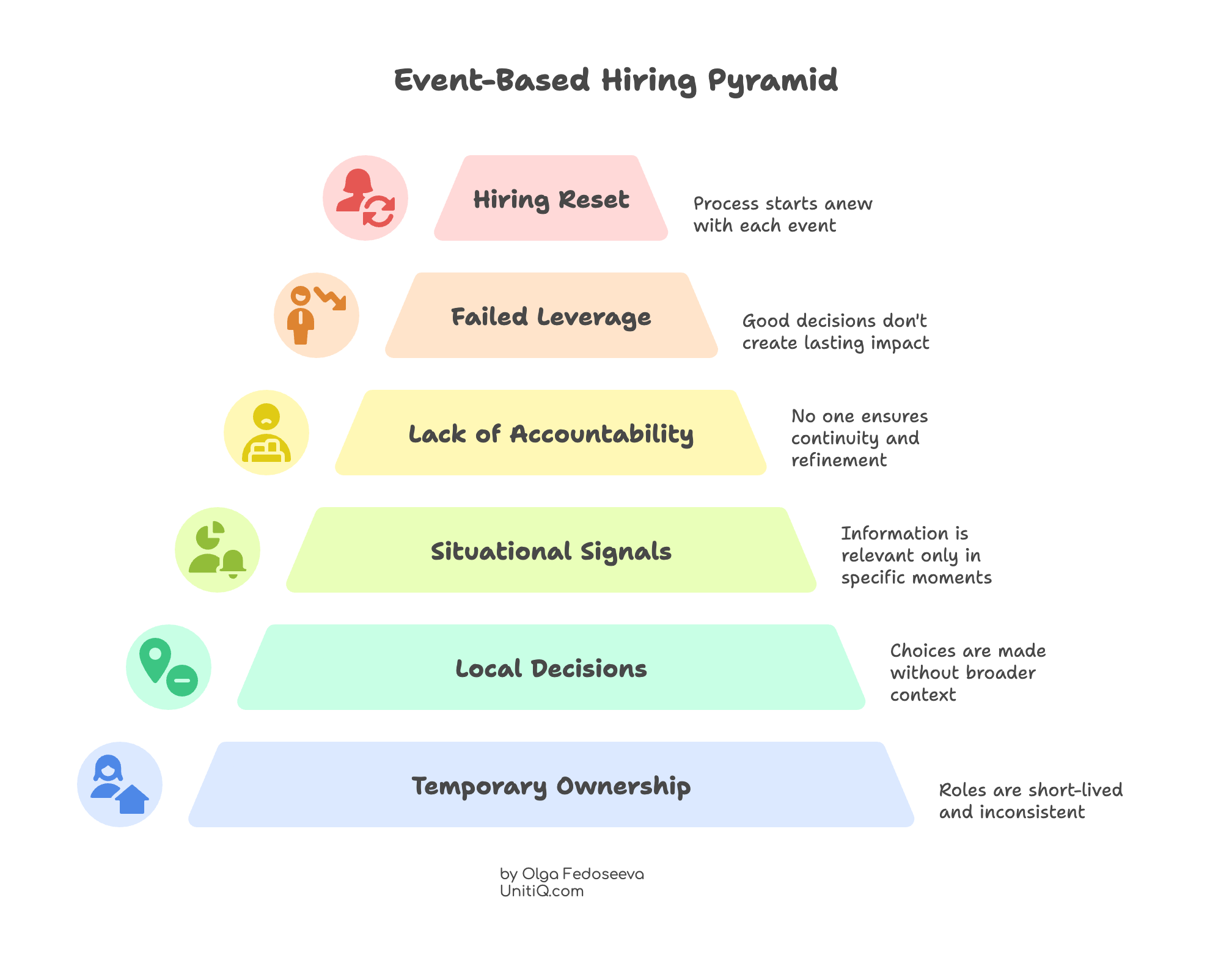
So even good decisions fail to create leverage.
The same lack of leverage is why transactional hiring models quietly inflate total cost.
Paying per hire is the most expensive hiring model.
Paying per hire is the most expensive hiring model.
Hiring doesn’t mature.
It resets.
Why process doesn’t fix this
Many teams try to solve this with:
- interview scorecards
- competency frameworks
- ATS workflows
- “best practices”
These tools assume the problem is structure.
But learning debt isn’t caused by missing tools.
It’s caused by missing continuity of ownership.
Without someone responsible for:
- what the organisation learned
- why decisions were made
- where judgement proved wrong or right
process becomes theatre.
This is why adding structure rarely fixes hiring when execution readiness is missing.
Hiring is not the bottleneck — execution capacity is.
Hiring is not the bottleneck — execution capacity is.
The same uncertainty simply moves to a different stage.
The hidden cost of learning debt
Learning debt doesn’t show up as a failed hire.
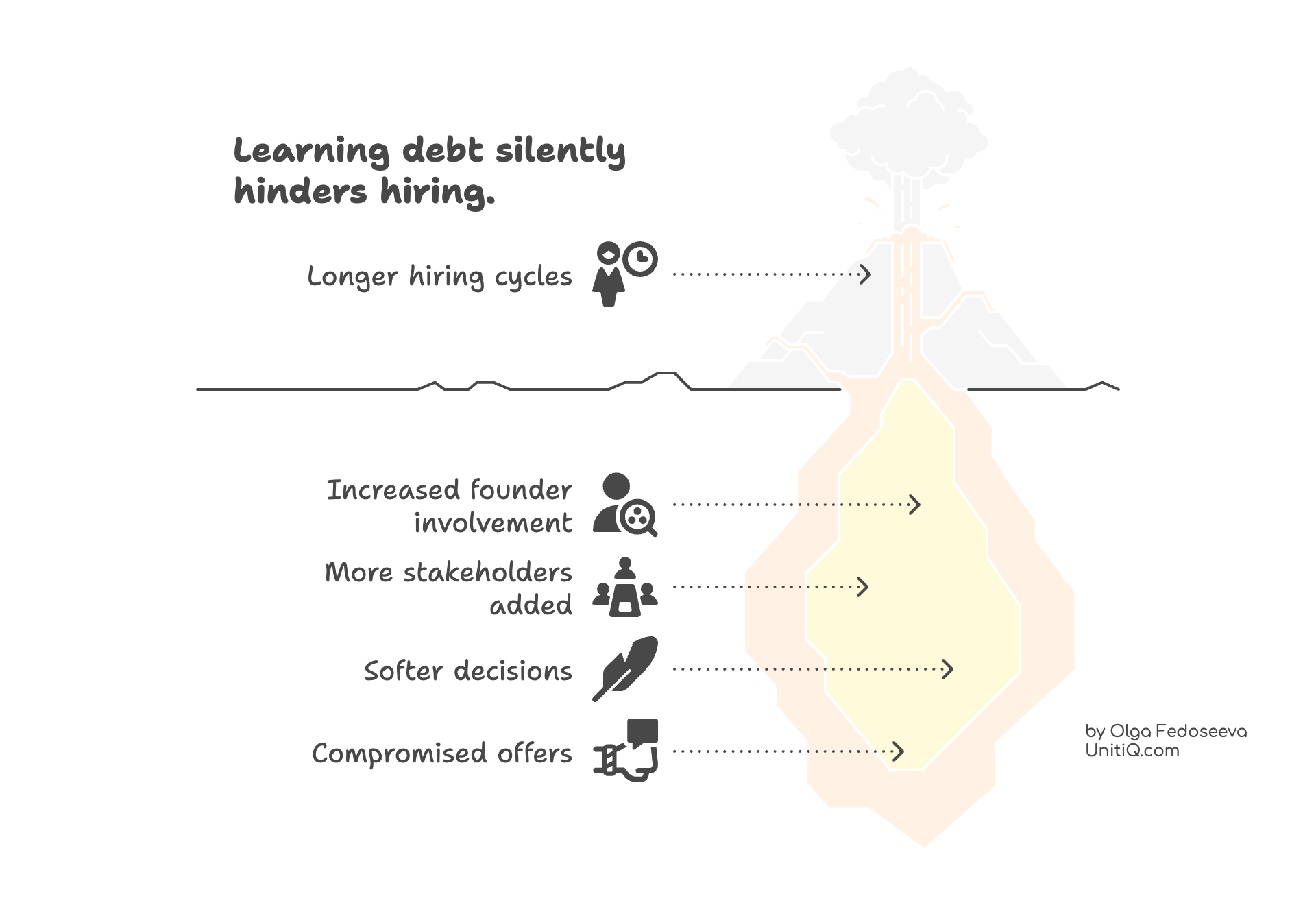
It shows up as:
- longer hiring cycles
- increased founder involvement
- more stakeholders added “for safety”
- softer decisions
- compromised offers
Each symptom looks rational on its own.
Together, they quietly drain execution capacity.
Hiring never becomes lighter.
It just becomes more expensive to think about.
Why this feels worse as companies scale
Ironically, the more a startup grows, the more learning debt hurts.
Because:
- more roles run in parallel
- more people influence decisions
- more risk feels attached to each hire
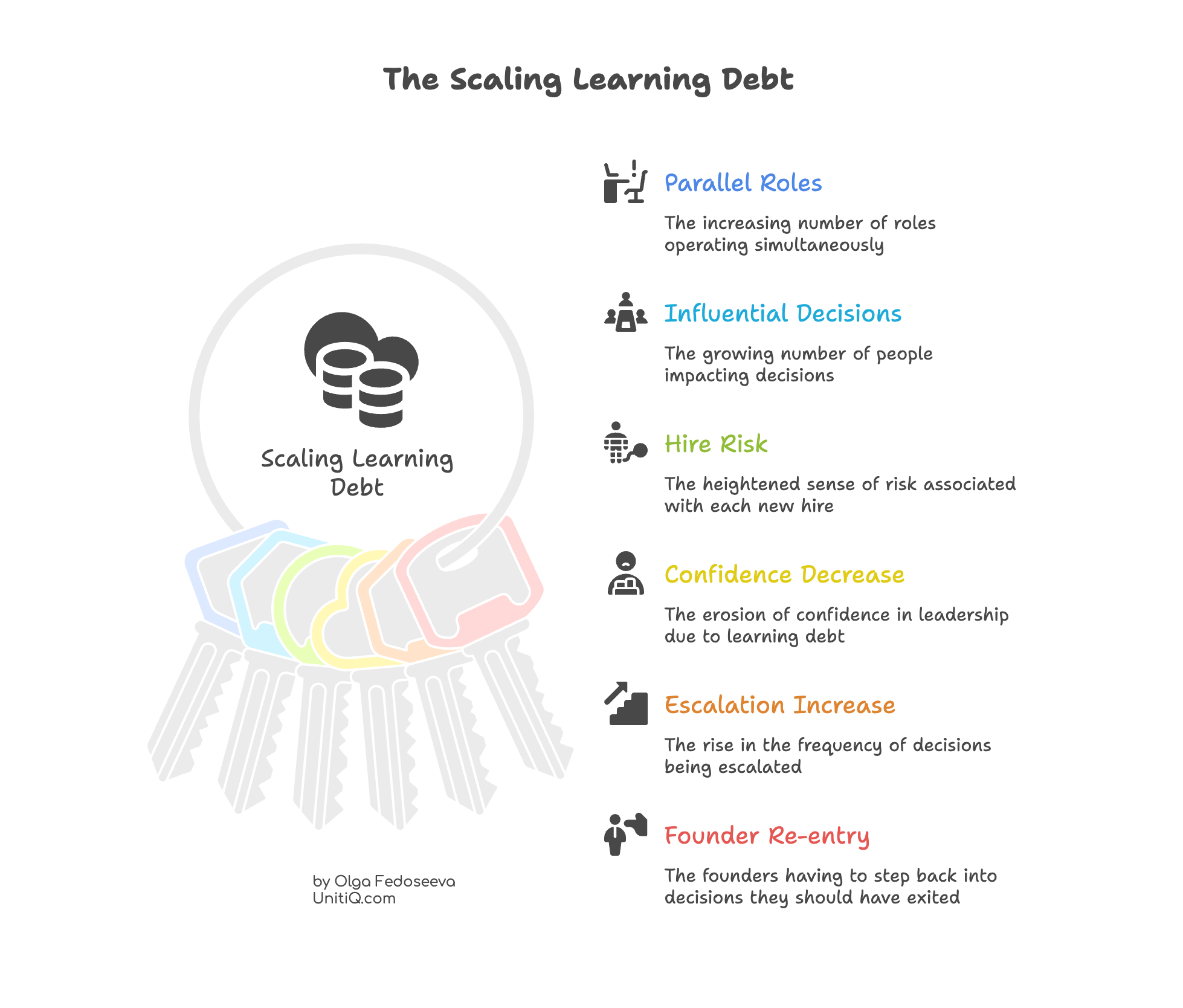
Without retained learning:
- confidence decreases
- escalation increases
- founders re-enter decisions they should have exited
Hiring becomes a cognitive tax on leadership.
Over time, this tax shows up as exhaustion rather than obvious failure.
Founders burn out on hiring before the team ever scales.
Founders burn out on hiring before the team ever scales.
What hiring looks like when learning compounds
In companies where hiring actually improves:
- role definitions sharpen instead of expand
- interview signals stabilise
- trade-offs feel clearer
- founders exit earlier, not later
The key difference is not talent quality.
It’s memory.
Someone owns the system long enough for judgement to mature.
In some teams, that ownership is built internally. In others, it’s temporarily brought in.
Recruitment as a subscription.
Recruitment as a subscription.
Hiring stops relearning itself.
This is why volume doesn’t help
Hiring more does not reduce learning debt.
It often increases it.
Because without continuity:
- mistakes aren’t analysed
- successes aren’t codified
- intuition doesn’t stabilise
The organisation stays permanently “early” in its hiring maturity — regardless of headcount.
Learning debt is why hiring never feels done
Founders often say:
“We just need to get through this phase of hiring.”
But phases end.
Learning debt doesn’t — unless it’s explicitly addressed.
Until hiring has:
- sustained ownership
- retained context
- feedback loops that survive individual roles
it will always feel unfinished.
TL;DR
- Hiring doesn’t improve automatically with experience.
- When hiring is event-based, learning resets after every role.
- Teams repeat the same debates because no context is retained.
- Process alone can’t fix learning debt.
- Hiring only gets easier when ownership and memory persist.
If your hiring feels as hard on role twenty as it did on role two,
you’re not lacking experience — you’re lacking continuity.
Where this leads next
This is also why founders burn out on hiring long before teams scale.
Not because they hire too much —
but because they keep making the same decisions without leverage.
That’s the next cost most teams never see.
If you want to sanity-check which model fits your current stage — and where execution is actually breaking — we can walk through it together.
About the author
Olga Fedoseeva is the Founder of UnitiQ, a global HR executive, and a talent acquisition and people strategy leader with 20+ years of experience across EMEA, the US, and APAC. She has personally hired 1,500+ employees, led people strategy for organisations scaling from 30 to 700+ employees, and writes about hiring systems, execution risk, and people infrastructure in growth-stage startups.
Read full author profile
LinkedIn
Read full author profile


