
Most founders think they understand hiring costs.
They calculate:
- agency fees
- recruiter cost
- salary
They debate:
- 15% vs 20%
- in-house vs agency
- success fee vs retainer
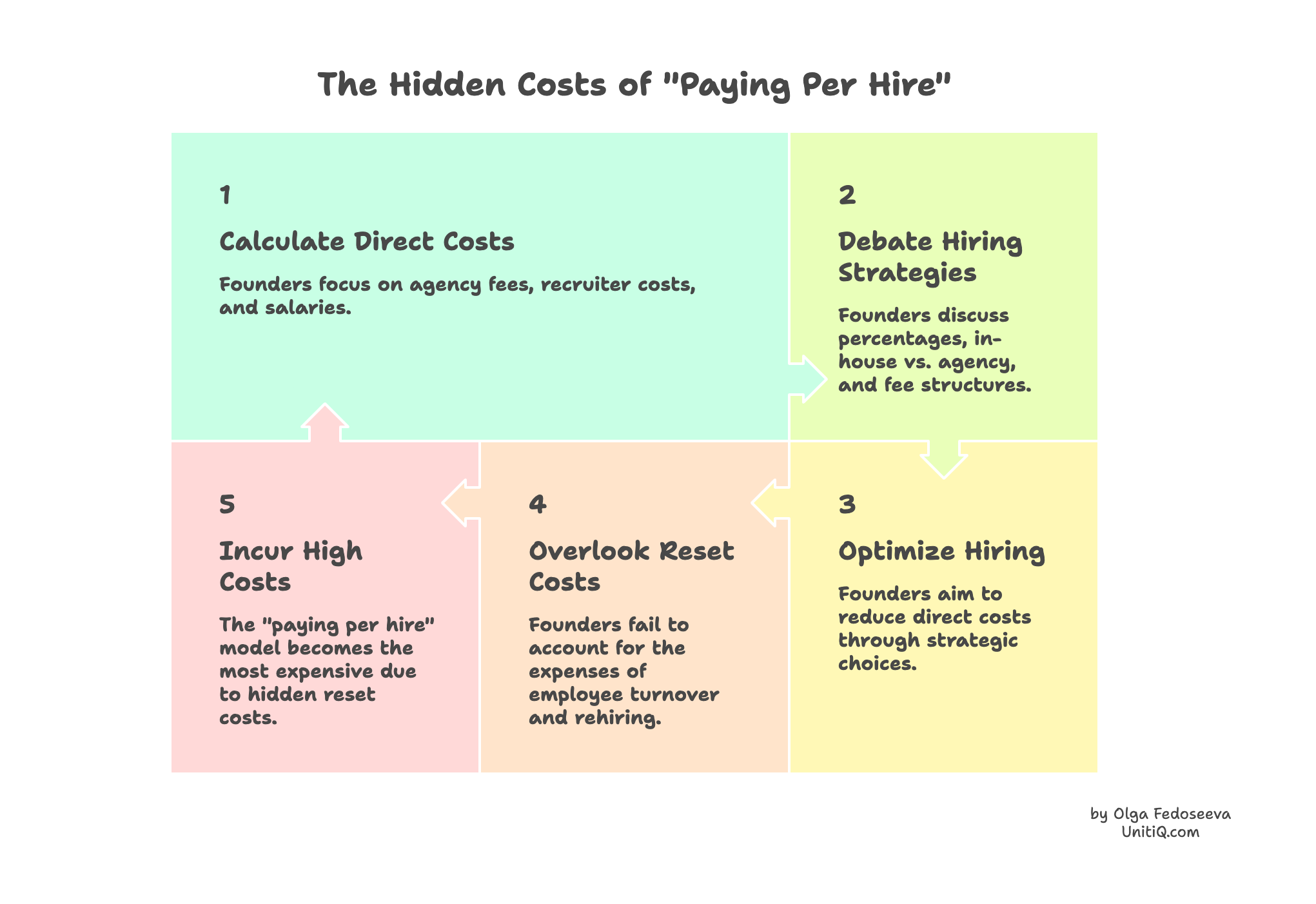
And then they try to “optimise”.
What almost no one calculates is the reset cost.
That’s why paying per hire looks efficient on paper — and becomes the most expensive hiring model in practice.
The mistake: treating hiring cost as a single event
“Paying per hire” assumes hiring is an isolated transaction.
One role.
One search.
One outcome.
One invoice.
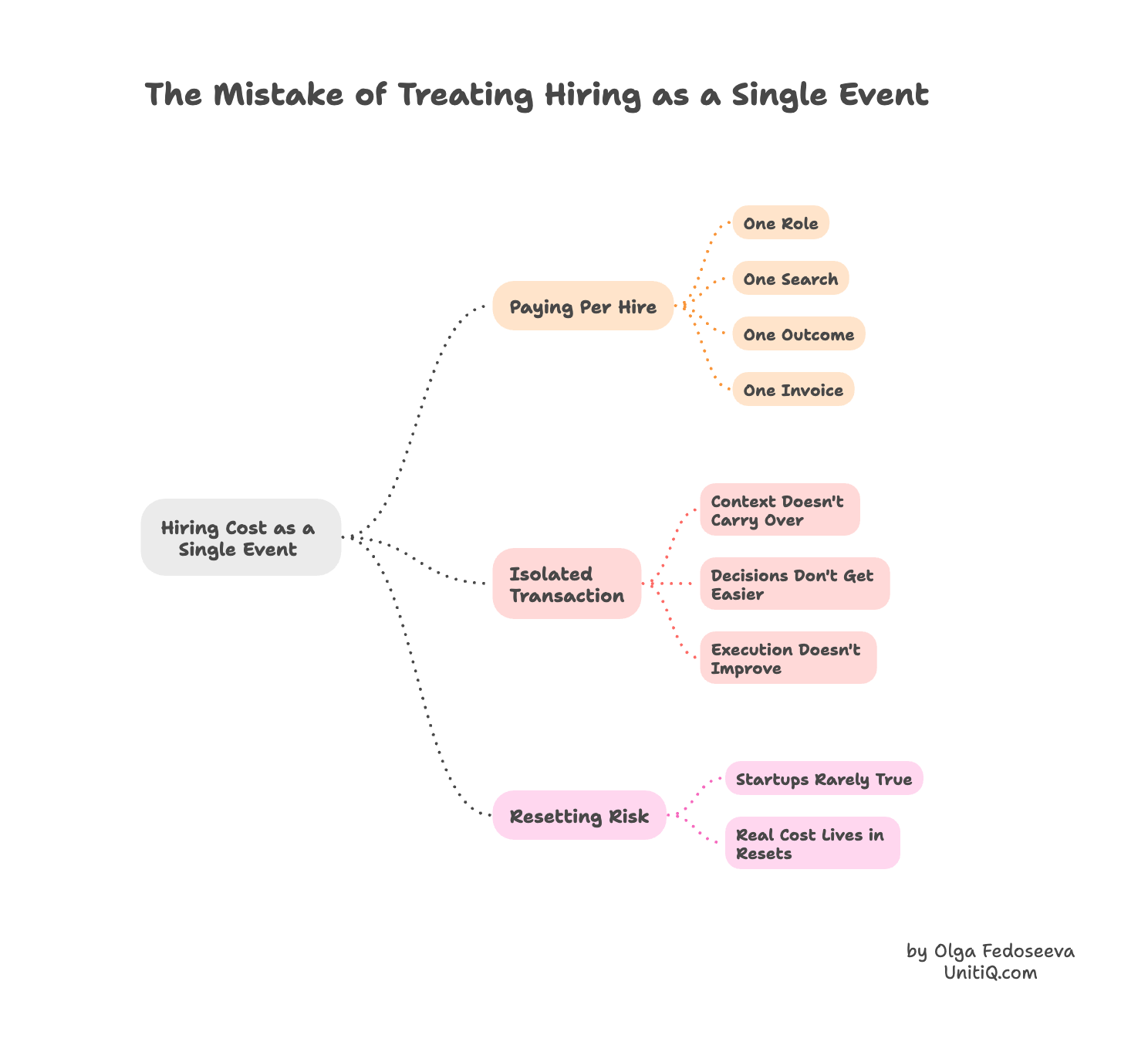
That framing only works if:
- context carries over
- decisions get easier over time
- execution improves with each hire
In startups, that’s rarely true.
When hiring is treated as an event, every hire resets risk instead of reducing it.
This reset dynamic is the same pattern that causes startups to relive the same hiring pain cycle quarter after quarter. Event-based hiring keeps resetting your startup.
And resets are where the real cost lives.
What founders actually pay for (but never invoice)
When a role opens again, founders don’t just pay a fee.
They repay:
- problem framing
- role definition debates
- interview calibration
- decision uncertainty
- founder attention
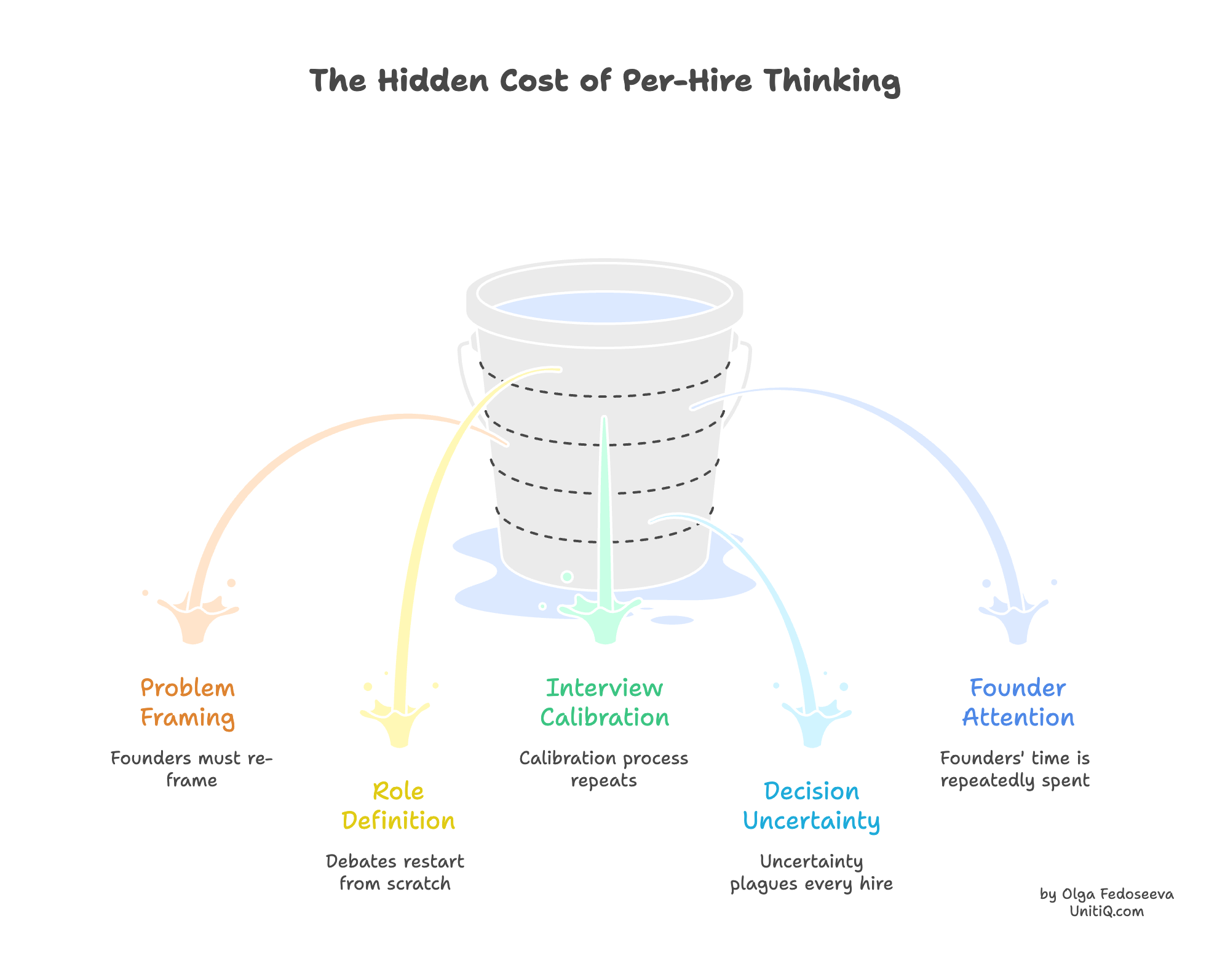
Again.
Even if the hire “works”, the system didn’t improve.
Nothing compounded.
This is why hiring doesn’t actually improve with experience when learning isn’t retained between roles.
Why hiring never gets better — even after dozens of roles.
Why hiring never gets better — even after dozens of roles.
The next role starts from zero.
That is the hidden cost of per-hire thinking:
no memory, no learning loop, no leverage.
Why “cheaper per hire” often costs more
Founders often say:
“This agency is expensive.”
“We can do this more cheaply in-house.”
“Let’s just pay per hire and move on.”
But cheaper per hire usually means:
- fragmented ownership
- no continuity
- no retained context
- no accountability beyond placement
When ownership fragments like this, decisions slow down even when candidate quality is high.
Decision ownership has already broken.
Decision ownership has already broken.
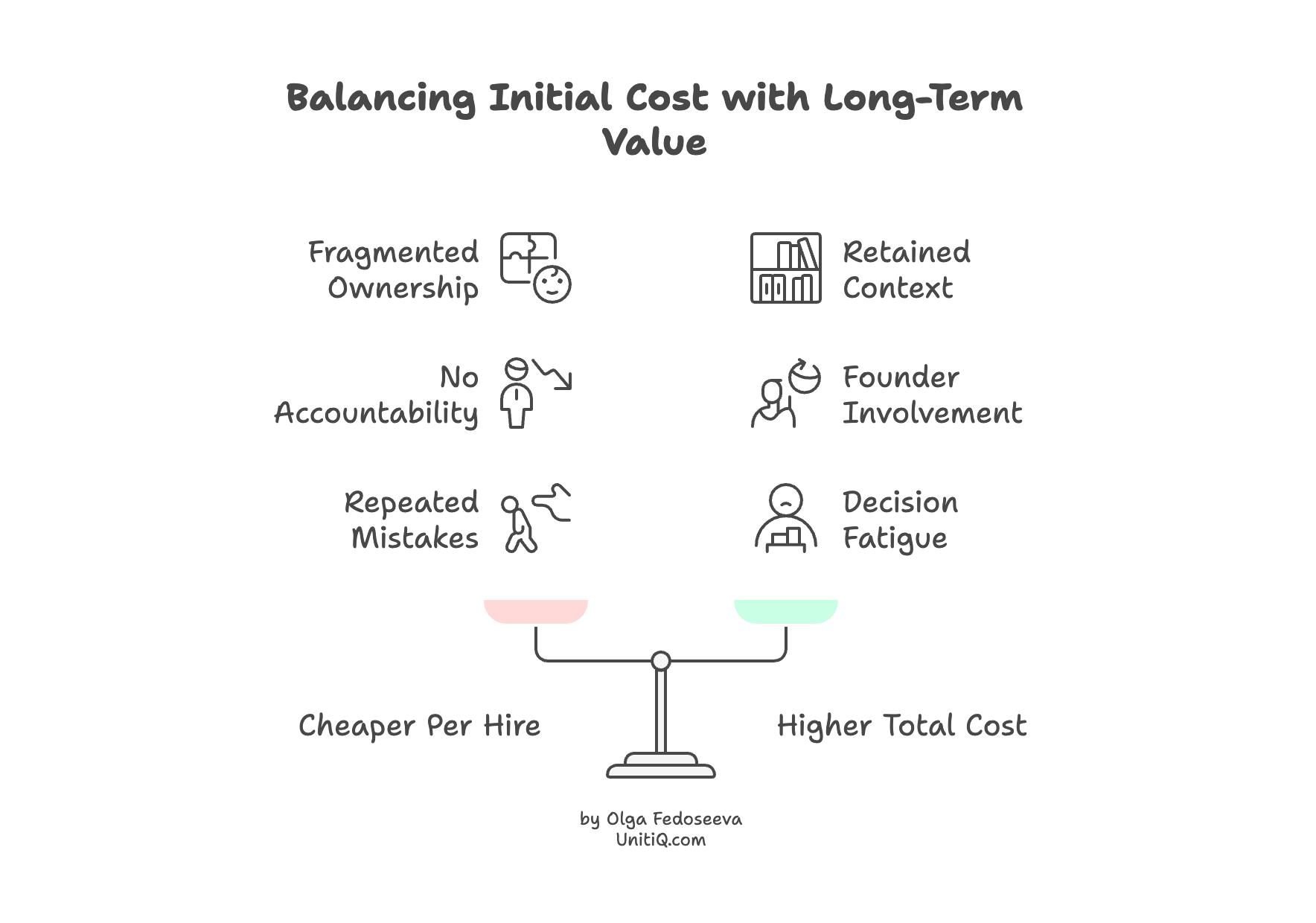
Which guarantees:
- longer cycles next time
- more founder involvement
- repeated mistakes
- decision fatigue
The fee goes down.
This is because adding people without execution capacity often creates more drag, not speed.
Hiring is not the bottleneck — execution capacity is.
Hiring is not the bottleneck — execution capacity is.
The total cost goes up.
The real comparison founders should make
The meaningful comparison is not:
agency fee vs internal cost
It’s:
reset cost vs compounding cost
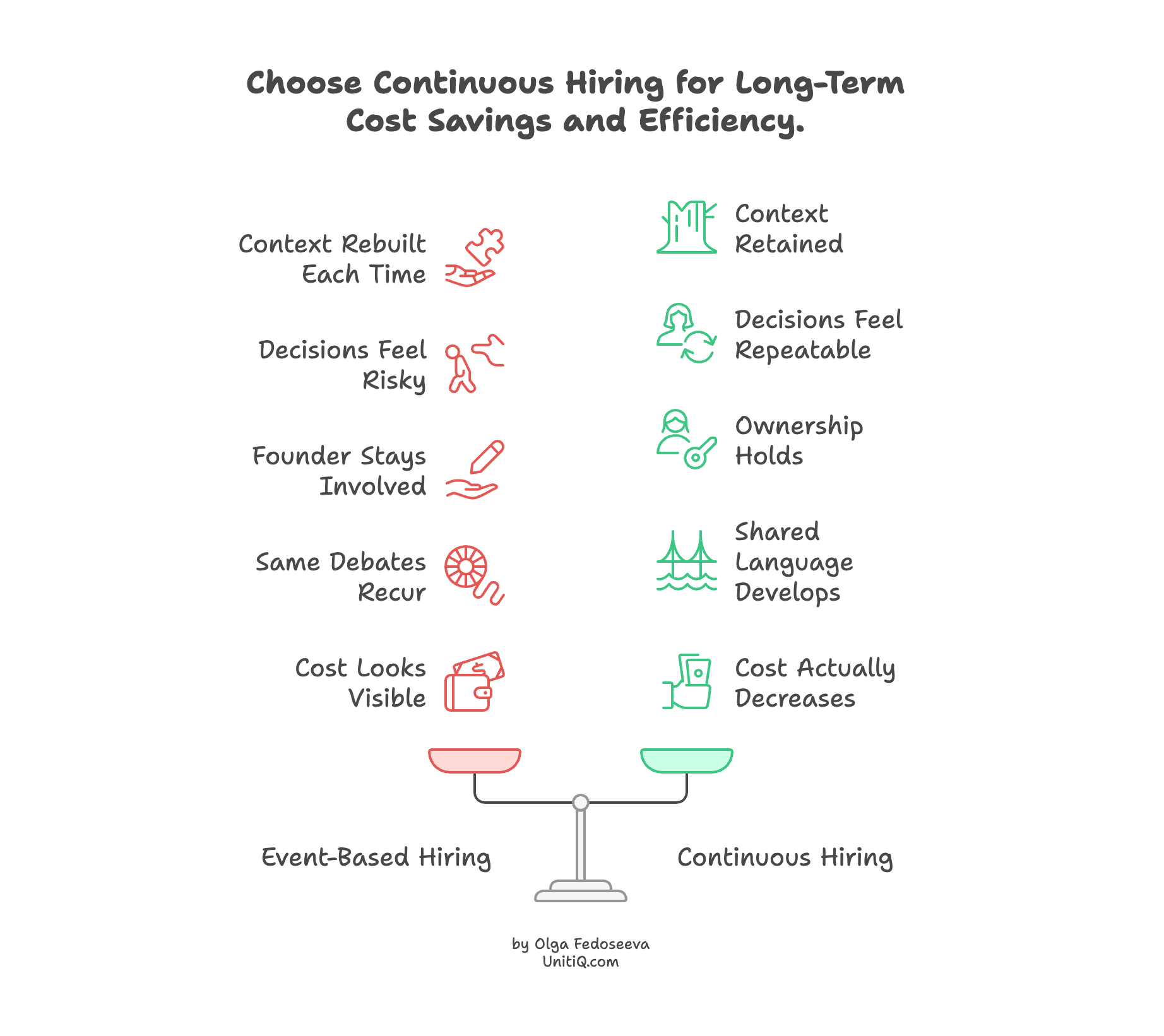
This only works when hiring outcomes are continuously owned — even when no roles are open.
Recruitment as a subscription.
Recruitment as a subscription.
Event-Based / Per HireContinuous / Owned
Context rebuilt each time
Context retained
Decisions feel risky
Decisions feel repeatable
Founder stays involved
Ownership holds
Same debates recur
Shared language develops
Cost looks visible
Cost actually decreases
Paying per hire optimises the visible line item.
It ignores the system underneath.
Why this keeps happening in startups
Startups don’t choose per-hire models because they’re naïve.
They choose them because:
- hiring pressure spikes suddenly
- roles shift mid-search
- priorities change quarter to quarter
Event-based hiring feels flexible.
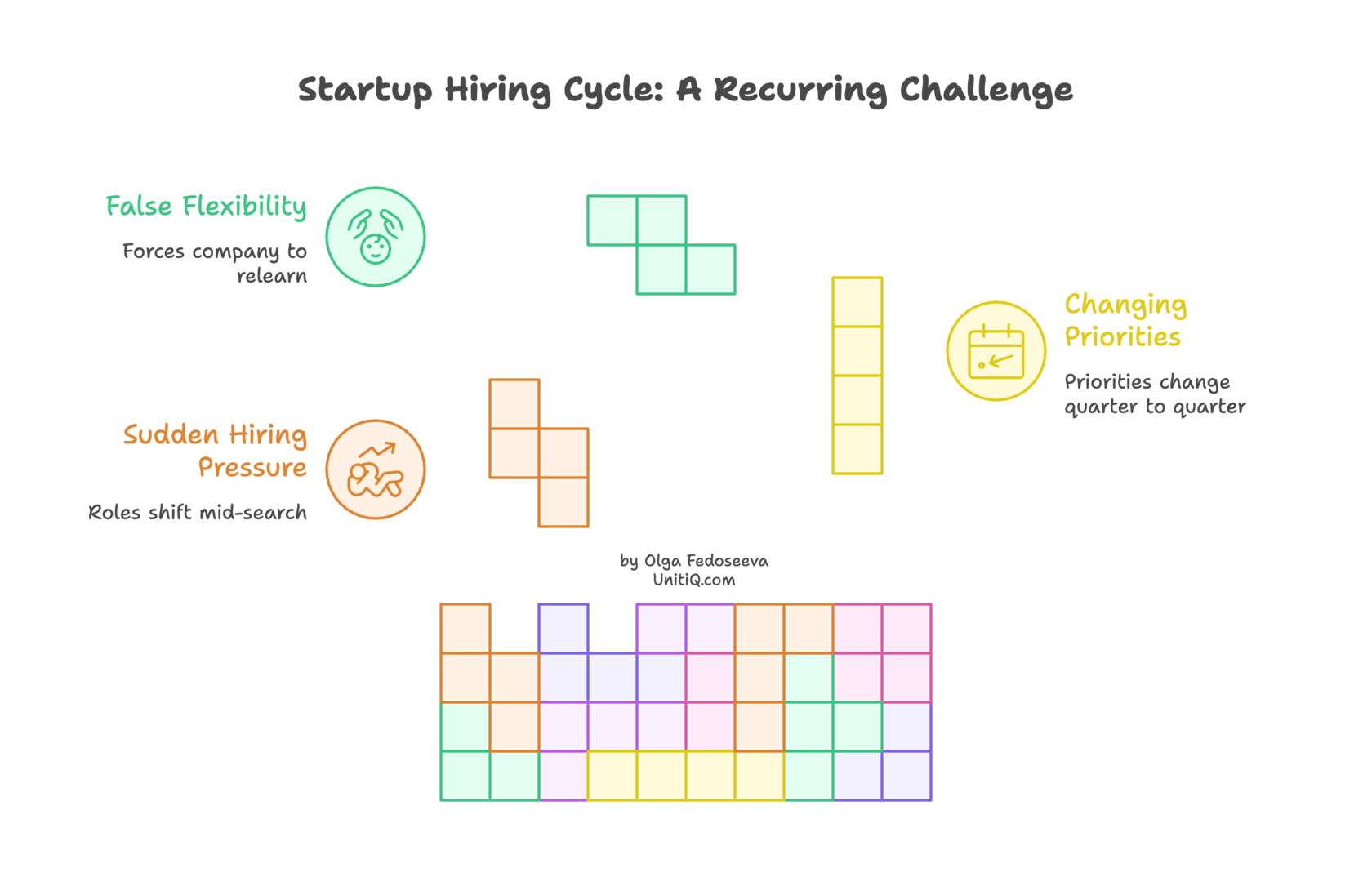
In reality, it forces the company to relearn itself every time.
That’s why hiring never gets lighter.
It just pauses between events.
This is not an argument against success fees
Important clarification.
A success fee or retention fee is not the problem.
Treating the hire as the unit of value is.
There are situations where:
- a success-based component makes sense
- a retention element aligns incentives
- a per-hire fee reflects real risk
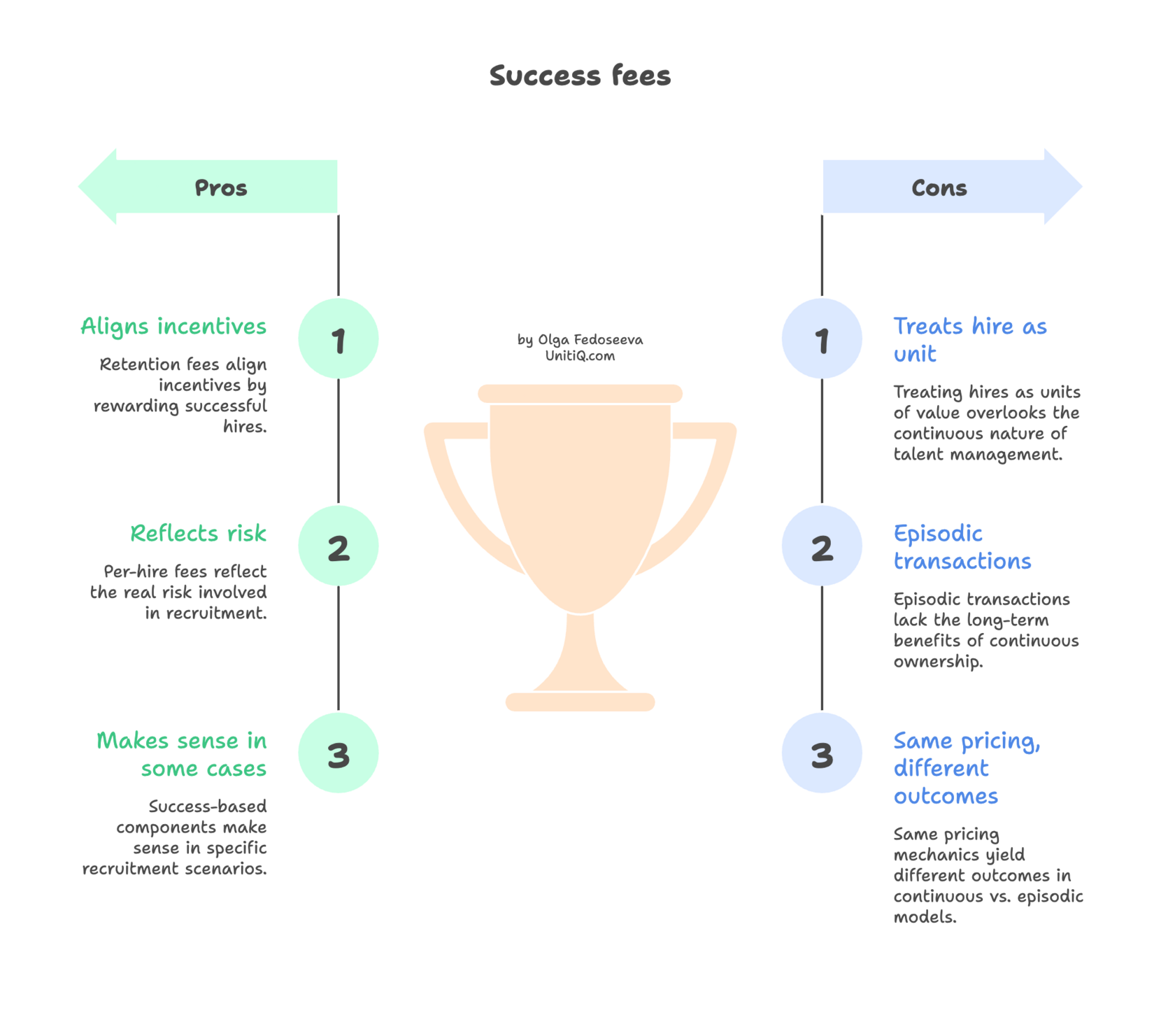
The difference is whether that fee sits inside:
- a continuous ownership model, or
- an episodic transaction model
Same pricing mechanics.
Very different outcomes.
Why continuous models reduce cost without “hiring faster”
When hiring is continuously owned:
- context accumulates
- role definitions improve
- decision criteria stabilise
- interviews get sharper
Hiring doesn’t just fill roles.
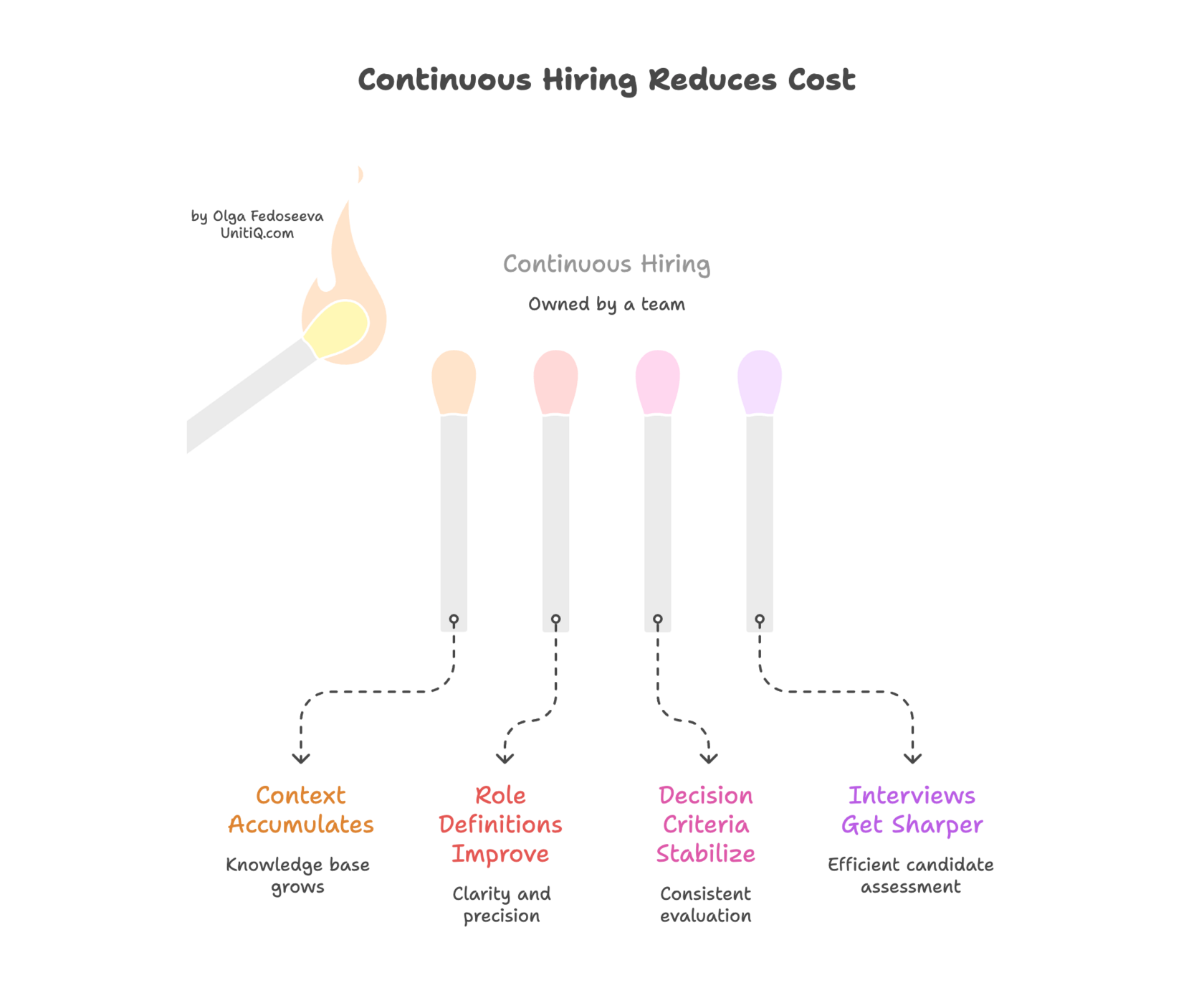
It reduces future uncertainty.
That’s when:
- fewer interviews are needed
- founders step out earlier
- trade-offs feel clearer
- cost per hire actually drops over time
Not because fees are lower —
but because resets stop happening.
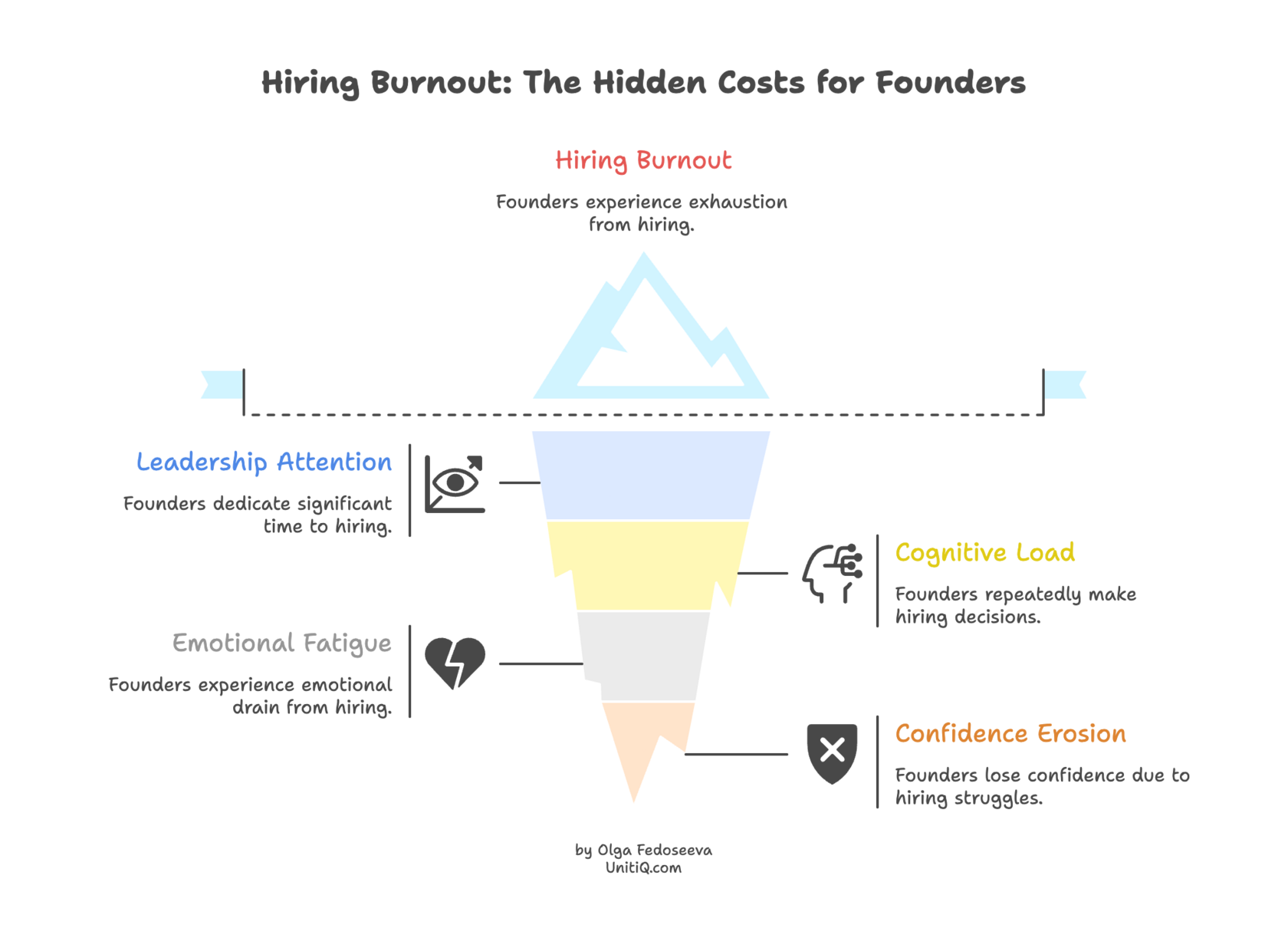
The cost founders underestimate most
The most expensive part of hiring is not money.
It’s:
- leadership attention
- repeated cognitive load
- emotional fatigue
- confidence erosion
That’s why founders burn out on hiring long before teams scale.
This burnout is not caused by hiring volume — but by restarting the same decisions without leverage.
Founders burn out on hiring before the team ever scales.
Founders burn out on hiring before the team ever scales.
Not from volume —
but from restarting the same decisions without leverage.
TL;DR
- Paying per hire treats hiring as an event, not a system.
- Event-based hiring resets context instead of compounding learning.
- Lower fees often increase total cost through repeated resets.
- The real cost is founder attention, uncertainty, and execution drag.
- Hiring becomes cheaper only when ownership and continuity exist.
If hiring feels expensive even when fees look reasonable,
you’re probably paying for the same decisions more than once.
Where this leads next
This is also why:
- hiring never seems to “get better”
- teams repeat the same interview debates
- founders stay involved longer every time
That’s not a talent problem.
It’s a learning problem.
Which is exactly what we’ll unpack next.
If you want to sanity-check which model fits your current stage — and where execution is actually breaking — we can walk through it together.
About the author
Olga Fedoseeva is the Founder of UnitiQ, a global HR executive, and a talent acquisition and people strategy leader with 20+ years of experience across EMEA, the US, and APAC. She has personally hired 1,500+ employees, led people strategy for organisations scaling from 30 to 700+ employees, and writes about hiring systems, execution risk, and people infrastructure in growth-stage startups.
Read full author profile
LinkedIn
Read full author profile


