
The Power of Role Clarity: Why Founders Lose Momentum When Roles Are Vague
Founders rarely say:
“We have a role clarity problem.”
They say:
- “People are busy, but progress feels slow.”
- “Everyone is doing a lot — but ownership is unclear.”
- “Decisions bounce around.”
- “I keep stepping back in.”
This is one of the most underestimated execution killers in growing startups:
vague roles disguised as flexibility.
At Series A–C, lack of role clarity doesn’t look like chaos.
That’s because hiring isn’t the constraint — execution capacity is.
It looks like motion without momentum.
Purpose only translates into execution when roles are clear — and execution breaks differently across teams when they’re not.
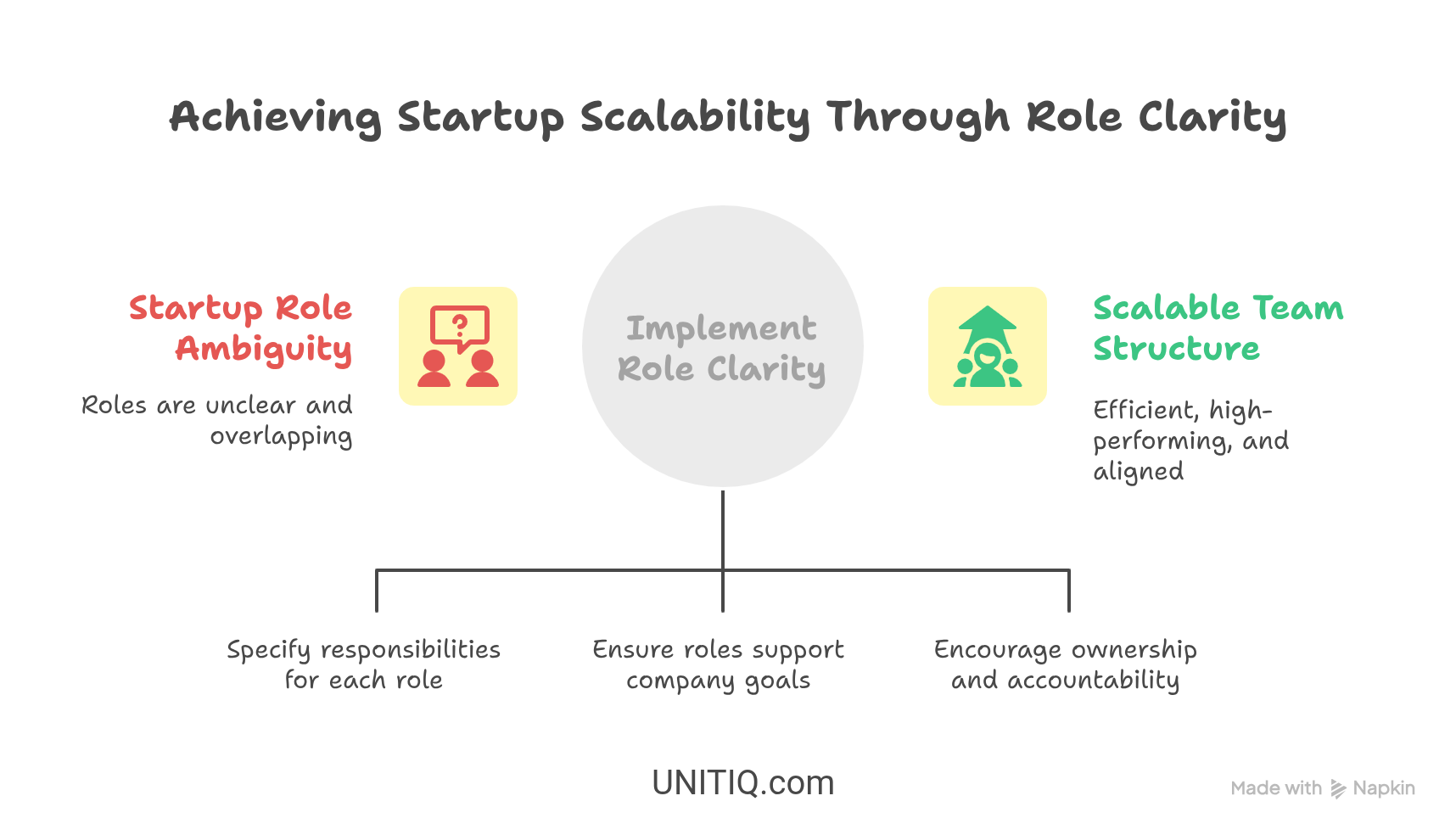
The hidden cost of unclear roles
Early-stage startups survive on flexibility.
Everyone does everything, and it works — for a while.
But as teams grow:
- responsibilities overlap
- ownership blurs
- decisions stall
- accountability becomes emotional instead of structural
The result:
- founders step back into day-to-day decisions
- leaders hesitate instead of acting
- execution slows quietly
This is how founders end up stuck in execution mode, even with a growing team.
Why role clarity is not “HR structure”
Many founders resist role clarity because it feels like:
- bureaucracy
- hierarchy
- “big company thinking”
But role clarity is not about control.
It’s about decision speed.
Clear roles answer three execution-critical questions:
- Who owns this outcome?
- Who decides when trade-offs appear?
- Who is accountable when momentum drops?
Without clear answers, teams default to:
- meetings
- alignment loops
- founder escalation
This is why role clarity isn’t a cultural exercise — it’s something that must exist before you hire.
What role clarity actually means in practice
Role clarity is not:
- long job descriptions
- rigid org charts
- fixed task lists
Role clarity is:
- clear ownership of outcomes
- explicit decision boundaries
- known interfaces between roles
- shared understanding of “what good looks like”
In other words:
Role clarity protects execution by removing ambiguity before it turns into drag.
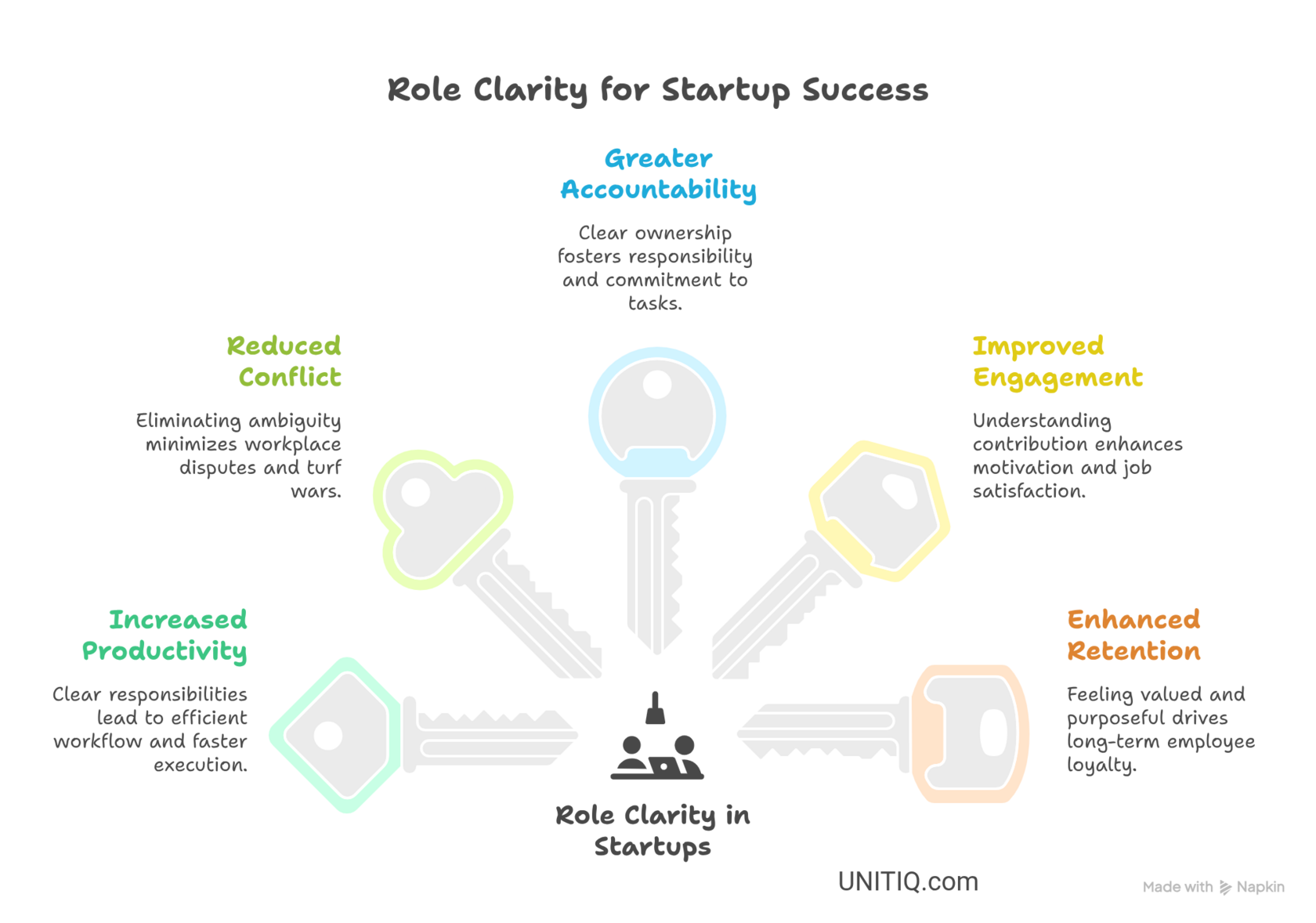
The 4 signals that role clarity is breaking down
Founders usually feel this before they can name it.
These are the signals that matter.
1. Decisions keep coming back to the founder
If:
- teams “check” instead of decide
- leaders escalate small calls
- progress pauses waiting for approval
That’s not a leadership problem.
That’s unclear decision ownership.
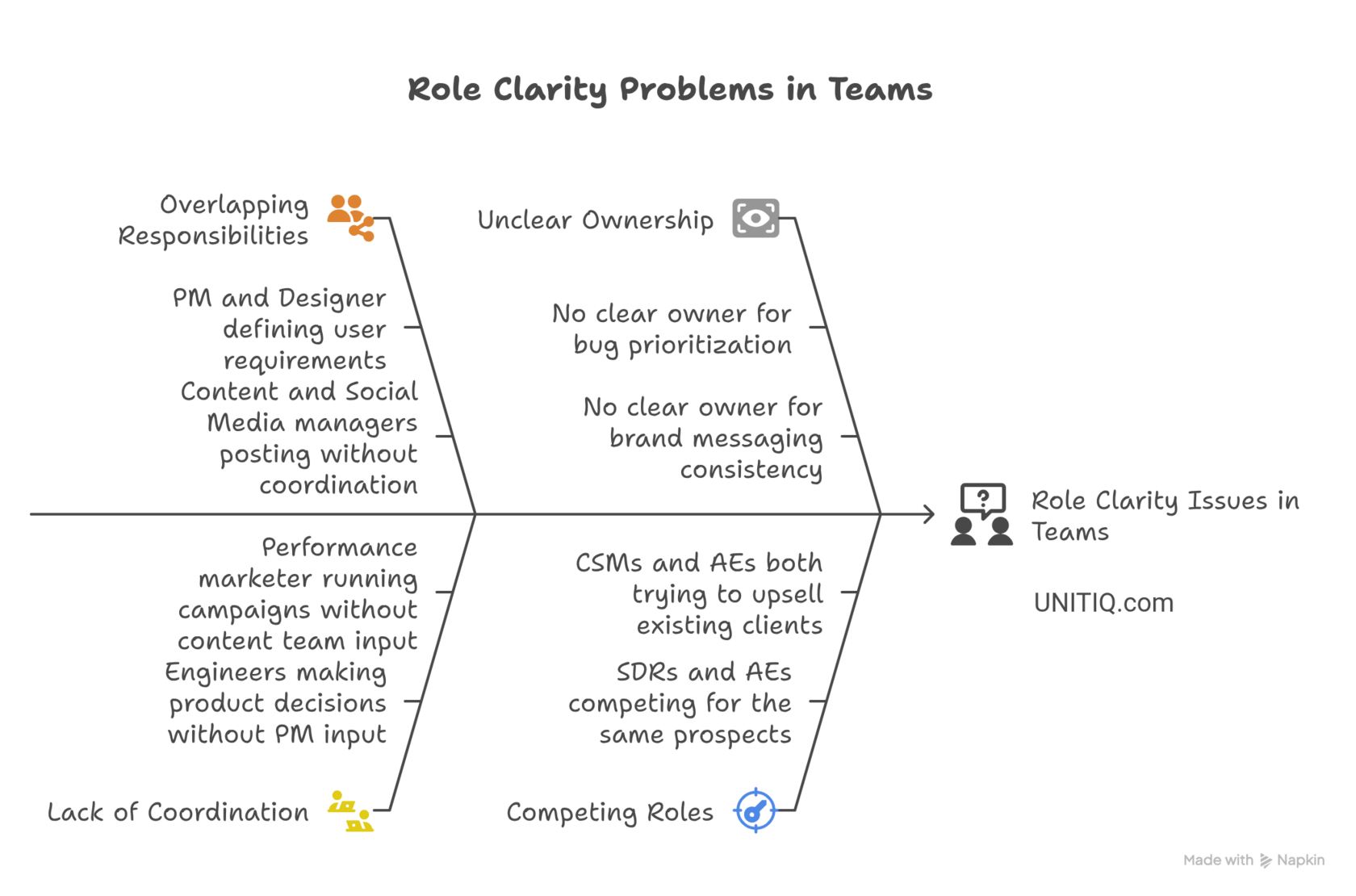
2. Multiple people own the same thing — or no one does
You’ll hear:
- “I thought they were handling it.”
- “We’re both responsible.”
- “It’s kind of shared.”
Shared responsibility without clear ownership equals no responsibility.
3. High effort, low output
People are:
- busy
- committed
- working hard
But outcomes lag.
This is one of the clearest signs that:
- priorities are unclear
- success criteria are fuzzy
- roles are mis-scoped
4. Hiring doesn’t fix execution
You hire smart people.
Nothing really changes.
That usually means:
- the role itself was unclear
- expectations weren’t explicit
- success wasn’t defined upfront
Hiring into an unclear role simply scales confusion.
This is why “almost right” candidates start to feel acceptable.
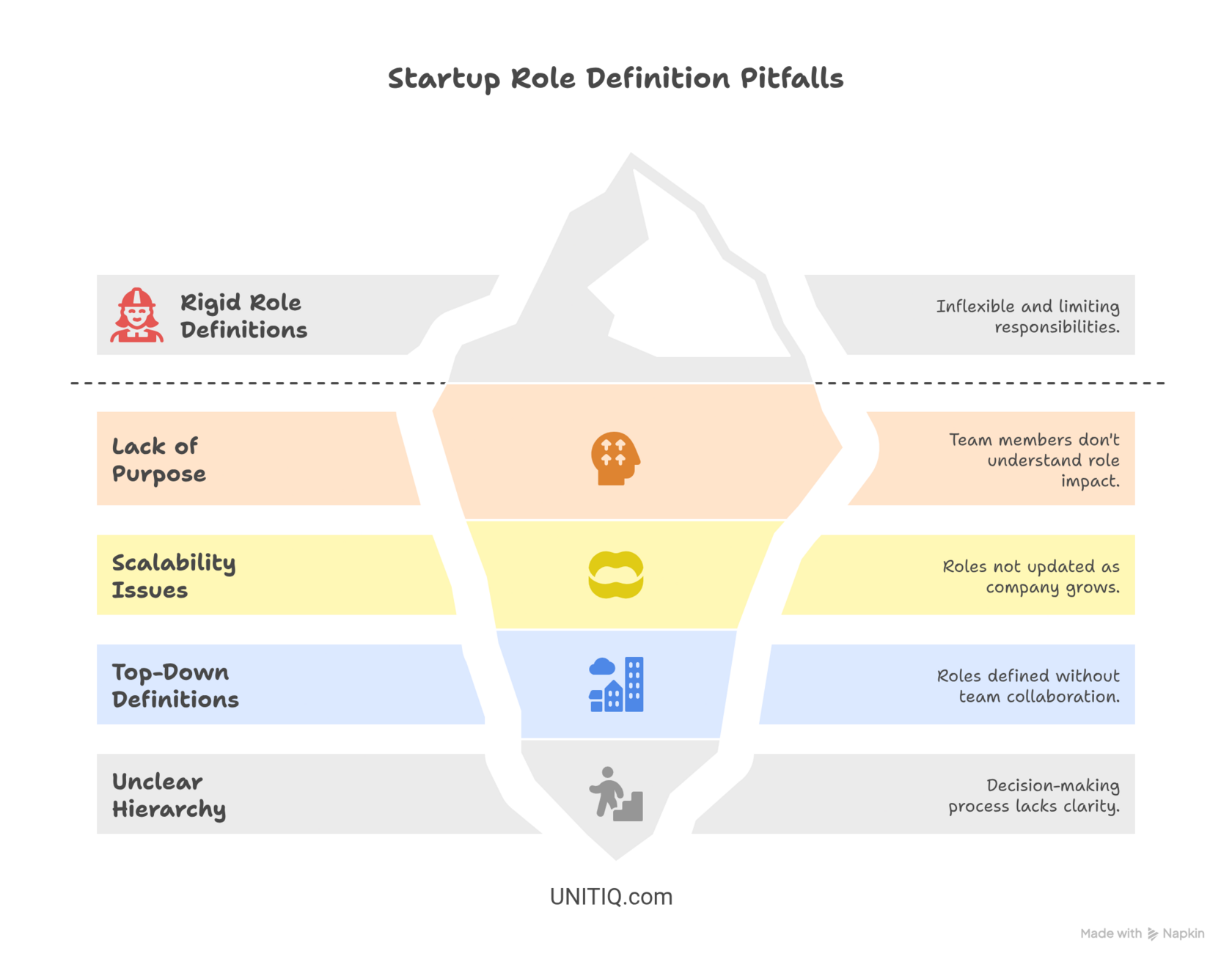
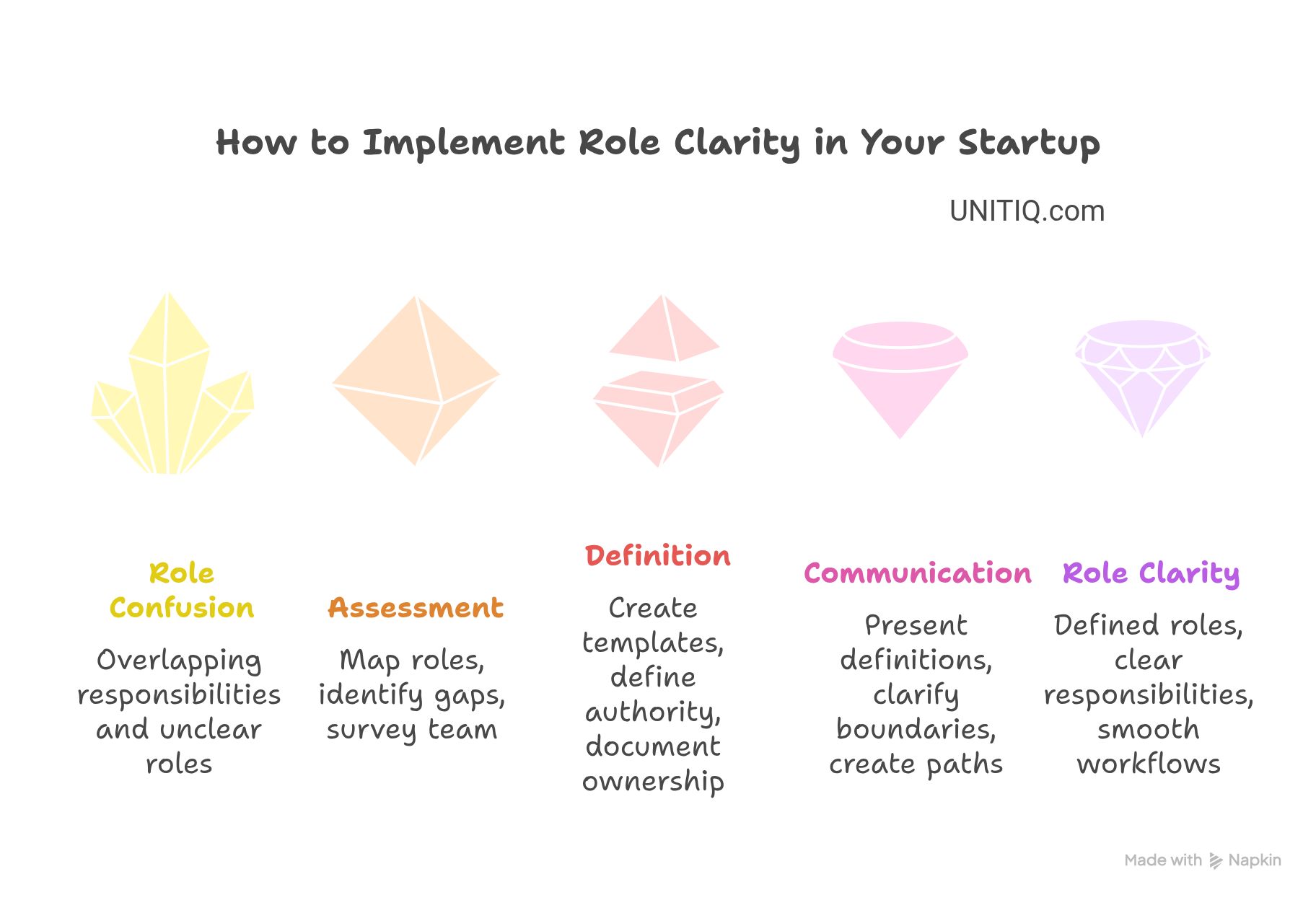
How role clarity fits into a People Project
High-performing teams don’t “roll out org design.”
They treat role clarity as part of a focused People Project.
Before hiring or restructuring, they define:
- what outcomes the role owns
- what decisions sit inside the role
- what the role does not own
- how success is measured in 90 days
This turns hiring into a precision exercise, not a hope-based one.
Role clarity and getting out of hiring mode
When roles are clear:
- interviews become sharper
- candidates self-select better
- onboarding accelerates
- mis-hires drop
- founders stop compensating for gaps
This is one of the fastest ways to:
step out of hiring and execution firefighting — and get back to strategy.
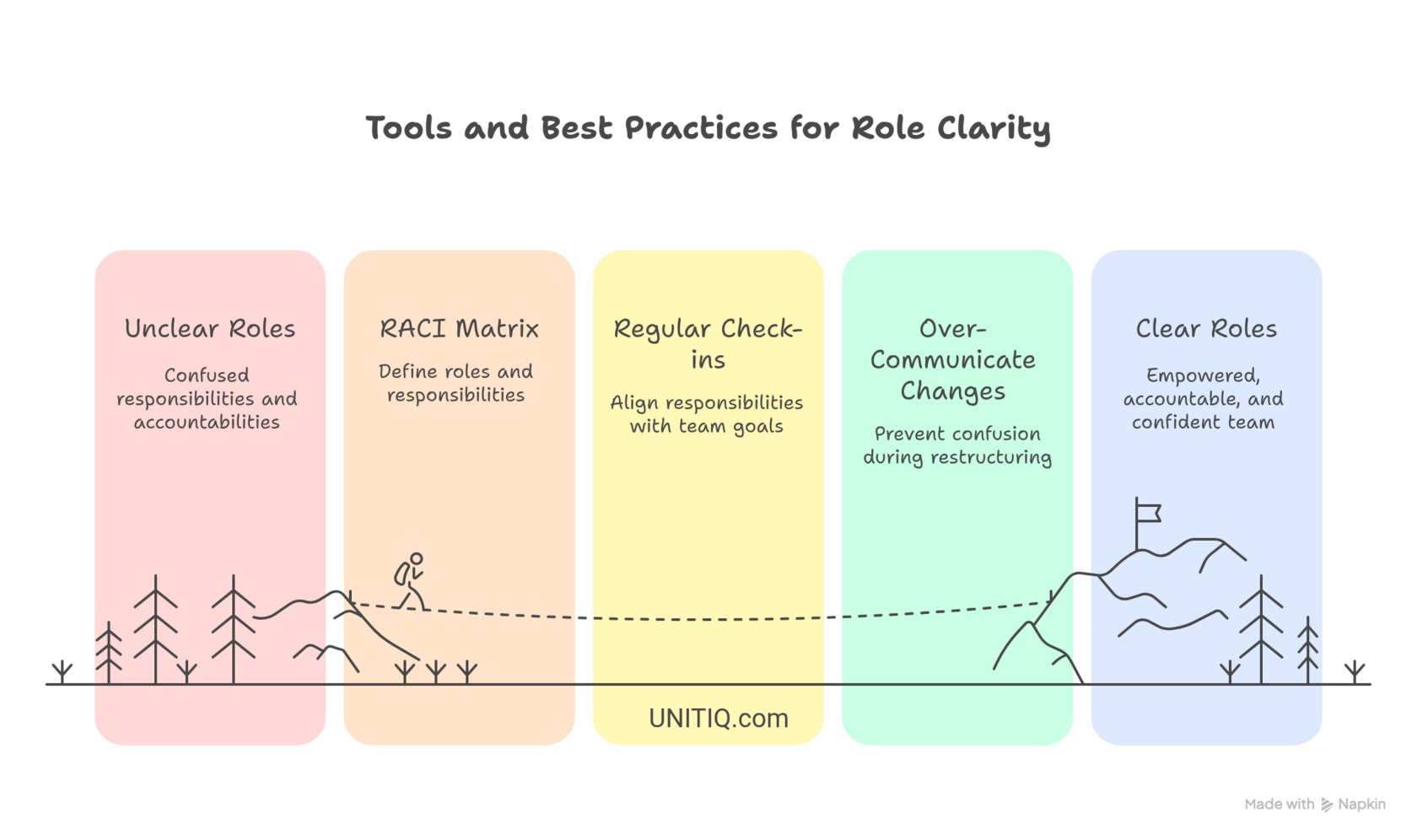
The common mistake founders make
Founders often try to fix execution by:
- hiring more people
- adding layers
- pushing harder
But without role clarity:
- every new hire adds coordination cost
- leaders slow down
- founders stay involved
Clarity first.
Scale second.
If you want to sanity-check what’s breaking in your hiring system, we can walk through it together.
👉 Book a conversation
{$te}
Role clarity is not an HR exercise.
It’s an execution system.
That’s where execution risk appears — and why hiring only works when clarity comes first.
When roles are vague:
- ownership blurs
- decisions slow
- founders step back in
- momentum drops
When roles are clear:
- teams move independently
- decisions speed up
- hiring works
- execution stays aligned
FAQ
Why does role clarity become critical as startups scale?
Because coordination cost increases faster than headcount. Without clear ownership, decisions slow and founders get pulled back into execution.
Is role clarity only needed for managers?
No. Individual contributor roles need clarity just as much — especially in fast-moving teams.
Can too much role clarity slow innovation?
No. Clarity removes ambiguity around ownership, which actually frees teams to move faster within clear boundaries.
How does role clarity reduce mis-hires?
Clear roles define success upfront. That improves candidate fit, interview quality, and onboarding outcomes.
When should founders revisit role clarity?
After funding, during rapid growth, or when hiring no longer improves execution.
According to Gallup, companies with high role clarity see a 53% increase in engagement and a 27% decrease in turnover.
👉 Need help building scalable People Operations? At UnitiQ, we help startups achieve role clarity, talent acquisition, and employer branding so your team can grow with purpose and speed.
About the author
Olga Fedoseeva is the Founder of UnitiQ, a talent acquisition partner for Series A–pre-IPO companies in Fintech, Robotics, and Mobility across EU, UKI, and MENA.
Role clarity isn't bureaucracy—it's rocket fuel for startup growth. Teams that know who owns what move faster, argue less, and deliver better results.
She works with founders who are stuck in execution or hiring mode — helping teams regain momentum through precision hiring and focused People Projects that restore aligned execution.


