
Short answer
In growth-stage startups, hiring problems are rarely caused by sourcing or candidate pipelines. They usually appear because the organisation never designed the infrastructure that allows new hires to operate independently. When role architecture, decision authority, and escalation logic are unclear, hiring increases coordination cost instead of execution capacity.
Hiring is usually treated as a pipeline problem.
More candidates.
Better sourcing.
Stronger interviews.
Faster time-to-hire.
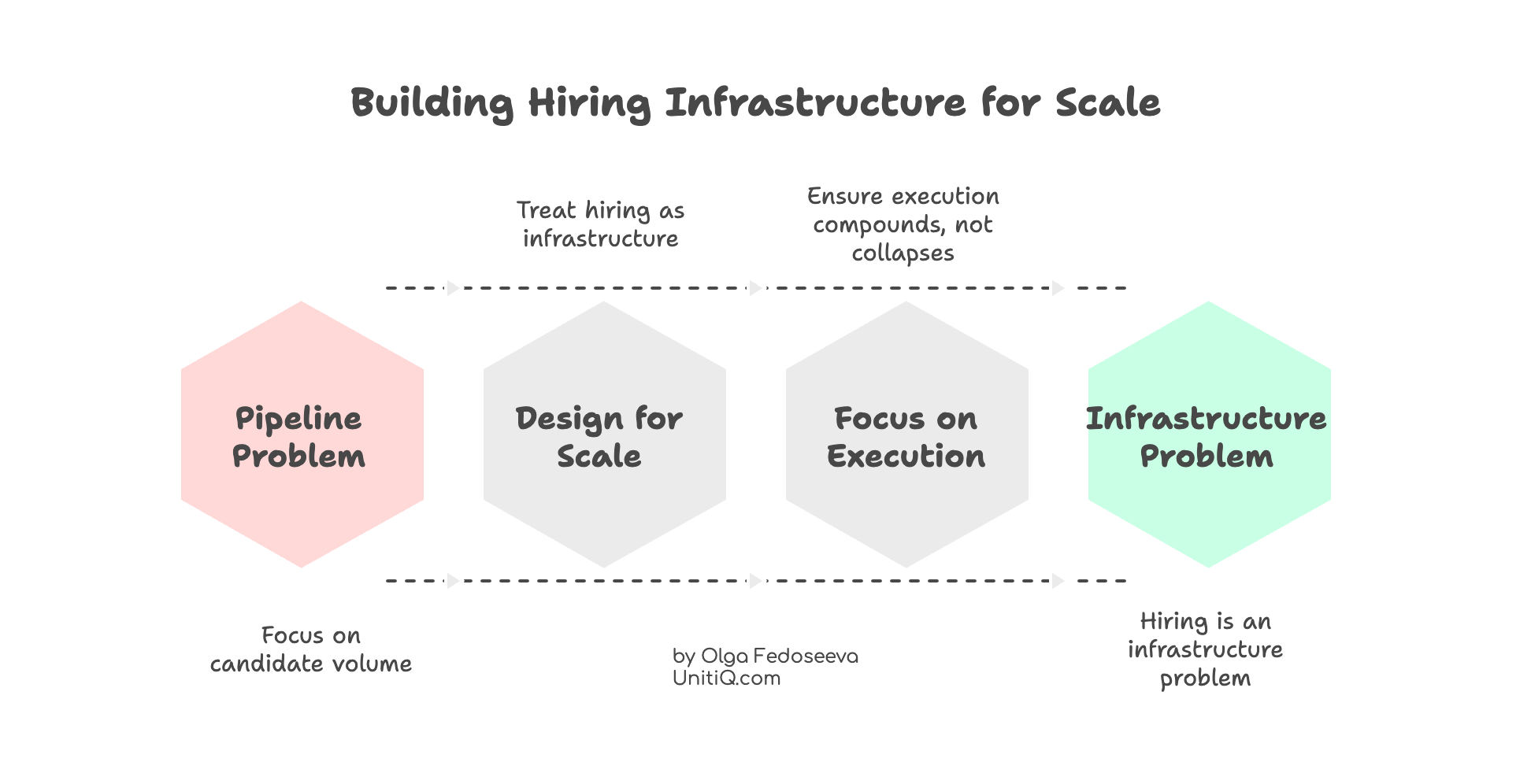
But in growth-stage startups, hiring is not a pipeline problem.
It is an infrastructure problem.
Infrastructure only works when the operating rules of the company are clear — including how decisions are made and what behaviors define success. (Read: Why Hiring the Right People Doesn’t Work Without a Clear Culture)
And infrastructure determines whether execution compounds — or collapses.
What is hiring infrastructure?
Hiring infrastructure is the system that allows new hires to operate with clear ownership, decision authority, and stable performance signals. It includes role architecture, decision design, and escalation logic that enable teams to execute without constant founder intervention.
Without hiring infrastructure, each new hire increases coordination overhead instead of increasing execution capacity.
Without hiring infrastructure, each new hire increases coordination overhead instead of increasing execution capacity.
Most hiring failures don’t originate in interviews — they appear after onboarding, when execution design can’t absorb new ownership. (Read: Execution Fails After Hiring — Not During It)
Hiring Doesn’t Break Because Candidates Are Weak
Where hiring systems actually break
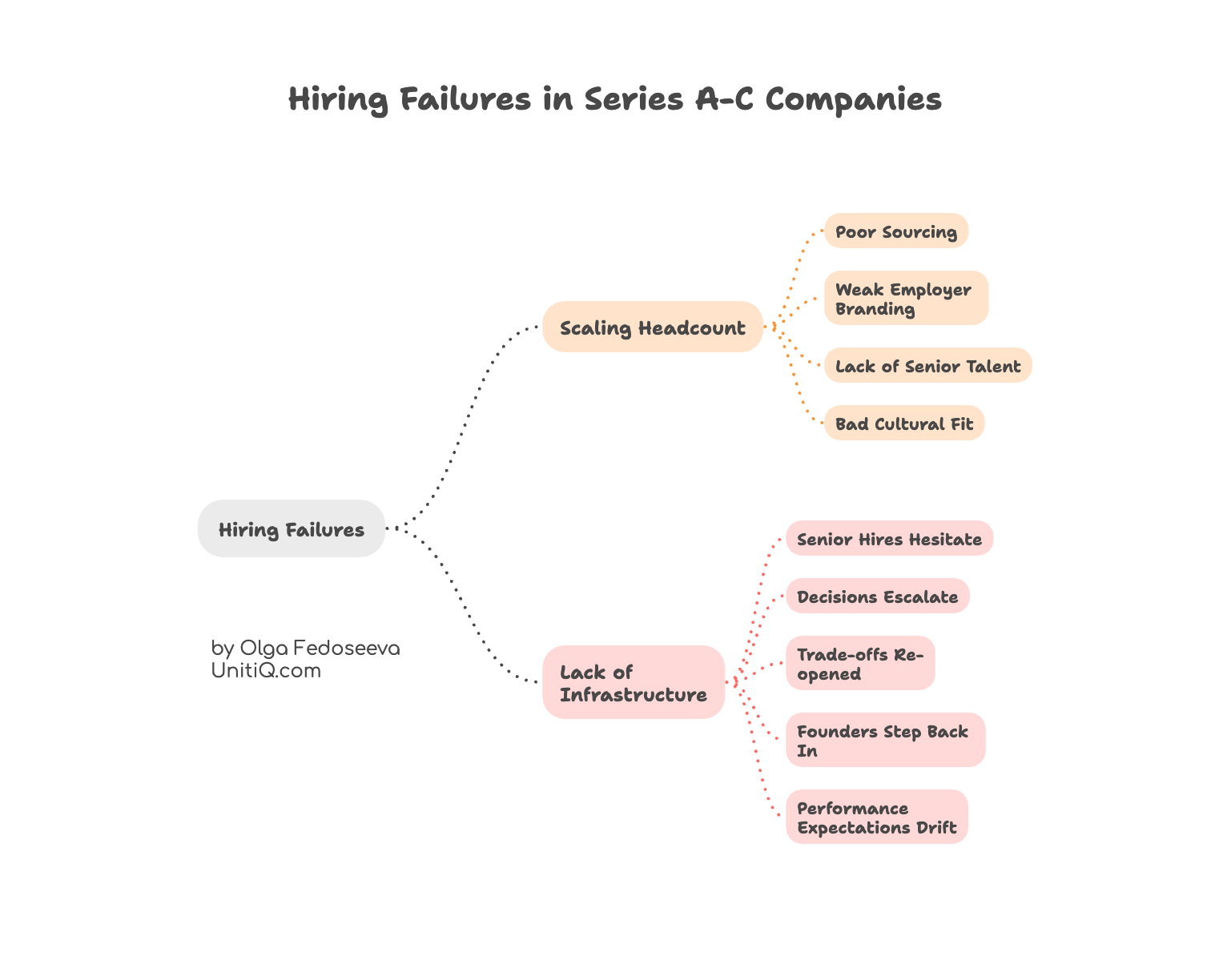
In Series A–C companies, most hiring failures are not caused by:
- poor sourcing
- weak employer branding
- lack of senior talent
- “bad cultural fit”
They happen because the company scaled headcount —
without redesigning the system those people enter.
Hiring adds capacity.
Infrastructure determines whether that capacity converts into execution.
Without infrastructure:
- senior hires hesitate
- decisions escalate
- trade-offs are re-opened
- founders step back in
- performance expectations drift
The cost is invisible at first.
Then execution slows.
What “Hiring as Infrastructure” Actually Means
Infrastructure is what makes performance predictable.
Not inspirational.
Not personality-based.
Not founder-dependent.
Hiring infrastructure includes:
1. Role Architecture
Roles defined by:
- outcome ownership
- decision rights
- trade-off boundaries
- escalation thresholds
Not by skills.
Not by tasks.
Not by headcount plan.
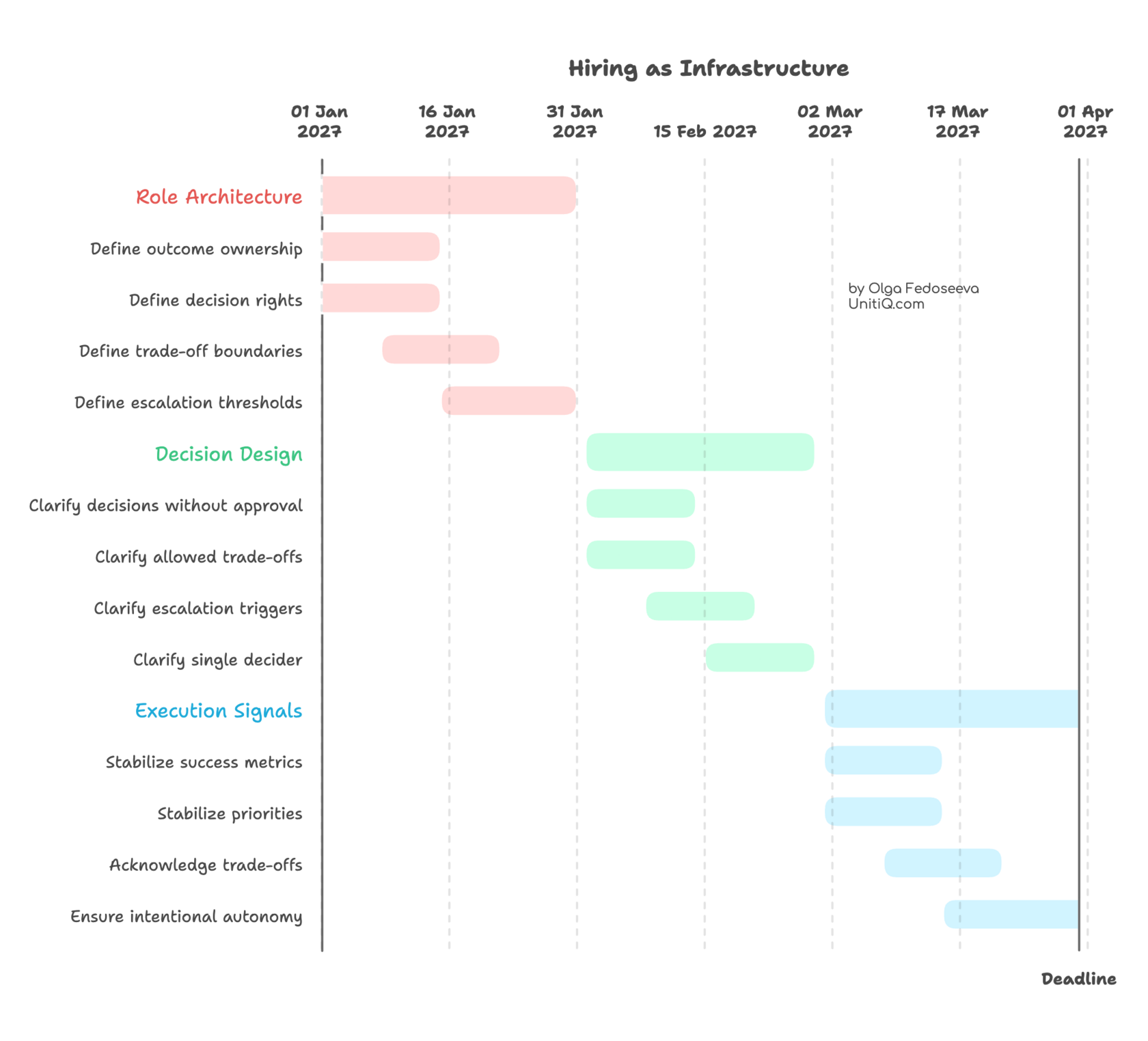
2. Decision Design
Every role must answer:
- What can I decide without approval?
- What trade-offs am I allowed to manage?
- When do I escalate?
- Who is the single decider if conflicts arise?
If those answers are unclear, hiring amplifies ambiguity.
3. Execution Signals
Infrastructure creates stable signals:
- success metrics don’t drift weekly
- priorities don’t shift mid-quarter
- trade-offs are acknowledged explicitly
- autonomy is intentional
New hires don’t guess.
They execute.
Why Hiring Gets Fragile After Series A
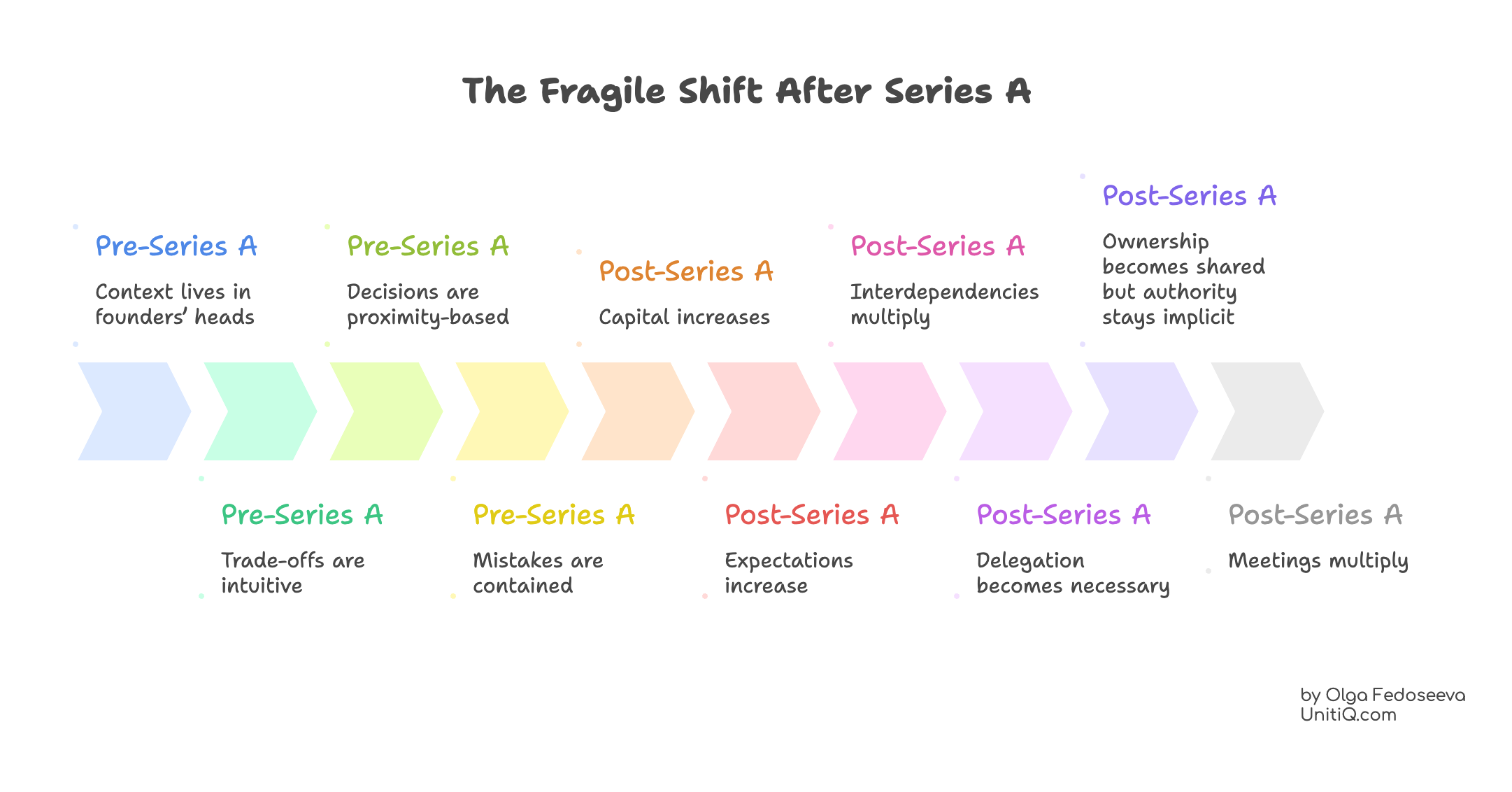
Pre-Series A:
- context lives in founders’ heads
- trade-offs are intuitive
- decisions are proximity-based
- mistakes are contained
Post-Series A:
- capital increases
- expectations increase
- interdependencies multiply
- delegation becomes necessary
But clarity does not automatically scale.
Without redesign:
- ownership becomes shared but authority stays implicit
- meetings multiply
- Slack threads grow longer
- alignment replaces decision
- senior hires over-communicate
- founders sanity-check decisions
This is not a talent shortage.
It is infrastructure debt.
What is infrastructure debt?
Infrastructure debt accumulates when a company scales headcount without redesigning the systems that define ownership, decisions, and escalation paths.
Like technical debt, it compounds quietly. Teams grow, but execution becomes slower because ambiguity spreads faster than authority.
Like technical debt, it compounds quietly. Teams grow, but execution becomes slower because ambiguity spreads faster than authority.
As startups grow, decision authority naturally fragments unless it is intentionally redesigned. Hiring without redesigning authority only accelerates the breakdown. (Read: Why Decision Authority Breaks as Startups Scale)
The Hidden Cost of Infrastructure Debt
When hiring is not treated as infrastructure:
1. Hiring ROI Decreases
Strong candidates underperform
because decision architecture is unclear.
This is exactly why capable hires stall in their first 60–90 days — not from lack of skill, but from missing execution scaffolding. (Read: Why “Good Hires” Still Fail in the First 90 Days)
2. Founder Workload Returns
Delegation fails.
Founders re-enter.
Trust erodes.
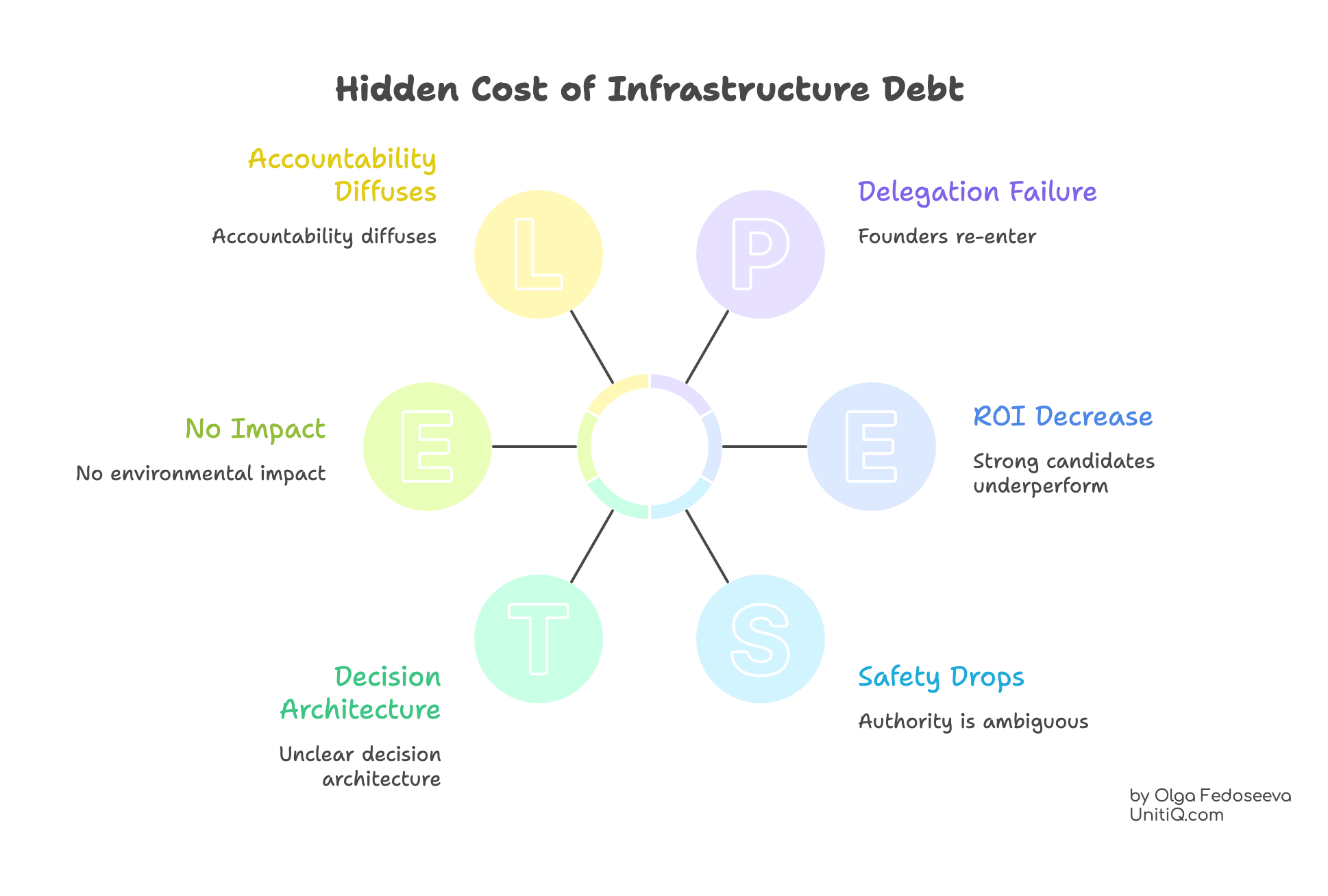
3. Psychological Safety Drops
When authority is ambiguous:
- people hesitate
- accountability diffuses
- trade-offs feel dangerous
- decisions stall
Execution slows silently.
The Shift: From Recruiting Function to Execution Design
Most companies invest in:
- better sourcing tools
- stronger recruiters
- improved employer branding
Few invest in:
- role clarity
- decision architecture
- outcome ownership
- escalation logic
Most structural HR mistakes don’t look like HR problems — they quietly increase uncertainty and pull leadership back into operations. (Read: The HR Mistakes That Quietly Cost Startups Execution)
But those determine whether hiring compounds.
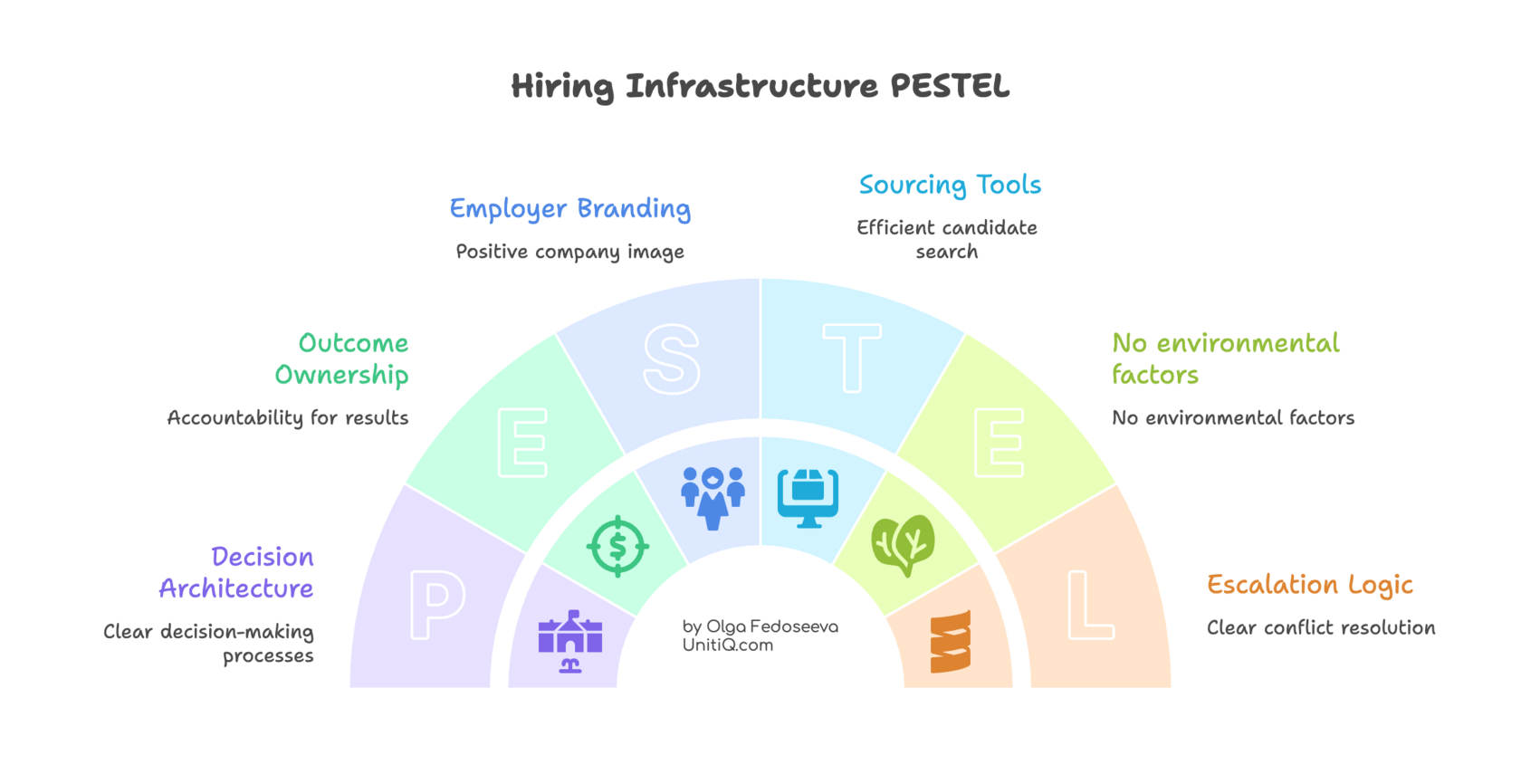
Recruiting fills seats.
Infrastructure multiplies impact.
When execution slows, many teams try to compensate by hiring faster — but speed amplifies whatever system already exists. (Read: Why Hiring Faster Won’t Fix Your Execution)
How to Design Hiring for Scale
If you want hiring to support execution, redesign three layers before adding headcount:
1. Anchor Roles in Outcomes
Every role must be tied to:
- measurable results
- decision authority
- defined trade-offs
If you cannot define those, you are not ready to hire.
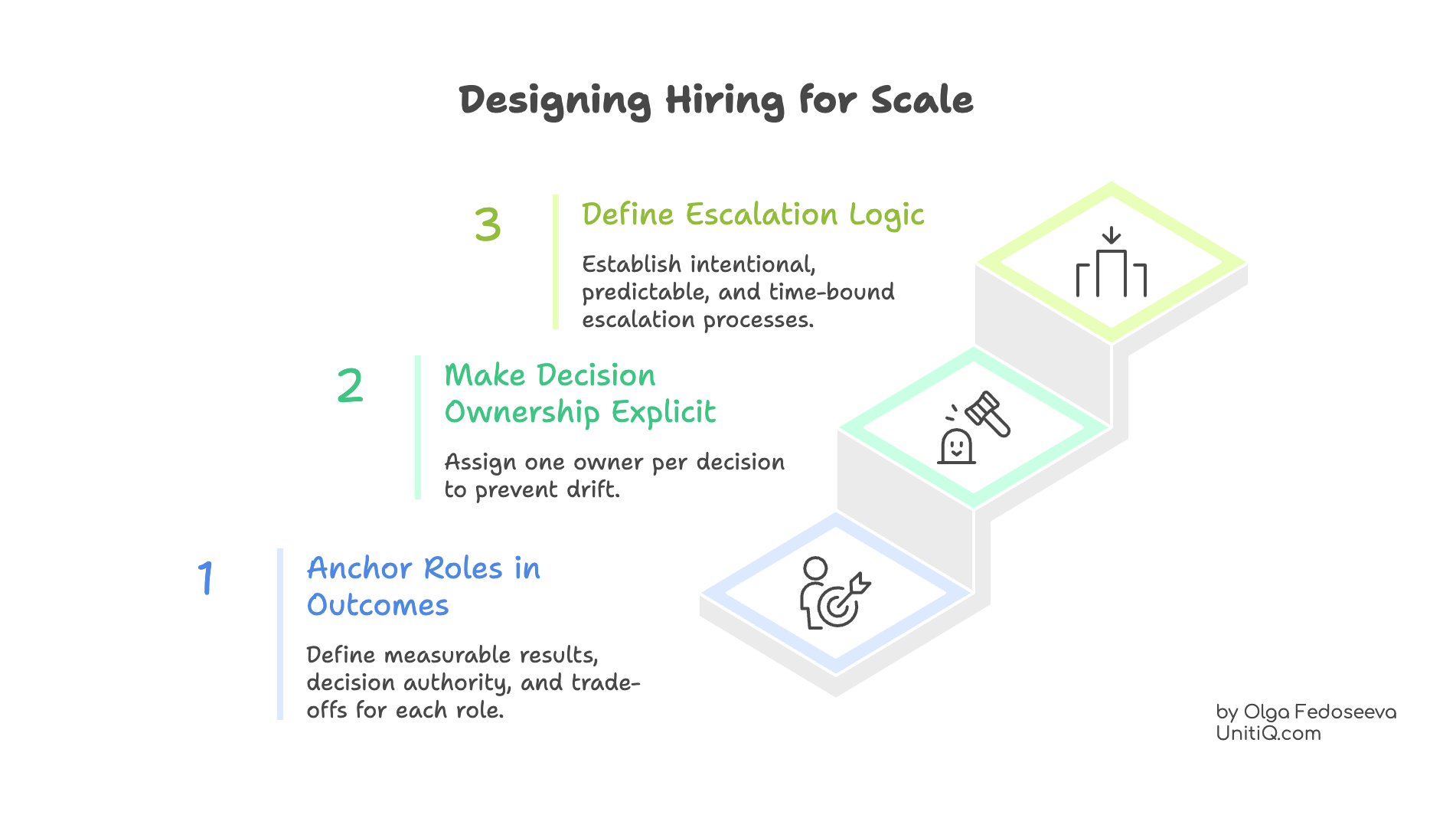
2. Make Decision Ownership Explicit
One owner per decision.
Not panels.
Not consensus.
Not “alignment sessions.”
Ownership prevents drift.
3. Define Escalation Logic
Escalation must be:
- intentional
- predictable
- time-bound
Without it, founders become the fallback system.
Hiring as a System Multiplier
When infrastructure is clear:
- senior hires move faster
- autonomy increases
- trade-offs are handled locally
- execution compounds across roles
- founders step back permanently
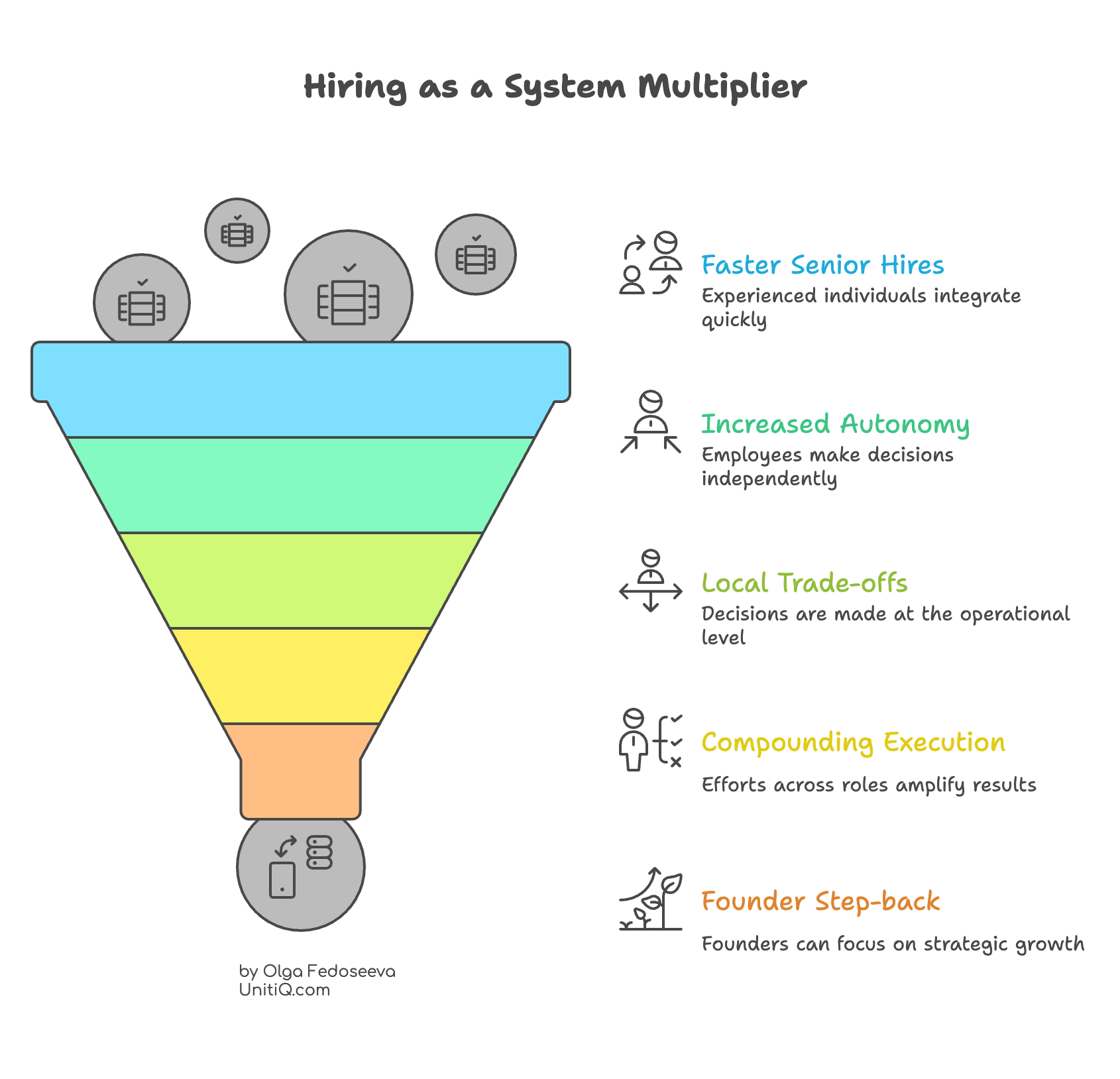
The system holds.
Hiring becomes leverage.
The Real Question Before You Hire
Don’t ask:
“Do we need another person?”
Ask:
“Does our decision architecture support another person?”
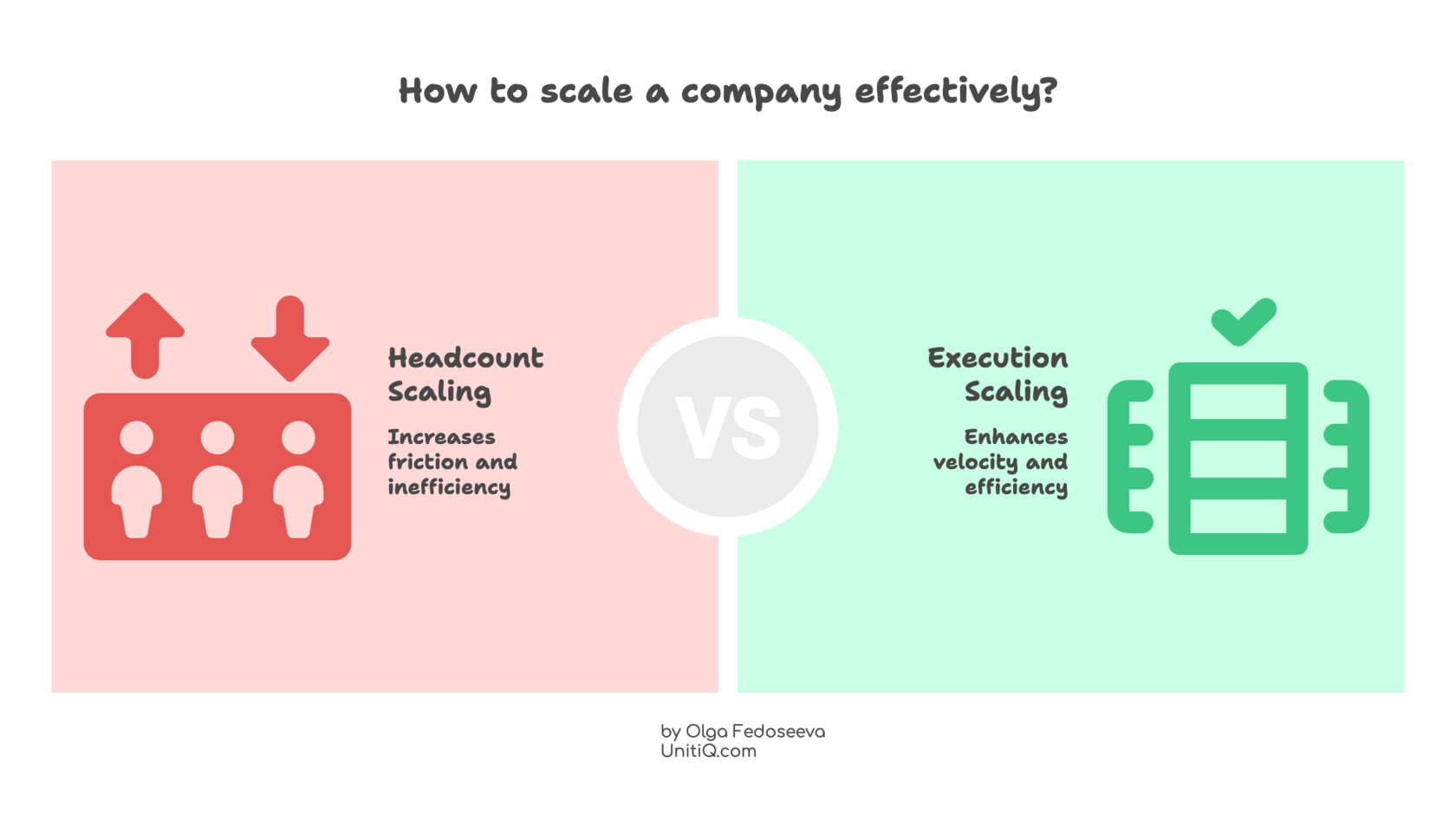
If the answer is no, hiring will increase friction.
If the answer is yes, hiring increases velocity.
That is the difference between scaling headcount and scaling execution.
TL;DR
Hiring failure in growth-stage startups is rarely a sourcing problem.
It is an infrastructure problem.
Without:
- clear role architecture
- explicit decision authority
- defined trade-offs
- escalation design
New hires cannot execute independently.
Hiring must be treated as infrastructure —
or execution will stall after every growth phase.
When hiring is approached as isolated events instead of continuous system design, learning resets and authority fragments with every new role. (Read: Why Event-Based Hiring Keeps Resetting Your Startup)
Frequently asked questions about hiring infrastructure
Why do hiring problems appear after onboarding instead of during interviews?
Because most hiring failures are not caused by candidate quality. They appear when new hires enter a system where ownership, decision authority, and success signals are unclear.
What does hiring infrastructure actually include?
Hiring infrastructure includes role architecture, decision ownership, escalation logic, and stable performance signals that allow new hires to operate independently.
When does hiring start to scale execution instead of slowing it?
Hiring scales execution when roles are defined by outcomes, decision authority is explicit, and escalation paths are designed before the hire joins.
If you want to sanity-check which model fits your current stage — and where execution is actually breaking — we can walk through it together.
About the author
Olga Fedoseeva is the Founder of UnitiQ, a global HR executive, and a talent acquisition and people strategy leader with 20+ years of experience across EMEA, the US, and APAC. She has personally hired 1,500+ employees, led people strategy for organisations scaling from 30 to 700+ employees, and writes about hiring systems, execution risk, and people infrastructure in growth-stage startups.
Read full author profile
LinkedIn
Read full author profile


